

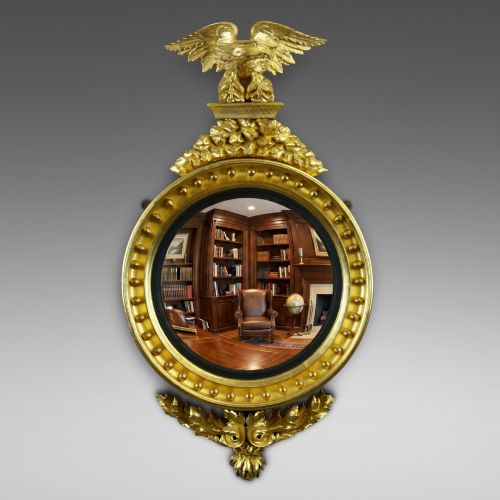
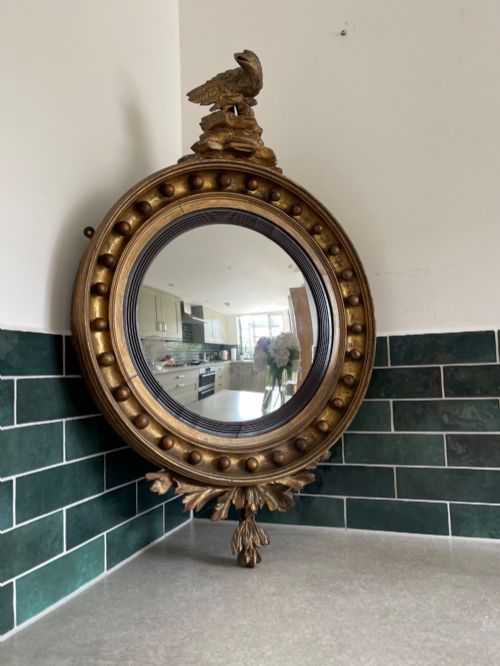


Gilt Eagle Convex Mirror
A gilt eagle convex mirror brings a dramatic, curved reflection and striking bird crest into a room.
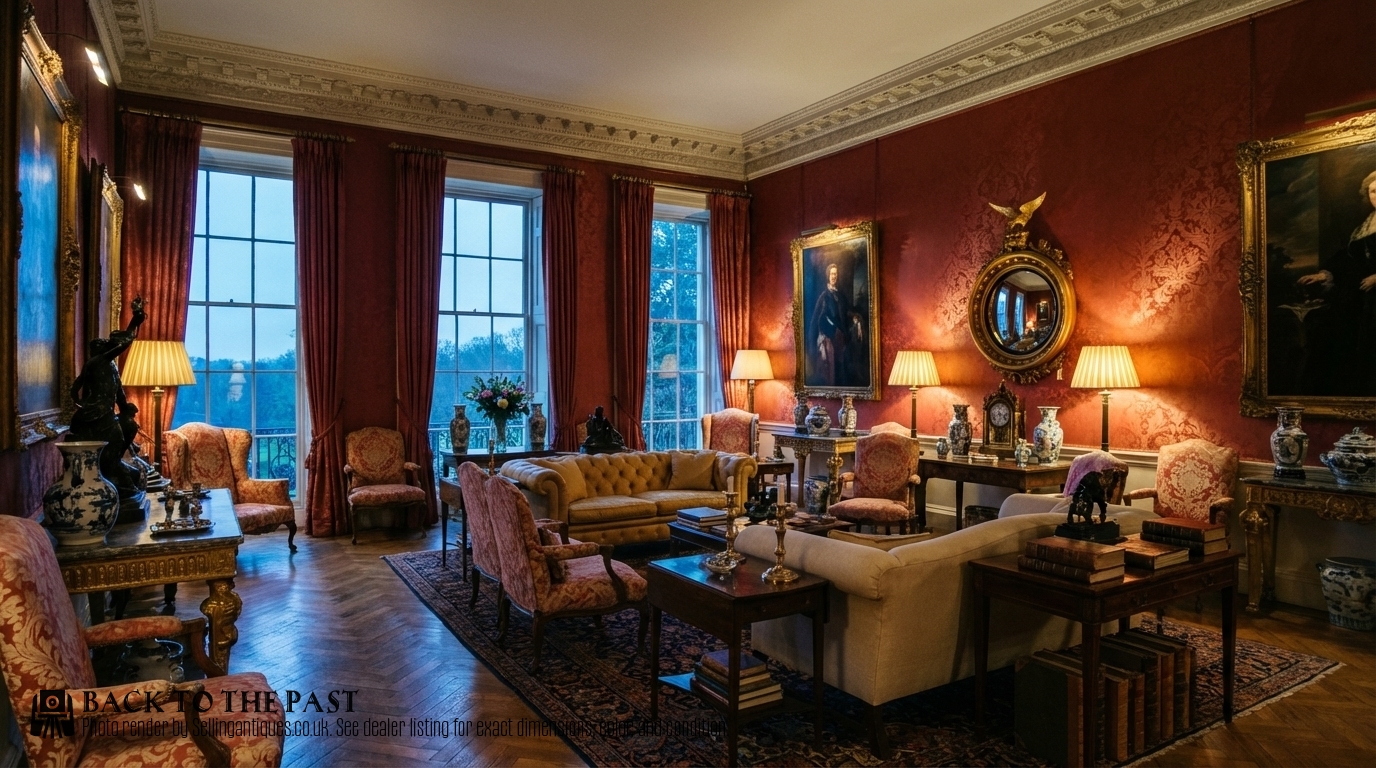
Gilt Eagle Convex Mirror
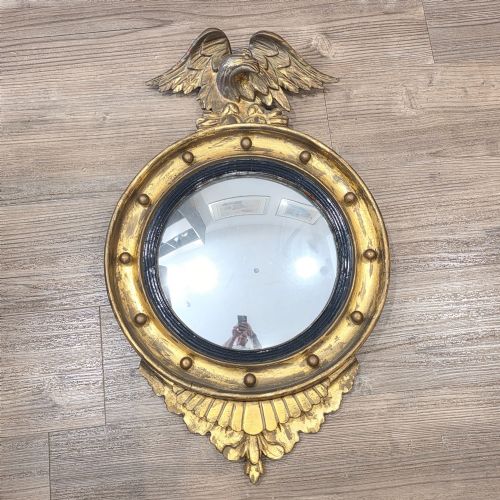
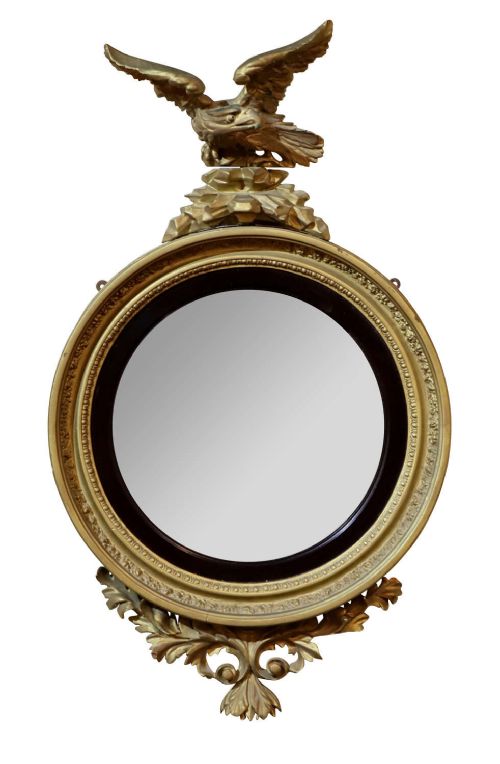
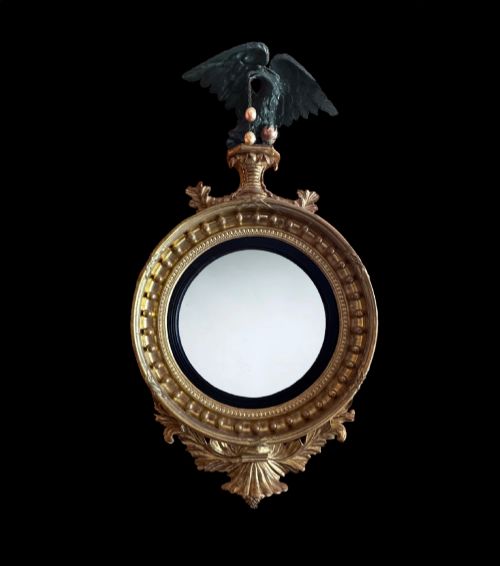
When you search for a gilt eagle convex mirror, you look at circular wall pieces defined by a deep curved glass plate and a prominent bird surmount. The version you are most likely to meet on this page belongs to the Regency period or follows its exact stylistic traditions.
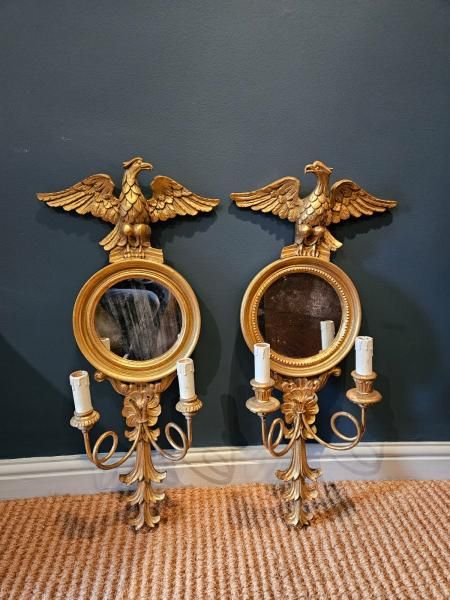
These circular wall hangings appear primarily in Giltwood and gesso, often paired with ebonised wood details. The forms range from plain round frames to grand girandole formats featuring candle sconces attached to the sides.
Originating largely from the Georgian and Regency eras, these pieces also emerge in Victorian and later revival iterations. They serve primarily as focal points in reception rooms, designed originally to reflect the whole breadth of an interior.
Materials and construction
Makers shaped the heavy circular frames from carved timber, applying layers of gesso to build up intricate surface details before gilding them with gold leaf. The deep spherical glass plates were blown or cast to create the characteristic fish-eye reflection.
The characteristic eagle surmount sits atop the frame, frequently perched upon a rocky outcrop or pedestal with outstretched wings. Secondary materials such as brass fittings and ebonised reeded inner rings appear regularly to provide visual contrast against the bright gilt surface.
Listings feature examples spanning from the Georgian and Regency periods through to Victorian revivals and 1920 pieces, constructed primarily in Giltwood and gesso.
Judging quality and character
The crispness of the carved woodwork dictates the visual impact of the frame, separating finely detailed Regency pieces from later or softer castings. Carving depth in the eagle wings and the surrounding acanthus leaves shows the hand of a skilled maker.
The condition of the original convex glass plate and its mercury backing alters the character of the reflection, with undisturbed historical surfaces holding greater visual depth. The integrity of the gesso ground beneath the gilding determines how well the circular moulding retains its original sharpness.
The Gilt Eagle Convex Mirror Glossary
- Convex glass
- Curved glass that projects outward like a sphere, creating a wide-angle reflection of the entire room. This optical property made the glass popular for watching over drawing rooms.
- Surmount
- An ornamental feature placed at the very top of a mirror frame. On these pieces, it almost exclusively takes the form of a carved eagle.
- Gesso
- A plaster-like mixture applied to wood frames to provide a smooth base for gilding. It allows for sharp, crisp moulding of fine decorative details.
- Girandole
- A wall mirror fitted with one or more candle branches attached to the frame. The arms multiply the candlelight within the room.
- Ebonised wood
- Timber stained or treated to imitate dense, black ebony. It frequently forms an inner reeded ring within the main gilt frame.
Gilt Eagle Convex Mirror: Frequently Asked Questions
Where should I hang a convex mirror?
These mirrors function best on a main wall in a dining room, hallway or sitting room where they can capture light from multiple angles.
Because the curved glass shrinks the reflection to fit a wide view, hanging them at eye level maximises their decorative impact.
How do I identify a Regency convex mirror?
Look for heavy carved giltwood frames, an eagle pediment at the top, and often an ebonised slip surrounding the curved glass plate.
Many genuine examples from this era also feature candle arms or decorative balls set into the outer frame moulding.
Why do these mirrors have eagles?
The eagle surmount served as a popular patriotic and decorative motif during the Georgian and Regency periods in English design.
Symbolising strength and majesty, the bird anchors the circular composition and draws the eye upward.
Are all eagle convex mirrors from the Regency era?
While the form reached its peak popularity during the Regency period, makers continued producing them through the Victorian era and into later revival periods.
Construction details, wood types and the wear on the gesso help distinguish early pieces from later copies.