

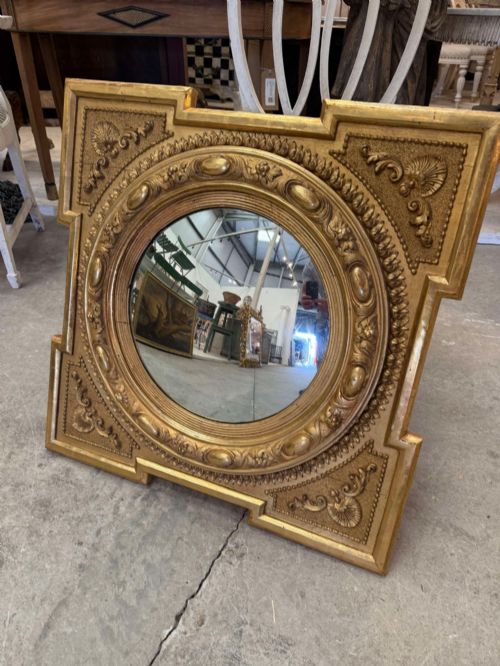
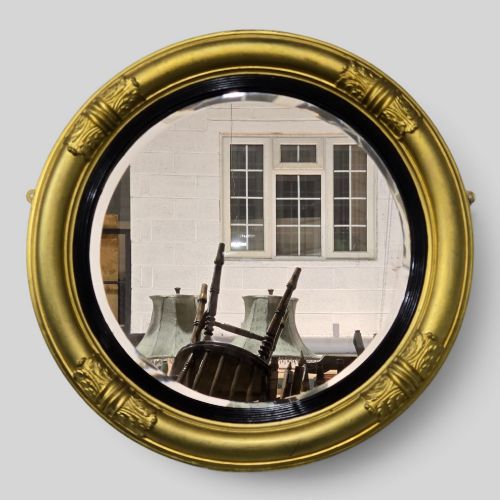
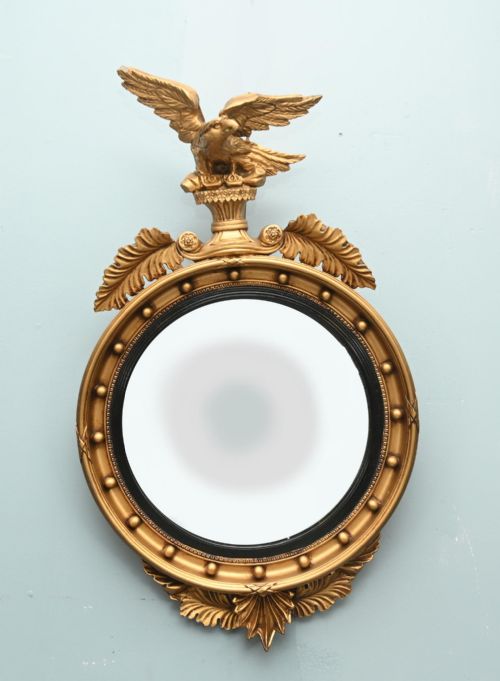


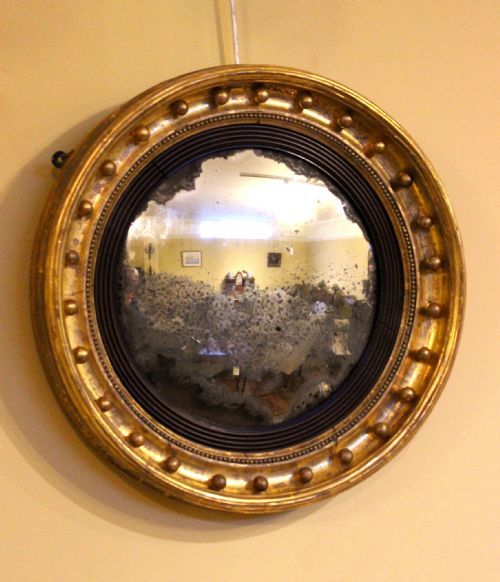


Regency Style Bullseye Mirror
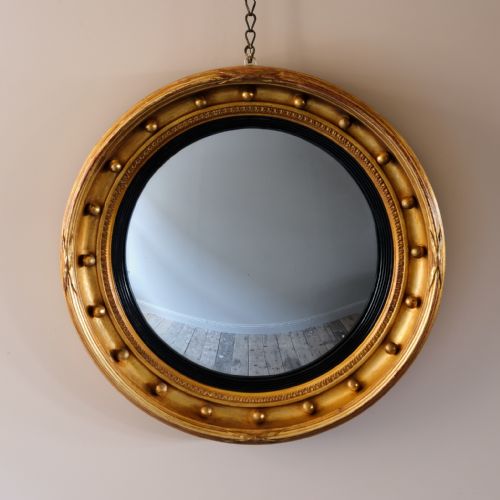
A regency style bullseye mirror brings luminous depth to a room through its distinctive convex glass set within a round frame.
Regency Style Bullseye Mirror
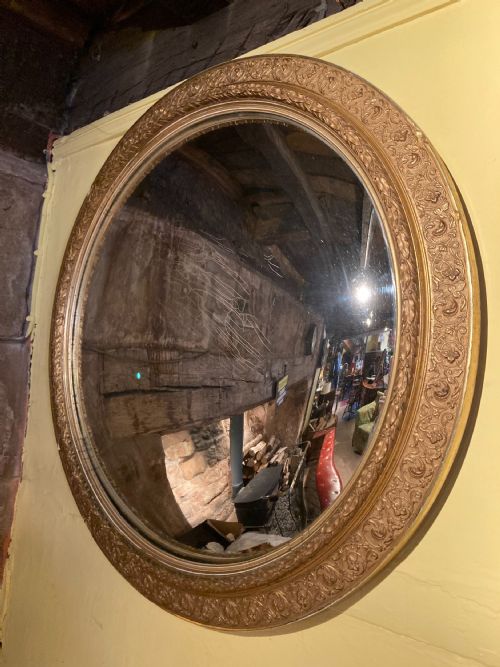
A regency style bullseye mirror captures the eye with its curved, spherical plate that reflects a wide, sweeping view of the interior. These wall mirrors appear in forms dating from the nineteenth century, including the Victorian era and early twentieth century revivals.
How they were made
Makers fashioned these pieces using timber frames enriched with giltwood, ebonised wood, or brass details to hold the curved glass securely. The distinctive convex mirror glass required specialised blowing and shaping techniques to achieve the spherical distortion characteristic of the form.
Carpenters and gilders utilised composition ornaments applied to wood structures, finishing the surfaces with gold leaf or dark polish. Mahogany and other sturdy timbers provided the structural foundation for the heavier wall mirrors.
Regency Style Bullseye Mirror Retail Price Guide 2026
Typical asking prices for regency style bullseye mirror among the pieces listed under this phrase on Sellingantiques today, from the lower quarter to the upper quarter. They describe what is for sale here now, not the wider market.
Early convex mirrors were sometimes called butler's mirrors because the curved glass let servants keep an eye on the entire dining room at once.
What varies in quality
The refinement of the carved or moulded frame ornamentation dictates much of the distinction across these pieces. Crisp detail in the giltwood and timber work marks out the superior examples from simpler iterations.
The clarity and depth of the mirror glass itself alters the visual impact, alongside the integrity of the original wood or brass components. Subtle handling of the surface finishes preserves the character valued by collectors.
The Regency Style Bullseye Mirror Glossary
- Convex mirror
- A round mirror with an outward-curving glass surface that gathers a panoramic reflection of the room. This form gained popularity during the Regency period and remained favoured through the Victorian era.
- Giltwood
- Timber coated with a thin layer of gold leaf or gilt preparation. This finish catches the light and frames the reflective glass.
- Ebonised wood
- Timber treated to resemble ebony through dark staining or finishing. It provides a striking contrast against gilded details.
- Composition
- A moulded material made from whiting, resin, and glue pressed into decorative ornaments. Makers applied these details to mirror frames before gilding.
Regency Style Bullseye Mirror: Frequently Asked Questions
Where should I hang a bullseye mirror?
These mirrors suit spaces where they can capture light and reflect a broad angle of the room, such as above a fireplace or along a hallway.
Because the convex glass shrinks the reflection, placing them opposite a window maximises their ability to brighten dark corners.
How do I date an antique convex mirror?
Dating relies on examining the construction methods of the timber frame, the composition ornaments, and the characteristics of the mirror glass itself.
Nineteenth century pieces often show hand-finishing details and ageing on the mirror plate that differ from later revival versions.
Are these mirrors heavy?
Many examples possess substantial weight due to the solid timber frames, composition mouldings, and thick glass plates.
Secure wall fixings suited to the specific weight of the piece are essential for safe hanging.
What is the difference between Regency and revival pieces?
Original Regency pieces date from the early nineteenth century, while revival examples typically emerge from the Victorian period or the early twentieth century.
Both styles follow the traditional bullseye format, though material handling and wear patterns often reveal the span of years between them.