




Round Gilt Convex Mirror
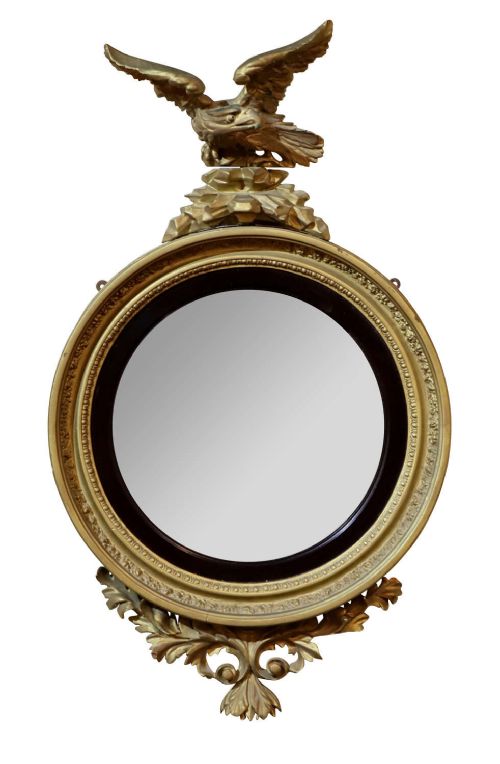
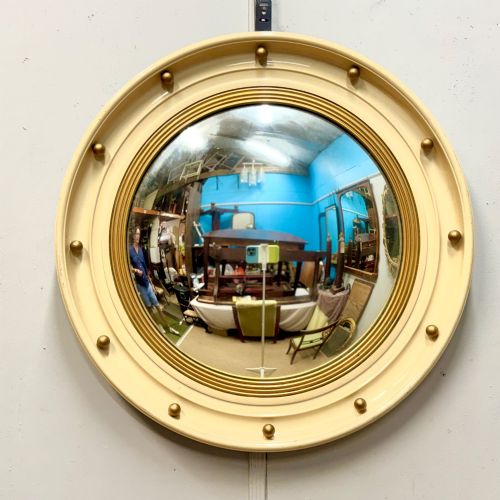
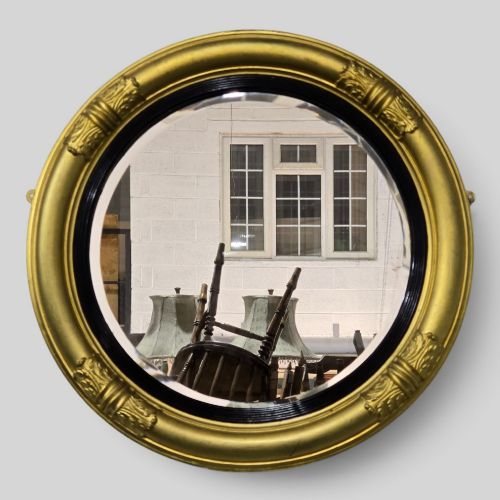
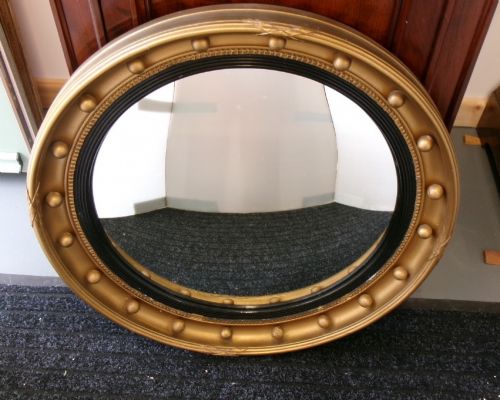
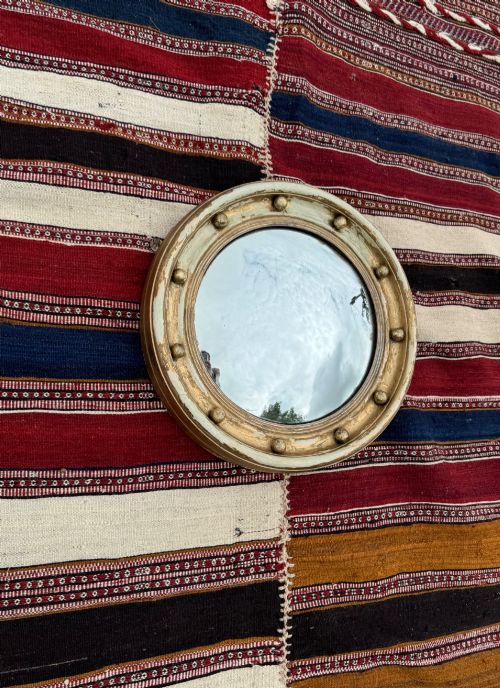
A round gilt convex mirror draws the eye across a room, capturing a distorted fish-eye view of its surroundings within a gilded circular frame.
Round Gilt Convex Mirror
A round gilt convex mirror serves as both an optical curiosity and a traditional wall hanging, originating largely from Georgian and Regency periods. These circular looking glasses pull light from across a chamber into a curved, spherical plate.
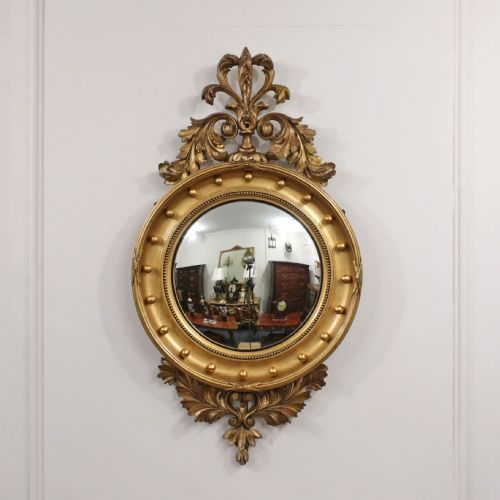
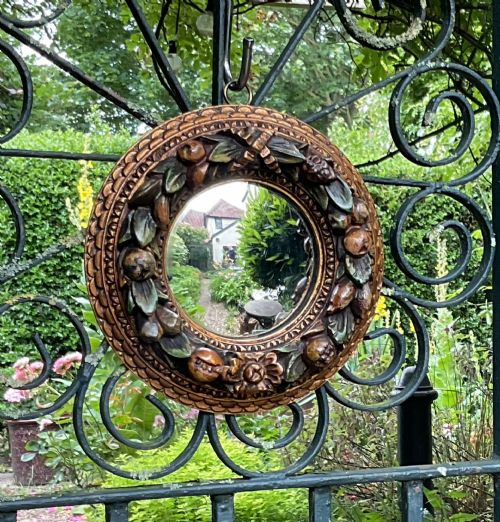
Most examples found here date from the nineteenth century, including numerous Regency originals alongside later Victorian and twentieth-century revivals. The circular form frequently incorporates carved wood or plaster frames finished in gold leaf.
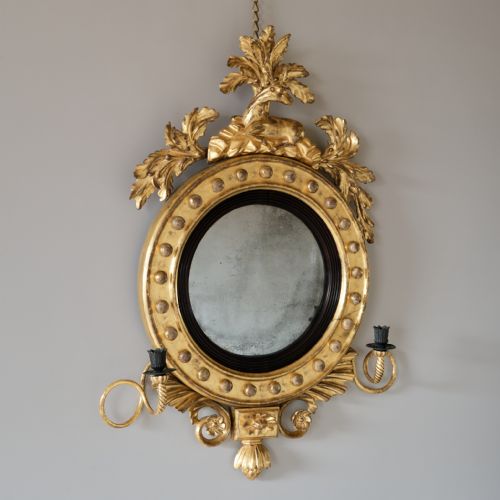
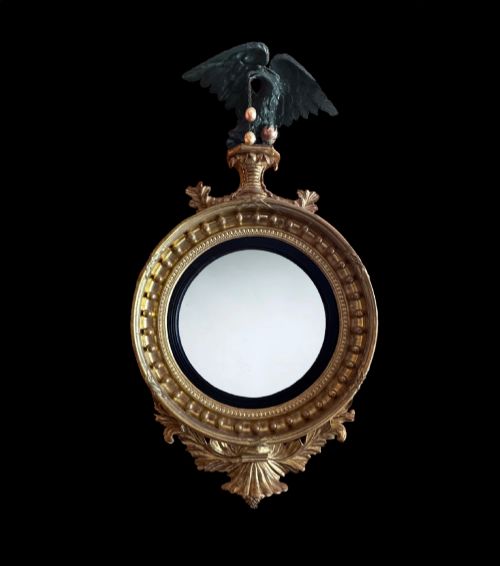
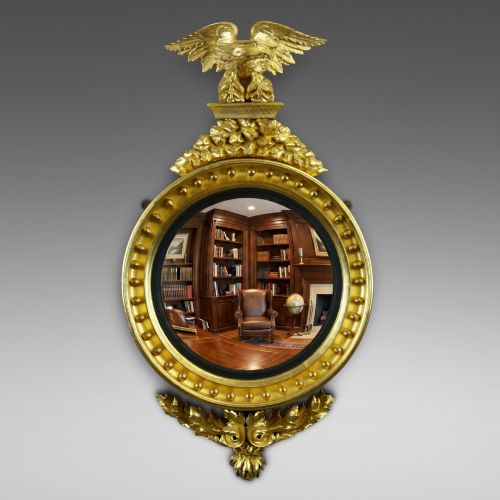
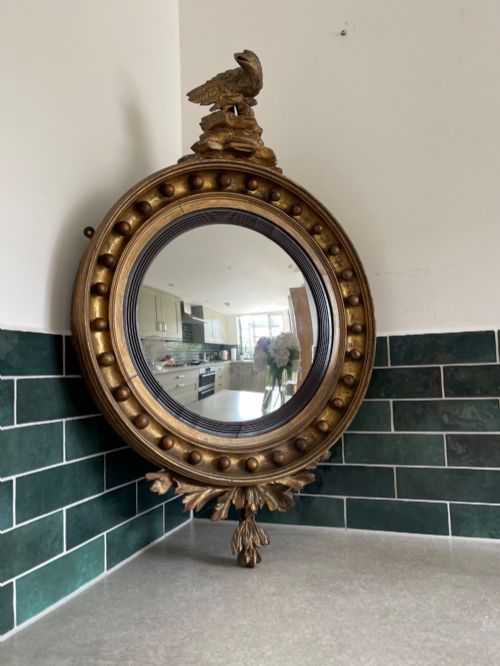
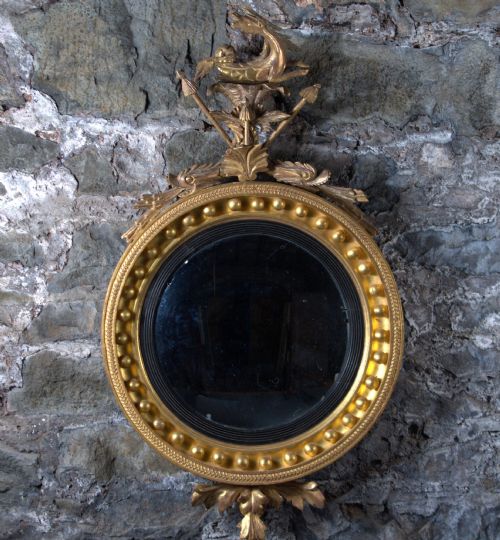
Makers often topped these wall mirrors with decorative crested animals, such as an eagle or a dragon, while others kept the moulded frame plain or added an ebonised inner slip. Scale ranges from compact boudoir pieces to grand hanging glasses spanning several feet across.
Materials and construction
The construction relies heavily on timber, gesso, and applied gold leaf to create the characteristic bright finish of a round gilt convex mirror. Carved gesso over a wooden core allows for intricate surface moulding, particularly on the prominent ball-studded bezels and crests.
Reflecting plates are curved rather than flat, traditionally blown or ground to produce the distinctive bulging glass that gives these objects their alternative bull's-eye designation. Ebonised wood slips often sit immediately against the mirror glass to provide a dark optical contrast to the surrounding gilding.
Early owners hung convex mirrors in dining rooms so servants could monitor diners' needs across the table without turning around.
Qualities that distinguish examples
The definition and depth of the carved gesso ornamentation separate standard production from finer work on a round gilt convex mirror. Crisp detailing on eagle crests, acanthus leaves, and spherical frame studs indicates skilled hand craftsmanship rather than hurried moulding.
The condition of the original gilding and the clarity of the convex glass plate heavily influence the character of the object. Subtly aged gold leaf and undisturbed mirror plates retain a softer visual depth than heavily restored surfaces.
Coalbrookdale
The Round Gilt Convex Mirror Glossary
- Convex glass
- Curved outward like the exterior of a sphere, this glass bends light to produce a wide-angle reflection of the interior space.
- Giltwood
- Timber coated with a thin layer of gold leaf over a prepared gesso ground. It provides a bright, reflective surface that catches room light.
- Ebonised slip
- A thin dark moulding positioned between the frame and the glass. This dark border frames the reflection and contrasts with the gold exterior.
- Gesso
- A plaster mixture applied to wood frames to build up surfaces for carving and gilding. It holds sharp detail when dry.
- Bulls eye
- A traditional term for circular convex mirrors derived from the resemblance of the glass to the centre of a blown glass pane.
Round Gilt Convex Mirror: Frequently Asked Questions
Where should I hang a round gilt convex mirror?
These mirrors function best on primary walls where they can reflect the entire space opposite them. Placing them directly across from a window or architectural feature maximises the wide-angle view.
Because of their optical distortion, they suit hallways, living rooms, and dining spaces rather than areas used for close grooming.
How do I date a round gilt convex mirror?
Dating relies on examining the construction methods of the wooden frame, the composition of the gesso, and the characteristics of the mirror plate. Early nineteenth-century examples often feature hand-carved wooden details and heavy plaster mouldings.
Later Victorian and Edwardian revivals tend to use machine-turned elements or simpler plaster compositions beneath the gold leaf.
Why do some mirrors have eagles on top?
The eagle surmount was a popular neoclassical motif during the Regency period, often symbolising watchfulness and imperial power. These birds were carved from wood or cast in gesso and perched atop the circular frame.
Not all models include this feature; many surviving examples are plain circular frames designed without crests.
How do I clean an antique convex mirror?
Dusting the frame gently with a soft dry brush preserves the delicate gesso and gold leaf. Moisture can damage old gilding and seep under the edges of the glass.
Glass cleaner should be applied sparingly to a cloth rather than sprayed directly onto the plate to protect the antique backing.