

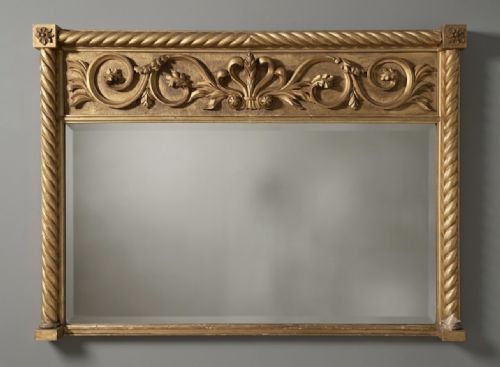
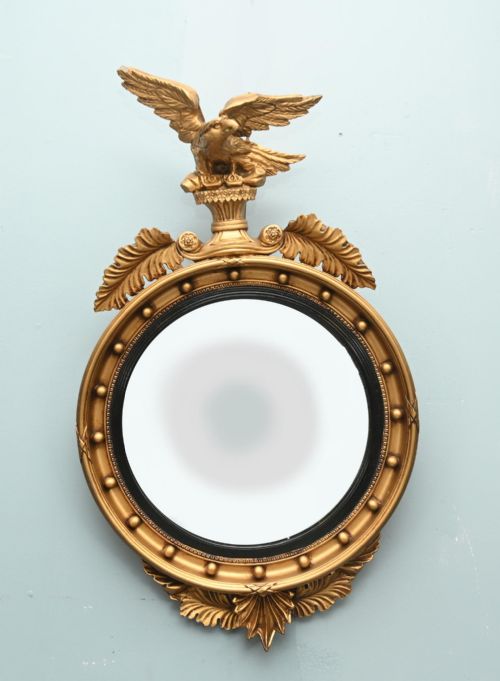


Regency Revival Gilt Mirror
A regency revival gilt mirror brings classic neocalassical proportion and radiant reflection to an interior.
Regency Revival Gilt Mirror
A regency revival gilt mirror draws on the design vocabulary of the early nineteenth century, combining classical restraint with bold decorative accents. When searching for a regency revival gilt mirror, buyers encounter wall mirrors, overmantel mirrors, and pier mirrors framed in gilded timber.
The selection ranges from authentic nineteenth-century pieces to later revival interpretations dating into the twentieth century. Forms include triptych overmantels, convex plates, and rectangular frames ornamented with columns or classical motifs.
Assessing quality
Quality rests in the crispness of the carved ornament and the depth of the gilding, where finer examples display sharp detail in the gesso and woodwork. The condition and clarity of the mirror glass also contribute significantly to the character of the piece.
The integrity of the frame construction and the subtlety of the classical detailing separate superior pieces from simpler utilitarian items. Original surfaces and period materials hold greater appeal for collectors seeking period authenticity.
Regency Revival Gilt Mirror Retail Price Guide 2026
Typical asking prices for regency revival gilt mirror among the pieces listed under this phrase on Sellingantiques today, from the lower quarter to the upper quarter. They describe what is for sale here now, not the wider market.
Materials recorded across the inventory include glass, giltwood, gesso, ebonised wood, gold leaf, mirror glass, walnut, and mahogany.
Sir Willian Trotter·Town and Emanuel
The Regency Revival Gilt Mirror Glossary
- Giltwood
- Timber that has been coated with gold leaf or a gold-coloured finish. This material forms the primary visual frame for the mirrors.
- Gesso
- A plaster-like mixture applied to wood frames to create a smooth surface for carving and gilding. It allows for intricate decorative mouldings.
- Convex mirror
- A round mirror with a curved glass plate that provides a wide-angle reflection of the room. These are frequently framed with gilt balls and ebonised bezels.
- Overmantel mirror
- A large mirror designed to hang specifically above a fireplace mantelpiece. They often feature horizontal triptych formats.
- Pier mirror
- A tall, narrow mirror made to hang on the wall space between windows. They frequently accompany console tables in period interiors.
Regency Revival Gilt Mirror: Frequently Asked Questions
How do I hang a heavy overmantel mirror?
These substantial pieces require secure anchoring directly into structural wall studs using heavy-duty brackets. Professional installation is strongly recommended due to the combined weight of the wood, gesso, and glass.
Ensure the hanging wire or fixing plates match the weight distribution specified for the mirror frame. Positioning the piece at the correct height above a mantelpiece balances the visual proportions of the room.
Where should I place a convex mirror?
Convex mirrors excel in principal reception rooms, hallways, and dining spaces where their wide-angle reflection captures light from multiple sources. Placing them opposite a window maximises the illumination they project into the interior.
Because they project the entire room into a curved perspective, they function best on unobstructed walls. This allows the decorative gilt frame to serve as a distinct focal point.
How do I clean a gilded wood frame?
Dust the surface gently using a soft, dry ostrich feather duster or a clean artist's paintbrush. Avoid applying water, chemical sprays, or abrasive cloths to the gilded areas, as moisture lifts the delicate gold leaf.
Preserving the original surface requires minimal intervention and careful handling. Professional conservators should address any flaking gesso or damaged gilding.
What defines the Egyptian revival style?
This design taste incorporates decorative motifs inspired by ancient Egyptian architecture, such as sphinxes, winged sun discs, and distinctive columns. It emerged during the early nineteenth century as part of the broader neoclassical movement.
Mirrors from this tradition combine classical architectural symmetry with exotic symbolic ornamentation. The resulting pieces offer a striking contrast to standard Regency furnishings.