



Georgian Eagle Convex Mirror
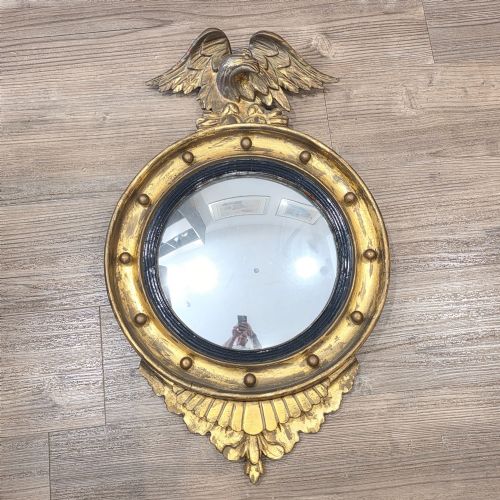
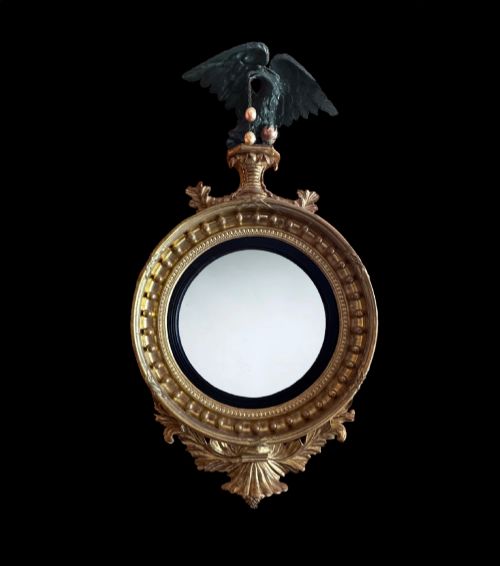
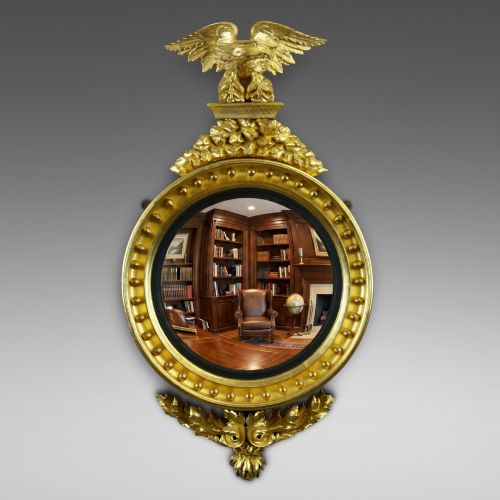
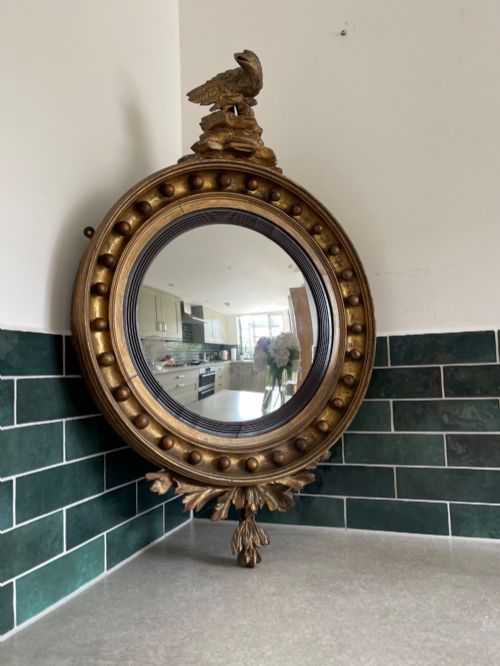
A georgian eagle convex mirror is a bold circular wall glass that distorts a wide room, prized for its fierce carved bird crest.
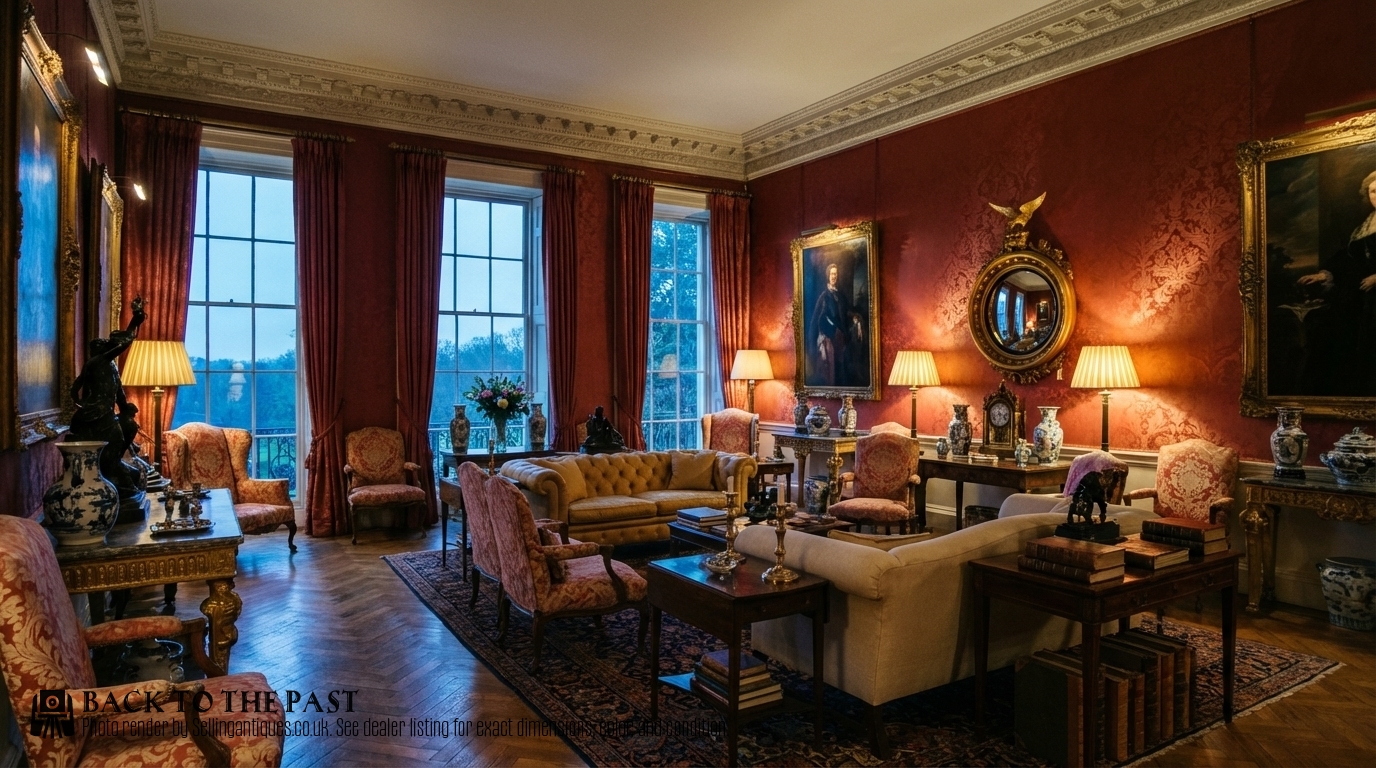
Georgian Eagle Convex Mirror
Buyers seeking a georgian eagle convex mirror encounter circular wall mirrors dominated by Regency, Georgian, and 19th Century pieces. Many examples feature a large spread eagle perched upon the top, while others take the form of a girandole with candle sconces attached.
The dominant forms span from smaller domestic glasses to large wall mirrors dated around 1800, 1820, and 1860, alongside later Victorian and 19th Century variations. These circular plates capture the entire width of an interior, framed in gilded timber.
Most pieces date to the Regency period and carry carved details such as balls within the frame and reeded ebonised slips. The eagle motif stands sentinel at the summit, defining the classic silhouette of the type.
Materials and Construction
Makers constructed these circular frames from timber, applying gesso to model crisp surface ornament before gilding the surface in gold leaf. Ebonised wood often appears on the inner reeded slip, providing a sharp contrast to the bright exterior gilding.
Mirrored glass provides the characteristic curved reflecting surface, sometimes paired with brass candle arms on girandole variants. Crystal elements occasionally dress the sconces, hanging to catch the flicker of candlelight.
Listings feature giltwood, ebonised wood, gesso, and brass across Regency, Victorian, and Georgian periods.
Judging Quality and Craftsmanship
The crispness of the carved woodwork separates superior examples from ordinary production, particularly in the rendering of the spread eagle's plumage and wings. A master carver achieved a dynamic, sculptural tension that lesser hands missed.
The quality of the gilding and the depth of the convex glass plate determine visual impact, with older curved glass displaying characteristic subtle distortions. The integration of the carved crest with the circular frame shows whether the piece was planned as a unified whole.
The Georgian Eagle Convex Mirror Glossary
- Convex mirror
- A circular wall glass with a curved plate that reflects a wide, fish-eye view of the interior. These pieces were historically placed in drawing rooms to monitor guests.
- Giltwood
- Timber coated with fine gold leaf applied over a prepared gesso ground. This finish creates the bright metallic lustre seen on traditional frames.
- Gesso
- A plaster-like mixture of chalk and binder applied to wood frames and carved to form crisp decorative details before gilding. It allows for sharp relief work.
- Girandole
- A wall mirror fitted with one or more candle branches attached to the frame. The arms multiply the candlelight within the room.
- Ebonised wood
- Timber stained or treated to imitate dense, black ebony. It appears on the inner rings of these circular frames.
Georgian Eagle Convex Mirror: Frequently Asked Questions
Where should I hang a convex mirror?
These mirrors suit principal reception rooms and hallways where they can capture a wide perspective of the space. Position them at eye level to draw the eye and open up narrow walls.
Because the curved glass shrinks the reflection, place the glass opposite a window or doorway to pull natural light and movement deeper into the interior.
What is a girandole mirror?
A girandole is a wall mirror equipped with attached candle arms that project from the base of the frame. These brass sconces held candles to multiply light.
They were designed for elegant entertaining, reflecting the glowing flames across the curved glass plate to illuminate darker corners of Georgian drawing rooms.
How can I tell a Regency piece from later work?
Regency and Georgian examples exhibit hand-carved wooden frames beneath the gesso, showing distinct tool marks and natural material shrinkage over two centuries. The weight and density of the timber also point to earlier construction.
Later Victorian or 20th-century reproductions often rely on moulded composition ornaments rather than deeply undercut wood carving, lacking the sharpness of the original period.