



Antique Church Pricket Pair
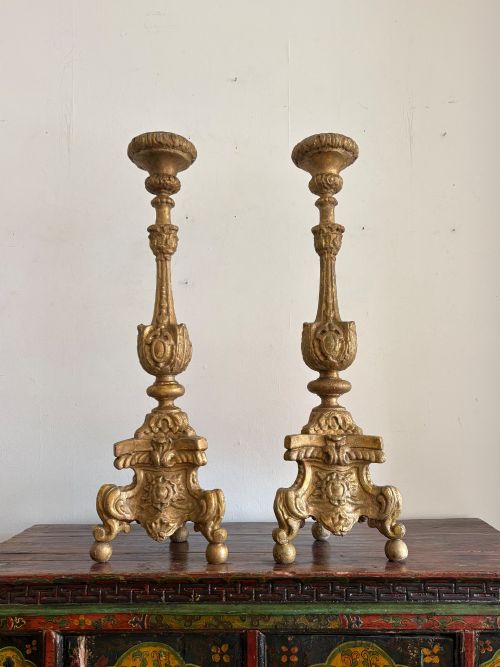
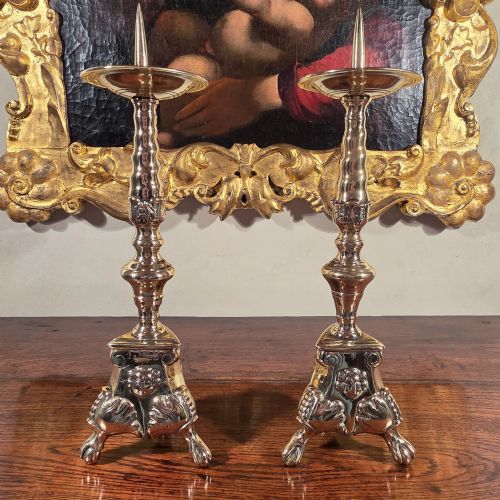
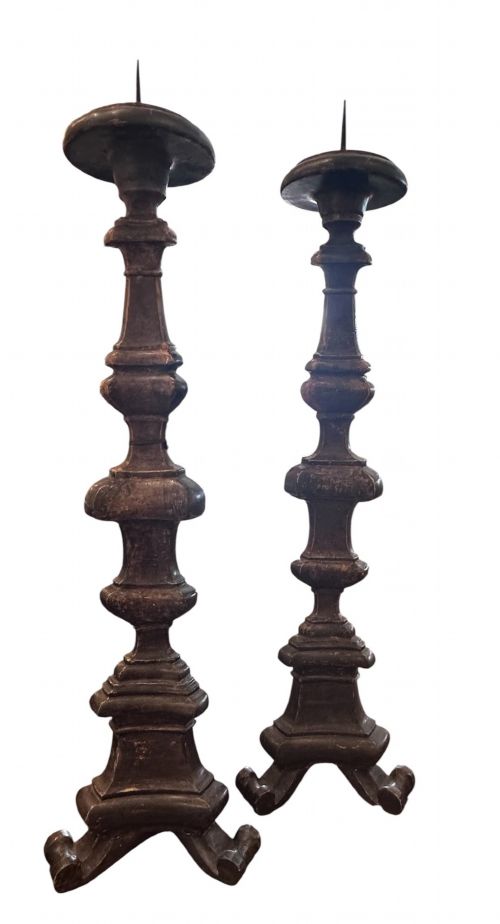
An antique church pricket pair offers the altar-bound presence of spiked altar candlesticks, fashioned to hold large candles in ecclesiastical settings.
Antique Church Pricket Pair
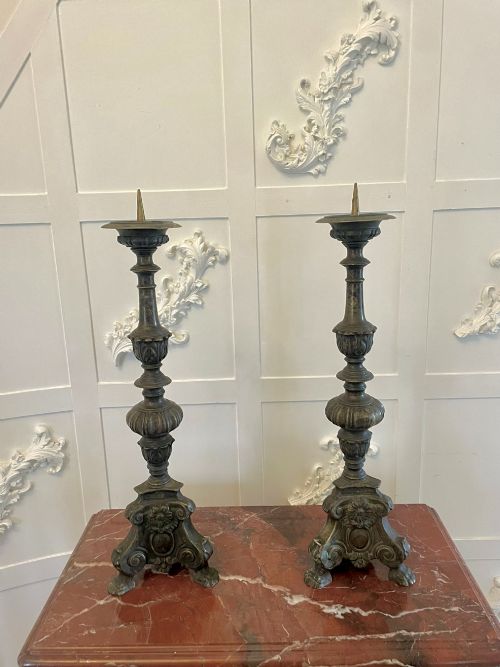
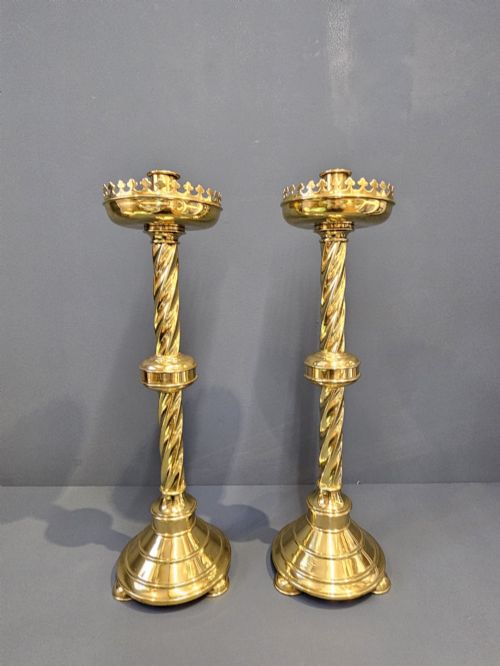
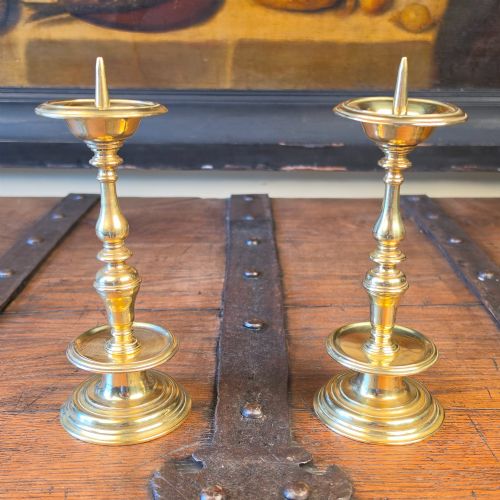
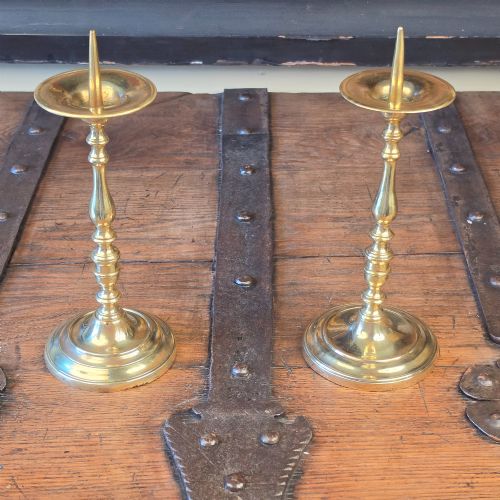
An antique church pricket pair comprises tall altar candlesticks designed with a central vertical spike rather than a socket to secure heavy wax candles. These pieces emerge across periods spanning the seventeenth century through to the Edwardian era, reflecting both continental liturgical traditions and British ecclesiastical revivals.
The selections on this page centre on substantial floor and altar forms, appearing in brass, bronze, carved wood, and giltwood. Styles range from strict seventeenth-century baroque interpretations and Italian Venetian models to ornate Victorian Gothic revival designs and Amsterdam School variations.
How they were made
Makers shaped structural elements from cast brass, heavy bronze, and wrought iron, alongside carved wooden frames finished with gesso, paint, silver leaf, or giltwood. Metal components often display the casting marks and patination of period foundry work, whilst wooden counterparts rely on skilled joinery and surface gilding.
Surface treatments combine burnished metal polishes with layered metallic leaf and decorative pigments to achieve the rich visual weight required for church interiors.
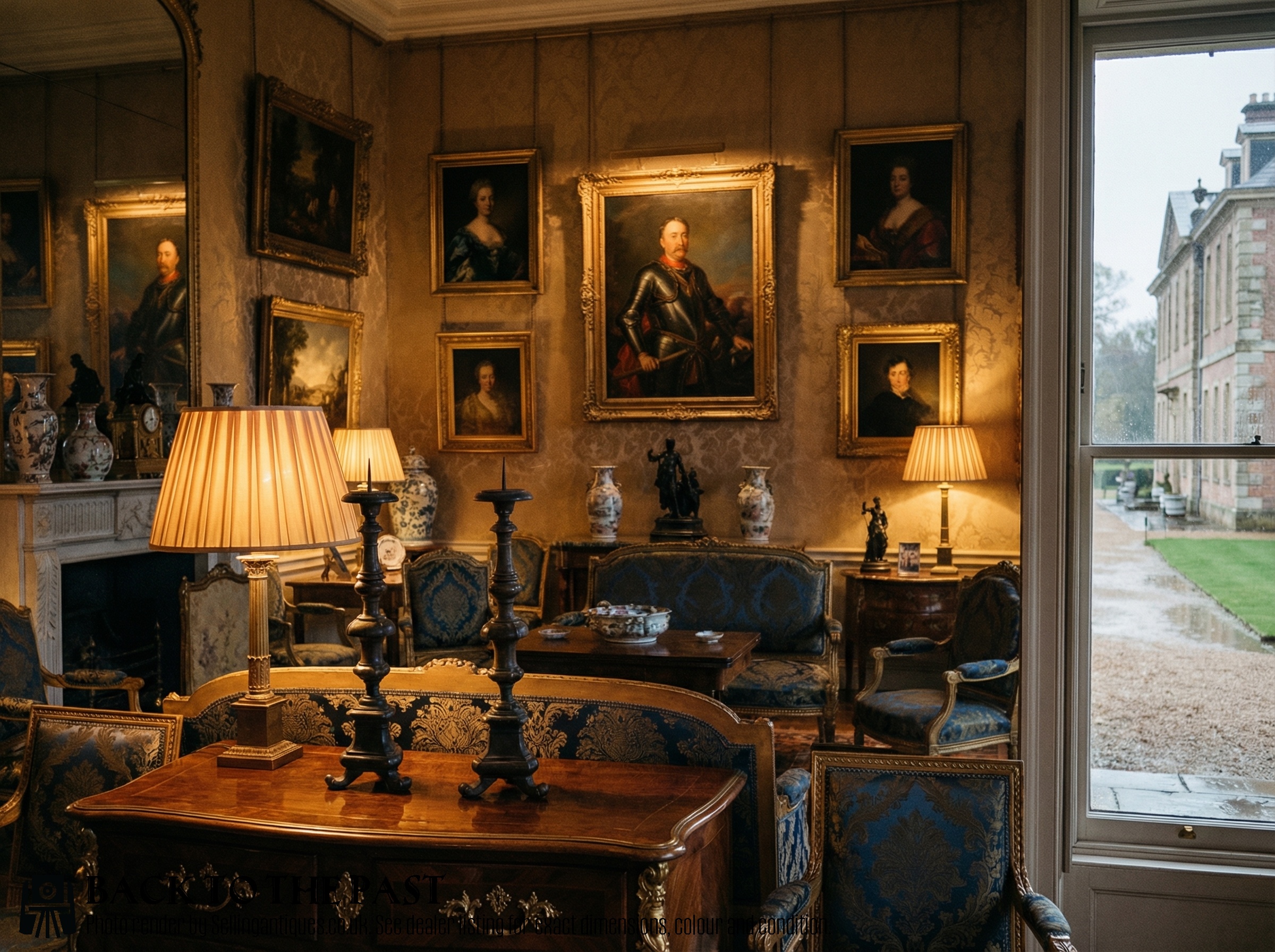
Some tall altar pieces possess enough height to double as surprisingly stern reading lamps.
What varies in quality
Quality rests in the crispness of the casting detail, the proportional harmony of the stem and base, and the integrity of the original surface finishes such as gilding or silvering. Superior examples maintain structural balance despite substantial height, avoiding clumsy replacements to the central pricket spike or base mountings.
The distinction between standard production and exceptional craftsmanship lies in the depth of hand-carving on wooden altar pieces or the substantial gauge and heavy weight of brass and bronze castings.
The Antique Church Pricket Pair Glossary
- Pricket
- A sharp metal spike atop a candlestick designed to impale the base of a large candle and hold it upright. This form predates standard socket holders in ecclesiastical use.
- Giltwood
- Wood that has been coated with a thin layer of gold leaf or gold paint over a prepared gesso ground. It provides a luminous surface for altar furnishings.
- Mecca
- A traditional Italian silver-and-gold varnish applied over silver leaf on wood to simulate rich gilt or antique metal. This technique creates a warm, aged tone on carved altar sticks.
- Gothic Revival
- An architectural and decorative style popular during the nineteenth century that revived medieval forms, pointed arches, and ecclesiastical motifs. It heavily influenced Victorian church metalwork.
- Baroque
- An ornate artistic style characterised by dramatic curves, rich surface decoration, and grand scale. Seventeenth and eighteenth-century examples display this theatrical presence.
Antique Church Pricket Pair: Frequently Asked Questions
What is a pricket candlestick?
A pricket candlestick uses an upright metal spike to hold a candle instead of a conventional cup or socket. This design allowed churches to burn large, thick wax pillars securely during services.
Over centuries, the spiked top remained a traditional feature for altar lighting long after domestic interiors shifted to socket designs.
How were these used in church settings?
These large candle holders stood upon altars or sanctuary floors to provide ceremonial illumination during liturgical services and masses. Their substantial height ensured they commanded visual attention within large sacred spaces.
Pairs were positioned symmetrically to flank crosses, reliquaries, or other central altar ornaments.
How do I date an antique pair?
Dating relies on examining the combination of materials, construction methods, and stylistic cues such as Gothic revival motifs or baroque proportions. Metal casting textures and the wear patterns on giltwood or silver leaf also indicate the period of origin.
Comparing structural joints and base configurations helps distinguish seventeenth-century originals from nineteenth-century revival interpretations.
How do I care for wooden and metal prickets?
Metal components require gentle dusting and occasional cleaning without harsh chemical polishes that strip historical patina. Giltwood and silvered surfaces need protection from direct moisture and strong sunlight to preserve the delicate leaf layers.
Using fitted drip protectors prevents modern wax from accumulating on antique wooden or metal bases during use.