




French Church Candle Holders
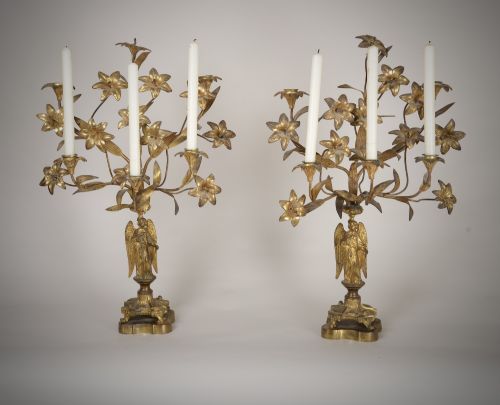
These French church candle holders bring ecclesiastical history into domestic rooms, offering weathered metals and carved giltwood suited for atmospheric interiors.
French Church Candle Holders
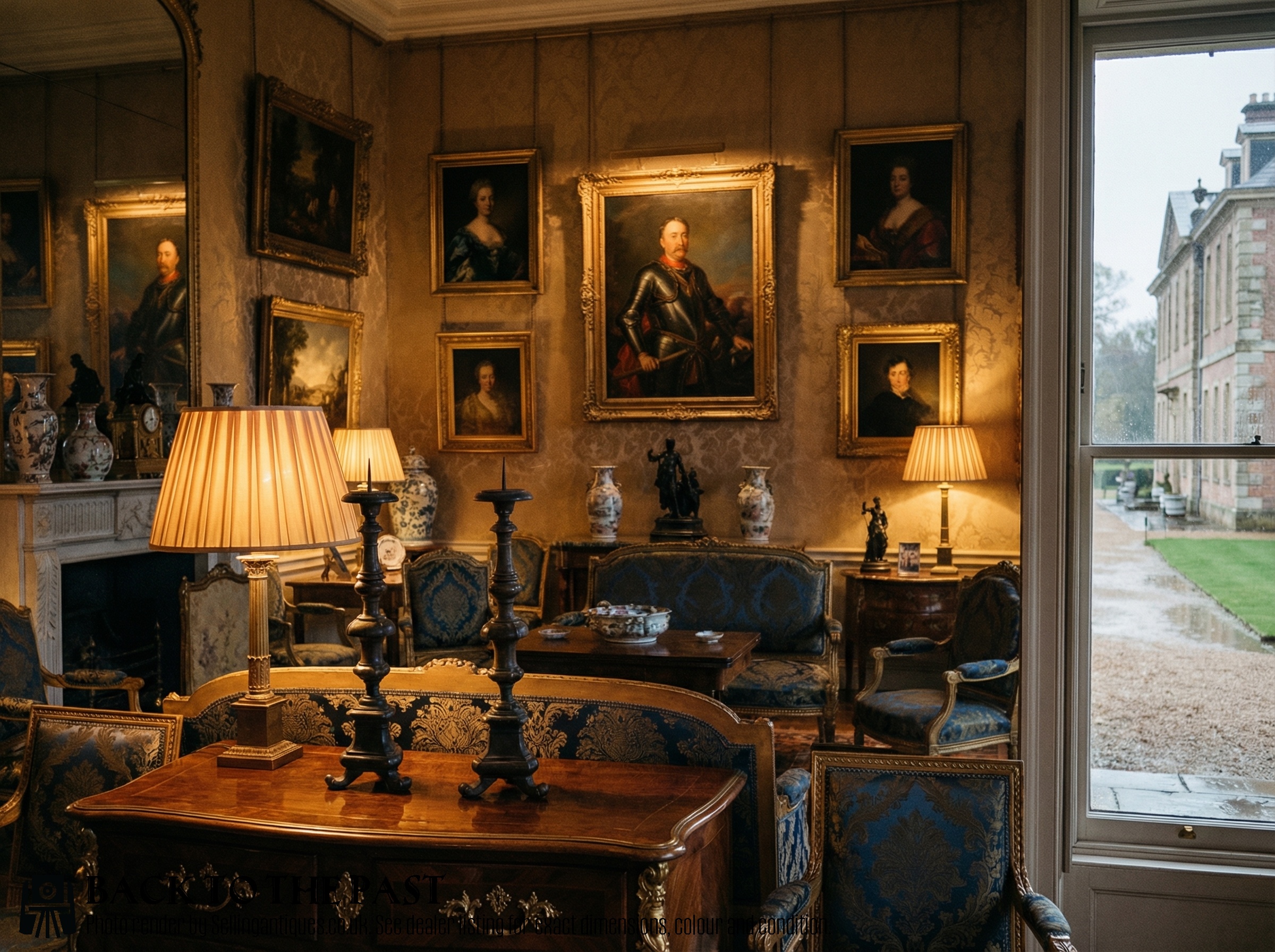
When you search for French church candle holders, you are looking at items designed for altars and sanctuaries that now serve as decorative objects in homes. The pieces available here span from the eighteenth century through to the early twentieth century, reflecting various ecclesiastical shifts.
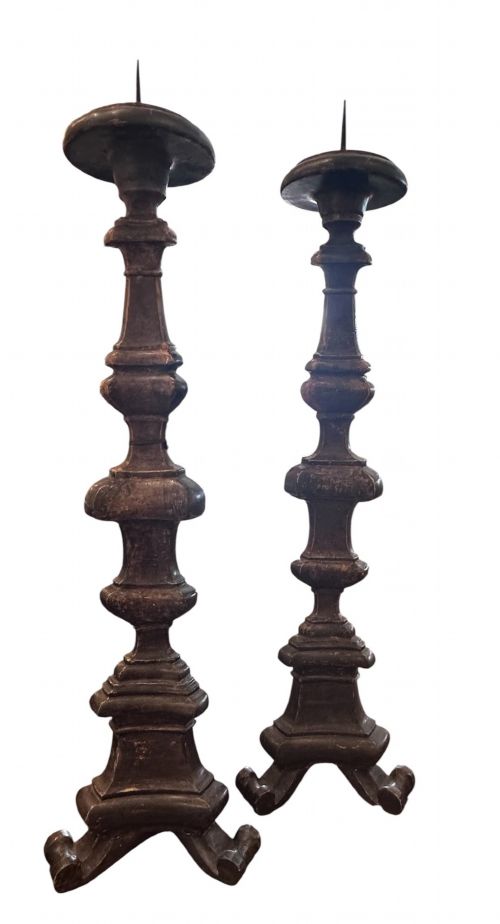
You will most commonly encounter candlesticks, prickets, and table lamps converted from older altar pieces. Forms range from single pricket sticks to pairs of candlesticks and larger candelabra.
The aesthetic leans heavily on historical church design, encompassing styles such as Gothic revival, Baroque, and French neoclassical. These objects often bear the physical marks of decades of use in religious settings.
Materials and construction methods
Many wooden pieces are finished with silver leaf or gold gilding over gesso, a technique that gives them a luminous quality when catching ambient light. Heavier items incorporate cast bronze and brass components designed to support large candles safely on altars.
Several pieces still bear the invisible ghosts of ancient wax drippings from long-forgotten Sunday services.
Distinctions in quality and execution
Quality reveals itself in the crispness of the wood carving and the depth of the original gilding rather than the mere presence of decoration. Pieces that retain their authentic surface texture without heavy modern restoration stand out from later adaptations.
Proportion and balance also dictate the standing of a piece, with finer examples displaying harmonious symmetry in their turned bases and drip pans. The integrity of the materials, whether solid carved wood or substantial cast metal, marks the difference between standard items and superior ones.
The French Church Candle Holders Glossary
- Pricket
- A candlestick featuring an upward-facing metal spike designed to secure a wax candle rather than a socket that holds it. This traditional form is frequently found on older altar pieces.
- Giltwood
- Timber that has been coated with a thin layer of gold leaf over a prepared base such as gesso. It provides a rich, reflective surface that mellows gracefully over time.
- Candelabra
- A branched candlestick or lamp base designed to hold multiple candles simultaneously. These offer a more substantial visual presence than single sticks.
- Gesso
- A plaster mixture applied to wood surfaces as a smooth base for gilding or painting. It allows intricate relief work to be carved before the application of gold or silver leaf.
French Church Candle Holders: Frequently Asked Questions
How were these used?
These items stood upon church altars and within chancels to hold candles for liturgical services and prayers. They provided essential illumination and added solemnity to religious ceremonies.
Over time, many have transitioned from places of worship into domestic settings, serving as decorative accents or converted into functional lighting fixtures.
How do I clean giltwood?
Dust giltwood gently with a soft, dry brush to prevent damage to the delicate metallic leaf and underlying gesso. Avoid using water, chemical cleaners, or abrasive cloths entirely.
Preserving the aged surface requires minimal intervention, as the natural patina contributes significantly to the character of the object.
Are these safe for modern candles?
Pricket sticks require candles with a pre-drilled base to fit securely onto the upward-facing metal spike. Care must be taken to catch dripping wax to protect surfaces.
Many examples listed now have been adapted as table lamps, removing the need for open flames while retaining the sculptural base.
How do I date them?
Dating relies on identifying stylistic markers such as Baroque curves, Gothic revival pointed arches, or neoclassical symmetry. Tool marks and the wear patterns on the wood and metal also offer clues to age.
Comparing the construction methods to known periods helps place the piece within the eighteenth or nineteenth centuries.