




Tall Wooden Pricket Stands
Tall wooden pricket stands bring vertical drama and centuries of continental candle-burning history into a room.
Tall Wooden Pricket Stands
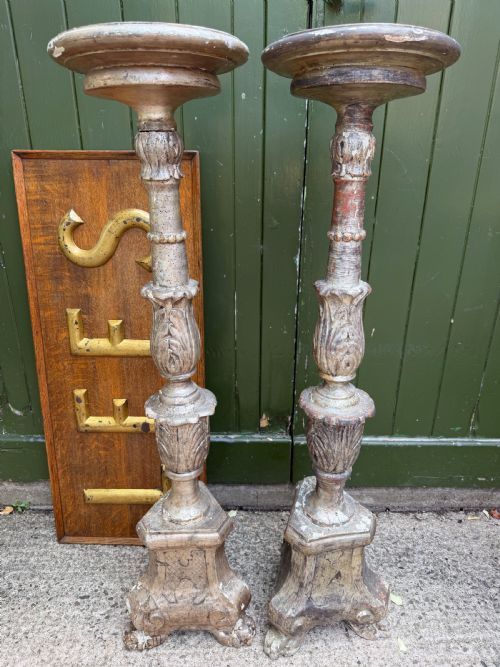
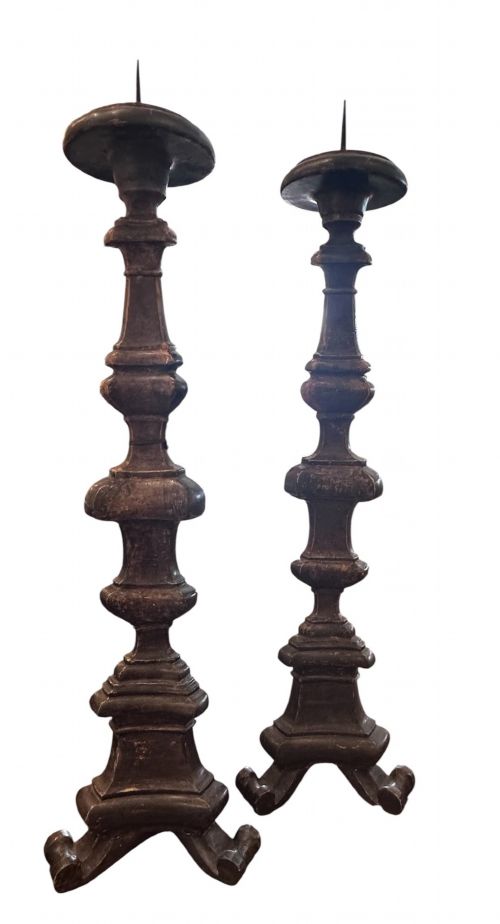
Tall wooden pricket stands encompass altar-style candle-sticks, torcheres, candle holders, and standard lamps originating mainly from the eighteenth and nineteenth centuries. These pieces carry strong stylistic links to Italian Baroque, Italian Neoclassical, and French Chateau traditions.
A buyer seeking tall wooden pricket stands will most frequently encounter carved wooden pieces finished with giltwood, silver leaf, gesso, paint, or iron details. Forms range from monumental pairs of church-style candle-holders to converted standard lamps and individual torcheres.
How they were made
Carved pinewood and hardwood form the structural core of these stands, shaped by hand into ornate scrolls, fluted columns, and baroque profiles. Artisans built up surface texture using layers of gesso before applying fine metallic finishes.
Giltwood, silver leaf, and polychrome paint impart the characteristic rich surface sheen seen across Italian and French examples. Iron and brass components occasionally provide structural reinforcement or functional pricket spikes for supporting large candles.
Some tall stands spent centuries holding altar candles before quietly retiring to live life as electrified floor lamps.
What varies in quality
The depth, crispness, and artistic confidence of the hand carving dictate the visual impact of each stand. Vigorous baroque scrolls and finely articulated foliage separate masterwork altar pieces from simpler decorative interpretations.
The integrity of the original surface finishes - whether patinated giltwood, silver leaf, or polychrome paint - shapes the overall character. Surviving historical surfaces with honest wear hold greater aesthetic cohesion than heavy later repainting.
The Tall Wooden Pricket Stands Glossary
- Pricket
- A metal spike on top of a candlestick designed to hold a large candle in place. This traditional form is frequently found on altar-style sticks.
- Torchere
- A tall ornamental stand or candlestick designed to elevate a light source. These pieces often feature slender columns or carved pedestal bases.
- Giltwood
- Wood that has been coated with gold leaf or a gold-coloured finish. This technique creates a luminous surface common in Baroque and Neoclassical design.
- Gesso
- A plaster-like mixture applied to wood as a smooth base for gilding or painting. It allows intricate relief details to be modelled before finishing.
- Polychrome
- Decorated in multiple colours. This surface treatment adds visual depth and realistic detail to carved wooden figures and architectural motifs.
Tall Wooden Pricket Stands: Frequently Asked Questions
Where were these stands used originally?
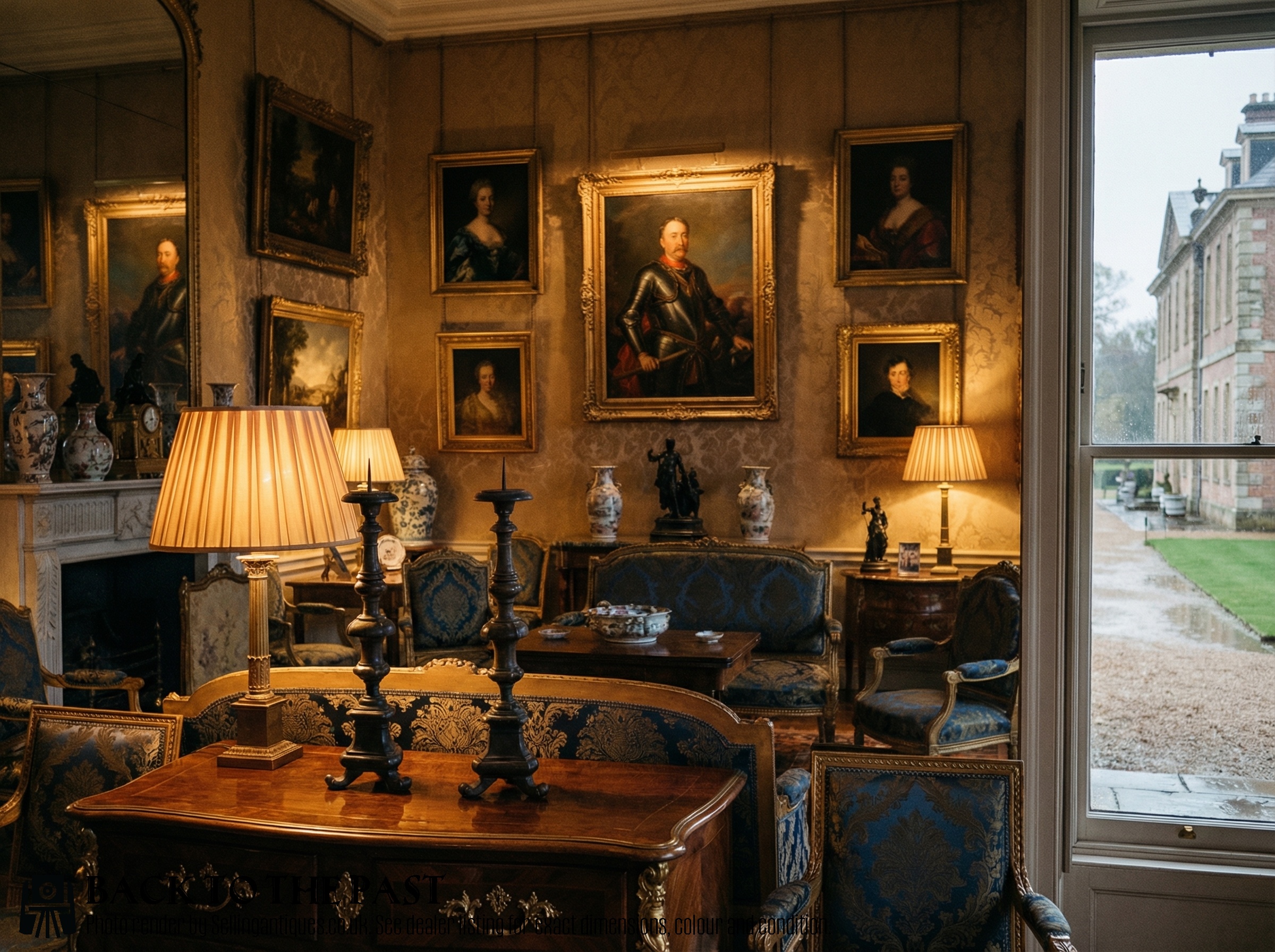
These tall stands primarily served ecclesiastical roles on altars or illuminated grand domestic interiors in Italy and France.
Their commanding height ensured light reached across large ecclesiastical spaces and stately rooms during the eighteenth and nineteenth centuries.
Can modern candles be used safely?
Most pricket stands feature an upward-pointing metal spike that requires a candle with a hollow base or drilled centre.
Using dripless candles or placing a protective disc beneath the spike helps protect the historical wood and gilt surfaces from wax damage.
How do I distinguish Italian from French pieces?
Italian pieces frequently display exuberant Baroque or Neoclassical carving with rich giltwood, silver leaf, and polychrome paint.
French equivalents often lean towards chateau-style elegance with refined proportions and decorative flourishes suited to sophisticated domestic interiors.
Are electrified standard lamps original?
Many tall stands were converted into standard lamps during the nineteenth or twentieth centuries to accommodate modern lighting.
These conversions utilise the original antique wooden shafts while adapting the top mechanism to hold electrical fittings and lamp shades.