


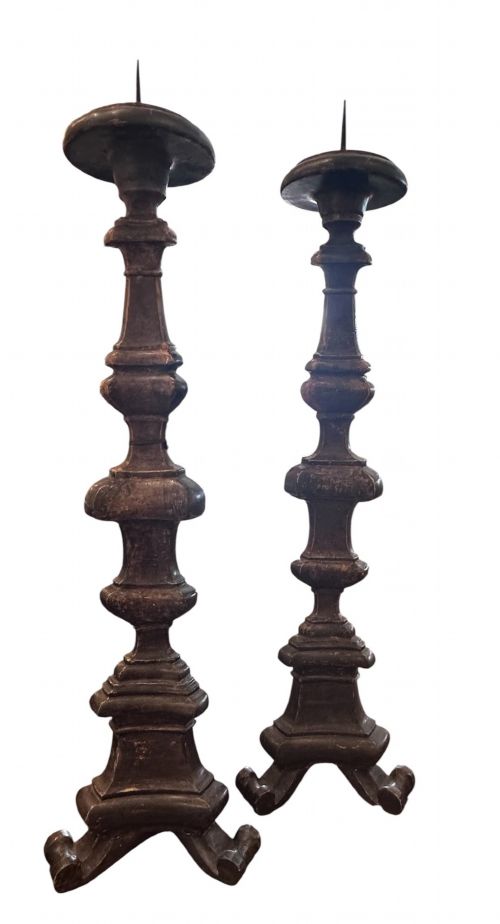


French Pricket Candlesticks
These French pricket candlesticks are architectural candle stands and altar lights that bring centuries of continental church craftsmanship straight into a room.
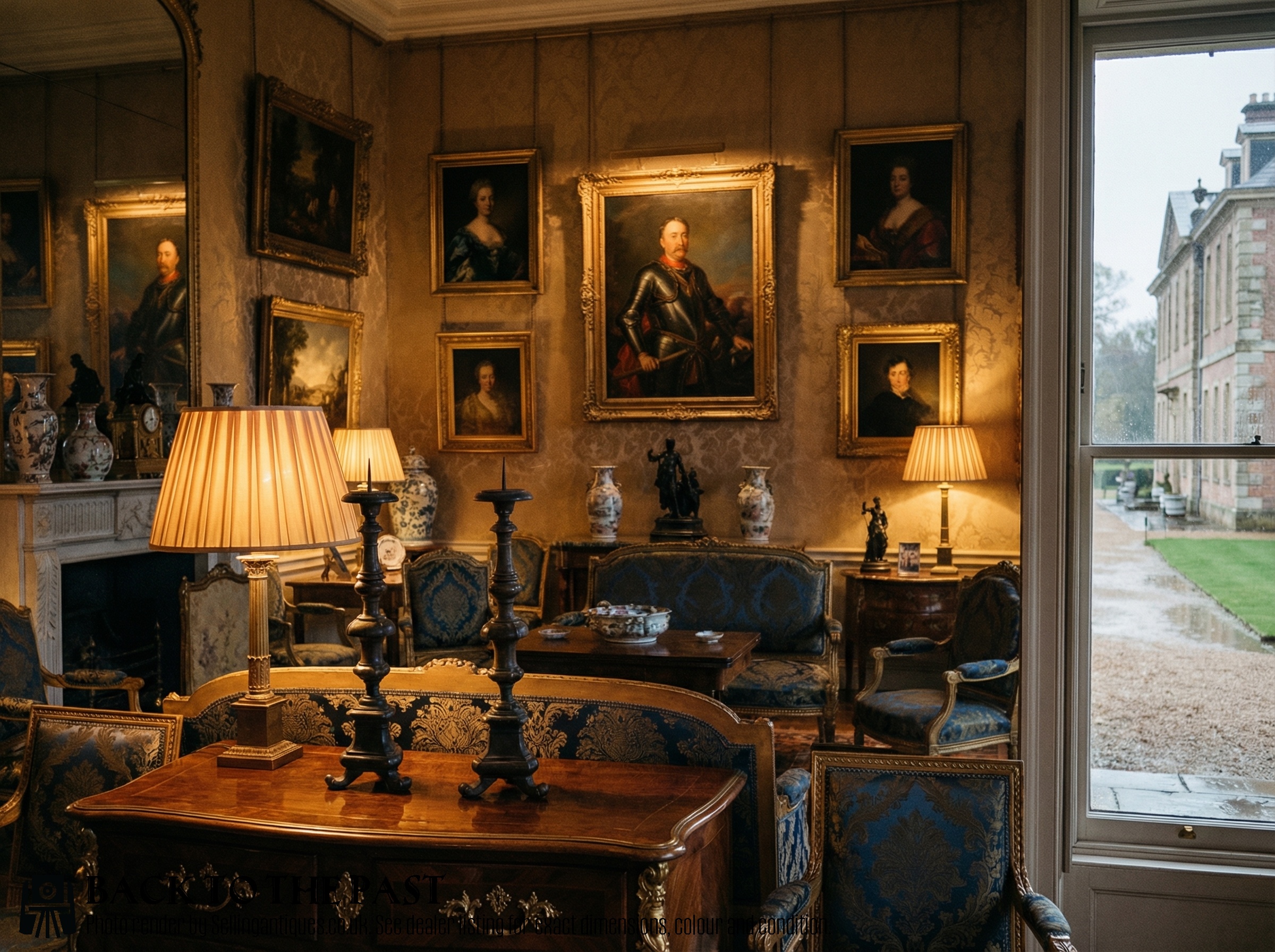
French Pricket Candlesticks
French pricket candlesticks are altar lights, pillar candlesticks, and church candle holders designed with a central upward spike instead of a socket to hold large wax candles securely in place. When exploring these listings, buyers encounter church brassware alongside carved timber, giltwood, and iron objects spanning several centuries.
The selections on this page range from heavy ecclesiastical brass and polished copper alloys to carved and giltwood forms reflecting French Chateau, Gothic Revival, and Baroque styles. Treen, gesso, and silver leaf finishes also appear among the wooden floor and table candlesticks.
Most examples date from the nineteenth century, though earlier sixteenth and eighteenth-century pillar variants occasionally surface alongside twentieth-century continental pieces. Buyers find individual items, matched pairs, and larger sets configured either as original candle stands or adapted into table lamps.
Materials and construction
Metal pieces rely on heavy brass, copper alloy, iron, and nickel plate, shaped through casting and turning to form sturdy ecclesiastical bases and drip pans. These metal components often exhibit polished finishes or patinated surfaces developed through generations of handling in churches and chapels.
Wooden examples utilise carved timber, treen, and gesso, finished with gold leaf, silver leaf, or giltwood applications to mimic solid precious metals. Artisans carved these structural pillars by hand, applying decorative gesso moulding and leaf layers over timber carcases.
Church brass candlesticks often hide centuries of ecclesiastical candle wax tucked deep inside their drip pans.
Defining quality and craftsmanship
Quality rests upon the crispness of the original cast brass or the depth of the hand-carved timber beneath the gilding. Finer pieces retain their original structural integrity, substantial weight, and genuine period surface patination without excessive modern intervention.
The distinction between standard workshop output and superior work involves the proportion of the pillar, the detailing of the drip pan, and the survival rate of the delicate gold or silver leaf layers.
The French Pricket Candlesticks Glossary
- Pricket
- A sharp metal spike on top of a candlestick designed to pierce the base of a thick candle and hold it upright. This medieval method preceded the standard candle socket.
- Giltwood
- Timber that has been coated with a thin layer of gold leaf or gold paint for decorative effect. It creates the appearance of solid gold while using a lighter wooden carcase.
- Gesso
- A plaster-like mixture applied to wood surfaces as a smooth base before gilding or painting. It allows artisans to carve fine decorative details onto a solid ground.
- Ecclesiastical
- Relating to the Christian Church or its clergy, describing items made specifically for use in chapels, cathedrals, and abbeys. These objects typically display formal religious iconography.
French Pricket Candlesticks: Frequently Asked Questions
What is a pricket candlestick?
A pricket candlestick is a lighting stand featuring an upward-pointing metal spike rather than a hollow socket. The base of the wax candle is pressed directly onto this spike to keep it stable.
This design originated in medieval churches for large altar candles and remained standard in ecclesiastical settings for centuries.
How were these candlesticks used?
These candlesticks were placed upon church altars, side tables, and floors to provide illumination during religious services and ceremonies. Sets of four were commonly used on larger altars for liturgical celebrations.
Over time, many ecclesiastical pieces transitioned into domestic settings for decorative display or conversion into lamps.
How do I date an antique candlestick?
Dating relies on examining the materials, casting methods, tool marks, and stylistic influences such as Baroque or Gothic Revival. Brass components often show sandy casting textures on earlier pieces, while wood carvings reflect period aesthetic trends.
Comparing the wear patterns and construction joints helps confirm whether a piece originates from the sixteenth, eighteenth, or nineteenth century.
Can converted lamp candlesticks be restored?
Many candlesticks on the market have been wired as table lamps, utilising the central channel or pricket base for electrical fittings. Restoration depends on whether the original wiring can be removed without damaging the underlying brass or timber structure.