
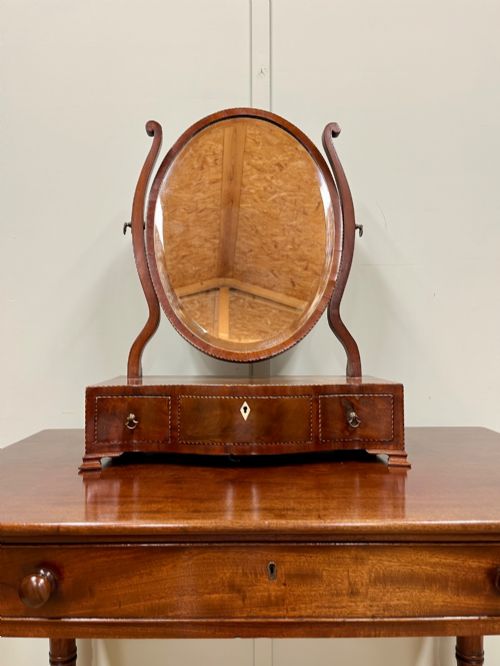
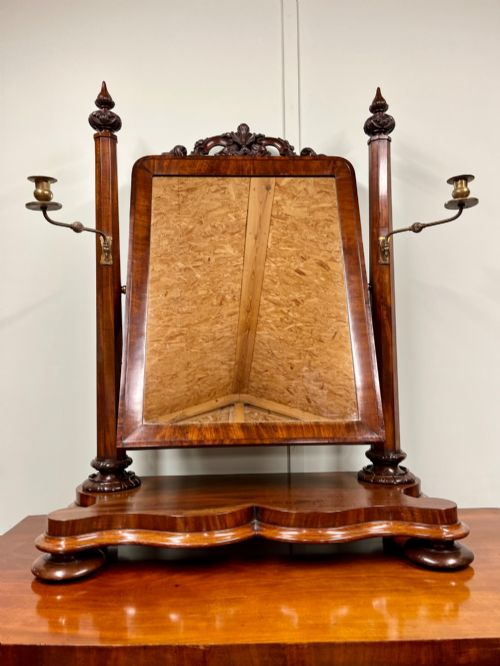
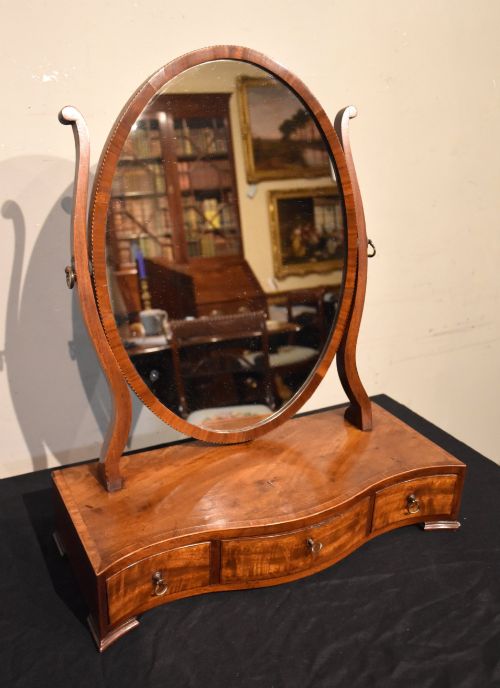
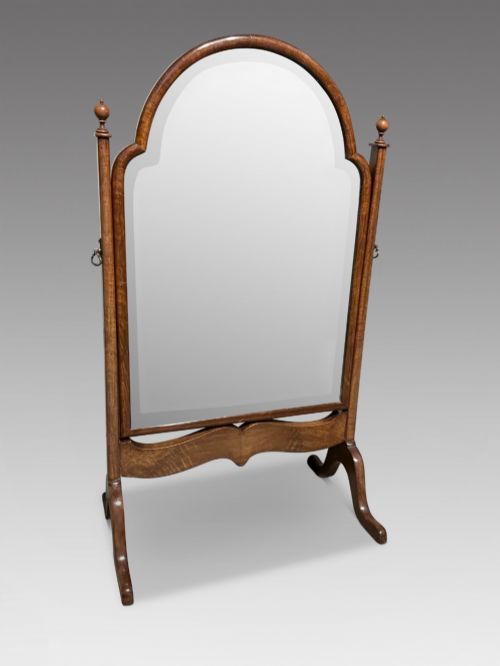

Antique Cheval Table Mirror
These antique cheval table mirrors bring practical elegance and adjustable reflection to dressing tables and chests of drawers.
Understanding the Antique Cheval Table Mirror
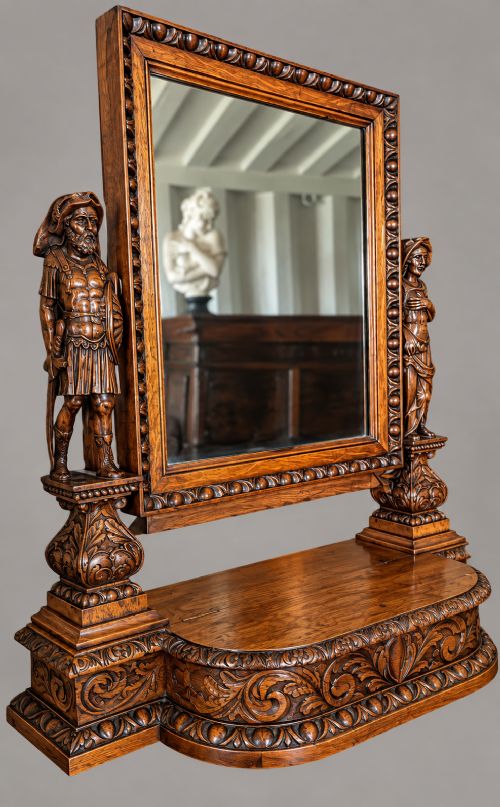
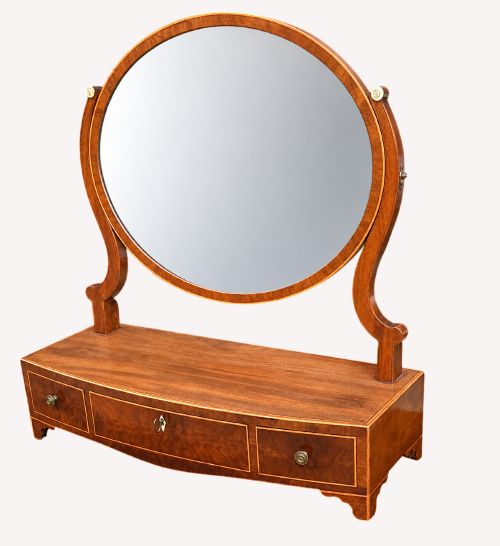
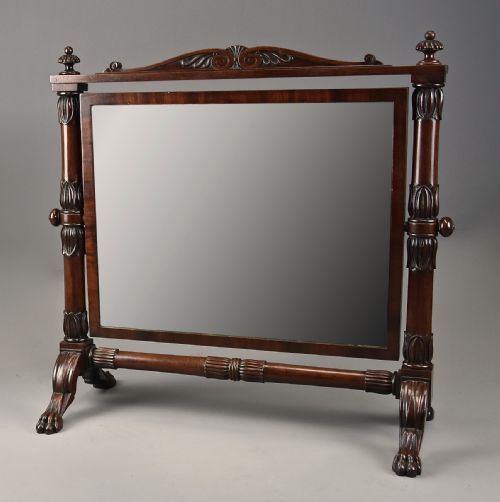
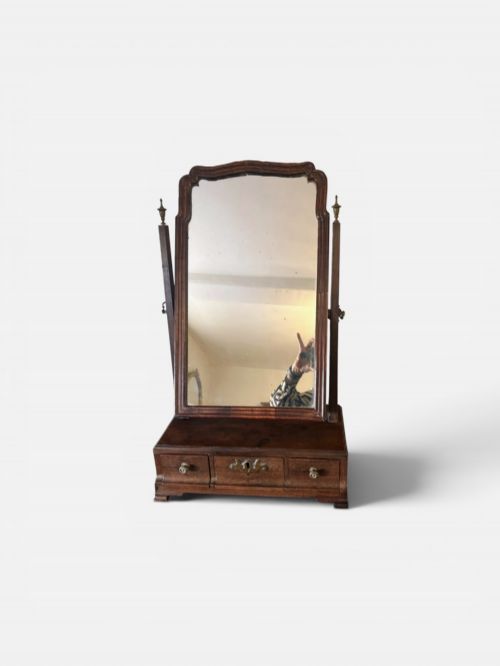
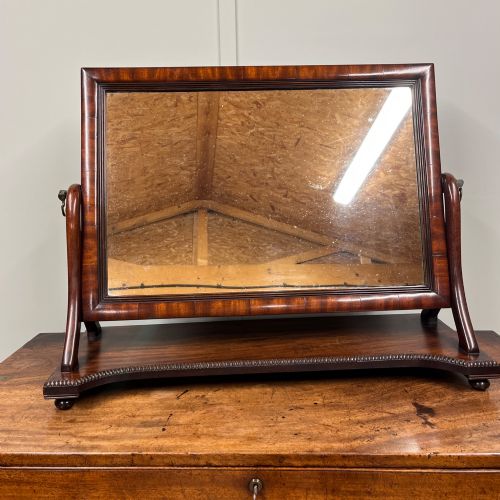
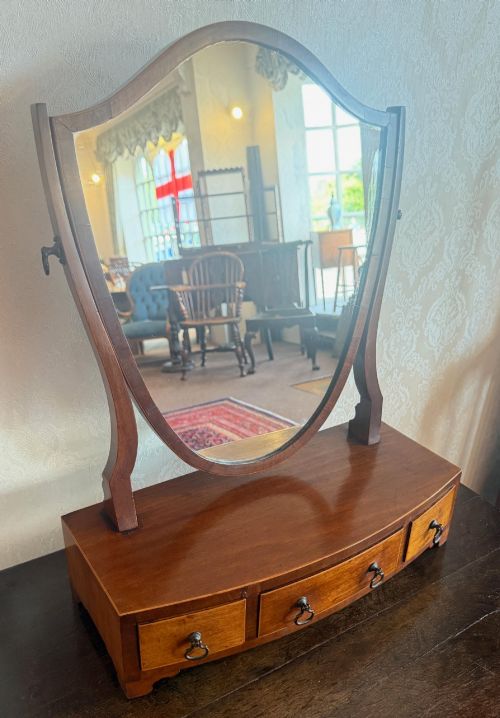
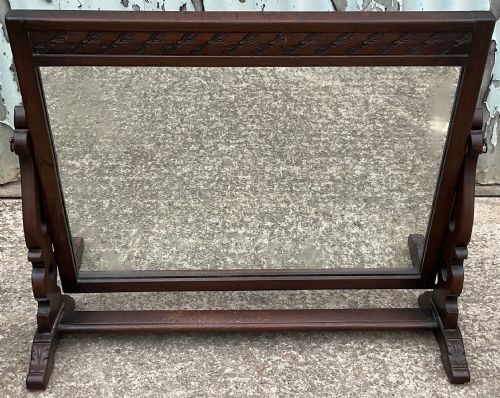
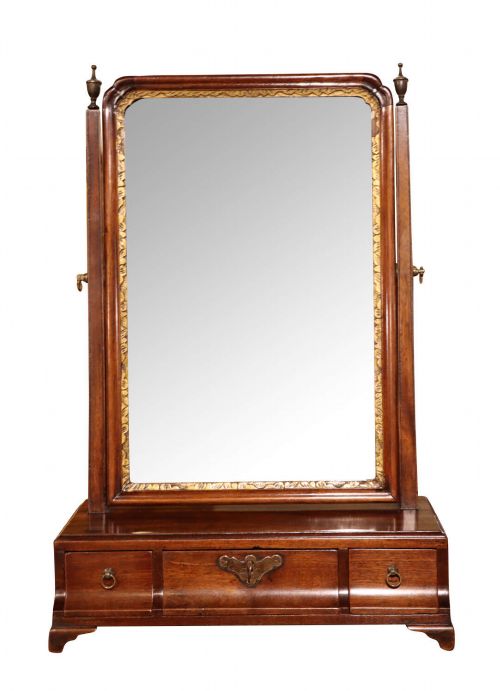
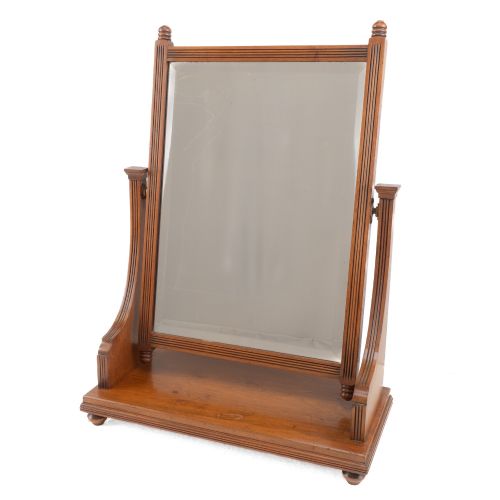
An antique cheval table mirror is a compact glass pivoting in an upright frame designed for tabletop placement. The pieces seen here span the eighteenth century, the nineteenth century, and the Regency period.
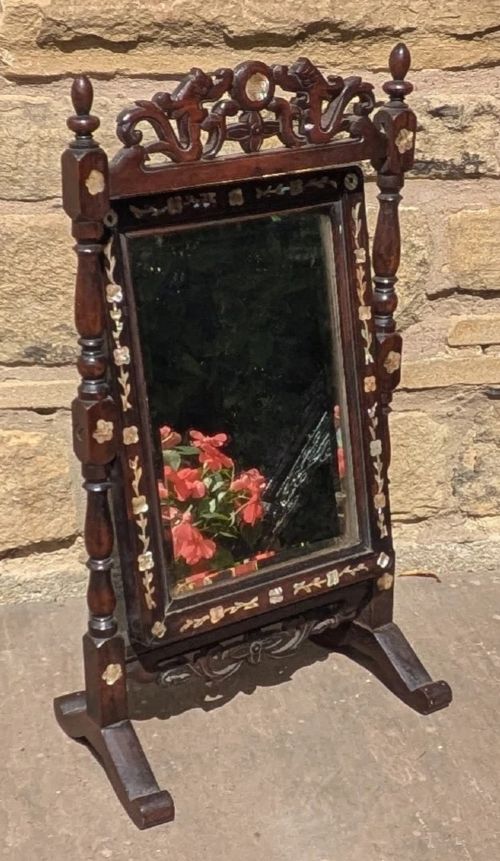
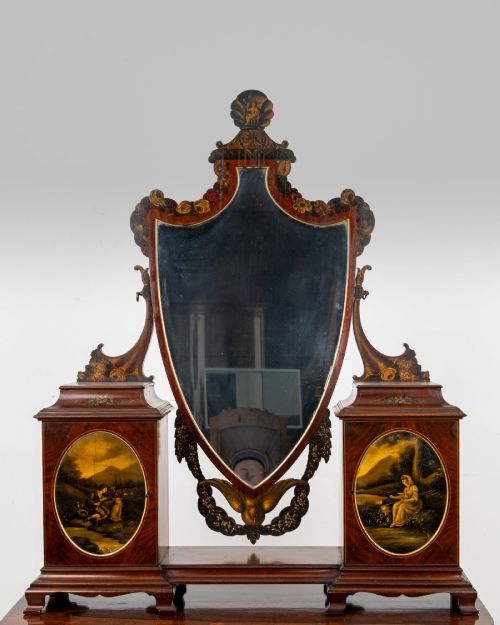
Makers produced these mirrors primarily as dressing mirrors, toilet mirrors, and dressing table mirrors. Mahogany forms the dominant material across the selection, accompanied by brass, mirror glass, giltwood, wood inlay, and bone.
Buyers encounter traditional Georgian and Victorian interpretations alongside Regency examples dated around eighteen-ten. The historical evidence also includes Edwardian oval mahogany and brass swing mirrors from circa nineteen hundred.
Materials and Construction
Cabinetmakers utilised solid mahogany and wood inlay to build the supporting frames and box bases of these dressing mirrors. Brass fittings secure the pivoting mechanism, allowing the glass to tilt.
Reflecting plates consist of traditional mirror glass set within shaped frames. Additional decorative elements include giltwood and bone accents on select pieces.
Retail Price Guide 2026
Typical UK retail prices for cheval table mirror, calculated from the Sellingantiques database of over a million retail prices indexed since 2003. This retail price guide relies exclusively on Sellingantiques data; no external sources or auction records are used, so the figures do not describe the wider market.
Listings feature pieces spanning the eighteenth century, nineteenth century, and the Regency period, constructed primarily in mahogany and brass.
Judging Quality
Quality rests in the crispness of the mahogany framing and the integration of brass pivot hardware. Refined examples display careful proportions and balanced wood inlay.
The sophistication of the timber selection and the integrity of the original mirror glass elevate a piece above standard domestic utilitarian items.
Gillows
The Antique Cheval Table Mirror Glossary
- Cheval mirror
- A freestanding full-length mirror, though table versions adapt this pivoting frame mechanism for smaller tabletop proportions. It allows the user to adjust the angle of the glass effortlessly.
- Toilet mirror
- A smaller mirror designed to sit on a dressing table or chest, often featuring small drawers in the base. These were essential items for grooming before electric lighting.
- Swing mirror
- A glass mounted on vertical posts with side screws or pivots that let the plate swing back and forth. This construction defines the movement of these pieces.
- Giltwood
- Wood that has been treated with a thin layer of gold leaf or gilt finish. It adds a bright reflective contrast to darker timbers like mahogany.
Frequently Asked Questions
What is an antique cheval table mirror?
An antique cheval table mirror is a small pivoting glass set in a frame designed for placement on a table or chest.
They provide adjustable reflection for grooming and dressing routines.
How were these mirrors used historically?
These mirrors sat upon dressing tables in bedrooms and dressing rooms to assist with hair styling and adjusting attire.
The small drawers often incorporated into the bases held cosmetics, pins, and small valuables.
How do I date an antique table mirror?
Dating relies on identifying timber choices, construction techniques, and stylistic markers such as Regency curves or Victorian proportions.
Hardware styles and the thickness of the mirror glass also offer clues to the period of manufacture.
What materials are typical for these pieces?
Mahogany serves as the primary wood across the historical record, frequently paired with brass hardware and traditional mirror glass.
Selected pieces incorporate giltwood, bone, and decorative wood inlay.