



Antique Cherub Figurines
These antique cherub figurines span porcelain and cast bronze, bringing classical mythology and domestic display together on a mantelpiece.
Antique Cherub Figurines
When you search for antique cherub figurines, you encounter winged figures drawn from classical mythology, including putti, amorini, and cupid. These representations appear across multiple centuries in various sculptural and functional forms.
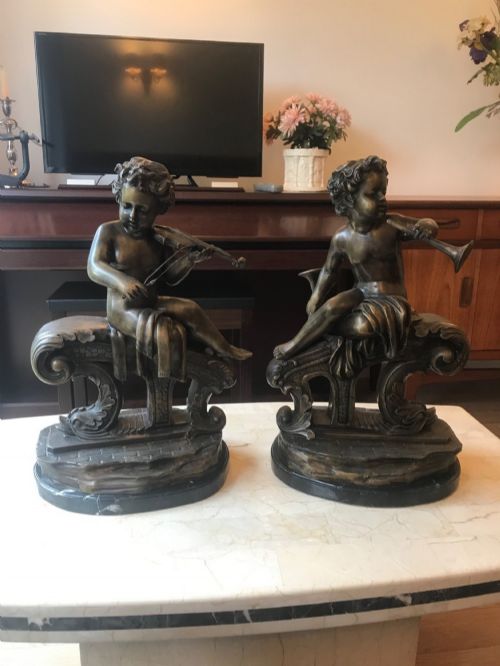
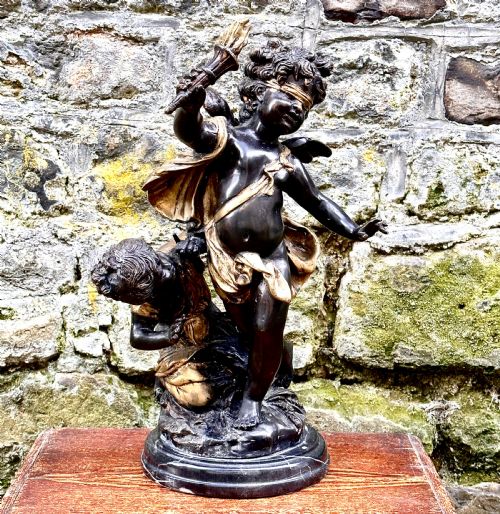
The pieces on this page lean heavily toward nineteenth-century French bronze work and eighteenth-century English and German porcelain figures. You will find them cast in metal, carved in marble, and modelled in glazed or biscuit porcelain.
Makers utilised these motifs for standalone desk sculptures, mantel clocks, table lamps, and decorative pairs flanking a centrepiece. Their scale ranges from small cabinet figures to substantial tabletop bronzes on marble bases.
Materials and Construction
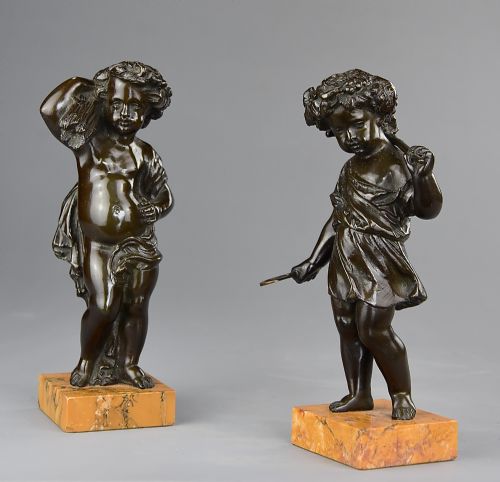
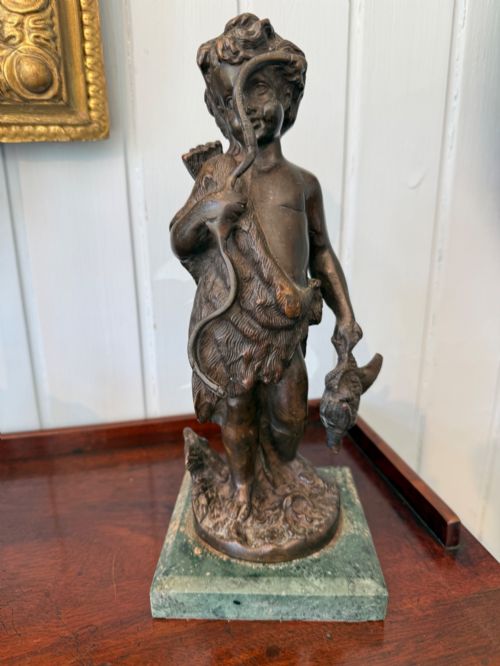
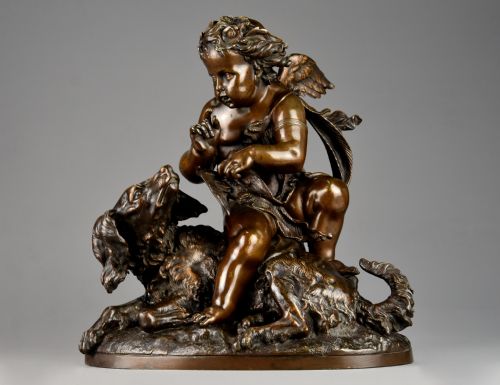
Foundry-cast bronze forms the backbone of the metal offerings, often finished with patination, or combined with ormolu and mounted on marble plinths. The execution relies on skilled metal chasing to define hair, wings, and drapery after the cast cools.
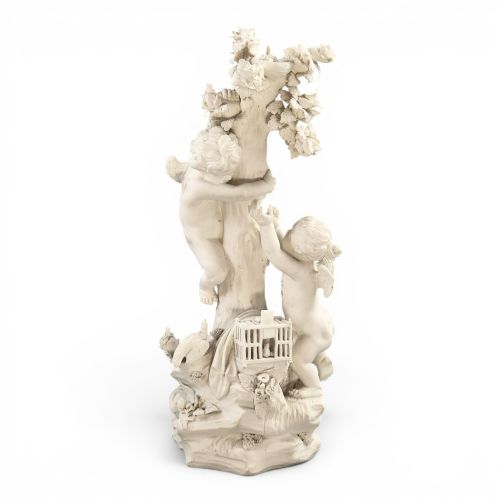
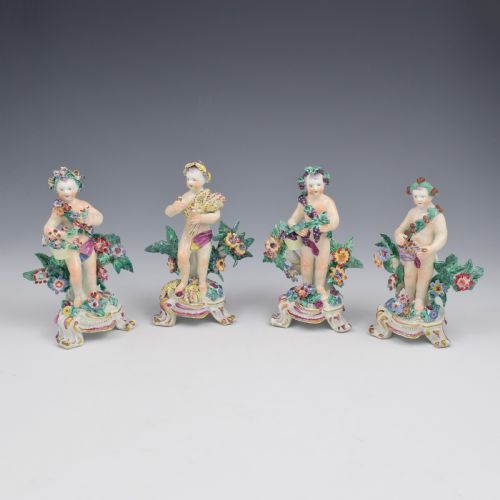
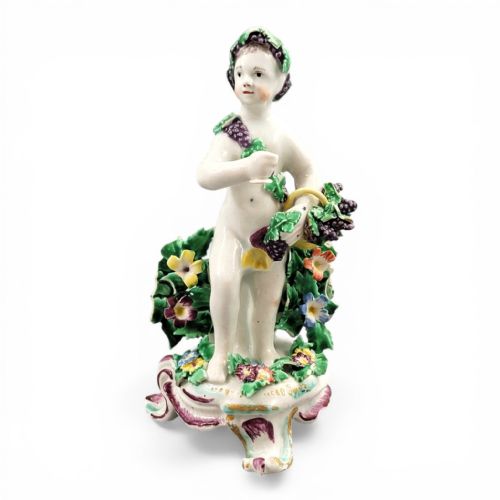
Porcelain examples rely on slip casting and hand-modelling at European factories like Bow, Meissen, and Royal Worcester. Artisans painted details by hand before firing, sometimes leaving surfaces in matte biscuit porcelain for a stone-like texture.
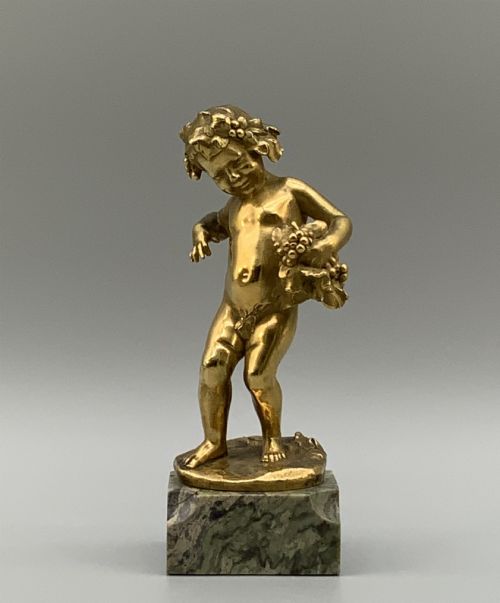
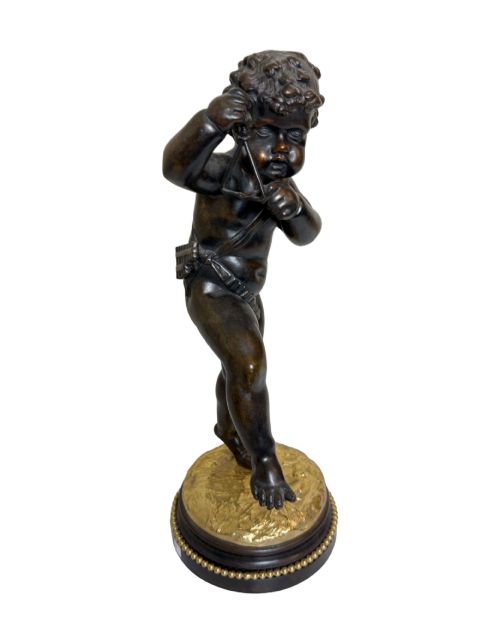
A surprising number of these celestial infants spend their eternity wrestling grapes, holding musical triangles, or guarding domestic spaniels.
Judging Quality and Execution
The distinction between ordinary and superior pieces rests on the crispness of the modelling and the finish applied to the surface. In bronzes, a strong casting preserves the anatomy and feather detail without blurring the edges during the chase work.
For ceramic versions, quality shows in the delicacy of the hand-painted enamels, the precision of applied floral elements, and the absence of clumsy glaze pooling. The weight of the material and the stability of the base structure also indicate the workshop's standard.
Charles Louis Malric·Susse Frères·Claude Michael Clodion·Royal Dux Bohemia·H. Schubert·Antonio Canova·Paul Scheurich·Richard Avrilli·George Kemper·Edme Samson·Royal Worcester·Louis Auguste Moreau·Volkstedt·KPM Berlin·Kerr and Binns·Achille Brocot and Delettrez·Bohne Söhne Rudolstadt
The Antique Cherub Figurines Glossary
- Putto
- A plump, often winged male infant figure frequently seen in classical art. Renaissance artists revived the motif, passing it down to later European sculptors and modellers.
- Ormolu
- Gilded bronze produced by applying a mercury and gold amalgam to a bronze object and heating it to drive off the mercury. This technique creates a rich golden surface found on many French decorative items.
- Biscuit porcelain
- Unglazed porcelain fired once to vitify the body, resulting in a matte, white finish resembling marble. Eighteenth-century factories favoured this texture for classical figures.
- Patination
- The surface colour achieved on metal through age or chemical treatment. Controlled patination highlights the contours of a bronze casting.
- Sweetmeat figure
- A small ceramic dish or figure designed to hold confectionery or dried fruits at a dining table. German and English factories produced elaborate examples featuring human and cherubic figures.
Antique Cherub Figurines: Frequently Asked Questions
How do I spot a reproduction?
Examine the surface texture, weight, and underside markings to understand how a piece was manufactured. Modern castings often lack the hand-finished chasing and tool marks visible on nineteenth-century bronzes.
Porcelain reproductions may show machine-printed transfer patterns rather than hand-applied brushwork. Compare the base and glaze characteristics against known examples from the stated period.
Where were these figures placed?
These decorative objects served multiple functions in domestic interiors, particularly on mantelpieces, desks, and side tables. Pairs often flanked clocks, candelabra, or garniture sets.
Some examples were adapted later into utilitarian objects such as table lamps or bookends. Their compact size allowed them to be moved easily around reception rooms.
What is the difference between putti and cherubs?
Art historical terminology separates secular putti, derived from classical antiquity, from the religious cherubim of biblical tradition. In the marketplace, however, sellers often use the terms interchangeably for winged infant figures.
Most decorative European sculptures depict the secular putto engaged in playful or allegorical activities rather than theological guardian spirits.