


Antique Cheese Dome Stand
An antique cheese dome stand protects a fine wedge of cheese in style, bringing heavy Victorian earthenware and glazed ceramic to the dining table.
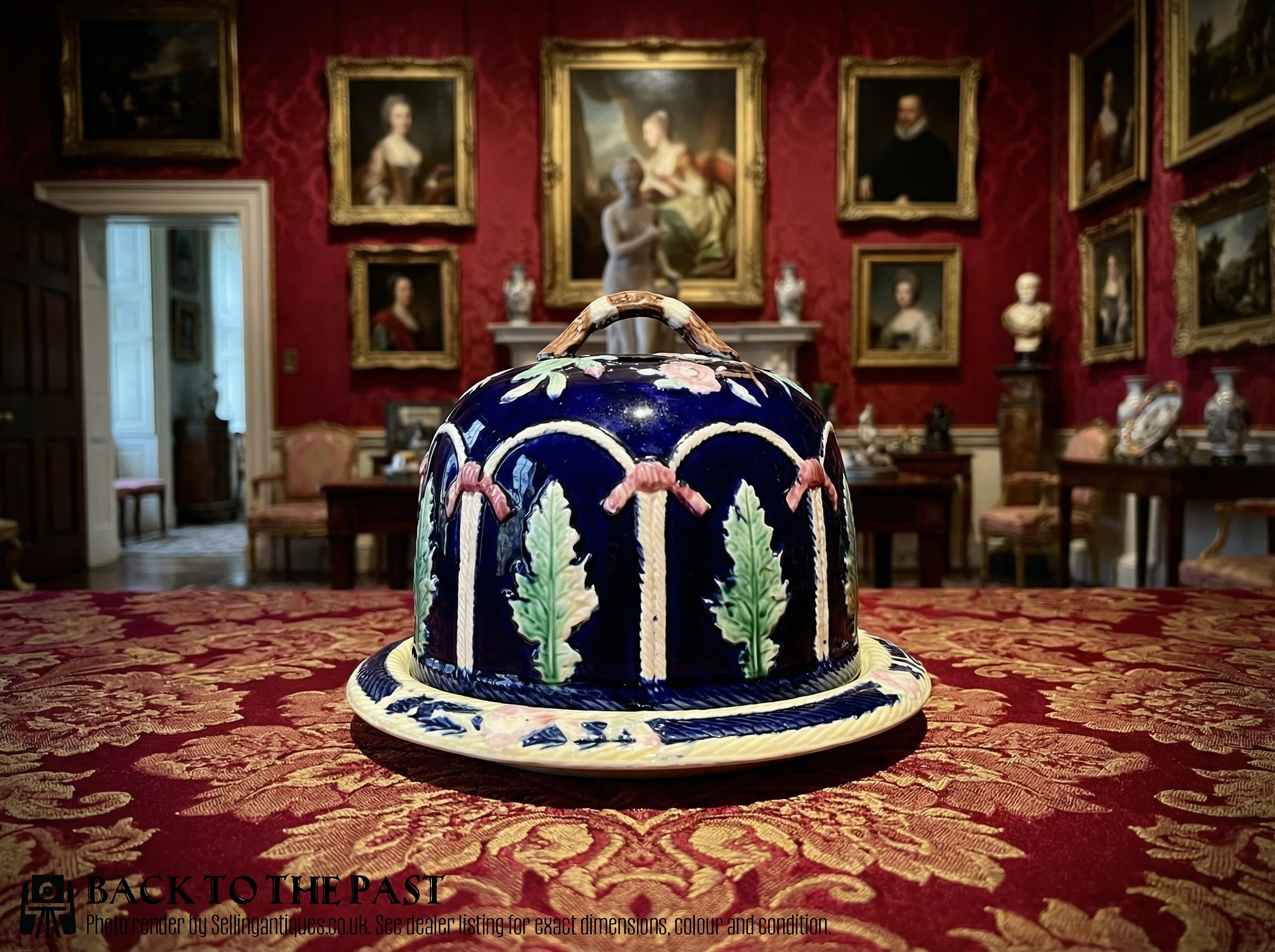
Antique Cheese Dome Stand
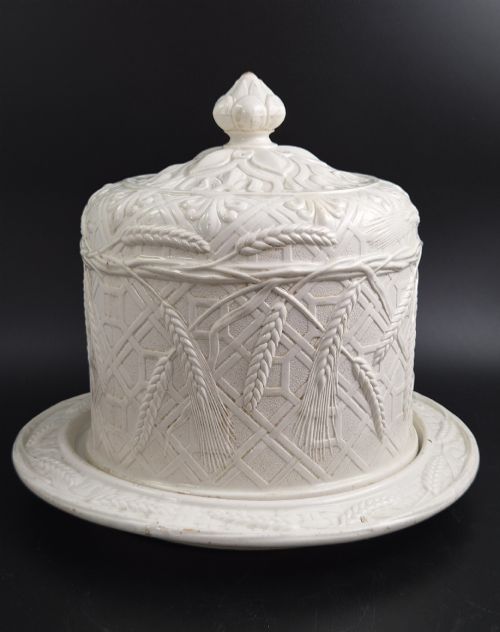
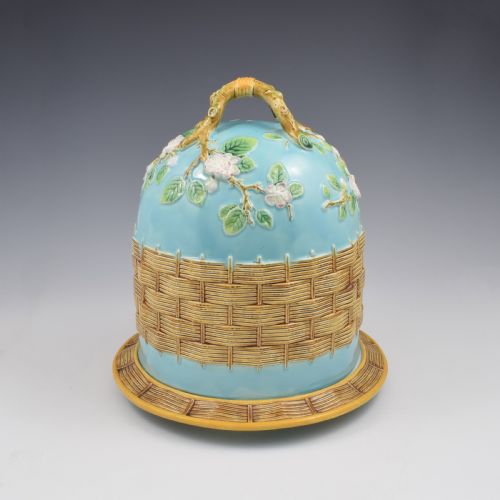
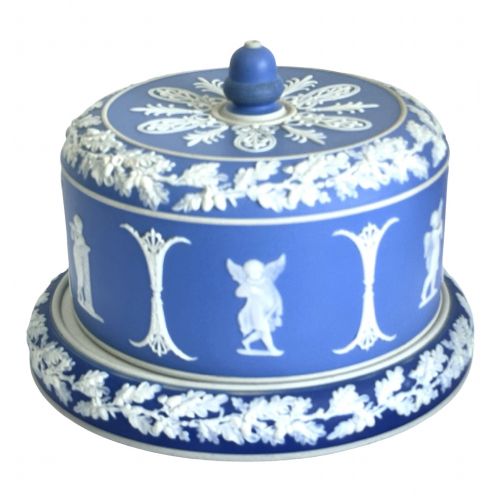
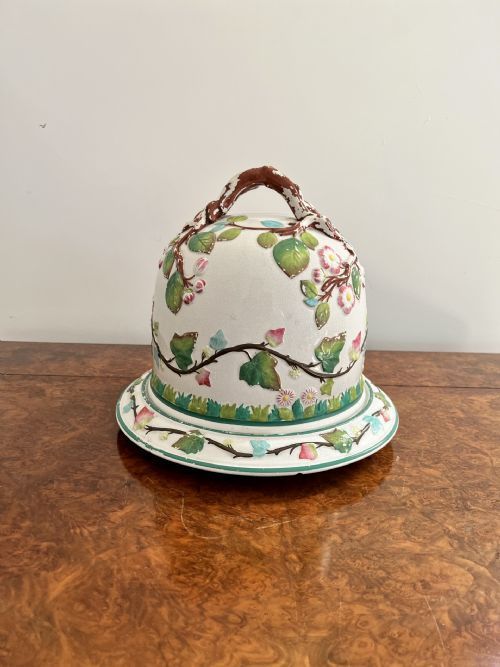
An antique cheese dome stand serves as a traditional table centrepiece designed to preserve and display cheese under a fitted ceramic cover. These heavy serveware pieces appear mostly in nineteenth century Victorian styles, ranging from plain white ironstone to heavily decorated majolica.
The form typically consists of a matching base plate and a tall, domed cover featuring a central handle or finial. Buyers encounter substantial earthenware and stoneware examples originating from prominent potteries of the Victorian and Edwardian eras.
Materials and manufacture
Potters shaped these large serving dishes from dense ironstone, earthenware, and stoneware, applying thick lead or tin glazes to seal the porous clay body. Majolica versions received vibrant coloured lead glazes fired at high temperatures to create rich, glossy surface relief designs.
Some decorative models integrate delicate mouldings such as wheat and lattice patterns, apple blossom motifs, or oriental pagoda scenes. Later examples combine pressed glass covers with silver plate stands for a lighter aesthetic.
Judging quality and craftsmanship
Quality rests in the crispness of the moulded relief and the depth of the coloured glaze, where finer examples display sharp botanical details rather than soft, blurred lines. Substantial weight and balanced proportions distinguish high production standards from utilitarian kitchenware.
The relationship between the dome and its matching base plate dictates overall integrity, as well-fitted covers demonstrate superior potter skill during the high-temperature firing process that often caused warping.
George Jones·Wedgwood·James Dudson·Copeland·Masons Ironstone
The Antique Cheese Dome Stand Glossary
- Ironstone
- A dense, durable type of earthenware patented in Britain to imitate Chinese porcelain. It provides a sturdy white body well suited for heavy domestic serveware.
- Majolica
- A Victorian earthenware style characterised by colourful lead glazes applied over moulded low relief decoration. It often depicts naturalistic botanical and floral themes.
- Stilton cheese dome
- A tall, cylindrical variation specifically proportioned to house a whole traditional English Stilton cheese. These covers are noticeably larger and narrower than standard round cheese dishes.
Antique Cheese Dome Stand: Frequently Asked Questions
What is an antique cheese dome stand?
An antique cheese dome stand is a covered ceramic dish designed in the nineteenth century to keep cheese fresh on the dining table. The tall cover traps moisture while preventing strong odours from escaping into the room.
These pieces combine a flat serving plate with a matching domed lid, often decorated with colourful glazes or moulded patterns. They functioned as essential dining accessories in Victorian households before household refrigeration became common.
How do you use a cheese dome stand?
Place a wedge or block of hard cheese directly onto the centre of the base plate, then cover it completely with the ceramic dome. This setup keeps the cheese at a stable humidity and protects it from dust and insects during long meals.
When serving guests, simply lift the heavy lid by its top handle to reveal the cheese underneath. The base plate catches any natural oils or crumbs, keeping your tablecloth clean.
How do you date an antique cheese dome?
Dating relies heavily on the ceramic body type, the glaze style, and any impressed factory marks found on the underside of the base. Victorian pieces from the mid to late nineteenth century often feature registration diamonds or specific maker stamps.
Heavy white ironstone typically points to the mid-Victorian decades, while brightly coloured majolica and detailed jasperware frequently date towards the eighteen eighties. Silver plate and glass combinations generally indicate a later turn-of-the-century origin.
Are antique cheese domes safe for food?
Most antique ceramic domes use stable glazed earthenware or ironstone that remains suitable for serving food today. However, crazing in the old glaze can sometimes absorb food oils over time if left unwashed.
Hand washing with mild soap preserves the antique surface and prevents thermal shock to the old ceramic. Avoid soaking pieces with extensive glaze crazing or those that incorporate delicate silver plated elements.