


Victorian Cheese Cover
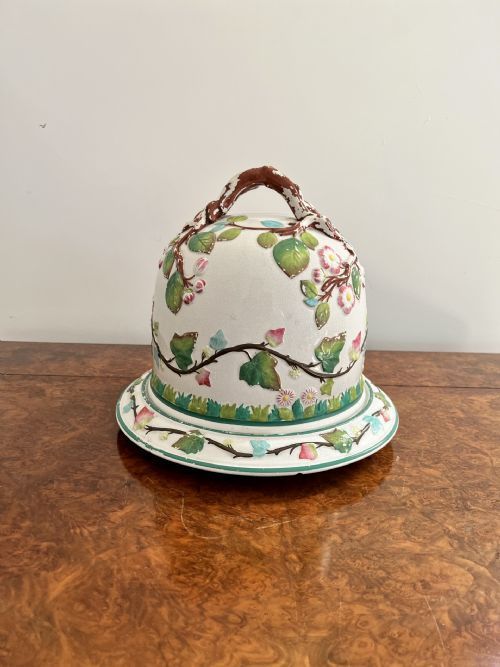
These Victorian cheese covers are the ceramic and glass domes designed to keep cheese fresh on the dining table.
Victorian Cheese Cover
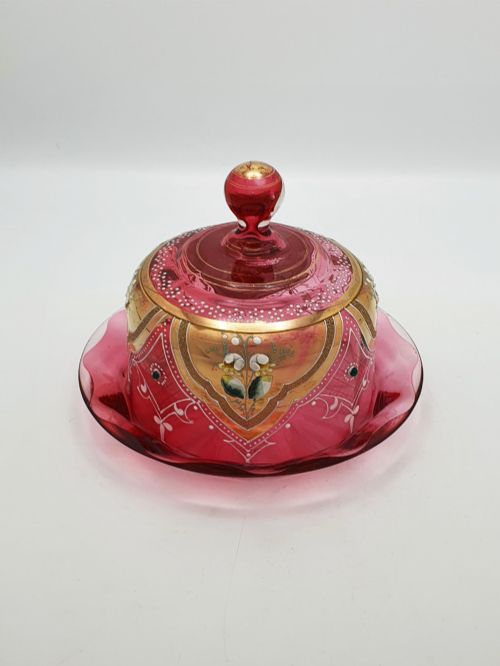
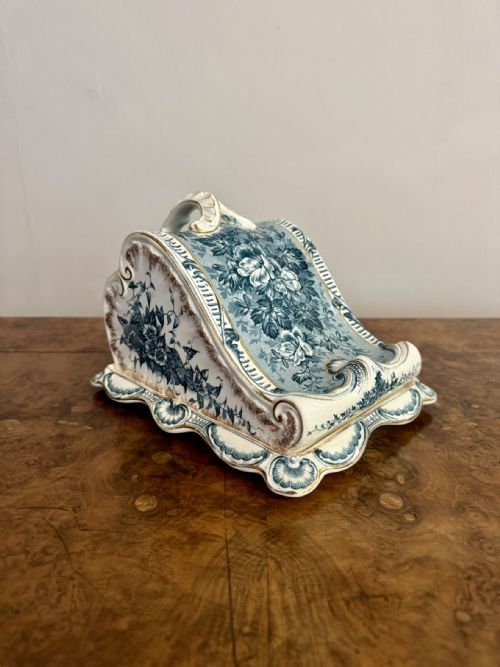
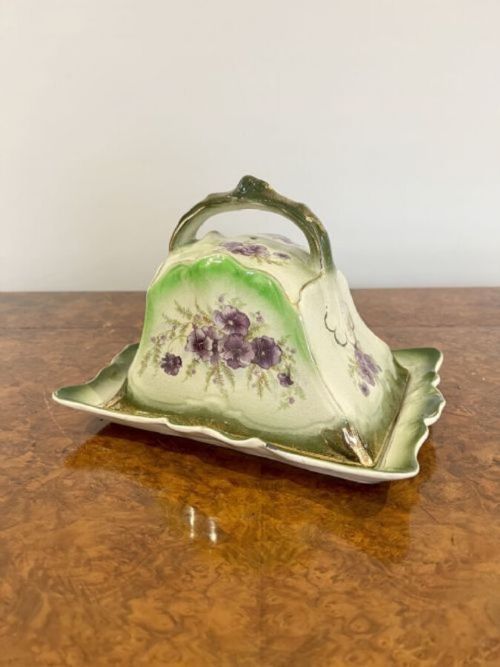
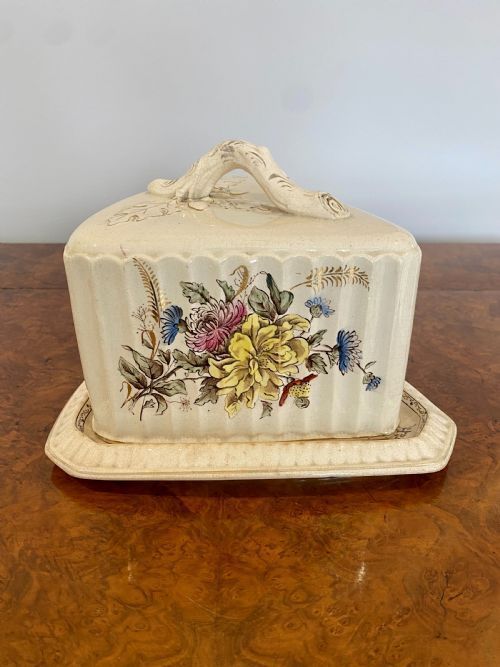
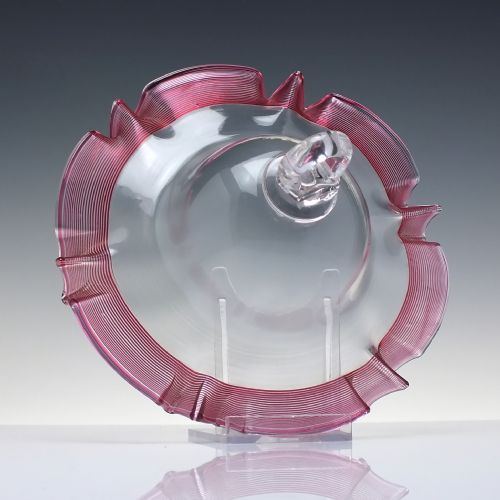
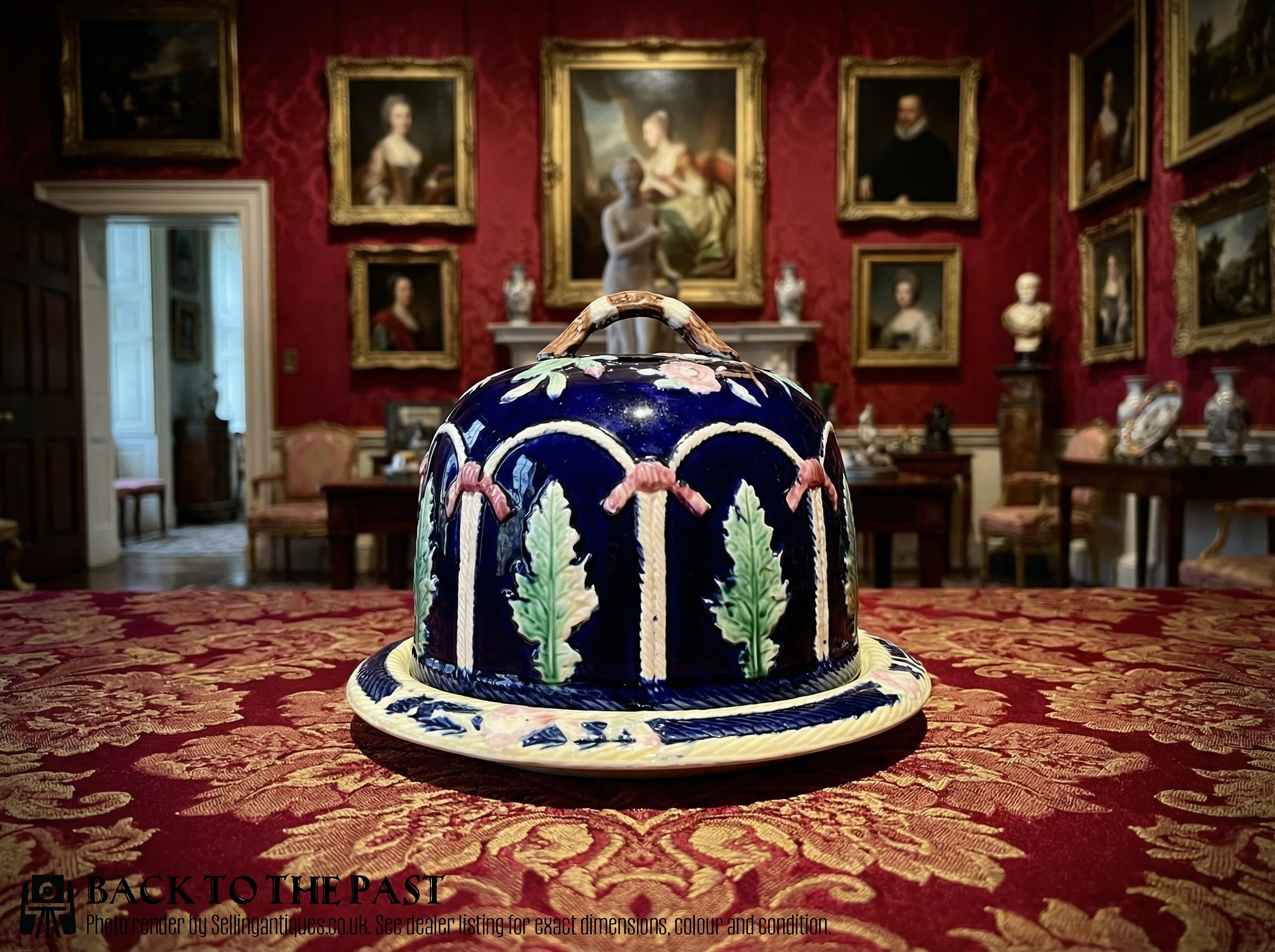
When you search for a Victorian cheese cover, you encounter large ceramic and glass domes accompanied by matching stands, made to house Stilton and other large cheeses on the dining table. These pieces range from substantial earthenware and ironstone bodies to colourful majolica and delicate cranberry glass.
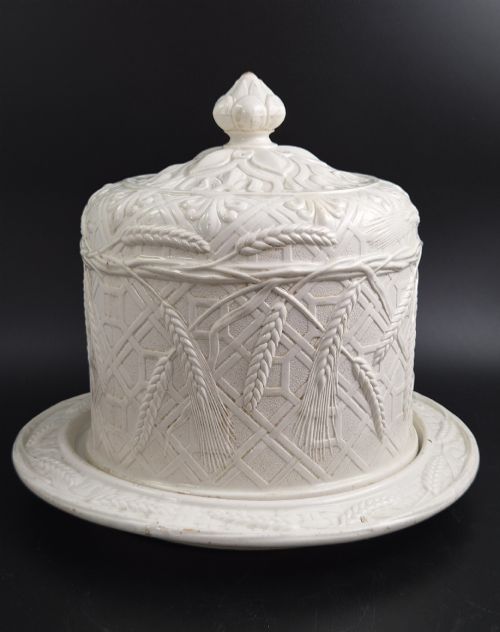
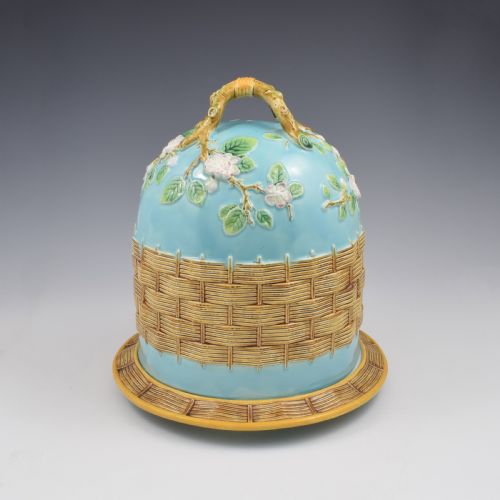
You are most likely to meet Victorian majolica cheese dishes featuring naturalistic basket weave or apple blossom motifs, alongside crisp white ironstone examples bearing moulded wheat and lattice decoration. The heavier ceramic bells often sit upon matching circular plates designed to catch crumbs and contain the cheese.
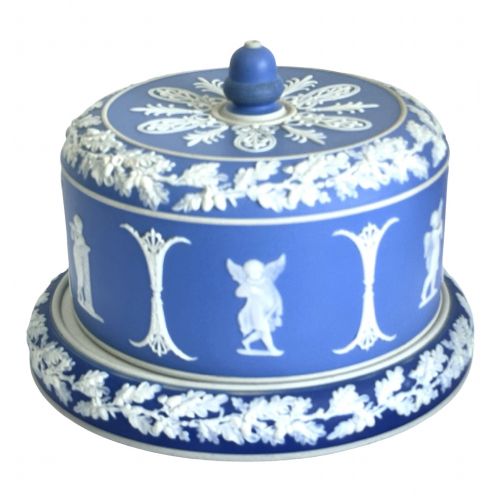
The selection also includes jasperware pieces from makers such as Wedgwood and James Dudson, which utilise classical relief decoration on contrasting coloured backgrounds. Glass covers appear less frequently, offering a transparent view of the contents rather than concealing the cheese beneath an opaque ceramic dome.
Materials and production methods
Potters shaped these large domes using earthenware, ironstone, and stoneware bodies, often forming them with thick walls to maintain a stable interior temperature for the cheese. Majolica versions received thick coloured glazes that pooled in the recesses of moulded leaf and blossom patterns.
Jasperware pieces combined fine-grained ceramic bodies with applied white stoneware reliefs, fired to create a distinct matt surface texture. Glass covers were mouth-blown or pressed into metal moulds to form the domed profiles required to clear tall wedges of cheese.
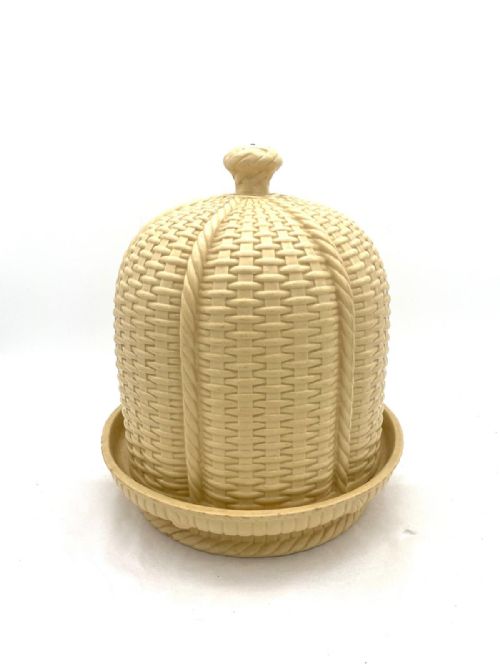
Some Victorian cheese domes were specifically formed as beehives, acknowledging the industrious insects that kept the dairy supplied.
Distinctions in quality
The standard of modelling defines the finer examples, where moulded details such as apple blossoms, basket weaves, and classical figures remain sharp and well-defined rather than blurred by thick glaze accumulation. Makers who invested in careful hand-painting and precise firing achieved vibrant glaze surfaces and clean, unwarped dome profiles.
Weight and proportion also separate robust utility pieces from exhibition-quality table wares, with better specimens possessing balanced matching stands and well-fitted covers that sit square on the base plate without rocking.
George Jones·Wedgwood·James Dudson·Copeland·Mintons·Burgess and Leigh
The Victorian Cheese Cover Glossary
- Cheese bell
- Another term for a cheese cover, describing the distinct bell-like dome shape used to cover the food.
- Majolica
- A Victorian earthenware pottery type covered in colourful lead glazes that created bright, glossy decorative surfaces.
- Jasperware
- A fine unglazed stoneware developed to display white moulded classical reliefs against a coloured matte background.
- Ironstone
- A dense, durable type of heavy white earthenware patented in the nineteenth century for robust tableware.
- Drabware
- A style of utilitarian pottery featuring a dull grey-brown or olive-coloured clay body popular during the mid-nineteenth century.
Victorian Cheese Cover: Frequently Asked Questions
What was a cheese cover used for?
These domes protected large blocks of cheese, particularly Stilton, from dust and drying out while seated on the dining table between meals.
The matching base plate caught crumbs and kept the table clean during serving.
How do I identify a majolica cheese dish?
Majolica pieces feature bright, glossy coloured glazes over moulded earthenware bodies, often showing natural themes like leaves, flowers, and basket weave patterns.
They feel noticeably heavier than standard pottery due to the thick clay walls and heavy glaze layers.
Are these covers safe to use for food?
While historic ceramics and glass can hold food, historic glazes may contain lead and older materials can crack under modern thermal shock.
Most collectors choose to display them rather than use them for daily dining.
How do I tell ironstone from majolica?
Ironstone is heavy, opaque white pottery with a utilitarian finish, sometimes featuring simple moulded patterns like wheat and lattice.
Majolica relies on vibrant coloured glazes and sculptural plant or animal motifs rather than plain white surfaces.