
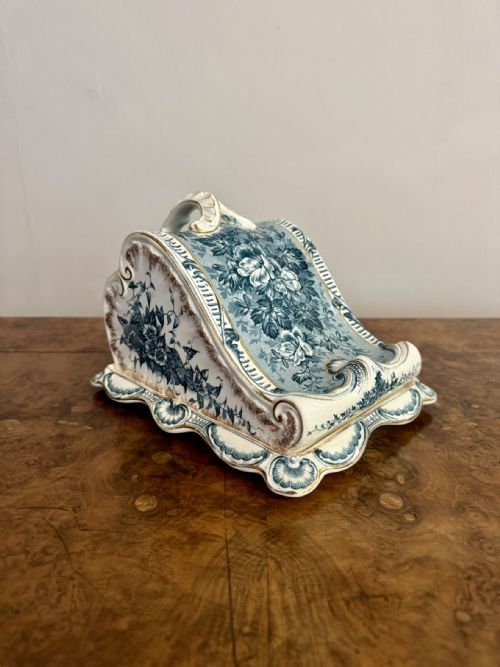
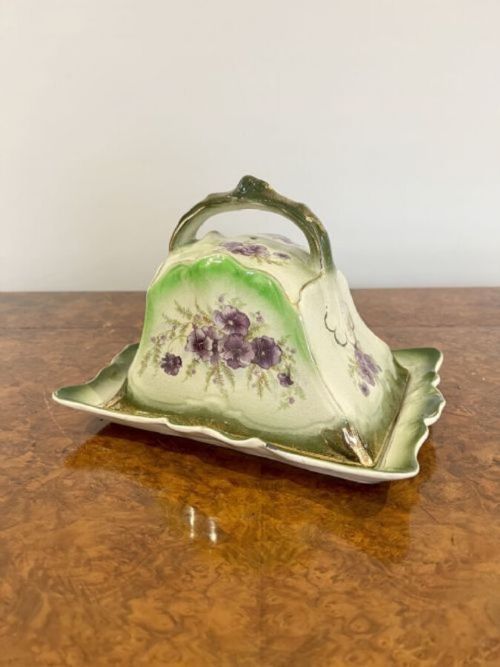
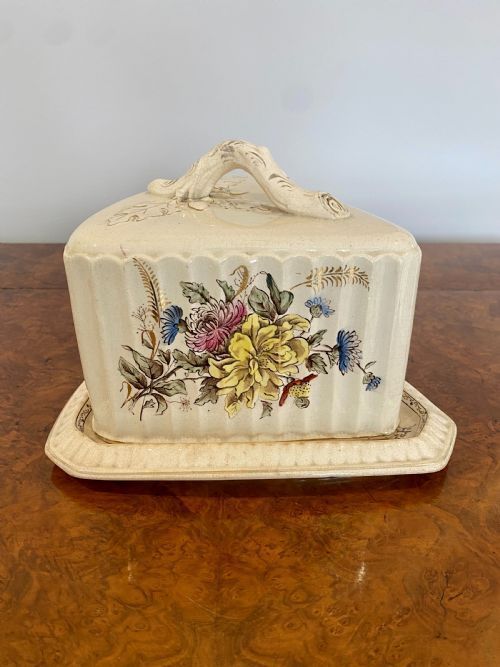
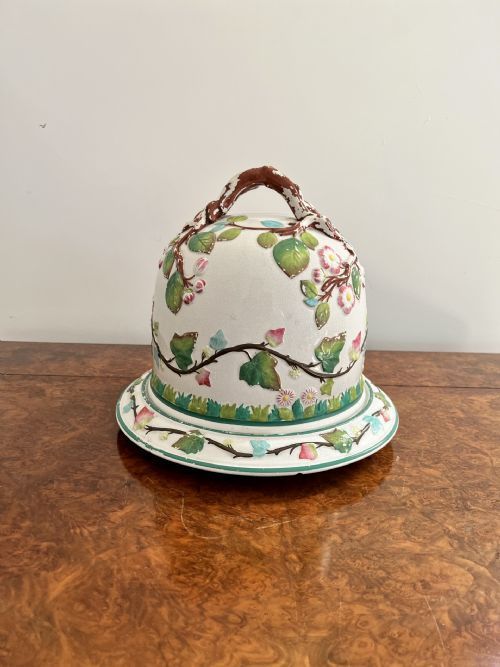


Vintage Ceramic Cheese Dish
These vintage ceramic cheese dish examples combine practical nineteenth-century design with striking tableware craftsmanship for the modern dining table.
Vintage Ceramic Cheese Dish
A vintage ceramic cheese dish consists of a fitted domed cover paired with a matching stand or base, designed specifically to preserve and present cheese at the table. These vessels protect the food while adding a decorative centrepiece to nineteenth-century dining arrangements.
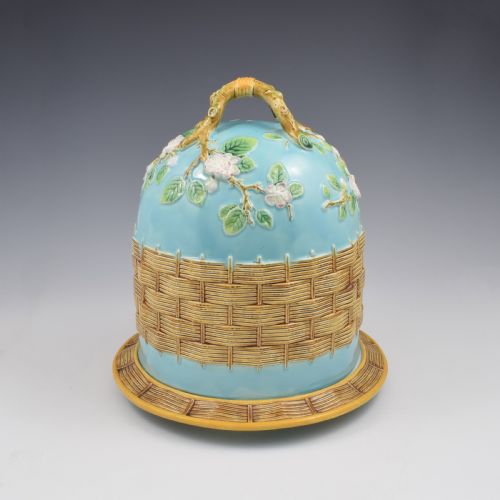
The selections available here span the Victorian, Regency and Edwardian eras, showcasing forms ranging from utilitarian white ironstone to ornate majolica. Buyers most frequently encounter pieces fashioned as domed covers with matching plates, often decorated with moulded motifs or hand-painted patterns.
How They Were Made
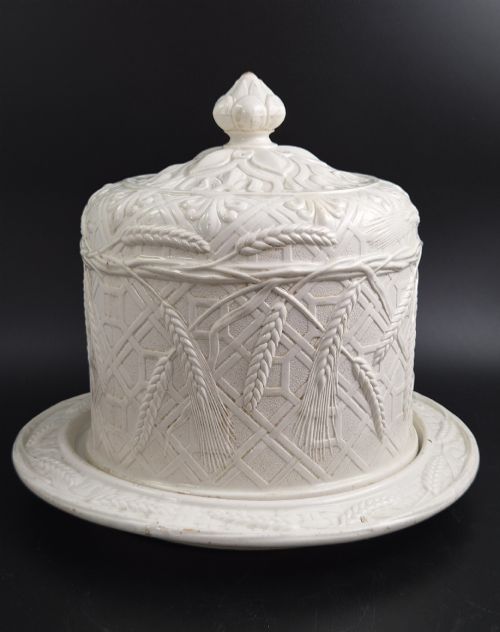
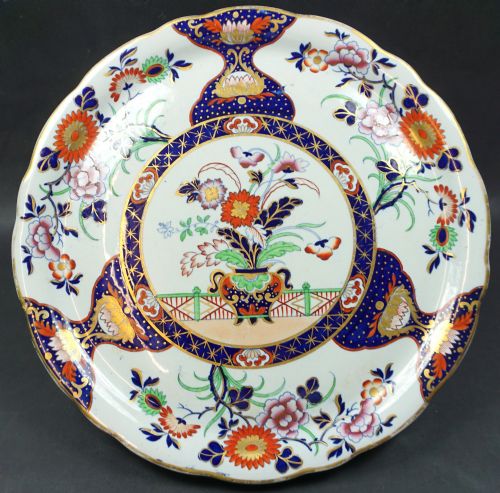
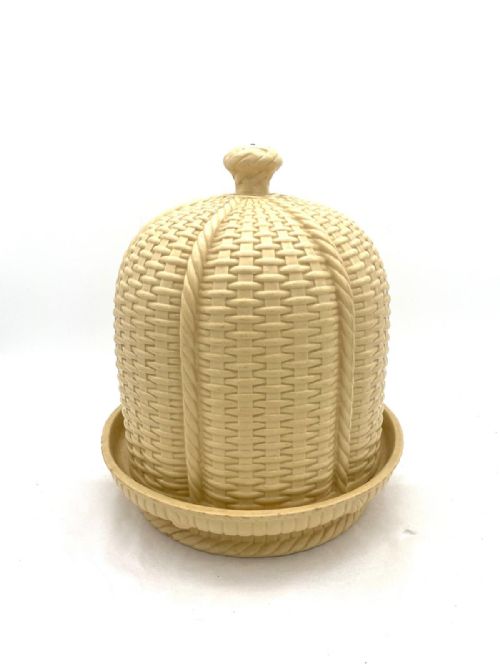
Potters shaped these wares from earthenware, ironstone and jasper ware, applying detailed moulded designs such as wheat and lattice or basket weave textures directly into the clay. Skilled artisans then finished many examples with colourful enamel, gilding or majolica glazes before firing.
Makers utilised traditional ceramic techniques to form the heavy domes and bases required to keep cheese fresh. Surface decoration combined hand colouring and intricate glazing to achieve the distinctive Victorian aesthetic seen across the inventory.
Listings feature pieces spanning the nineteenth century, including Victorian ironstone, majolica, and Edwardian ceramics.
What Varies in Quality
The distinction between standard domestic items and finer production lies in the crispness of the moulded relief and the application of enamel or gilding. Superior examples display sharply defined patterns, such as apple blossom or pagoda motifs, combined with even glaze coverage.
Weight and substance also separate ordinary utility wares from exceptional decorative pieces, with denser ironstone and rich majolica glazes commanding greater visual presence. The sophistication of the hand colouring further elevates the character of individual service dishes.
Hicks And Meigh·George Jones·Masons Ironstone China
The Vintage Ceramic Cheese Dish Glossary
- Ironstone
- A dense, durable type of earthenware patented in the nineteenth century. It provided a robust alternative to porcelain for heavy-use tableware.
- Majolica
- A colourful, lead-glazed earthenware style popular during the Victorian period. It is characterised by vibrant, moulded relief decoration.
- Drabware
- A style of unglazed or slip-glazed stoneware featuring muted, brownish-grey tones. It was widely produced during the nineteenth century.
- Cheese bell
- An alternative term for the domed cover of a cheese dish. The bell shape effectively traps moisture and preserves the cheese.
Vintage Ceramic Cheese Dish: Frequently Asked Questions
How were these cheese dishes used?
Victorian households used these dishes to store cheese in the pantry and present it directly at the dining table. The heavy cover helped protect the cheese from drying out and kept pests away.
Hosts brought the complete dish to the table for the final course of a meal. Guests could then lift the dome to serve themselves.
How do I care for my cheese dish?
Wash these ceramic pieces gently by hand using warm water and mild soap. Avoid soaking antique items with gilt or enamel decoration to preserve the surface.
Store the dome and base together securely when not in use. Handle the heavy covers with care to prevent chipping the earthenware edges.
How can I tell the period?
Dating relies on identifying the underlying ceramic material, such as heavy ironstone or vibrant majolica glazes. Stylistic clues like Victorian moulding or Edwardian shapes also indicate the era of production.
Maker marks stamped or painted on the underside provide the most reliable guide to age. Different bodies and decorative techniques align closely with specific nineteenth-century decades.