


Antique Ceramic Tazza
These antique ceramic tazza pieces are footed display vessels and elevated fruit dishes that bring architectural height and hand-painted artistry to a table.
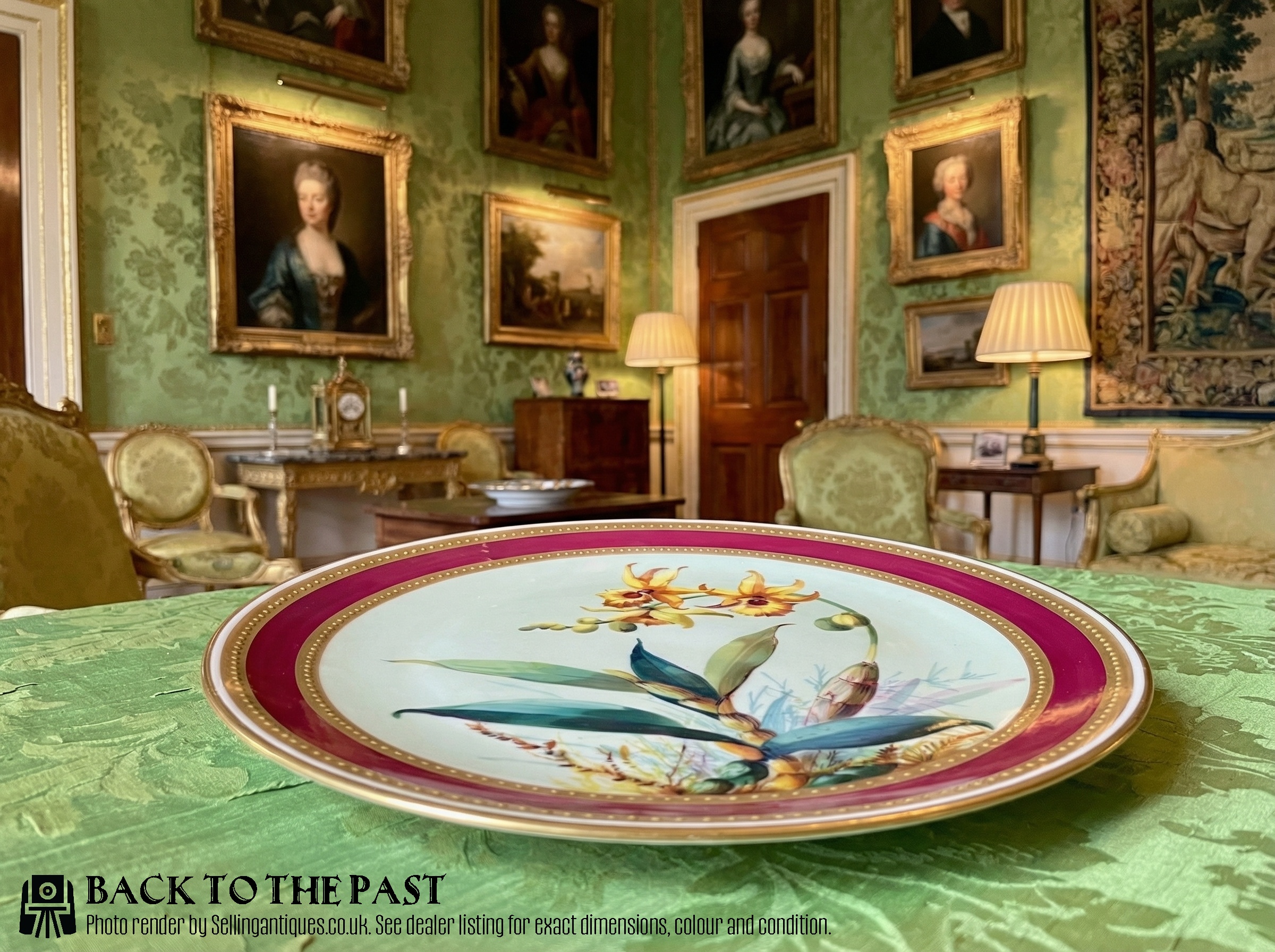
Antique Ceramic Tazza
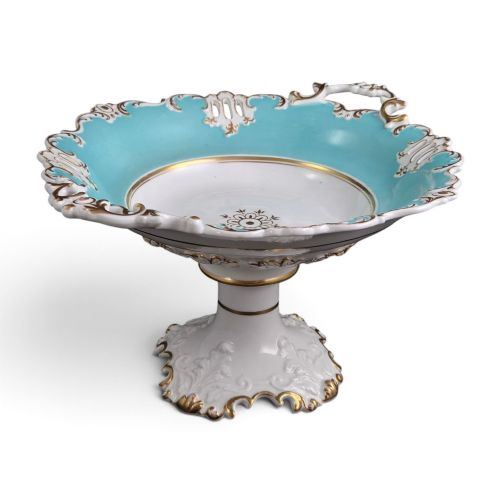
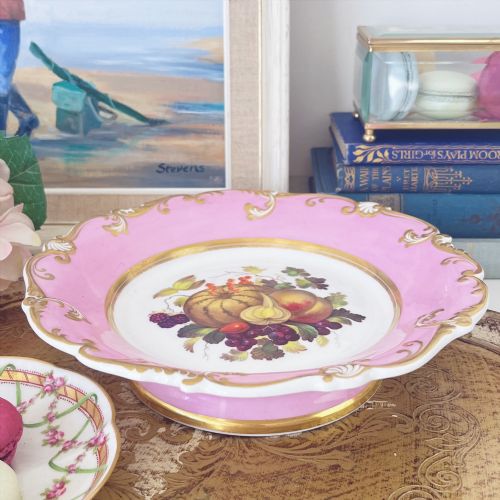
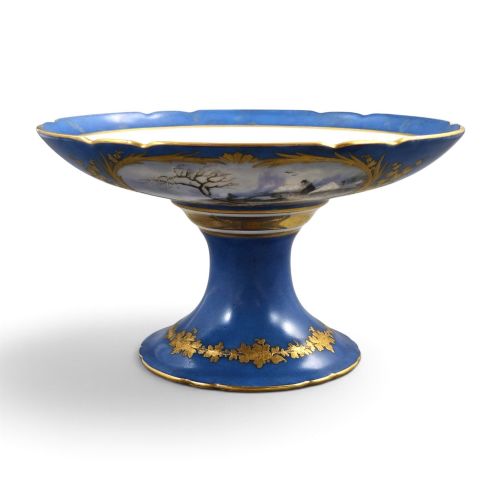
An antique ceramic tazza is a raised pedestal bowl or footed dish designed historically for serving fruit or sweets at dessert. The selections gathered here span Georgian, Victorian, and early twentieth-century eras, reflecting diverse manufacturing centres across England, France, Germany, and China.
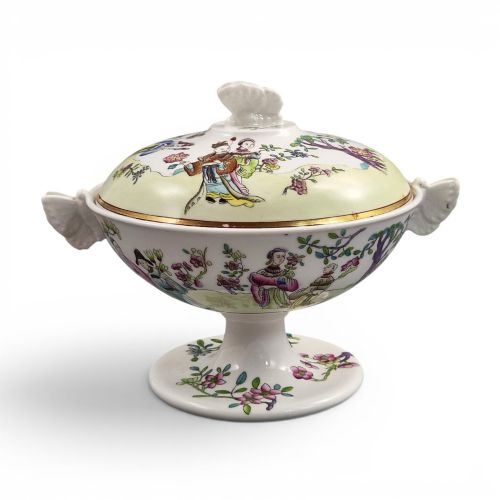
The dominant forms on this page include classical pedestal bowls, comport and tazza combinations, and elaborate centrepieces. Makers utilised bone china, earthenware, and hard-paste porcelain, shaping pieces with lattice borders, shell edges, and butterfly handles.
Many examples arrive with hand-painted botanical studies, landscapes, or armorial crests, while others demonstrate French Rococo Revival styling with gilt bronze mounts and champlevé enamel. Buyers encounter everything from transfer-printed blue and white pottery to vibrantly coloured majolica featuring sculptural figures.
Materials and production methods
Potters formed these elevated vessels using fine bone china, ironstone, earthenware, and porcelain pastes, often shaping them over moulds to achieve symmetrical footed bases and wide shallow bowls. Some specialised wares incorporated intricate openwork lattice borders or applied sculptural elements like cupids and butterfly handles.
Decoration relied heavily on hand-painting with polychrome enamels, cobalt blue underglaze, and delicate gilt leaf highlights or ormolu mounts. Firing techniques required precise kiln control, particularly for pieces combining complex porcelain bodies with applied metalwork or elaborate coloured grounds such as turquoise and pink.
Antique Ceramic Tazza Retail Price Guide 2026
Typical asking prices for ceramic tazza among the pieces listed under this phrase on Sellingantiques today, from the lower quarter to the upper quarter. They describe what is for sale here now, not the wider market.
Listings feature nineteenth-century porcelain, earthenware, and bone china from English and continental European factories.
Distinguishing quality and execution
Quality rests upon the crispness of the moulding, the fineness of the ceramic paste, and the precision of the hand-painted details. Superior pieces display finely rendered botanical subjects or historical scenes executed by skilled artists rather than generic transfer printing.
The integration of secondary materials also separates standard production from exceptional examples, such as the quality of gilt bronze mounts, champlevé enamel work, or the complexity of pierced lattice borders. Weight, balance, and the crisp definition of foot rims and handles further indicate the ambition of the original workshop.
Coalport·H and R Daniel·Sèvres·Spode·John Ridgway·Thomas Moorcroft·E.J.D Bodley·Minton·Eichwald·Louis Pierre Malpass·Mason·Moorcroft
The Antique Ceramic Tazza Glossary
- Tazza
- A shallow bowl raised upon a central foot or pedestal, traditionally used for serving dessert or fruit.
- Comport
- An elevated dish or bowl matching a tazza, frequently produced as part of a larger nineteenth-century dessert service.
- Majolica
- A type of colourful lead-glazed earthenware popular during the Victorian era, often moulded with high-relief figural or botanical motifs.
- Champlevé
- An enamelling technique where troughs are dug into metal and filled with vitreous enamel before firing.
- Felspar porcelain
- A specialised porcelain body developed during the nineteenth century using feldspathic rock to increase durability and whiteness.
Antique Ceramic Tazza: Frequently Asked Questions
What is an antique ceramic tazza used for?
These elevated vessels were traditionally used on dining tables to serve fruit, sweetmeats, or cakes during the dessert course.
Today, collectors primarily use them as striking decorative centrepieces on sideboards, mantels, or dining tables to add height and colour to a room.
How do I clean an antique tazza?
Dusting gently with a soft, dry cloth is the safest way to maintain glazed ceramic surfaces and painted details.
Water and harsh detergents should be avoided, particularly on pieces with delicate gilt highlights, ironstone bodies, or metal mounts.
How do I tell Victorian pieces apart from Georgian ones?
Georgian examples often lean towards classicism, early bone china bodies, and refined transfer printing like blue and white patterns.
Victorian pieces frequently embrace bolder colour grounds, heavy gilding, ornate Rococo Revival moulding, and majolica glazes.
Are these pieces safe to use for food?
Most nineteenth-century decorative wares feature lead-glazed surfaces or delicate hand-painted enamels that can wear with acidic foods.
It is generally recommended to keep these fragile ceramic and porcelain items for display rather than daily culinary use.