




Hand Painted Tazza
When you search for hand painted tazza, you are looking at footed display pieces designed to elevate fruit and sweets on a dining table.
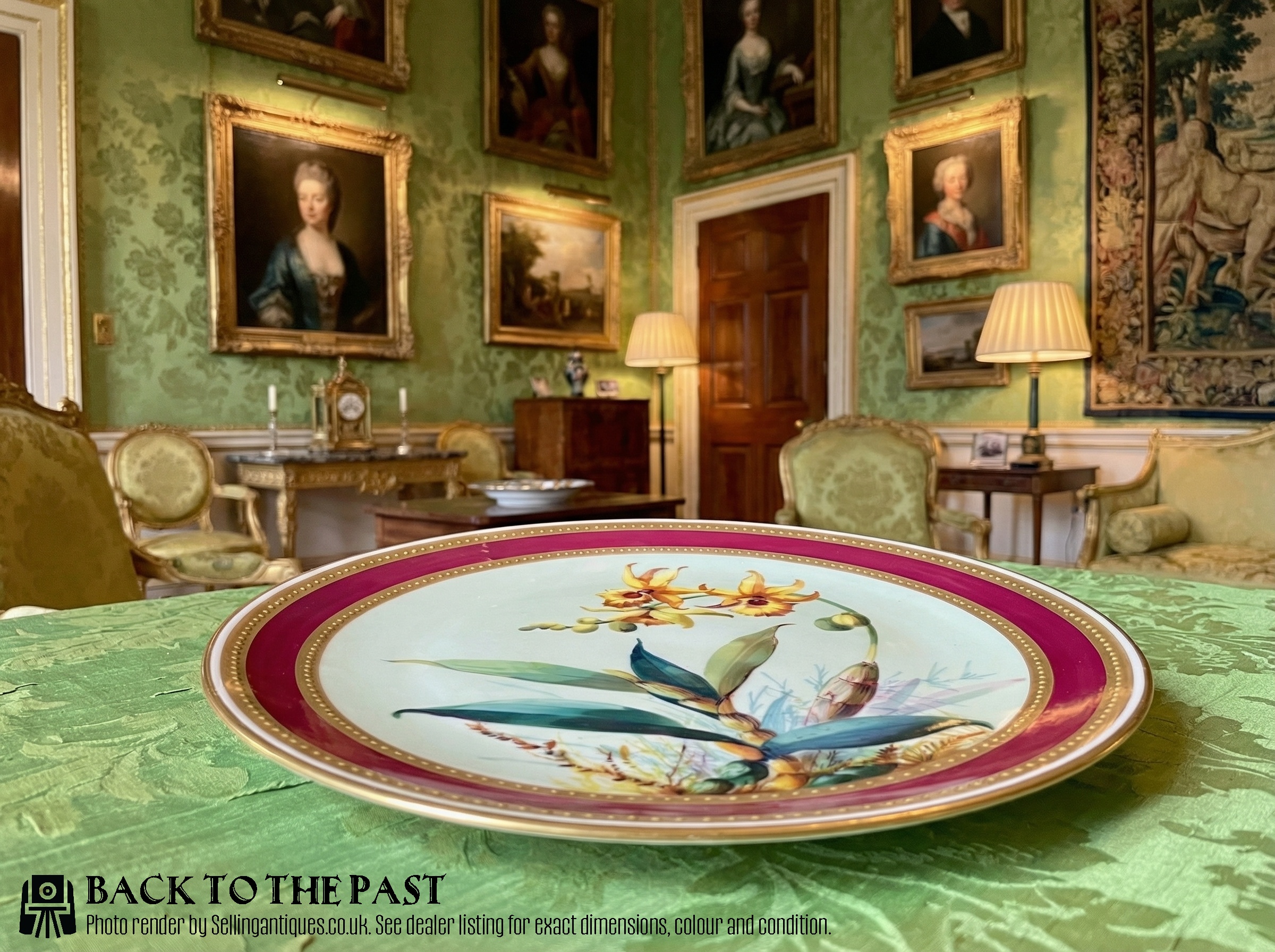
Hand Painted Tazza
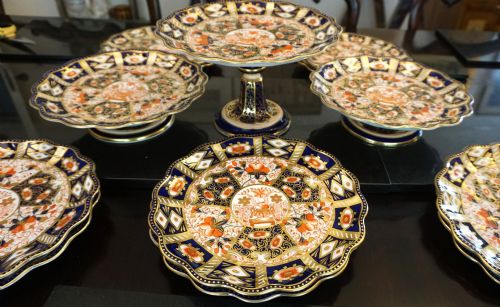
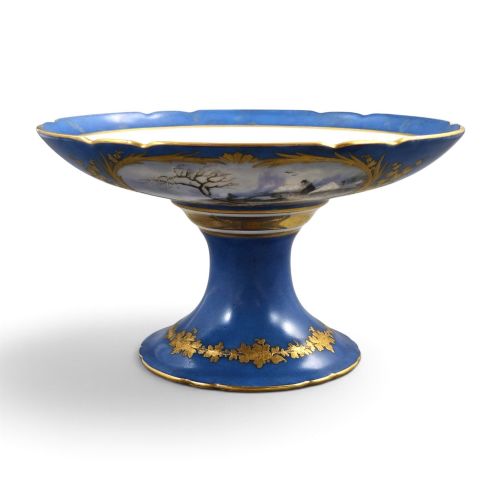
A hand painted tazza sits on a raised pedestal, taking the form of a decorative dish or comport designed to hold fruit and sweetmeats for dessert. These elevated display vessels command attention at the centre of a table, drawing the eye upward with painted decoration and sculptural form.
The versions most likely to meet you on this page span the nineteenth century, including Victorian examples and earlier Georgian pieces. Many originate from French workshops or English potteries, often adopting styles such as Rococo Revival or Japonisme.
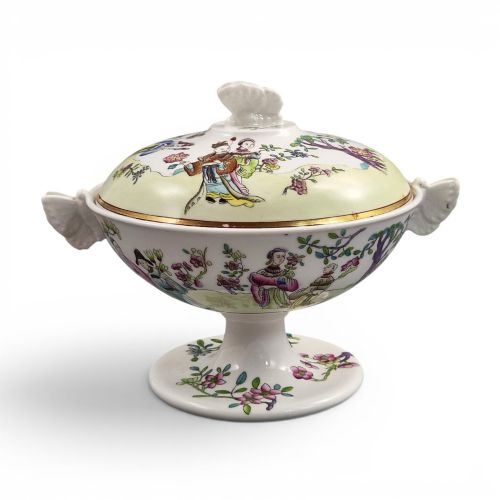
Makers utilised various forms ranging from pedestal bowls to dessert service comports. Each piece combines a broad dish or bowl with a distinct foot or stem, frequently enhanced by gilt bronze mounts or handles.
Materials and construction
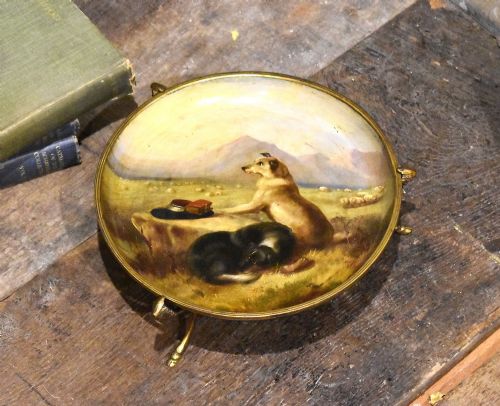
Potters and artisans formed these pieces from porcelain, felspar porcelain, and ironstone china, often pairing ceramic bowls with gilt bronze, ormolu, and cut crystal elements. Champlevé enamel and gold leaf frequently highlight the mounts and borders.
Decoration relied heavily on skilled brushwork, applying enamel colours directly to the ceramic surface before firing. Gilt bronze mounts were cast and chased to secure the porcelain bowls and add structural weight.
Hand Painted Tazza Retail Price Guide 2026
Typical asking prices for hand painted tazza among the pieces listed under this phrase on Sellingantiques today, from the lower quarter to the upper quarter. They describe what is for sale here now, not the wider market.
Some nineteenth-century comports feature delicate butterfly handles that make the entire pedestal dish look ready to flutter off the table.
Assessing quality and execution
Quality rests in the precision of the hand painted details and the crispness of the porcelain moulding. Superior pieces display refined brushwork on floral or figural subjects, whereas simpler examples rely on standard transfer prints with minimal hand touches.
The integration of metal mounts also dictates standard; heavier, finely chased gilt bronze or champlevé enamel mounts elevate a piece above standard ceramic comports. The clarity of cut crystal and the richness of the gilding further separate the finest examples from standard production.
Spode·John Ridgway·Thomas Moorcroft for E.J.D Bodley·Louis Pierre Malpass·MASON
The Hand Painted Tazza Glossary
- Tazza
- A shallow bowl or dish mounted on a stem and foot, used originally for serving wine or food. In nineteenth-century dining, it served primarily as a decorative centrepiece for fruit.
- Comport
- A large dish or bowl on a foot, used alongside a tazza for dessert service displays. The terms are often used interchangeably in antique listings.
- Ormolu
- Gilded bronze, where a finely ground gold-mercury amalgam is applied to a bronze base and heated. It provides a rich, durable metallic finish on mounts and handles.
- Champlevé
- An enamelling technique where troughs or cells are hollowed out in the metal surface and filled with vitreous enamel. These coloured glass pastes are then fired and polished flush with the metal.
- Felspar porcelain
- A specific ceramic body containing feldspar, developed in the early nineteenth century to improve durability and translucency. English factories utilised this material for robust yet refined tablewares.
Hand Painted Tazza: Frequently Asked Questions
What is a hand painted tazza used for?
These elevated dishes served primarily as centrepieces for dessert services, holding fruit, nuts, or sweetmeats during formal nineteenth-century dining.
Today, they function mainly as decorative display objects on sideboards, mantels, or dining tables, where their painted surfaces and raised forms can be appreciated without daily handling.
How do I date a hand painted tazza?
Dating relies on identifying the ceramic body, factory marks, and stylistic clues such as Rococo Revival curves or Victorian Aesthetic Movement motifs. Materials like felspar porcelain or champlevé enamel also point to specific manufacturing decades within the nineteenth century.
Examining the foot rim, glaze characteristics, and the style of the hand-painted decoration helps narrow down the period of production.
Are these pieces safe for holding food?
While originally designed for dining, antique porcelain and enamel pieces often develop microscopic crazing in the glaze over the centuries. This porous surface can absorb moisture and bacteria from food.
It is generally wiser to use them for dry display purposes rather than serving wet or perishable foods today.
How should I clean a hand painted tazza?
Dusting gently with a soft, dry brush or cloth is the safest way to maintain the ceramic surface and any delicate gilding. Avoid harsh chemical cleaners or soaking.
If metal mounts or glass elements require deeper cleaning, use a damp cloth carefully, ensuring no moisture sits on vulnerable painted areas or exposed ceramic bodies.