


Antique Ceramic Candle Holders
These antique ceramic candle holders bring together hand-modelled figures, rich glazes and neoclassical lines from eighteenth- and nineteenth-century kilns.
Antique Ceramic Candle Holders
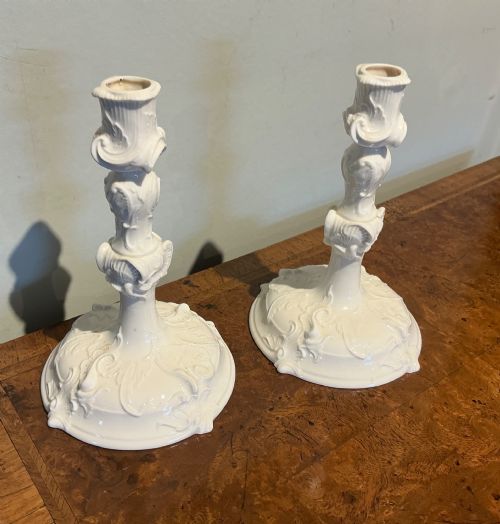
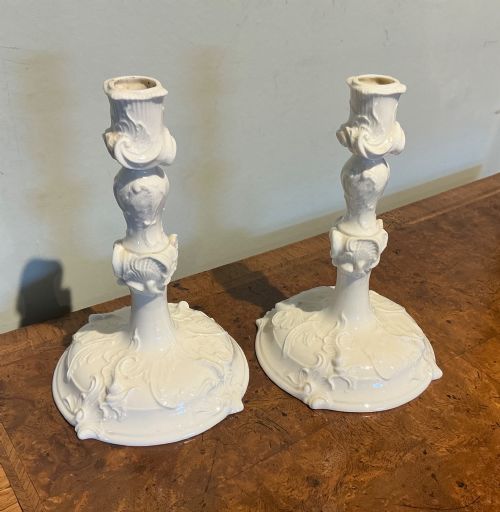
When you search for antique ceramic candle holders, you encounter a variety of forms including candlesticks, multi-branched candelabra, chambersticks and wall sconces. The pieces range from simple English earthenware and ironstone patterns to elaborate continental porcelain figures framed by applied foliage.
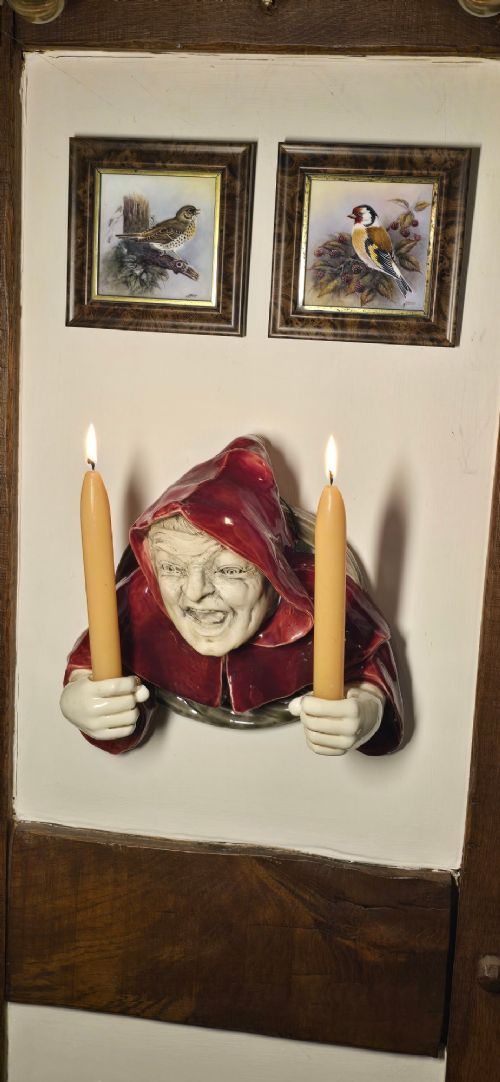
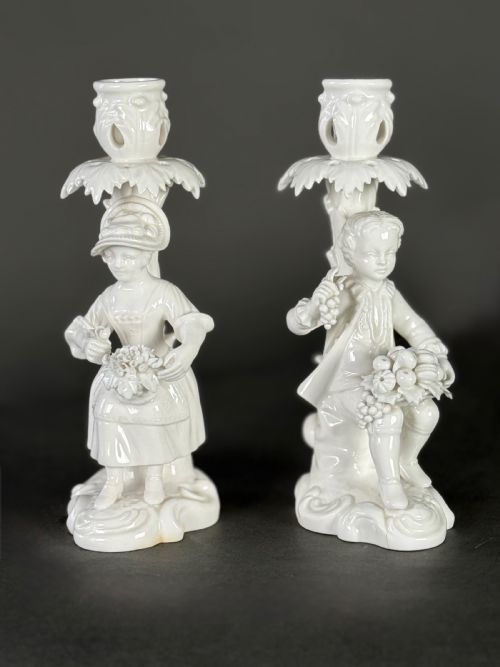
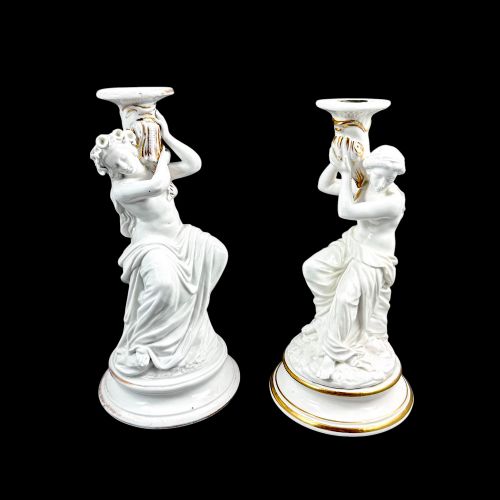
The most common examples on this page date from the Georgian and Victorian eras, alongside later nineteenth-century German and English output. Figures of children, musicians and allegorical representations frequently support the candle sockets amidst rococo scrollwork.
Forms span utilitarian chambersticks designed for carrying through a house to decorative mantel garnitures shaped as animals or classical figures. Each type reflects the domestic habits and kiln capacities of its specific period of manufacture.
Materials and production methods
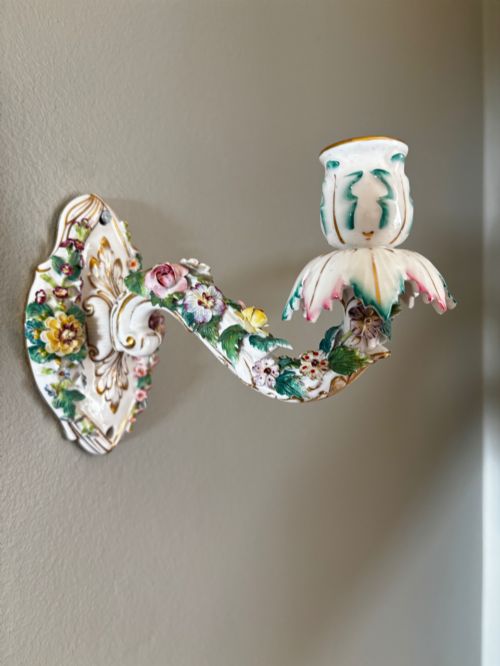
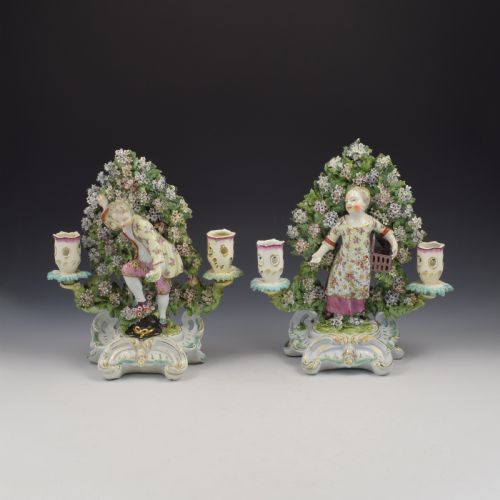
Potters shaped these items using soft-paste or hard-paste porcelain, ironstone, earthenware and delftware, often building complex figural groups from multiple cast or hand-pressed components. Artisans applied intricate foliage known as bocage around the figures using delicate bits of modelled clay.
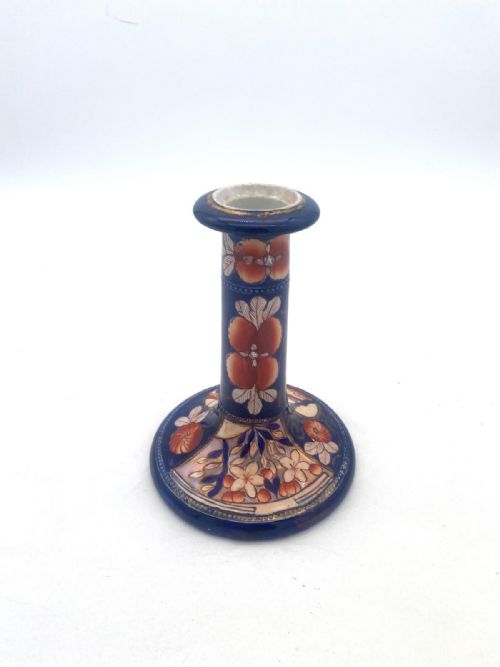
Surface decoration relied on hand-painted polychrome enamels, underglaze cobalt, and applied gold leaf or gilding to highlight the moulded details. High-temperature firing fixed the glazes, while later enamels sometimes received a secondary low-temperature fix.
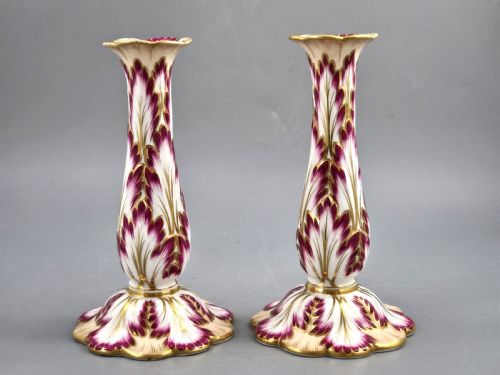
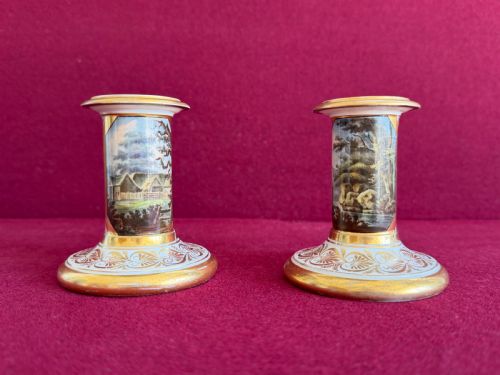
Form variations include single candlesticks, multi-arm candelabra, wall sconces, and chambersticks.
Assessing quality in ceramic lighting
Quality rests upon the crispness of the moulding and the precision of the hand-painting, particularly on figural pieces where facial expressions and fine garments reveal the modeller's skill. Finer examples retain delicate bocage leaves without extensive modern restoration or heavy replacement of missing parts.
The application of gilding and enamel colours distinguishes standard factory output from exceptional studio work. Pieces bearing clear factory marks from established kilns command greater interest among collectors.
Nymphenburg·Masons·Ridgway·Barr Flight And Barr·Meissen·Derby·Volkstedt·Royal Worcester·Wedgwood·Spode·Chelsea·Minton·Sitzendorf·Dresden·Bow·Doulton Lambeth·Triebner Ens And Eckert
The Antique Ceramic Candle Holders Glossary
- Bocage
- Applied ceramic foliage and leafy backgrounds common in eighteenth-century figures. This delicate work surrounds the candle nozzle with three-dimensional leaves.
- Chamberstick
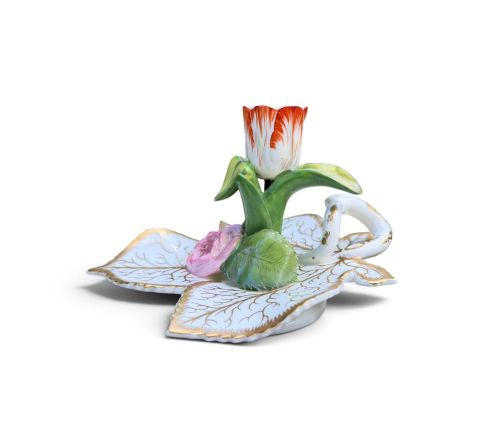
- A low candle holder fitted with a handle and a small drip pan. These portable items lit bedrooms and hallways.
- Candelabra
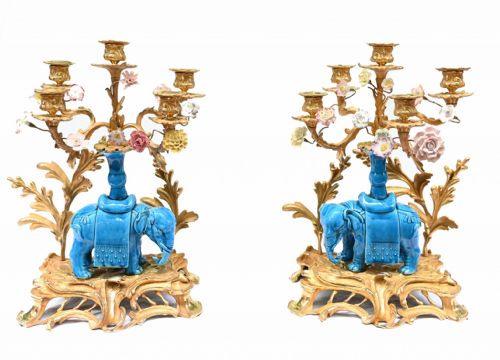
- A branched candle holder designed to hold multiple lights. Larger examples often feature central figural columns.
- Jasperware
- A fine stoneware developed by Wedgwood featuring contrasting coloured reliefs against a solid background. It appears frequently in neoclassical tableware and decorative items.
- Ironstone
- A heavy, durable type of earthenware patented in the nineteenth century. It resists chipping while accepting bright enamel patterns.
Antique Ceramic Candle Holders: Frequently Asked Questions
What is the difference between a candlestick and a chamberstick?
Candlesticks are vertical stands designed to remain stationary on tables, mantelpieces or sideboards. They elevate a single light source without auxiliary handles.
Chambersticks feature a shallow drip pan and a loop handle intended for carrying by hand. They provided portable illumination before the widespread adoption of electricity.
How do I identify porcelain figures with bocage?
Bocage consists of applied ceramic leaves and branches wrapping around the back and sides of a figure. It mimics natural foliage in three dimensions.
This technique appears widely on eighteenth- and nineteenth-century pieces from English and continental factories. The fragile leaves require careful handling due to their delicate nature.
Are these candle holders safe to use with real candles?
Historic ceramic and porcelain can develop hairline fractures when exposed to uneven heat over long periods. Modern dripless candles fit securely if chosen to match the socket diameter.
Many collectors prefer to display these items as decorative sculpture rather than functional lighting. If you burn candles, extinguish them before the flame reaches the ceramic socket.
How do I distinguish eighteenth-century pieces from later copies?
Early pieces often exhibit unglazed base rims, slight firing imperfections and hand-mixed enamel pigments. Factory marks evolved across decades, providing clues to date of origin.
Later Victorian and Edwardian reproductions utilised sharper moulds and mechanical transfer printing. Comparing paste density and potting weight helps clarify the period.