




19th Century Ceramic Garniture
These 19th century ceramic garniture sets bring grand mantelpiece symmetry and hand-painted porcelain elegance straight into a modern interior.
19th Century Ceramic Garniture
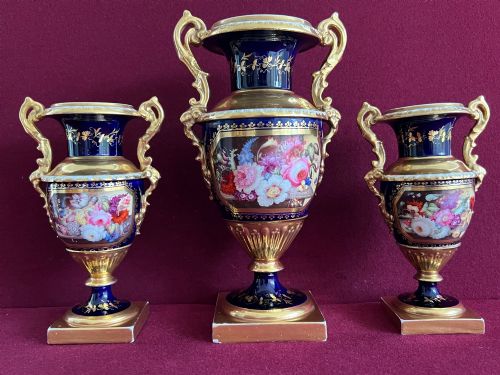
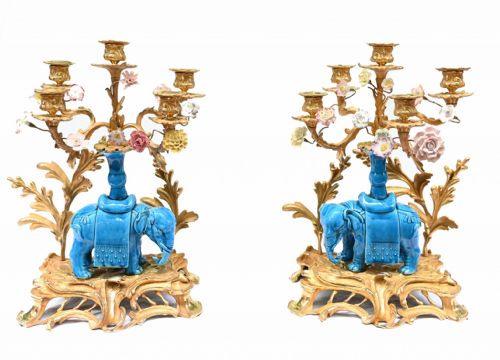
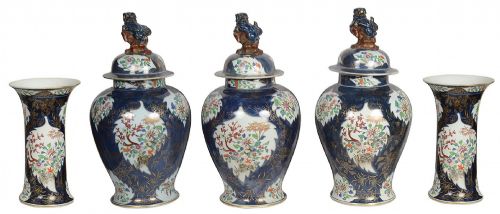
A 19th century ceramic garniture typically comprises matched sets of decorative vases, lidded urns, or clock sets designed to sit together on a mantelpiece or sideboard. These decorative objects display the distinctive aesthetic preferences of the period, ranging from classic French forms to ornate revival styles.
Buyers encountering this search phrase will most frequently find pairs of vases or multi-piece sets created in European workshops during the eighteen-eighties and eighteen-nineties. The selection spans classical porcelain urns alongside more eclectic forms incorporating animal figures and diverse regional aesthetics.
The objects serve primarily as decorative centerpieces rather than functional vessels, carrying the ornamental weight of nineteenth-century interior design. Surviving examples demonstrate how households of the period used matching ceramic groupings to create visual balance within formal rooms.
Materials and construction
Makers shaped these pieces from fine porcelain and glazed ceramic, applying detailed hand-painted enamel and gold leaf decorations across the surfaces. The resulting bodies provide a smooth canvas for the intricate floral, figural, and landscape scenes characteristic of the period.
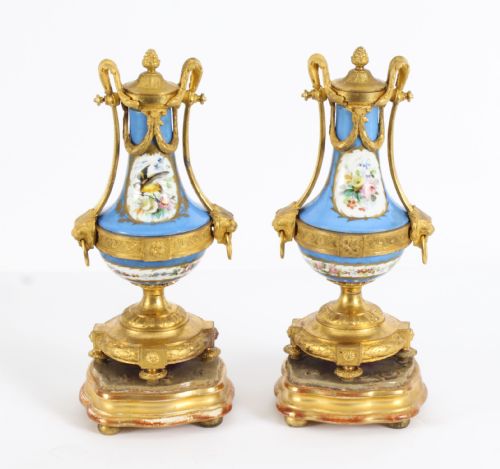
Many ceramic bodies feature elaborate cast metal mounts, utilising ormolu, gilt bronze, brass, and gilt metal to edge rims, bases, and handles. These metal mounts demand precise metalworking skills to fit the fired ceramic contours securely without damaging the glaze.
Materials recorded across these pieces combine porcelain, enamel, and glass with metal mounts in ormolu, gold leaf, gilt bronze, brass, and gilt metal.
Quality and execution
The refinement of the painted enamel and the precision of the gilding largely separate standard pieces from exceptional examples. Finer sets exhibit crisp brushwork, balanced polychrome palettes, and thickly applied gold leaf that retains its bright lustre after decades of handling.
The weight and finish of the metal mounts contribute significantly to the overall standard of a garniture. Superior sets integrate heavy ormolu or gilt bronze fittings that fit the ceramic body flush, whereas lesser examples rely on lighter brass or gilt metal with visible casting seams.
The 19th Century Ceramic Garniture Glossary
- Garniture
- A set of matching decorative vessels, such as vases or urns, designed to be displayed together on a mantelpiece or sideboard. These arrangements typically consist of three or five pieces of graduated or matching sizes.
- Ormolu
- Finely chopped high-karat gold applied to a bronze base using a mercury amalgamation technique, common in nineteenth-century decorative mounts. The process creates a rich, matte yellow finish that resists tarnishing.
- Bleu celeste
- A bright, pale turquoise blue enamel ground colour developed at the Sevres factory and widely imitated across nineteenth-century European ceramics. This distinctive hue forms the primary background for many decorative panels.
- Famille rose
- A palette of opaque enamel colours dominated by pink or rose shades, originating in Chinese ceramics and frequently revived in nineteenth-century European interpretations. The style relies on soft, blended tones for floral and figural motifs.
19th Century Ceramic Garniture: Frequently Asked Questions
What is a 19th century ceramic garniture?
A nineteenth-century ceramic garniture is a matching set of decorative vessels, such as vases or lidded urns, created to be displayed together as a symmetrical arrangement. These sets often included clock garnitures designed to anchor the centre of a mantelpiece.
The ceramic components were typically formed from porcelain or glazed earthenware, frequently paired with metal mounts and hand-painted enamel decoration. They functioned as ornamental centerpieces in formal nineteenth-century interiors rather than utilitarian containers.
How do you style a garniture set?
Garniture sets look best when displayed on a wide mantelpiece, console table, or sideboard where the full matching grouping can be seen without crowding. Placing the tallest urn or clock in the centre with the matching vases flanking it creates the traditional balanced arrangement.
Because these pieces carry significant visual weight through their gilding and painted surfaces, they require a simple background to stand out properly. Keeping surrounding decor minimal allows the intricate porcelain and ormolu details to remain the focal point of the room.
What styles are common in these sets?
The listings feature several distinct aesthetic movements from the nineteenth century, including neoclassical designs, French Rococo revival, and Sevres style pieces. Makers also drew inspiration from Chinoiserie motifs and Hispano-Moresque traditions, producing varied visual results.
French influence dominates many surviving pieces, particularly through Bleu Celeste grounds and gilt bronze mounts. Vienna porcelain styles also appear frequently, often taking the form of large lidded urns decorated with classical scenes.
Are these pieces fragile?
Like most nineteenth-century ceramics, these garnitures require careful handling due to the delicate nature of glazed porcelain and applied enamel. The protruding handles, lidded rims, and attached metal mounts are particularly susceptible to knocks if placed in high-traffic areas.
Displaying the pieces on stable, level surfaces away from edge risks prevents accidental tipping. Regular dusting with a soft, dry cloth helps maintain the gilt and enamel surfaces without introducing moisture.