


Antique Ceramic Bird Figures
These antique ceramic bird figures capture feathered subjects across European and Asian traditions, offering collectors finely modelled porcelain and earthenware forms to display.
Antique Ceramic Bird Figures
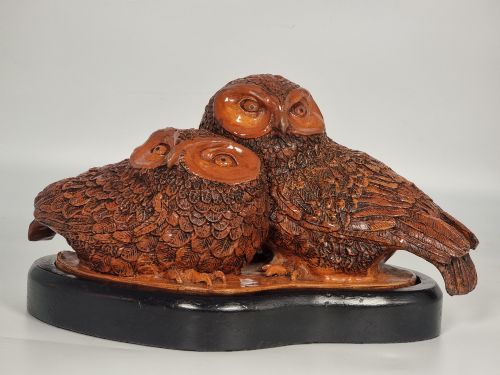
When you search for antique ceramic bird figures, you encounter a varied selection of sculptural works ranging from glazed parrots and cockerels to figural candlesticks and tureens. The pieces span the Georgian period, the nineteenth century, and the early twentieth century, drawing on European manufactories and Qing Dynasty production.
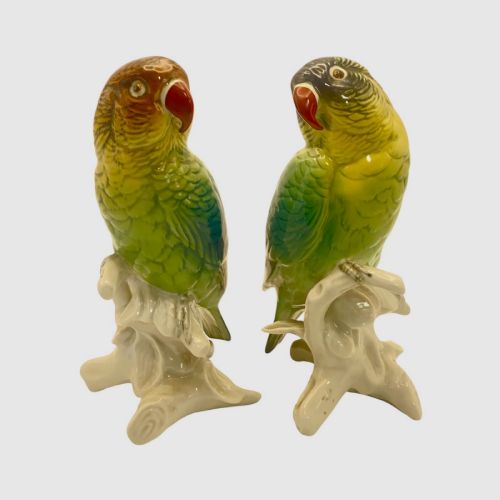
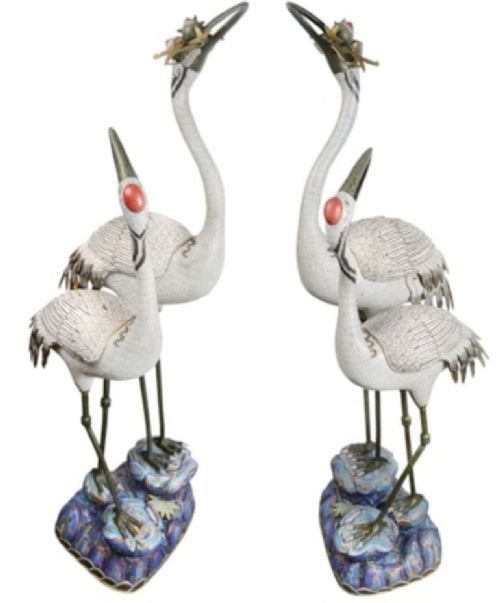
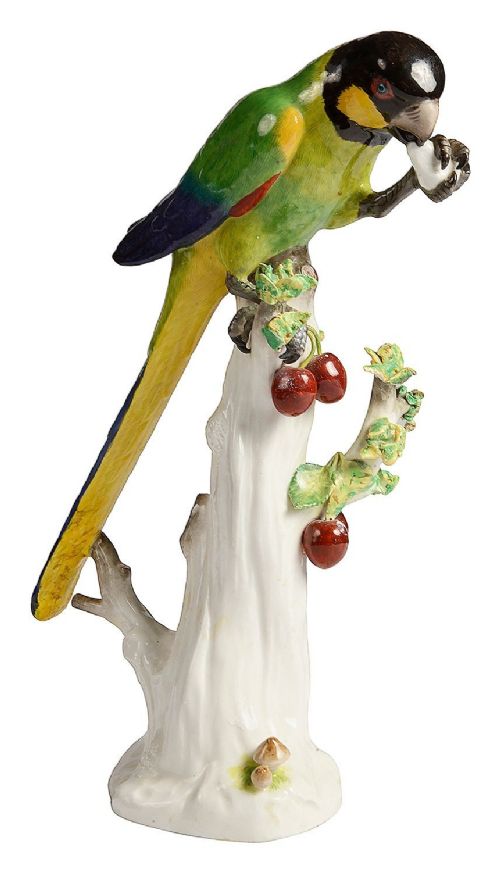
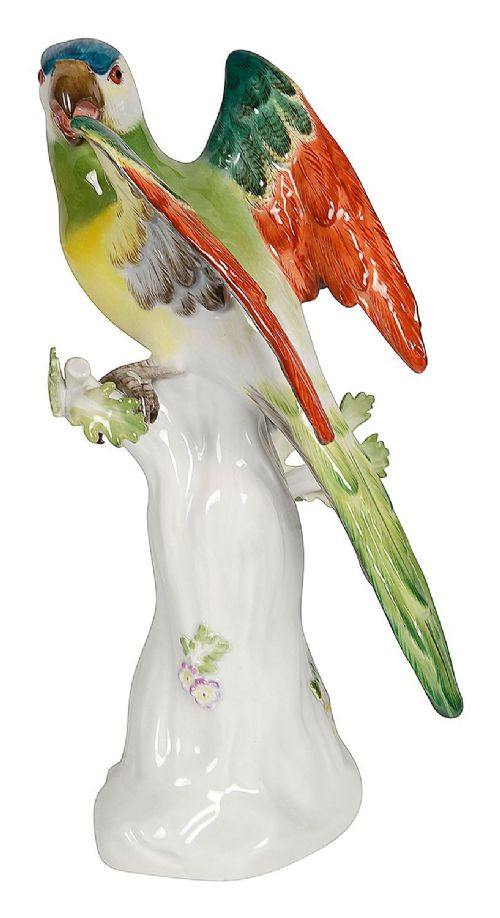
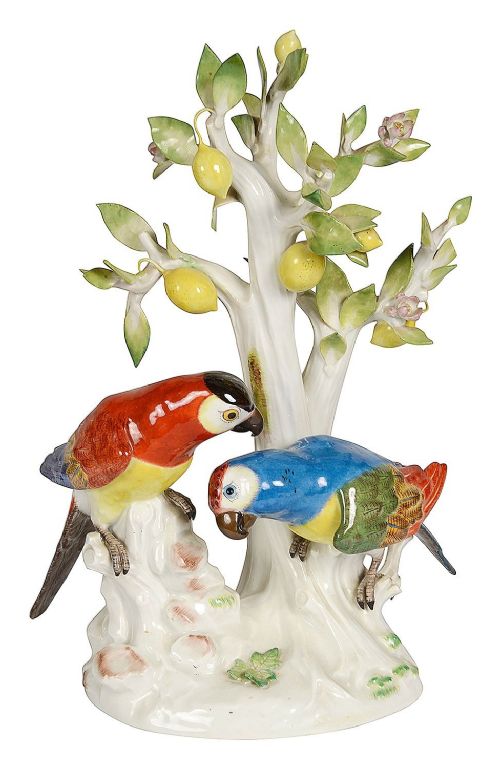
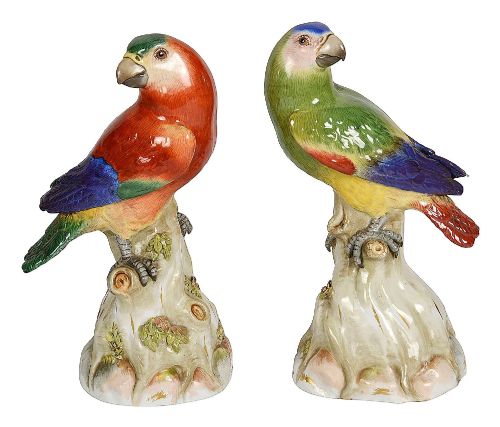
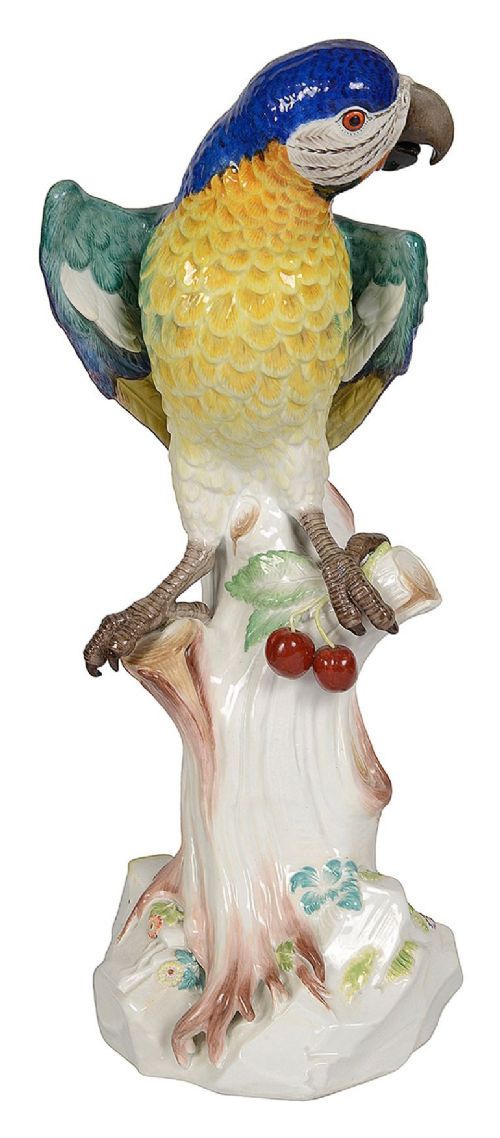
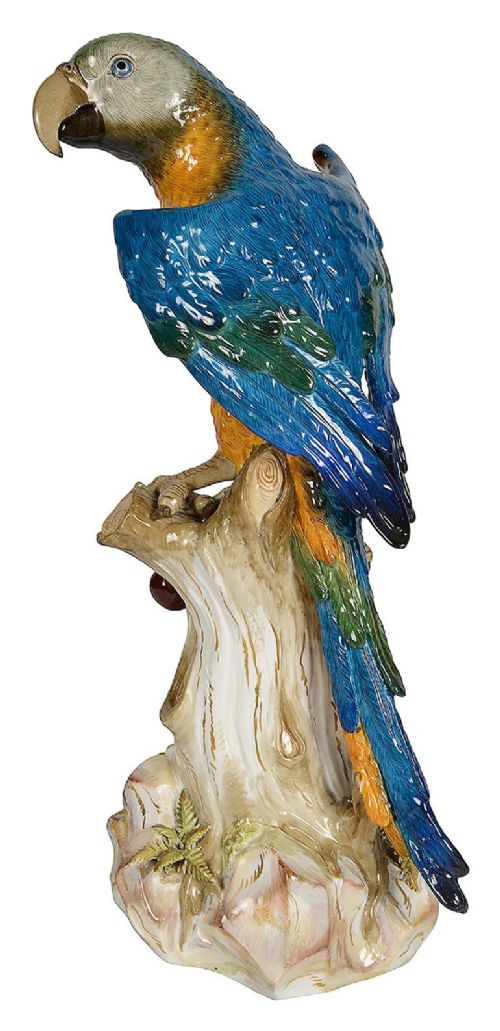
Meissen parrots and cockatoos dominate the available selections, frequently appearing in pairs perched on tree trunks or branches. Alongside these continental European porcelain models, you find English Staffordshire earthenware, Chinese turquoise-glazed and Famille Rose figures, and Italian terracotta cockerels.
How they were made
Makers utilised porcelain, soft-paste porcelain, hard-paste porcelain, earthenware, and terracotta to shape these avian subjects. Surface decoration relied upon enamel glazes, polychrome pigments, and celadon or turquoise glazes applied before or after firing.
Workshops such as Meissen, Derby, and Royal Worcester employed intricate moulding and hand-modelling techniques to render plumage, botanical supports, and anatomical details. Firing processes fixed the enamel colours and vitrified the ceramic bodies to varying degrees of translucency and density.
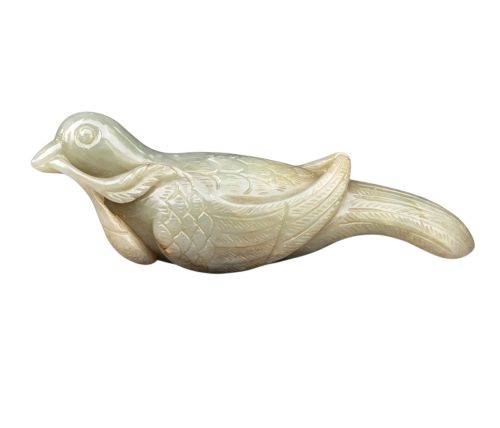
Listings feature nineteenth-century porcelain and earthenware from European manufactories alongside eighteenth-century Chinese celadon and polychrome faience.
What varies in quality
The sophistication of the modelling and the precision of the hand-painting set the finest examples apart from standard productions. Lifereal feather texturing and balanced multi-coloured enamel schemes indicate superior artistic execution in the workshop.
Scale and complexity also influence the standing of a piece, such as large paired figures or elaborate botanical settings compared to smaller single birds. The preservation of original polychrome surfaces and delicate extremities dictates the integrity of surviving specimens.
Karl Ens·Meissen·Derby·Staffordshire Pottery·Royal Worcester·Volkstedt Triebner Ens Eckert·Royal Dux
The Antique Ceramic Bird Figures Glossary
- Biscuit
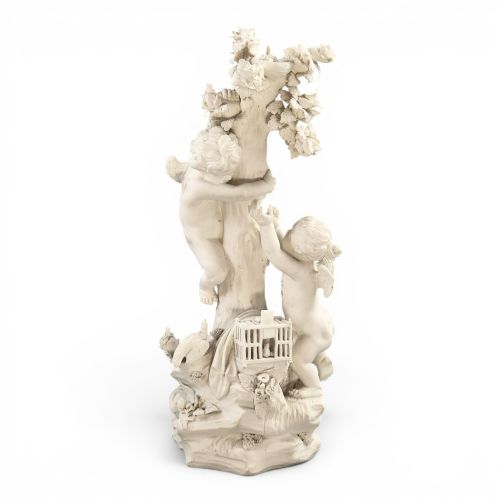
- Unglazed ceramic fired once, producing a matte, porous surface that reveals fine detail. This technique was frequently utilised for neoclassical figures and allegorical models.
- Hard-paste porcelain
- A dense, vitrified ceramic composed of kaolin and petuntse, fired at high temperatures. It resists scratching and provides a ringing tone when struck.
- Faience
- Tin-glazed earthenware decorated with metal oxide colours on an opaque white surface. It was widely produced across European workshops during the eighteenth century.
- Famille rose
- A palette of opaque enamel colours dominated by pink, introduced to Chinese porcelain production in the eighteenth century. Artisans used it to render naturalistic foliage and plumage.
- Celadon
- A pale green jade-like glaze applied to high-fired ceramics. The colour results from iron oxide in the glaze reacting within a reducing kiln atmosphere.
Antique Ceramic Bird Figures: Frequently Asked Questions
How do I identify Meissen bird figures?
Meissen pieces typically feature naturalistic modelling of species such as parrots, cockatoos, and hoopoes, often perched on leafy tree stumps or branches. Nineteenth-century examples display detailed multi-coloured enamel painting and substantial scale.
Examine the modelling of the plumage and the integration of the botanical base. Workshop standards remained high across both single figures and symmetrical pairs.
What is the difference between earthenware and porcelain birds?
Porcelain figures, including hard-paste and soft-paste varieties, offer a vitrified, non-porous body with a smooth, resonant finish that supports fine enamel details. Earthenware pieces, such as Staffordshire pottery, possess a more opaque, porous body with softer surface textures.
This material distinction affects weight, translucency, and the way polychrome glazes sit on the ceramic body. Both mediums were utilised across different periods and regional traditions.
How were ceramic bird figures used historically?
Many large porcelain and earthenware birds served as decorative garnitures on mantelpieces and tables within elite interiors. Others functioned as practical household objects, including candlesticks, inkwells, and animal-form tureens.
Functional pieces combined avian sculpture with utilitarian forms like lidded containers or candle sockets. Collectors today display them as standalone decorative sculptures.
How do I distinguish eighteenth-century pieces from nineteenth-century copies?
Eighteenth-century figures, such as those from Georgian Derby or Qing Dynasty kilns, exhibit the specific paste composition, glaze characteristics, and potting techniques of their era. Nineteenth-century revivals often replicate earlier Meissen and Imperial styles with heavier moulding.
Evaluating the palette, secondary glaze pooling, and base construction helps determine the manufacturing period. Archival records and historical models provide comparative benchmarks for dating.