



Antique Ceramic Animal
These antique ceramic animal figures bring centuries of character to a room, ranging from bold Staffordshire poodles to delicate Meissen birds.
Antique Ceramic Animal
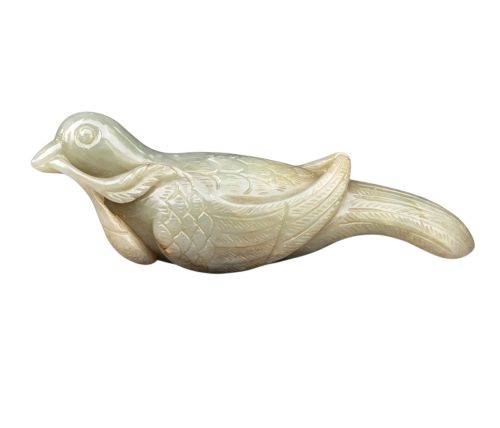
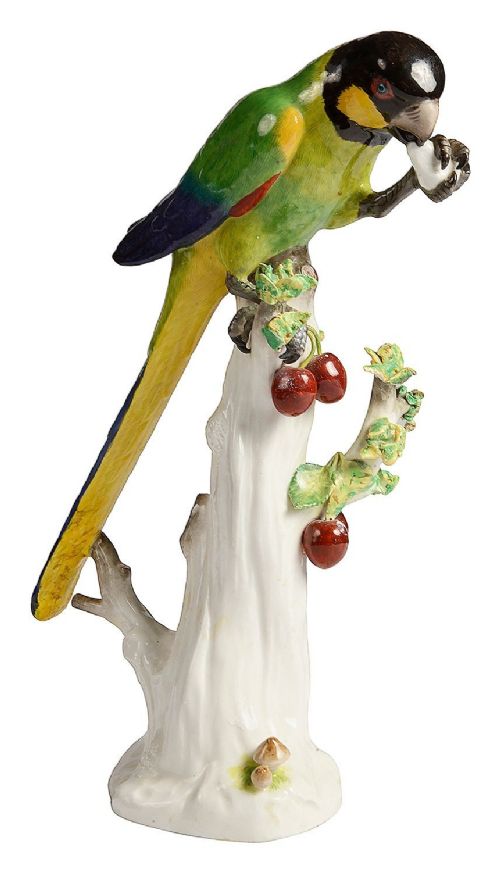
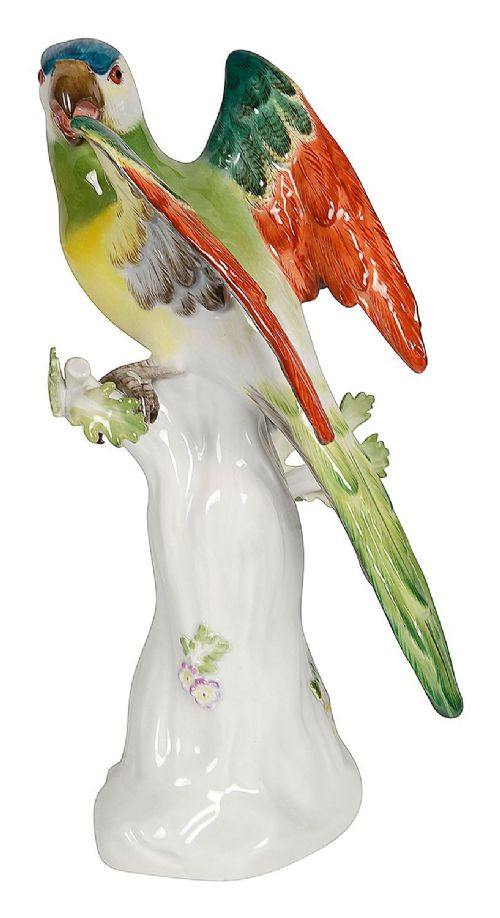
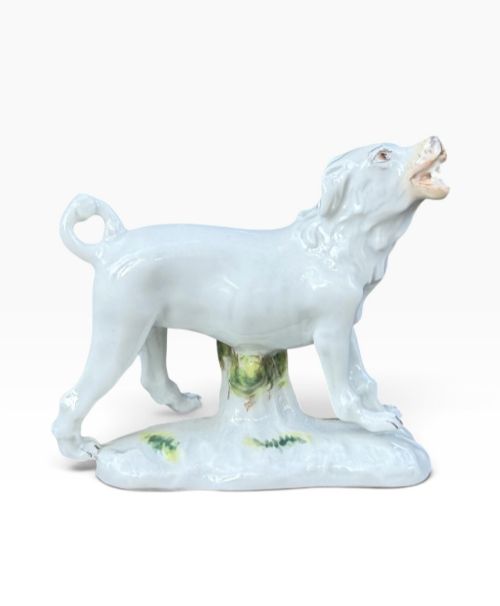
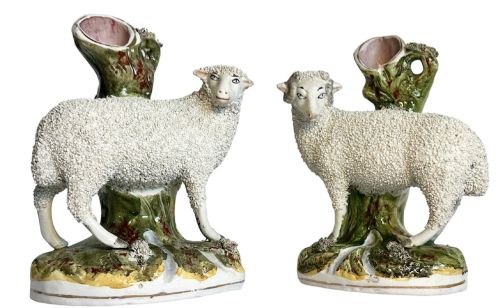
When you search for an antique ceramic animal, you meet a wonderful variety of creatures shaped by European kilns and potteries across the eighteenth and nineteenth centuries. The selection here leans heavily towards Staffordshire poodles, lions, and sheep, alongside finely modelled porcelain parrots, stags, and pugs from continental factories.
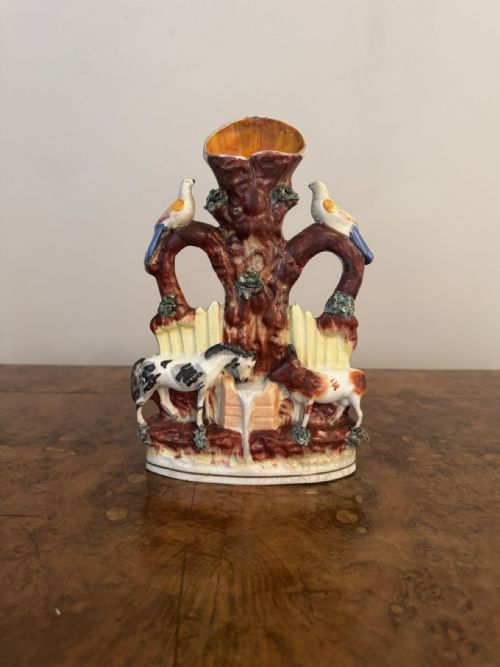
Makers fashioned these subjects as simple chimney ornaments, practical spill vases, and elaborate sculptural groups intended for display on mantelpieces and tables. Victorian earthenware pairs sit alongside Georgian porcelain figures, offering everything from rustic folk pottery to sophisticated court porcelain.
Materials and Methods
Potters relied on earthenware, porcelain, and terracotta, shaping them by hand or pressing them into moulds before firing. Workers then applied lead glazes, enamel colours, and treacle glazes to seal the porous clay and add rich surface decoration.
Many English figures like Staffordshire lions used pearlware bodies painted with underglaze cobalt or bright enamel overglazes. Continental factories such as Meissen and Derby utilised fine white porcelain painted with meticulous detail and fired at high temperatures.
A nineteenth-century ceramic pug dog wears a permanent look of mild disappointment.
Judging Quality
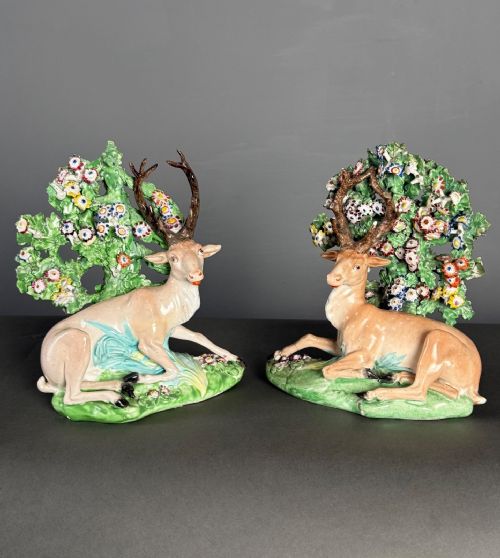
Early porcelain stag figures from Derby or finely glazed Staffordshire dogs display careful attention to anatomical detail and balanced proportions. Inferior examples often suffer from muddy glaze runs, blurred facial expressions, and careless painting.
Derby·Meissen·Doulton Lambeth·Sitzendorf·Royal Dux
The Antique Ceramic Animal Glossary
- Spill vase
- A hollow ceramic figure featuring an attached upright cylinder designed to hold wooden spills for lighting fires.
- Pearlware
- A refined earthenware developed in the late eighteenth century featuring a subtle bluish glaze over a pale body.
- Treacle glaze
- A thick, dark brown lead glaze that created a rich, glossy finish on nineteenth-century pottery.
- Bocage
- An intricate background of applied porcelain foliage and leaves framing eighteenth-century animal and human figures.
- Terracotta
- Fired unglazed brownish-red clay utilised widely for sculptural animal figures and architectural ornaments.
Antique Ceramic Animal: Frequently Asked Questions
What are Staffordshire dog figures?
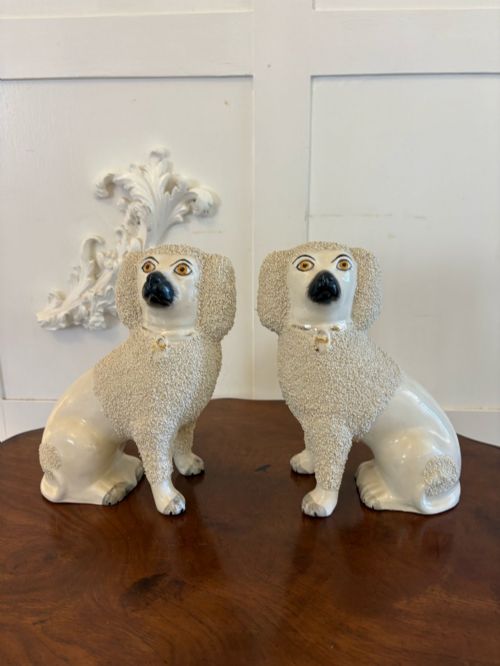
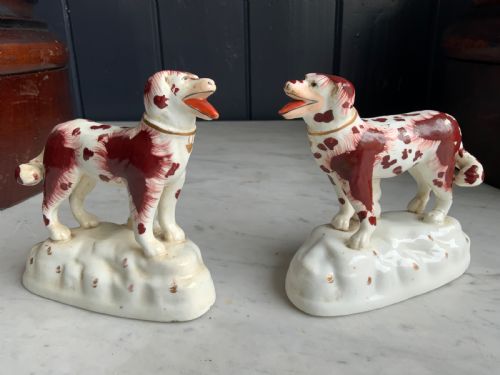
Staffordshire dog figures are earthenware mantel ornaments, usually poodles or spaniels, made in English potteries during the nineteenth century. They were typically produced in pairs to sit on either side of a fireplace.
Potters moulded these dogs in halves and joined them before applying white glazes and painted details. They remain one of the most recognisable styles of antique ceramic animals.
How do I date a porcelain animal?
Dating requires looking at the glaze, the weight of the ceramic body, and any factory marks stamped or painted on the base. Eighteenth-century pieces often feel lighter and show subtle variations from hand modelling.
Later Victorian and twentieth-century versions display more uniform machine pressing and brighter, modern enamel colours. Comparing base markings with known factory histories helps narrow down the decade.
Where should I display these figures?
These figures look best on stable wooden surfaces such as mantelpieces, bookshelves, or sideboards where their colours can stand out. Because antique ceramics are fragile, place them away from high-traffic areas and direct edges.
Pairing matching mantel dogs or placing a single bird sculpture near natural light highlights the glaze and surface texture. Keep them out of direct sunlight to prevent any painted enamel colours from fading over time.
What is a spill vase?
A spill vase is a hollow ceramic vessel combined with an animal figure, featuring a tall tube at the back. In homes before matches, these held wooden spills used to transfer fire from the hearth to candles and lamps.
Potters combined utility with charm by shaping lions, sheep, or dogs beside the vase opening. They functioned as everyday household tools disguised as decorative ornaments.