
Antique Cellarette
An antique cellarette is a secure timber vessel for holding bottled wine near the dining table, prized for rich mahogany surfaces and classical proportions.
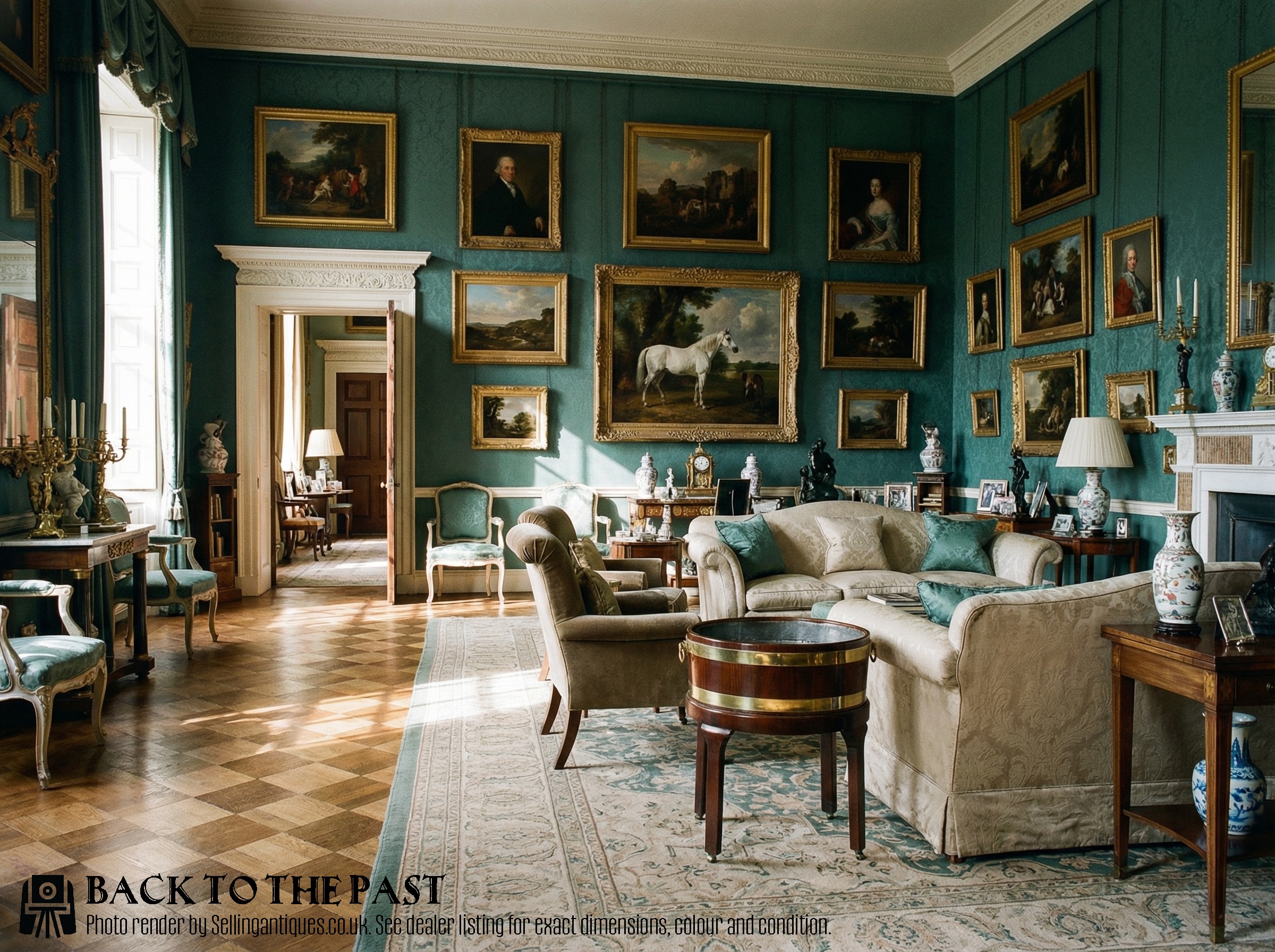
The Form and Character of an Antique Cellarette
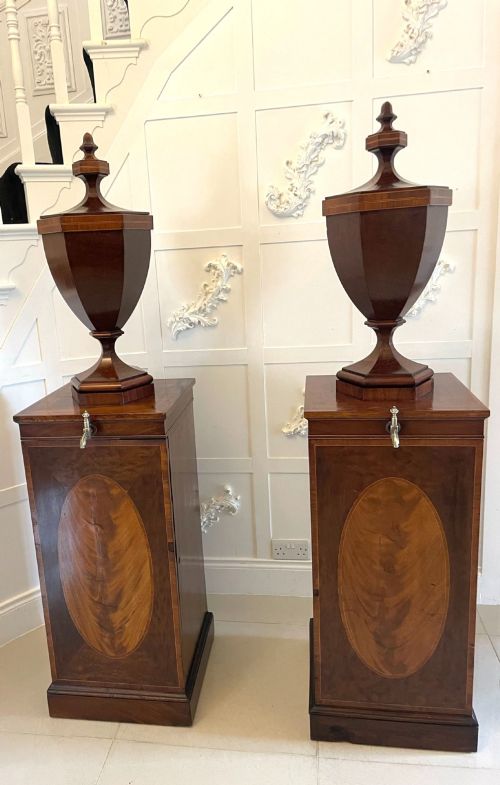
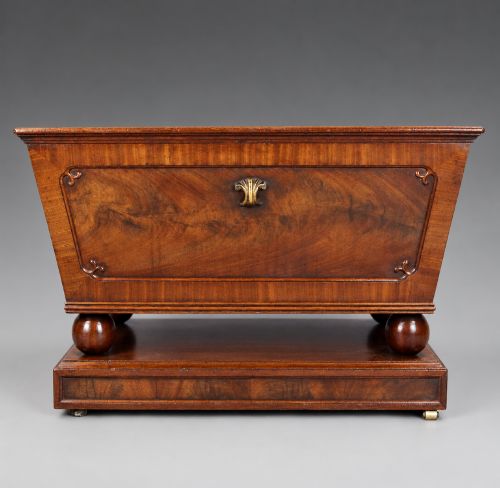
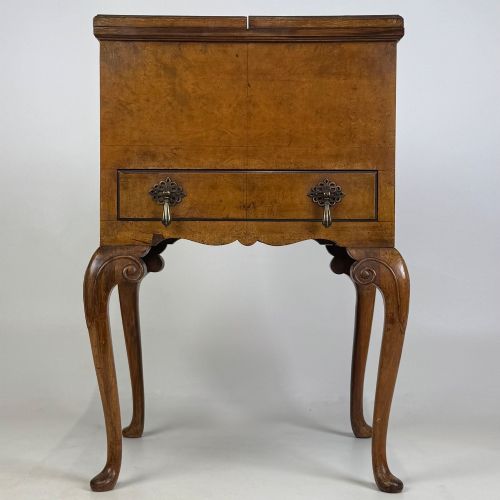
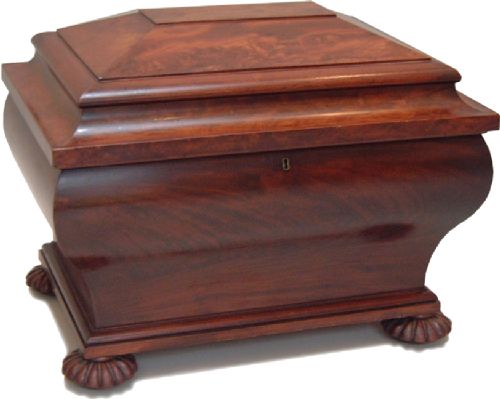
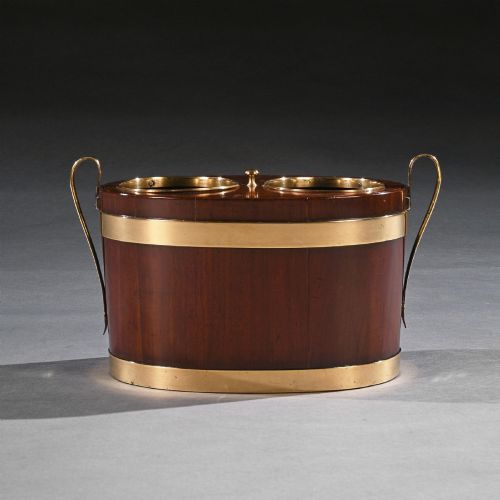
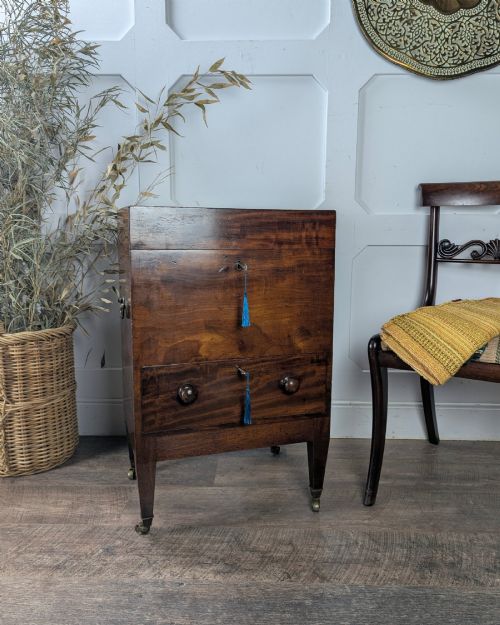
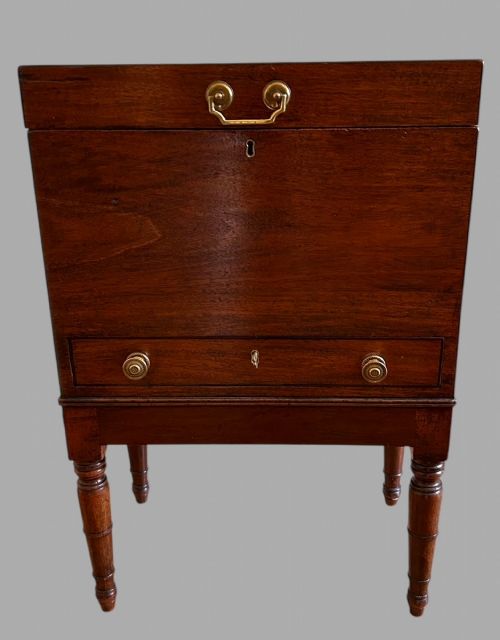
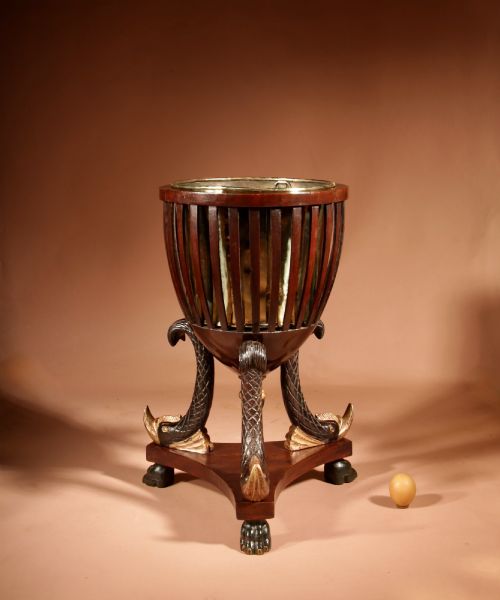
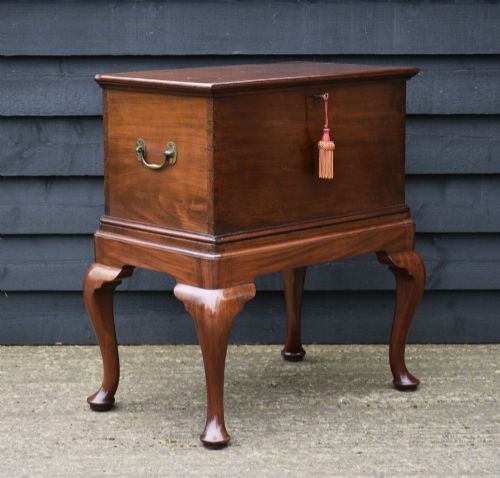
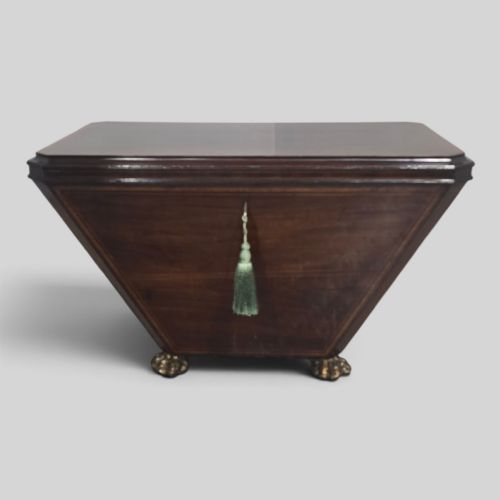
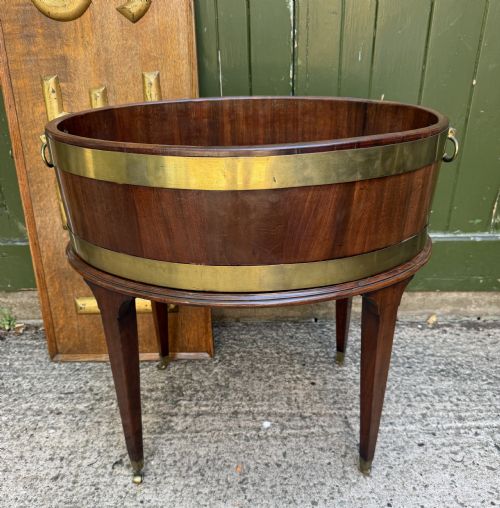
An antique cellarette serves as a dedicated storage chest for wine bottles, designed to sit beneath a sideboard or beside a dining table during the Georgian, Regency, and Victorian periods. Buyers encounter these vessels most frequently as mahogany sarcophagus forms with hinged lids, though octagonal, oval, and stand-mounted variations also appear across the inventory.
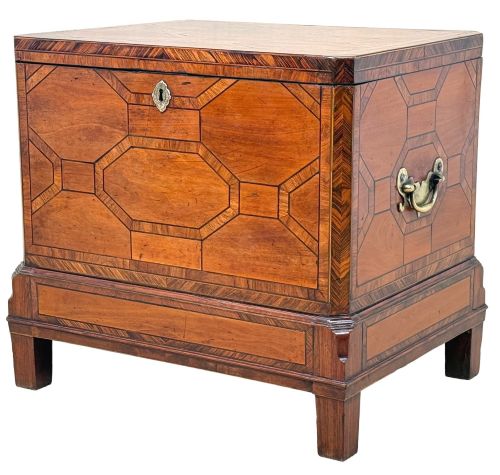
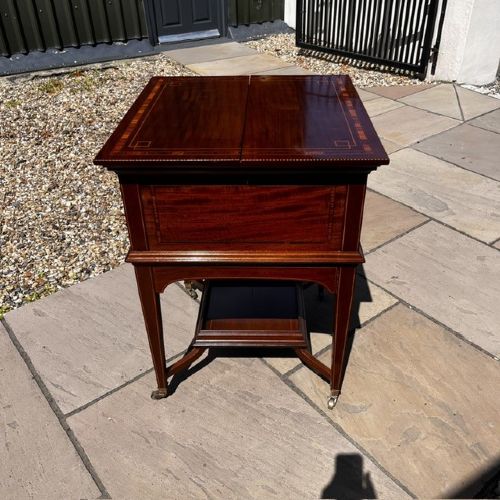
The objects span the eighteenth and nineteenth centuries, taking stylistic cues from Sheraton designs and incorporating brass banding, satinwood inlay, or boxwood stringing. Pieces range from campaign boxes to large sideboard integrations, reflecting how dining habits evolved in English households over several generations.
Materials and Construction Methods
Cabinetmakers built these wine coolers primarily from solid mahogany and flame mahogany veneer, occasionally introducing walnut, satinwood, and boxwood for contrasting stringing and geometric inlay. Metal fittings such as brass handles, straps, and protective bands reinforced the structural joints while adding decorative contrast to the dark timber.
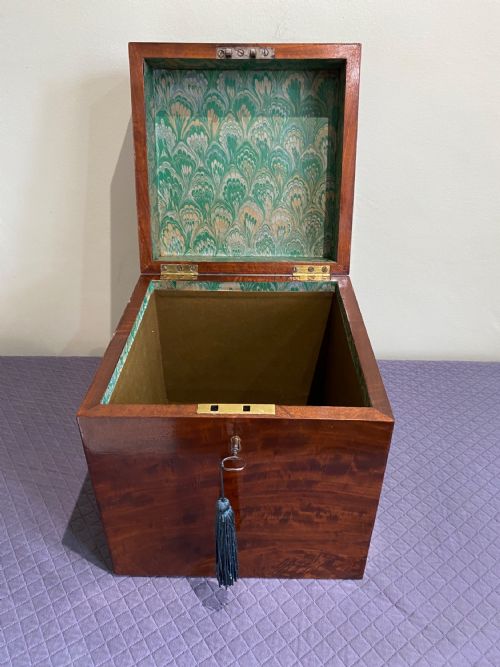
Joinery involved sturdy framing to support the heavy weight of bottled wine, often with internal wooden partitions or metal linings designed to hold ice and liquid. Sarcophagus and octagonal bodies relied on precise mitring and coopered staves similar to barrel-making techniques to achieve their curved and panelled profiles.
Retail Price Guide 2026
Typical UK retail prices for cellarette, calculated from the Sellingantiques database of over a million retail prices indexed since 2003. This retail price guide relies exclusively on Sellingantiques data; no external sources or auction records are used, so the figures do not describe the wider market.
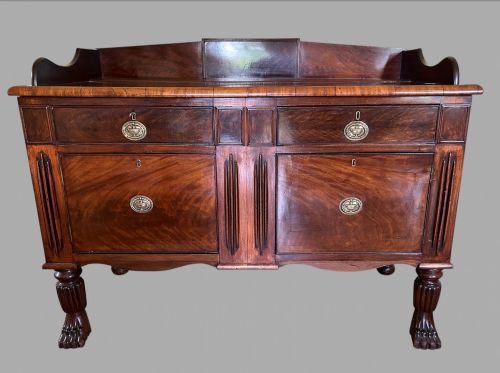
The inventory records both freestanding sarcophagus bodies and wine coolers mounted on dedicated stands.
Distinctions in Execution and Design
The distinction between ordinary storage boxes and master-workshop pieces rests on the choice of timber figure, such as highly figured flame mahogany veneer, and the restraint of decorative inlay. Workshops known for documented cabinet-making demonstrate superior proportion in curved sarcophagus mouldings and crisper execution of brass mounts.
Internal arrangements and secondary timbers reveal the level of care invested by the maker, with superior examples retaining original lead linings, fitted bottle dividers, and precise dovetailing. Subtle details like cross-banded borders and finely turned legs elevate certain pieces far beyond standard utilitarian coolers.
Edwards and Roberts·Gillows of Lancaster
The Antique Cellarette Glossary
- Cellarette
- A lockable container used for storing wine bottles near the dining table before serving. These vessels became standard dining room furniture during the eighteenth century.
- Sarcophagus
- A monumental cabinet shape featuring a domed lid and panelled sides tapering toward the base, popular during the Regency period. The design mimics ancient stone tombs.
- Flame mahogany
- A decorative veneer cut from timber where the branch meets the trunk, producing a rippled, flame-like grain pattern. Cabinetmakers reserved this timber for primary display surfaces.
- Stringing
- Thin lines of contrasting light wood, such as boxwood or satinwood, inlaid into darker veneers to outline panels and geometric shapes. This technique defines Sheraton styling.
- Coopered
- A method of construction using vertical wooden staves joined edge-to-edge to form a rounded body, traditionally used for casks and certain octagonal wine coolers.
Frequently Asked Questions
What is an antique cellarette used for?
These vessels held bottles of wine securely near the dining table, often containing lead-lined interiors intended to hold ice and chill the vintage before serving.
In modern homes, they function well as side tables, fireside storage boxes, or low display chests that conceal household items while adding period character to a room.
How do I date an antique cellarette?
Dating relies on observing stylistic markers such as Sheraton inlay, Regency sarcophagus proportions, and the transition from eighteenth-century straight-legged stands to heavy nineteenth-century plinth bases.
Examining timber choice, handle design, and interior construction methods helps narrow the period of manufacture between the Georgian era and the Victorian age.
Where should I place a cellarette?
They suit dining rooms positioned alongside sideboards or serving tables, mirroring their original placement in historic English houses.
Smaller octagonal or stand-mounted versions also fit comfortably in libraries or living spaces as occasional tables with hidden storage capacity.
Are brass mounts original to the piece?
Original brass handles and banding typically show period-appropriate casting techniques, patination, and fastening methods consistent with eighteenth and nineteenth-century metalwork.
Replacements often appear cleaner or lack the worn edges and screw types expected from long exposure to dining room use.