
Antique Cellarette Cooler
When you search for an antique cellarette cooler, you find timber vessels designed to hold bottles at the dining table.
Antique Cellarette Cooler
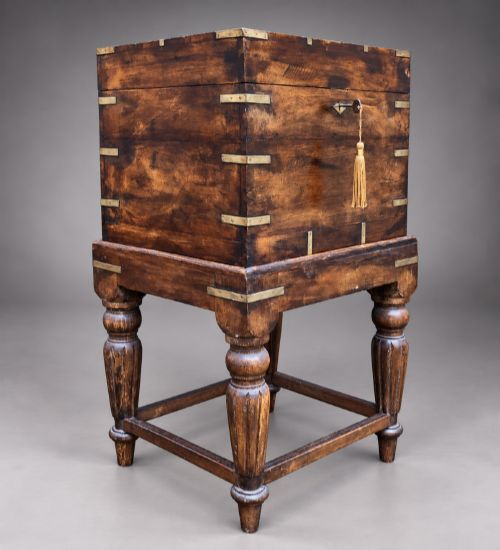
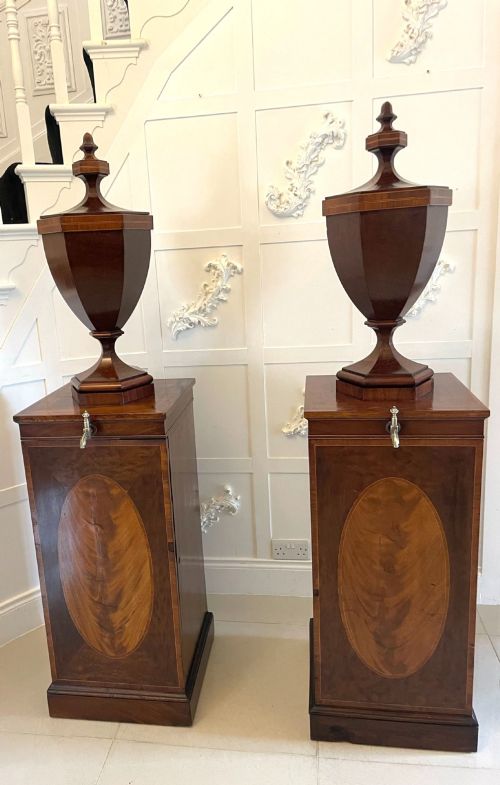
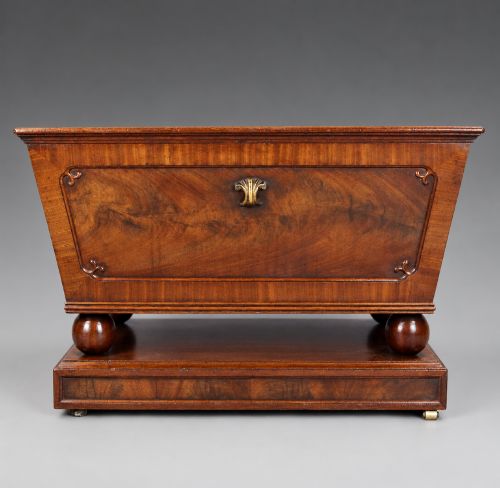
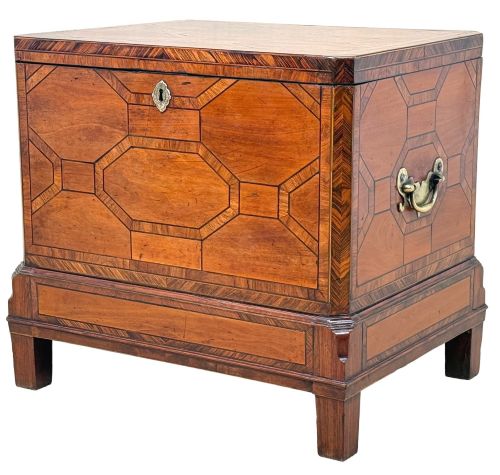
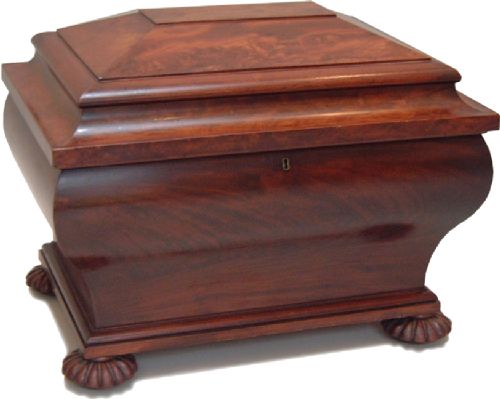
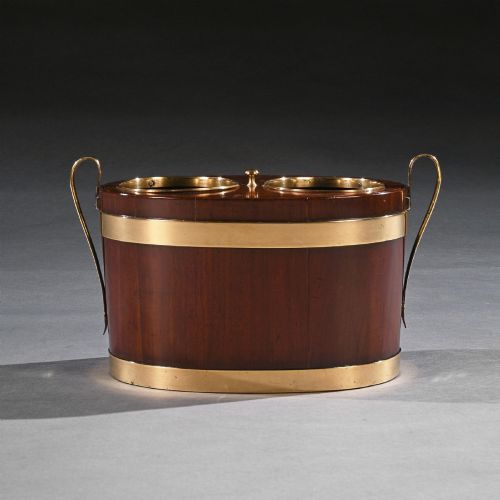
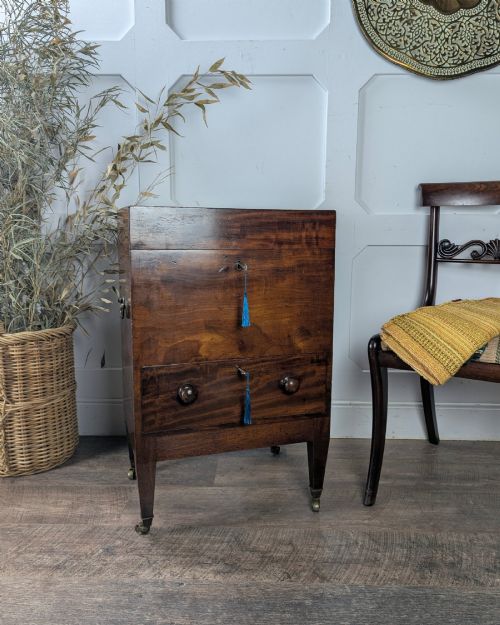
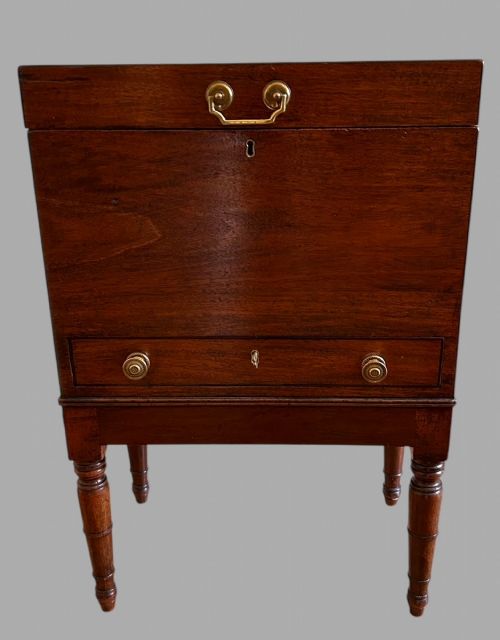
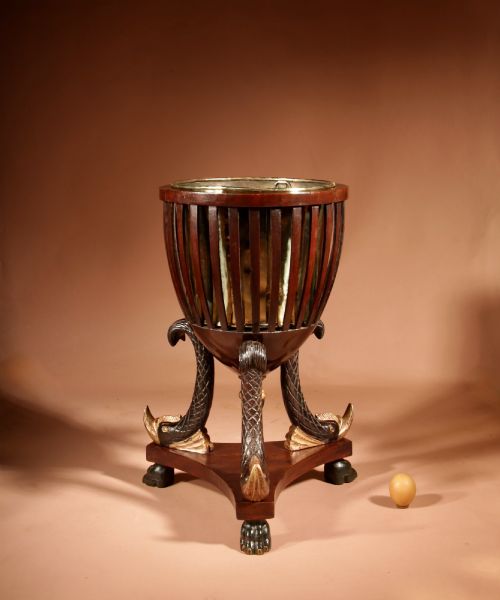
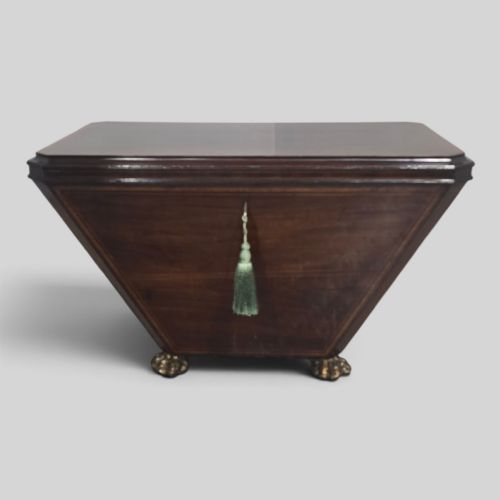
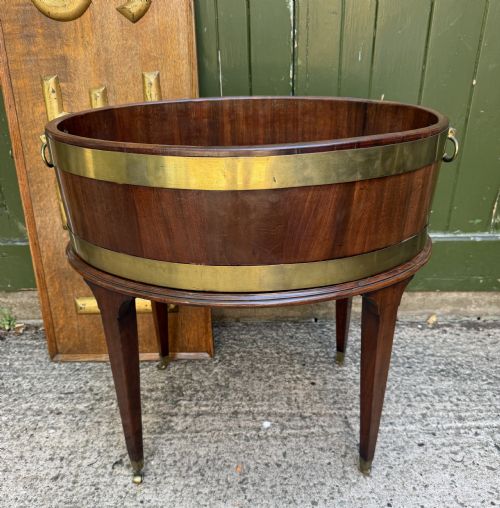
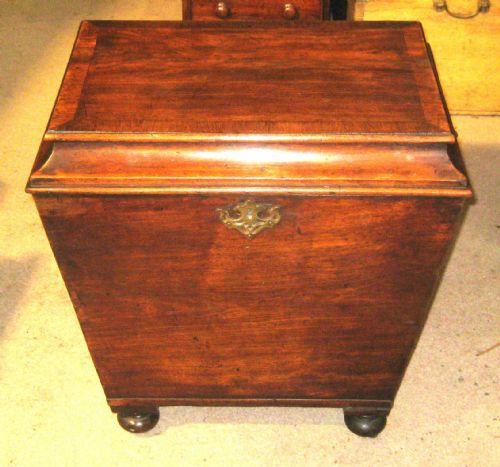
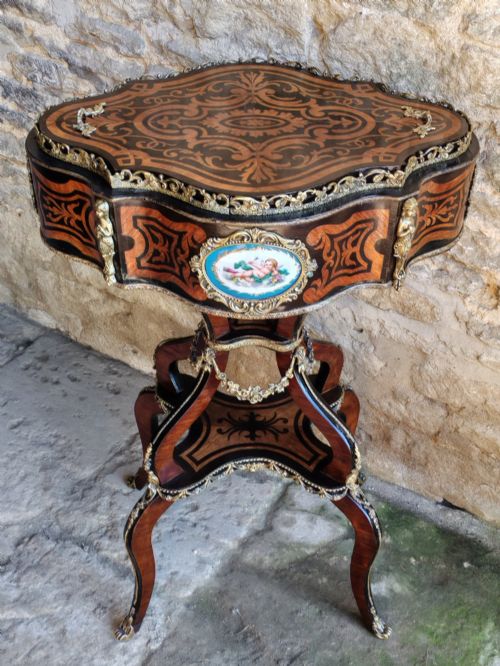
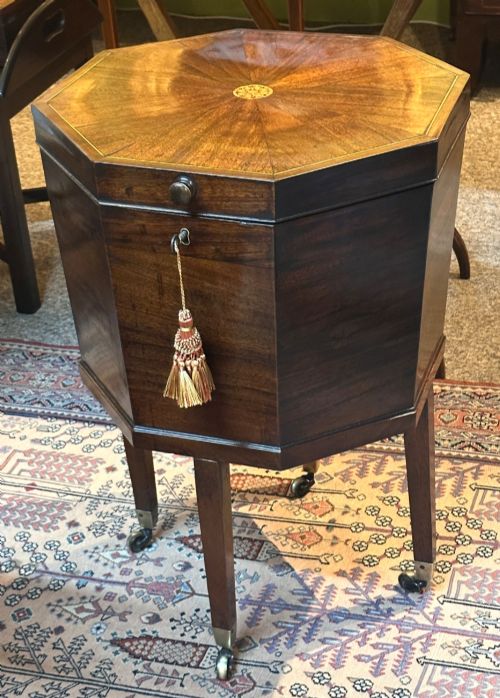
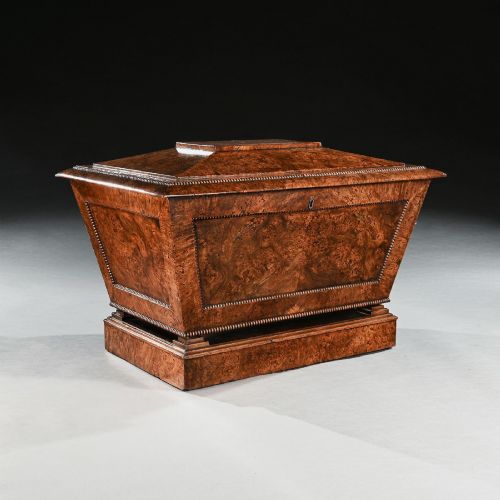
An antique cellarette cooler is a specialised storage piece designed to keep wine and spirits chilled or at hand during dining. These vessels appear in forms such as octagonal bins, oval tubs, sarcophagus shapes, and pedestals with urns. The Georgian and Regency periods dominate the selection, bringing substantial timber vessels shaped for domestic service.
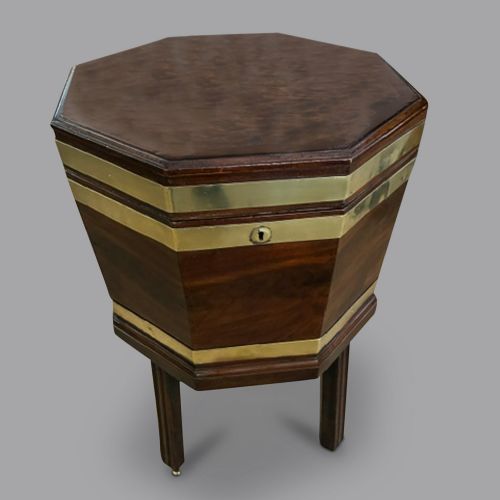
Makers constructed these pieces to sit beneath sideboards or beside dining tables, often fitted with internal lead linings or compartments to hold ice and bottles. Examples range from brass-bound mahogany buckets on stands to elaborate sarcophagi resting on paw feet. Buyers encounter variants that double as jardinières or log baskets alongside traditional wine coolers.
Construction and Materials
Makers relied principally on mahogany, often utilising flame veneers, Cuban timber, or solid boards coopered in the manner of barrels with visible staves and metal bands. Brass fittings, including carrying handles, binding hoops, and lion-paw feet, provide structural reinforcement and contrast against the dark wood. Artisans integrated boxwood inlay, satinwood, kingwood, ormolu, and ebonised details to ornament the exterior surfaces.
Interior architecture involved lead linings sealed at the seams to retain melted ice water, alongside fitted wooden dividers to separate individual bottles. Cabinetmakers applied meticulous joinery, utilising dovetails for carcases and turning wood for pedestals, urns, and legs. Secondary timbers such as oak or pine appear in hidden structural areas.
Forms span simple octagonal buckets on stands to elaborate French Empire planter designs and massive sarcophagi.
Distinctions in Execution
The degree of refinement in timber selection dictates the visual impact of an antique cellarette cooler, with figured flame mahogany or contrasting boxwood and satinwood inlay marking higher tiers of execution. The survival of original lead liners, internal bottle dividers, and matching stands or pedestals elevates a piece above those altered or stripped of their internal fittings.
Carved details, such as classical lion-paw feet, reeded mouldings, or cast ormolu mounts, reflect the hand of skilled workshops. The tightness of the coopered staves and the crispness of brass bandings demonstrate the original standard of craftsmanship.
Edwards and Roberts·Gillows
The Antique Cellarette Cooler Glossary
- Cellarette
- A lockable container or bin for holding bottles of wine near the dining table. They frequently feature internal divisions and metal linings.
- Coopered
- Constructed using vertical wooden staves bound together with metal hoops, mimicking the method used to build casks and barrels.
- Sarcophagus
- A monumental chest form with a sloping lid and flared sides, popular during the Regency period for large wine coolers.
- Jardiniere
- An ornamental stand or container intended for holding plants and flowers, often sharing forms with wine coolers.
- Ormolu
- Gilt bronze mounts applied to furniture for decorative enrichment, common on finer Regency and French-influenced pieces.
Antique Cellarette Cooler: Frequently Asked Questions
How were these coolers used?
Servants filled the internal lead-lined compartments with ice and water to chill wine before or during dinner service. The vessels stood on the floor beside the dining table or beneath a sideboard for easy access.
Over time, owners repurposed many examples as plant stands, jardinières, or log baskets once formal dining habits changed. Their robust construction allowed them to transition easily through different domestic roles.
How do you date an antique cellarette?
Dating relies on observing the prevailing style, timber choice, and construction methods associated with specific design periods. Georgian examples often feature straight lines, brass banding, and pedestals, while Regency pieces lean toward heavier sarcophagus forms and carved paw feet.
Secondary woods, types of joinery, and the presence of specific inlay patterns like satinwood or boxwood provide further chronological clues. Examining the wear patterns on the interior lead helps confirm the age of the piece.
How do you live with a cellarette today?
Cellarettes function well as side tables, umbrella stands, or magazine holders in modern living spaces. Their deep storage capacities make them practical for tucking away household items while adding historic character to a room.
Placing them in dry environments helps preserve the antique timber and brass fittings. Regular dusting and occasional wax application maintain the patina of the mahogany surface.