
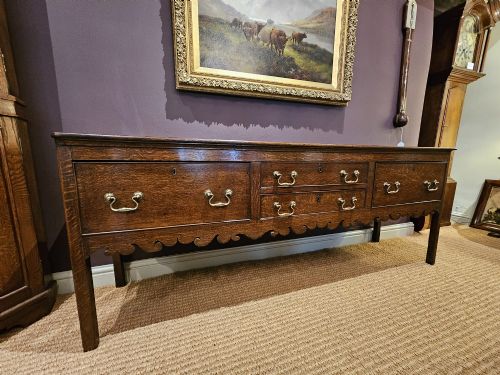
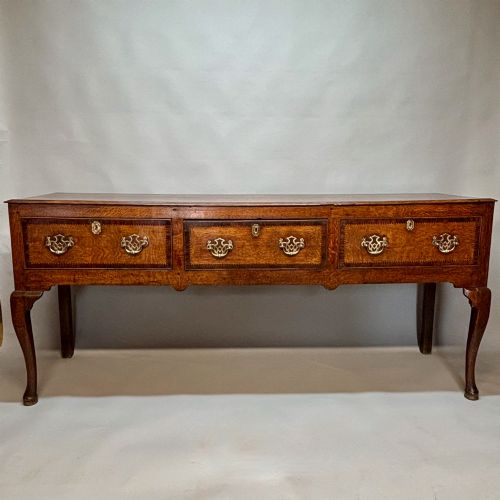
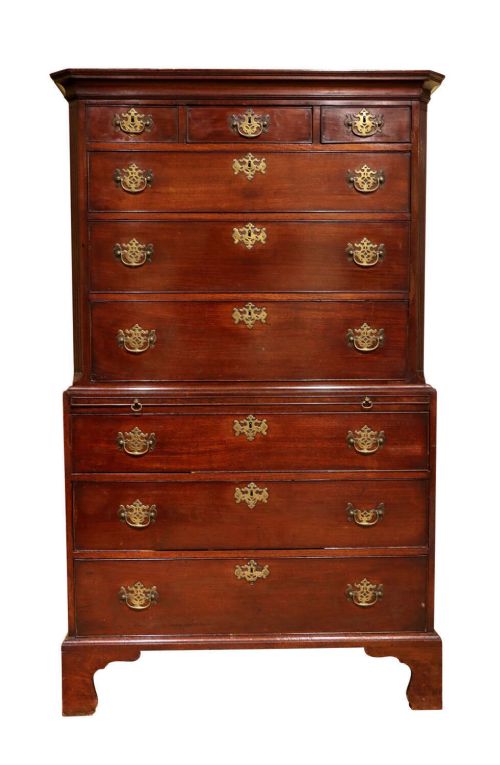
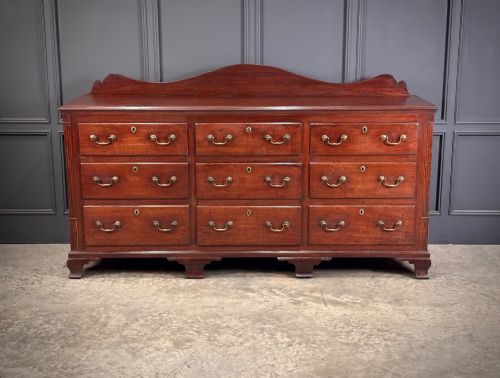
Antique Carved Drawers
These antique carved drawers bring rich texture and heritage grain into a room through centuries of cabinetmaking tradition.
Antique Carved Drawers
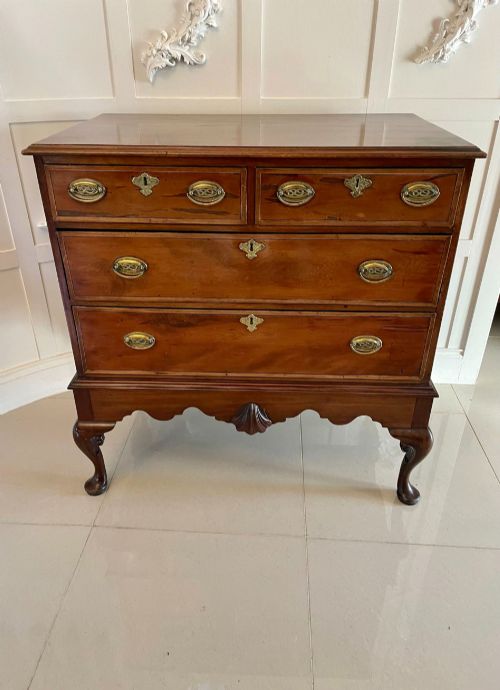
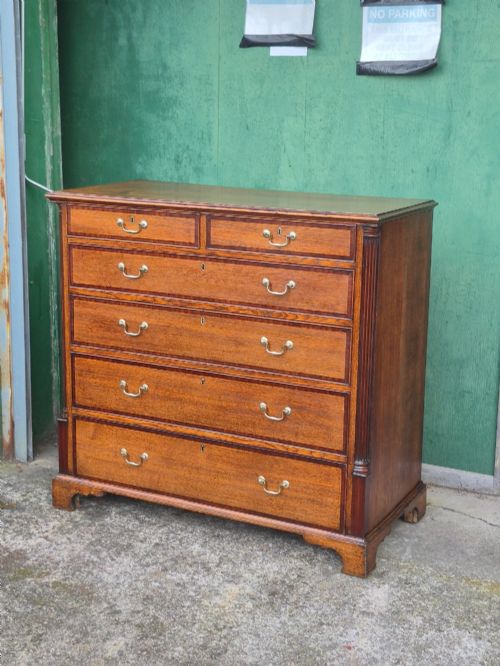
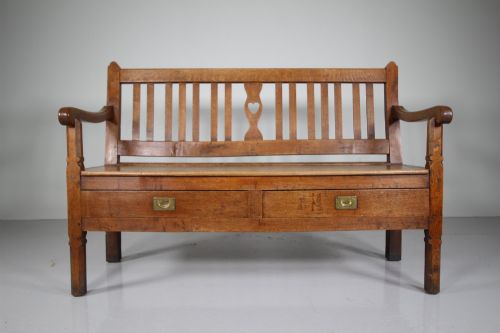
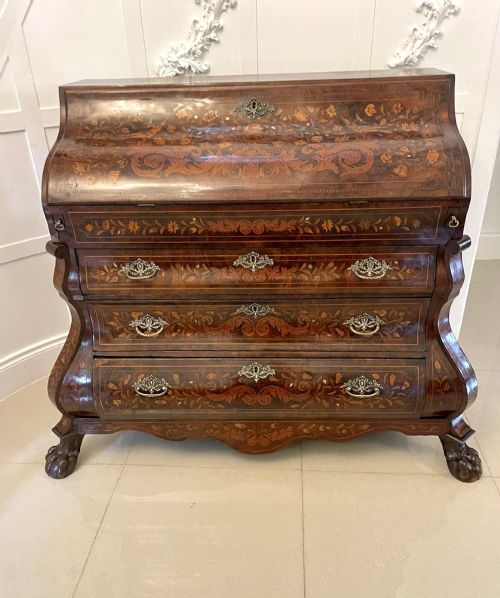
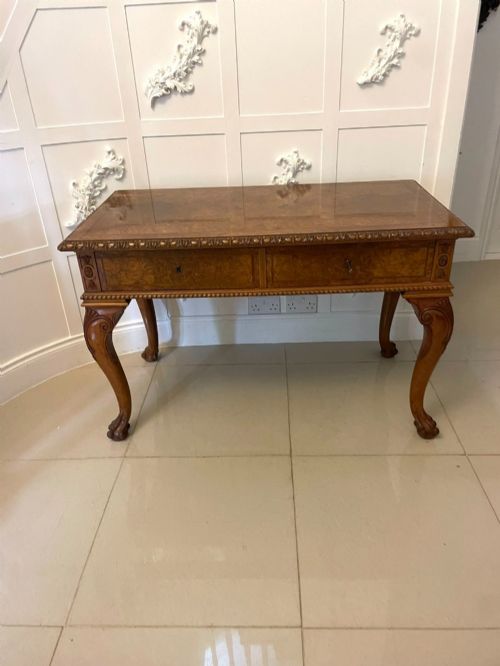
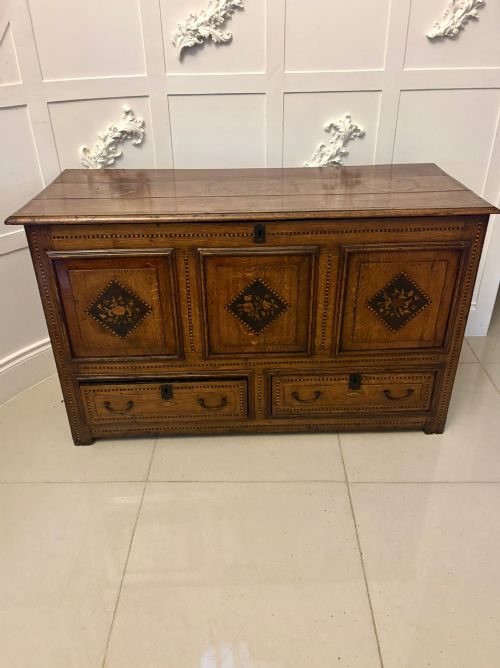
When you search for antique carved drawers, you uncover storage furniture ranging from sturdy oak chests to elegant walnut bureaux and commodes. The pieces on this page span several centuries, including substantial 17th-century mule chests, Georgian mahogany items, and ornate Victorian creations.
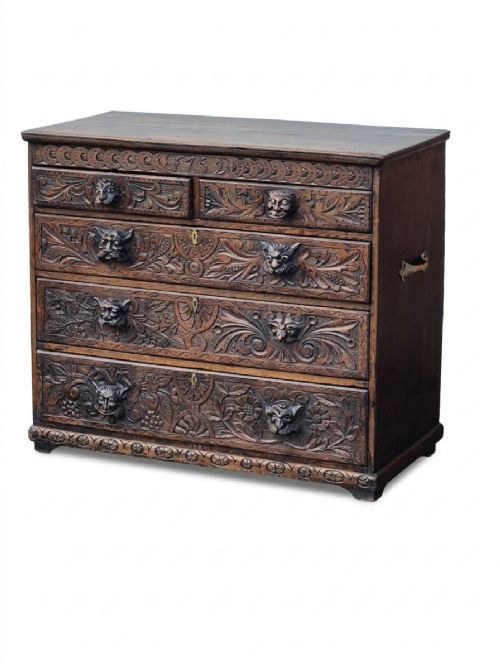
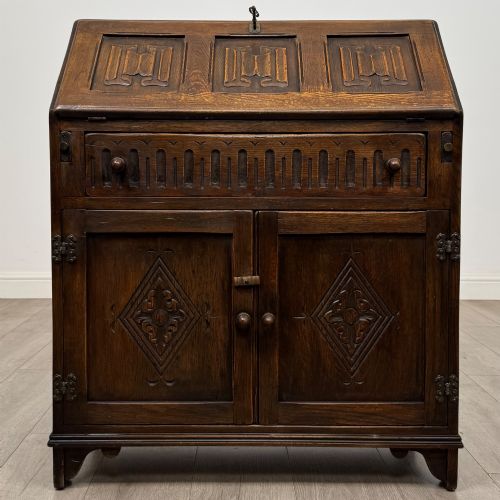
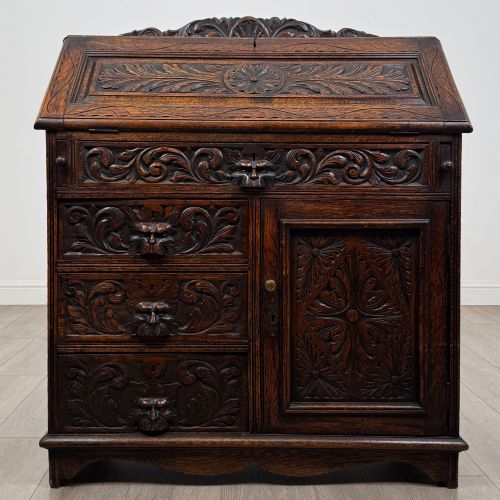
You are most likely to meet oak and walnut examples featuring traditional panel work, linenfold motifs, or striking Green Man carvings. These items serve as practical household storage while doubling as sculptural focal points in hallways, bedrooms, and studies.
How they were made
Cabinetmakers built these drawers using solid timbers such as oak, walnut, and mahogany, often enhanced by burr veneers, crossbanding, and marquetry inlay. Brass handles, iron fittings, and leather inserts added functional contrast to the wooden structures.
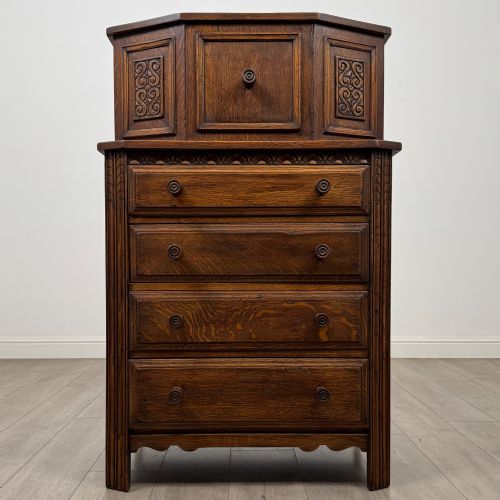
Carving was executed by hand, producing deep relief work like foliate details, linenfold panels, and grotesque masks. Joinery techniques relied on traditional methods to accommodate natural timber movement over decades of use.
Some Victorian oak pieces watch over the hallway with carved Green Man foliage sprouting directly from their wooden smiles.
What varies in quality
The standard of a piece rests in the depth and sharpness of the hand carving, alongside the selection of figured timbers like burr walnut or quarter-sawn oak. Superior examples exhibit precise marquetry and harmonious proportions.
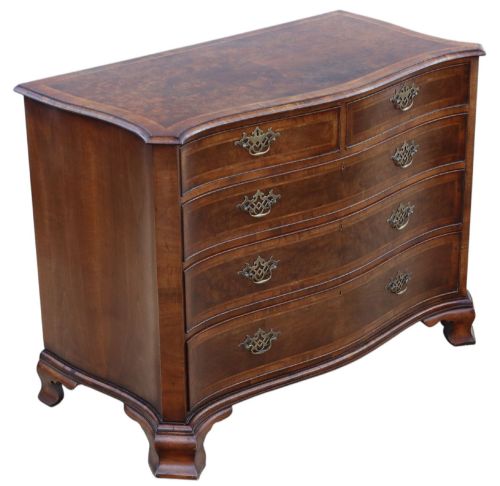
Construction details also dictate value, distinguishing standard utility items from masterwork commodes and desks with intricate serpentine shapes and crossbanded surfaces.
The Antique Carved Drawers Glossary
- Burr walnut
- A prized timber taken from the wart-like growth on a walnut tree, yielding complex swirling grain patterns. It was frequently used for high-end veneers on 18th-century and Victorian furniture.
- Linenfold
- A style of wood carving that imitates folded linen cloth, commonly seen on panels of early oak furniture and Edwardian pieces. This technique creates a textured surface with simulated vertical folds.
- Serpentine
- A furniture front or surface shaped with a convex centre flanked by concave curves, creating an undulating silhouette. This contour requires advanced woodworking skill.
- Mule chest
- A traditional storage chest featuring one or more drawers at the base beneath a hinged lid compartment. They bridge the evolution from simple coffers to modern drawer chests.
- Green Man
- A sculptural architectural motif depicting a human face entwined with or sprouting foliage and vines. Victorian revival pieces often incorporated this symbol into heavy oak carvings.
Antique Carved Drawers: Frequently Asked Questions
What periods do these carved drawers come from?
The pieces span from the 17th century through the Georgian and Victorian eras up to the early 20th century. Each period brought distinct carving styles and timber preferences.
Early items lean toward heavy oak with geometric or figurative panels, while later Victorian and Edwardian examples showcase refined walnut and lighter oak revival work.
How do I care for antique wooden drawers?
Keep wooden furniture away from direct heat sources and dramatic humidity changes to prevent the timber from splitting or warping. Regular dusting with a soft, dry cloth protects the finish.
Applying quality beeswax occasionally helps nourish older woods like oak and walnut without building up heavy chemical residues.
Where were these pieces typically used?
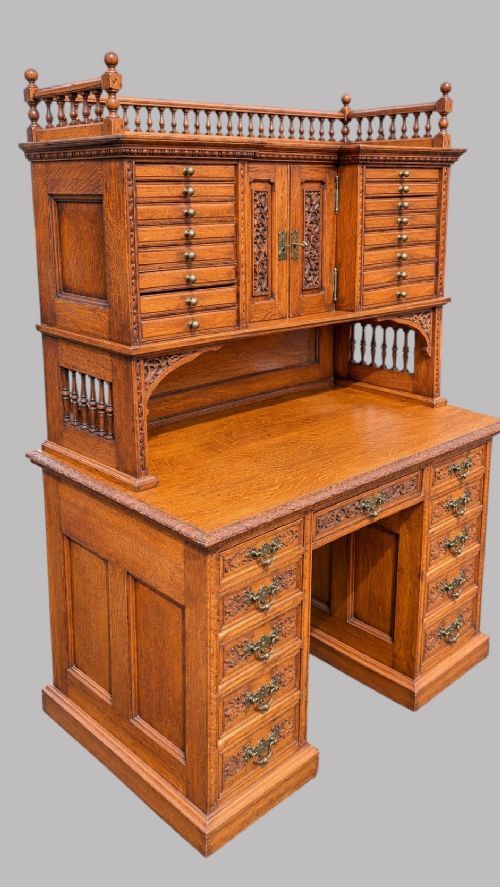
These items served various rooms across historic homes, functioning as bedroom storage, hallway statement pieces, or study desks. Bureaux and pedestal desks provided dedicated writing spaces with integrated drawer capacity.
Larger chests and commodes stood in parlours and halls to store household linens, documents, and garments.
How do I distinguish oak from walnut pieces?
Oak is a heavy, durable timber with prominent grain markings and visible medullary rays, often associated with earlier centuries and revival styles. Walnut presents a smoother, darker surface often highlighted by swirling burr patterns.
Walnut was typically selected for high-status decorative furniture, whereas oak provided robust utility across centuries of domestic life.