

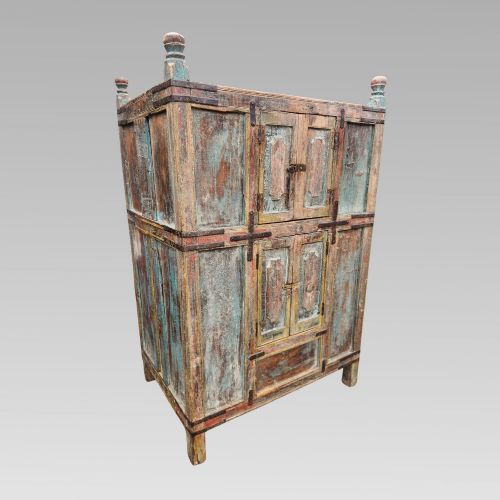
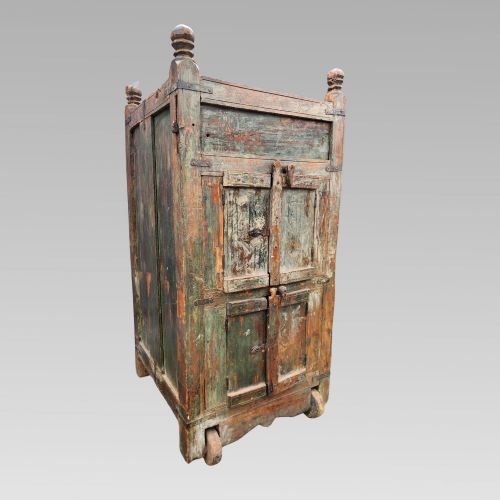
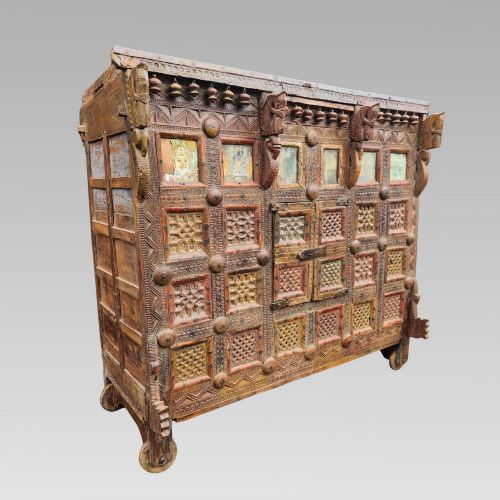
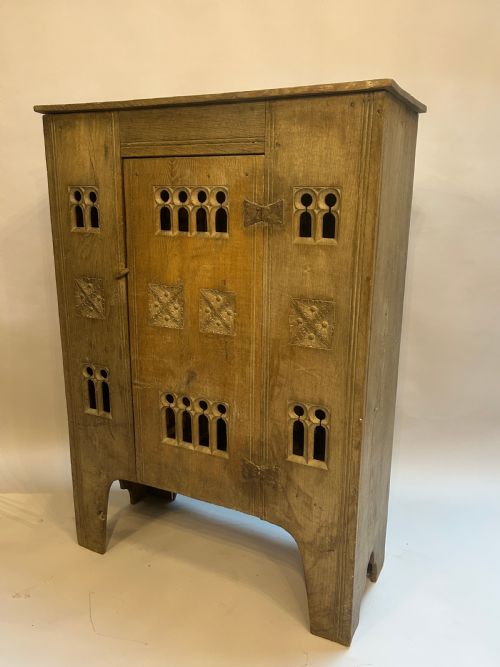
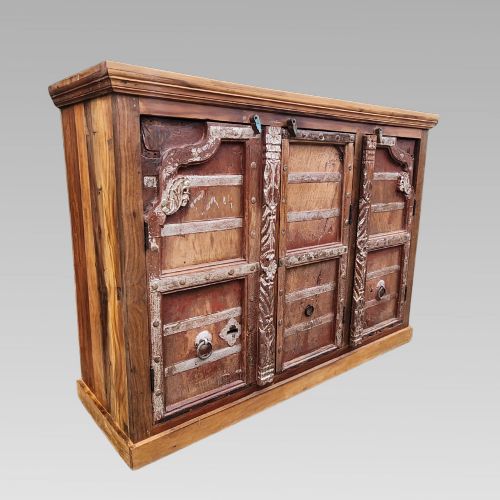
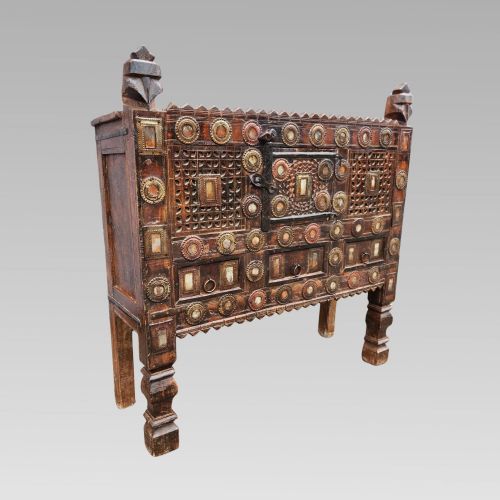


Indian Carved Cabinet
An indian carved cabinet brings intricate colonial craftsmanship and rich timber grain into a modern interior.
Indian Carved Cabinet
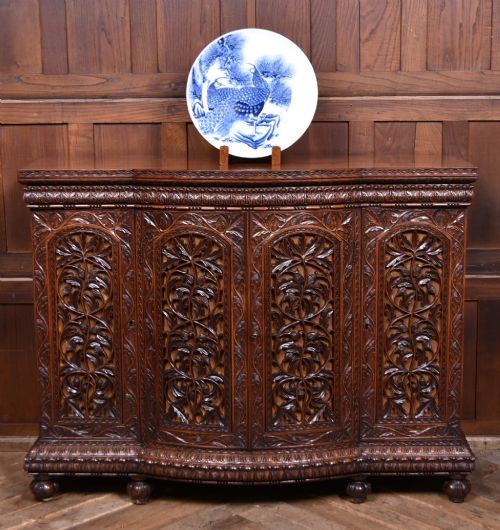
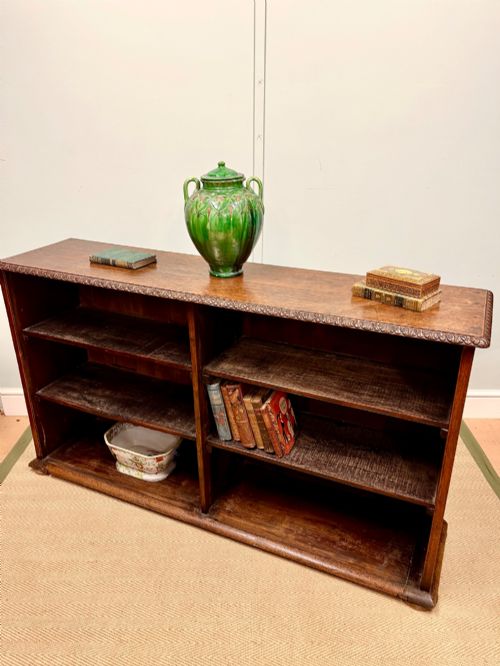
An indian carved cabinet encompasses a range of storage forms, from monumental sideboards and bookcases to compact corner units and writing desks. Buyers looking for an indian carved cabinet will encounter nineteenth-century pieces alongside early twentieth-century examples, reflecting both traditional domestic furniture and items made for the export market.
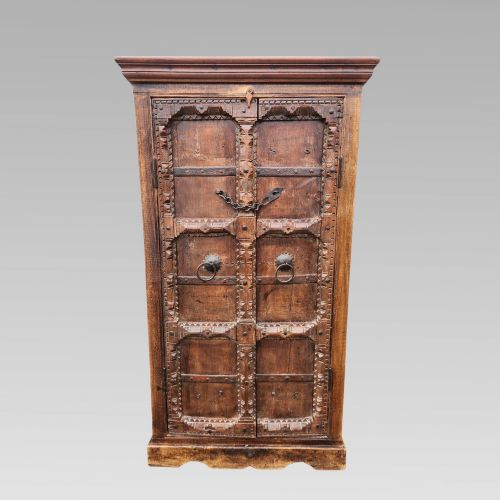
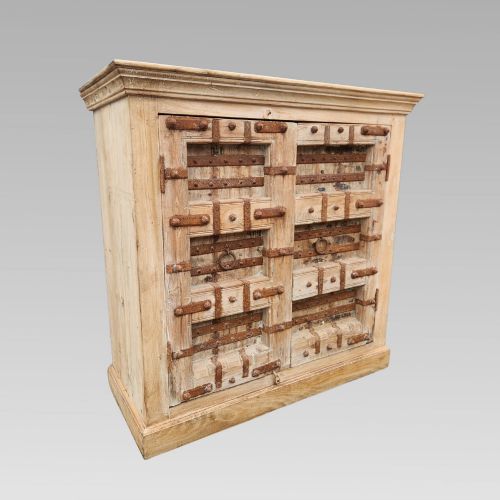
The dominant style found in these listings is Anglo-Indian, which blends British furniture forms with traditional indigenous relief carving. Pieces vary from tall cupboards and almirahs to low side cabinets and glazed display furniture.
Origins stretch across the subcontinent and neighbouring regions, including Burma and Ceylon, yielding distinct regional timber choices and decorative motifs such as figural carvings and temple pediments.
Materials and construction methods
Makers utilised dense tropical hardwoods including teak, padouk, rosewood, and satinwood, selected for their stability and capacity to hold crisp, deep relief work. These timbers were often worked in solid form rather than veneered, allowing carvers to cut directly into the structural mass of the carcass.
Assembly relied on traditional joinery methods suited to humid climates, combined with brass or iron hardware for hinges and locks. Surfaces were frequently left with a natural wax or polish to accentuate the grain of the hardwood, though some folk art examples feature painted finishes.
Anglo-Indian and traditional Indian folk art styles dominate the inventory, alongside Victorian gothic revival and North African influences.
Judging the quality
Quality rests primarily on the depth, sharpness, and discipline of the chisel work rather than the mere quantity of decoration. Superior examples display undercut foliage, crisp figures, and symmetrical proportions that integrate the carving with the architecture of the cabinet.
The choice of timber also dictates tier; dense padouk and figured rosewood command greater respect than plain utility woods. Original hardware, intact glazing, and well-preserved internal shelving elevate an example above later alterations.
The Indian Carved Cabinet Glossary
- Anglo-Indian
- Furniture made in India during the British colonial period, combining European forms with local carving traditions. These pieces often merge British utility with intricate eastern ornamentation.
- Padouk
- A heavy, durable reddish-brown tropical hardwood favoured by colonial cabinetmakers. Its stable nature allowed for intricate relief carving without splitting.
- Almirah
- A traditional Indian cupboard or freestanding wardrobe used for storage. They frequently feature deep panelled doors and robust internal shelving.
- Damchiya
- A traditional low dowry chest or storage cabinet featuring hinged lids or front-opening doors. They are heavily decorated with geometric and floral carvings.
- Breakfront
- A piece of furniture where the central section projects forward from the flanking sides. This layout adds architectural depth to large sideboards and bookcases.
Indian Carved Cabinet: Frequently Asked Questions
What is an indian carved cabinet used for?
These pieces serve as functional storage units for books, tableware, or linens while acting as decorative focal points in a room. Their internal shelving and cupboard space adapt easily to modern living rooms and dining areas.
Historically, they held household goods, documents, or textiles in colonial homes. Today, they bring texture and historical character to contemporary interior schemes.
How do I date an indian carved cabinet?
Dating relies on examining the timber species, construction joints, and style of decoration used in the carcass. Nineteenth-century examples often utilise dense padouk or rosewood with hand-cut dovetails.
Later pieces from the early twentieth century may incorporate reclaimed teak or show different milling marks. Comparing the hardware and finish against known period pieces helps narrow the decade.
Where were these cabinets made?
They were produced across various regions of the Indian subcontinent, as well as in Burma and Ceylon, often for British colonial officers or export markets. Regional workshops specialised in specific timbers and decorative vocabularies.
Workshops in regions like Bengal or Bombay developed distinct carving styles that fused British cabinet forms with local motifs. Ceylon pieces frequently exhibited unique corner designs and native hardwoods.
Are these cabinets made of solid wood?
Most antique examples are constructed from solid tropical hardwoods rather than veneered softwoods. Timbers such as teak, padouk, and satinwood provided the structural strength needed for heavy hand-carving.
Solid construction allowed artisans to carve deep relief directly into the doors and panels. This makes the furniture exceptionally heavy and durable.