


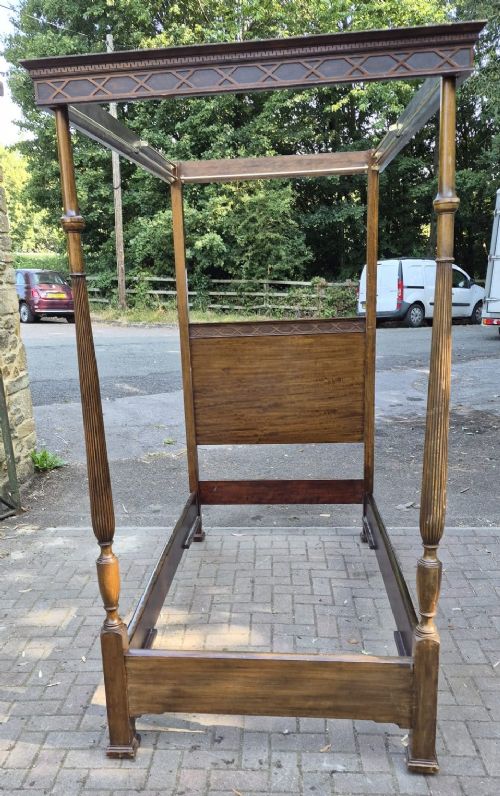
Antique Carved Bed Frame
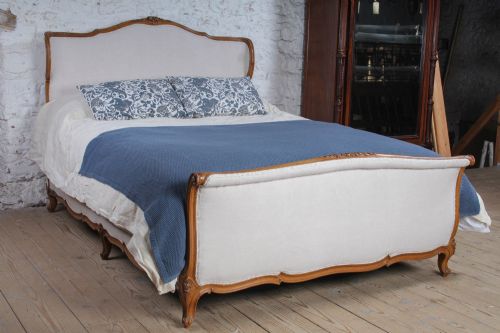
An antique carved bed frame brings architectural presence and hand-wrought detail into a bedroom through walnut, oak, and painted wood.
Antique Carved Bed Frame
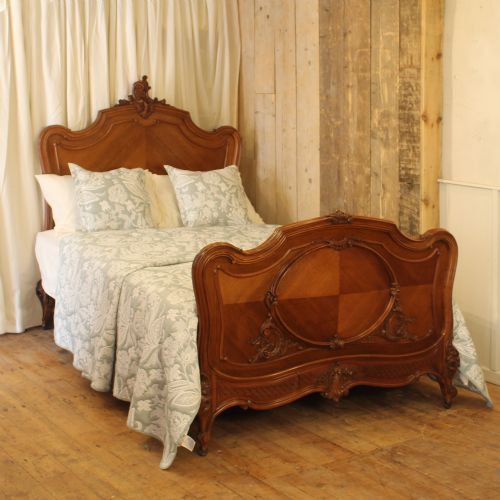
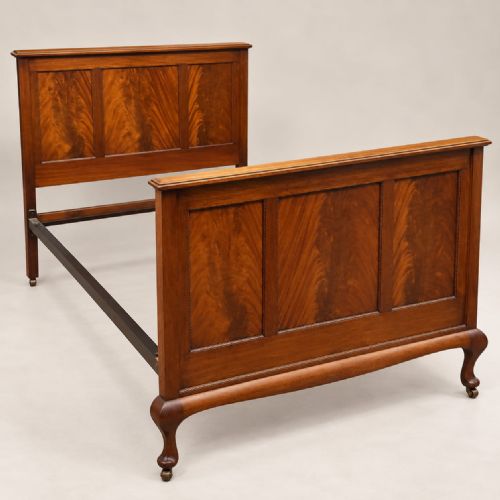
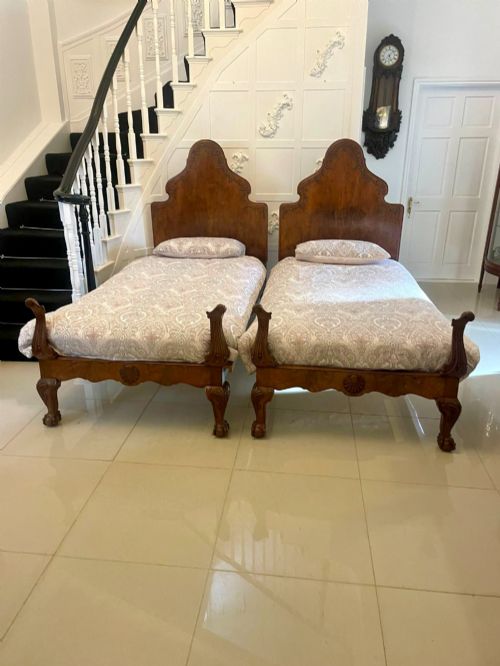
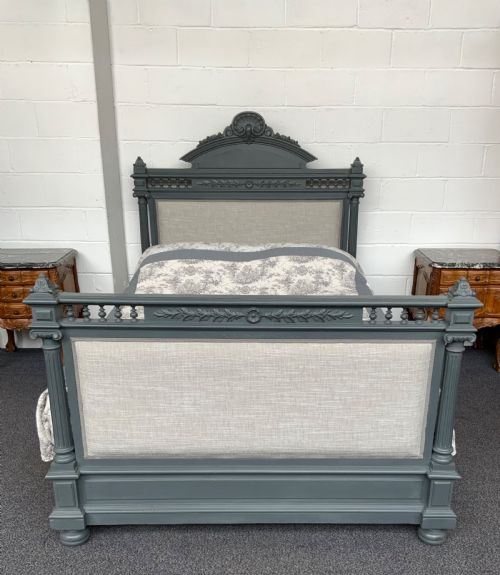
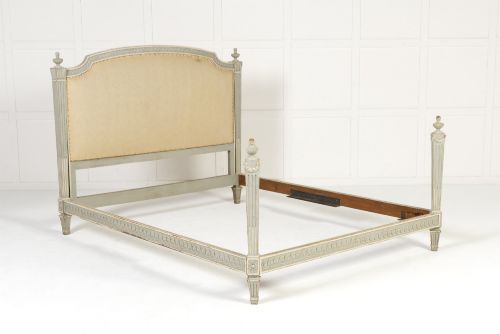
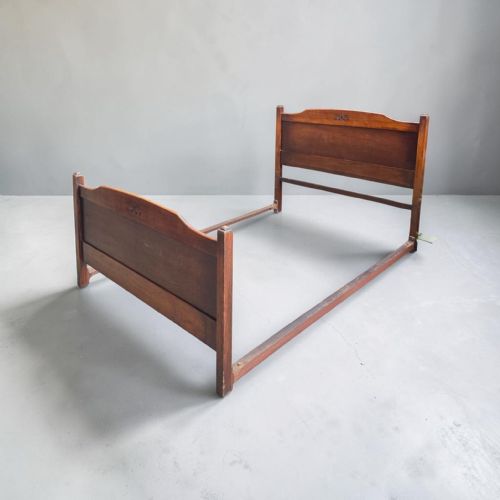
An antique carved bed frame encompasses double, king size, and single formats originating from the nineteenth and early twentieth centuries. Pieces span nineteenth-century French chateau designs, Edwardian mahogany iterations, and Victorian walnut constructions.
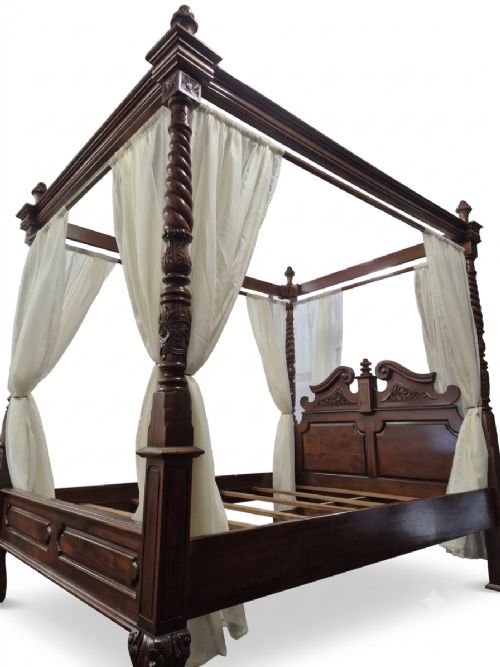
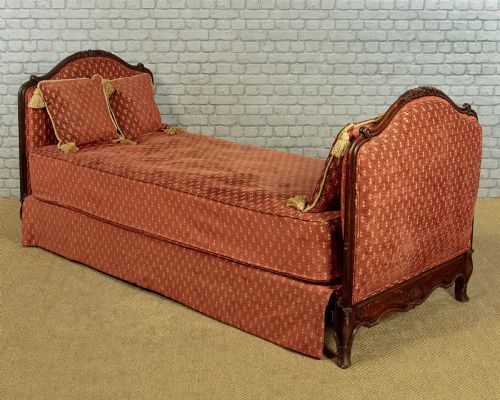
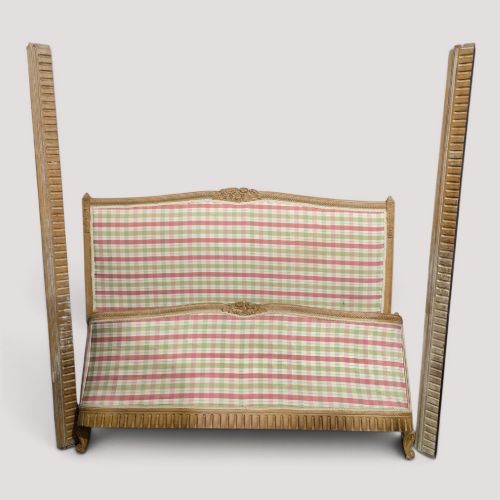
The selection frequently includes four poster beds, daybeds, and Louis-style double bedsteads featuring panelled headboards and low ends. Workshops across Britain, France, and Italy produced these timber frames for domestic sleeping quarters.
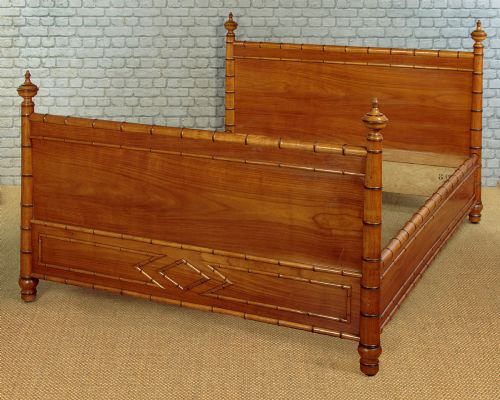
Buyers encounter variations ranging from solid oak frames dated around 1900 to fruitwood single beds and painted French king size models. Many examples display regional European styling such as Italian rococo or French provincial carving.
How they were made
Cabinetmakers utilised hardwoods including walnut, oak, mahogany, and fruitwood, often selecting burr veneers for prominent headboard panels. Joinery relied on traditional mortise and tenon construction to support the considerable weight of timber headboards and rails.
Carving was executed by hand directly into the solid wood or onto applied gesso layers, creating floral, scroll, and architectural motifs. Surface finishes involved French polishing, liming, painting, or gilding, while brass detailing provided structural or decorative accents.
Some nineteenth-century French makers carved bamboo patterns into solid wood to satisfy a Victorian fascination with distant flora.
What varies in quality
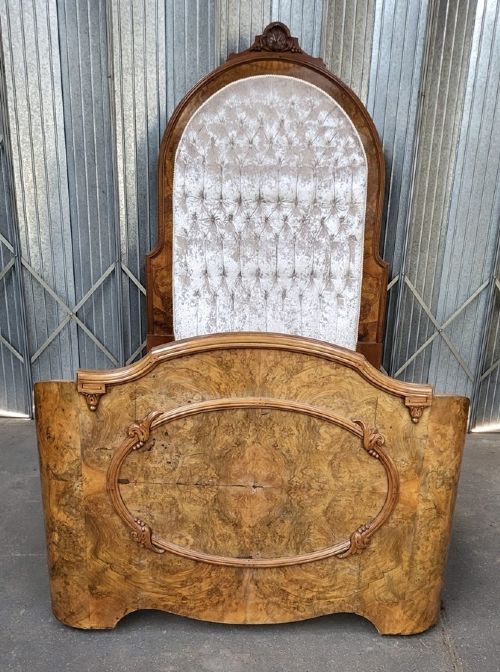
The depth and crispness of the hand carving distinguish standard production from exceptional joinery, particularly on moulded headboards and corner posts. Timber selection creates significant divergence, where quarter-veneered burr walnut or figured mahogany exhibits superior grain patterning compared to plain timber.
Original surface treatments preserve the integrity of the piece, whereas heavy over-finishing obscures the underlying wood character. The integration of period brass hardware and intact structural joinery elevates the overall standard of preservation.
Oliver Morel·Heals of London
The Antique Carved Bed Frame Glossary
- Bedstead
- A framework of a bed consisting of headboard, footboard, and rails designed to support a mattress and base. These structures often incorporate decorative carving or upholstery.
- Four poster bed
- A bed featuring four vertical columns supporting an upper canopy frame. Such pieces emerged in grand chambers and incorporate detailed posts.
- Daybed
- A couch-like bed intended for daytime lounging as well as sleeping. These forms frequently display upholstered backs or carved wooden daybed frames.
- Gesso
- A plaster-like mixture applied to wood surfaces to form a smooth base for gilding or painting. Artisans carved intricate relief patterns directly into this applied layer.
- Quarter-veneered
- A method of arranging four matching slices of wood veneer symmetrically from the same log. This technique produces geometric grain patterns across large headboard surfaces.
Antique Carved Bed Frame: Frequently Asked Questions
How do I choose the right size?
Review the internal dimensions of the wooden rails carefully, as nineteenth-century sizing differs from modern mattress standards. Many antique frames require custom mattress solutions to fit historical widths.
Measure your bedroom clearance to account for protruding footboard carvings and high headboard panels. Single and double formats suit smaller spaces, while king size versions demand substantial room proportions.
Can I use a modern mattress?
Modern mattresses fit within these timber frames provided the internal wooden slats or support ledges are adjusted for proper height and stability. Historic rails were built for different foundation depths, requiring discreet modern slatted bases.
Consult a specialist carpenter if internal iron brackets or wooden supports need reinforcement to carry contemporary weights. The exterior decorative facade remains unaltered while the interior gains modern support.
How do I care for the wood?
Maintain polished walnut and mahogany surfaces using traditional beeswax applied sparingly with a soft cloth. Avoid silicone sprays that penetrate old finishes and attract dust.
Position the bed away from direct heat sources and sunlight to prevent the timber from drying and splitting. Stable room humidity preserves both the solid wood and any delicate gesso or painted details.
How do I identify the period?
Examine the timber species, joinery methods, and stylistic cues such as French provincial curves or Edwardian mahogany proportions. Construction marks and screw types inside the rails offer clues to manufacturing dates.
Compare the decorative vocabulary, such as Louis XVI style parquetry or Victorian button-backed upholstery, against documented cabinetmaking eras. Regional characteristics in French and English workshops clarify the origin.