

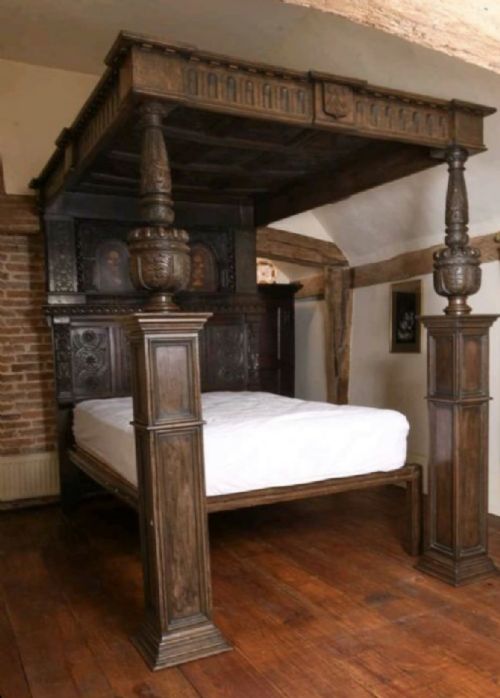


Dark Wood Four Poster Bed
A dark wood four poster bed brings architectural presence to a room, offering grand proportions and traditional craftsmanship in rich timber.
Dark Wood Four Poster Bed
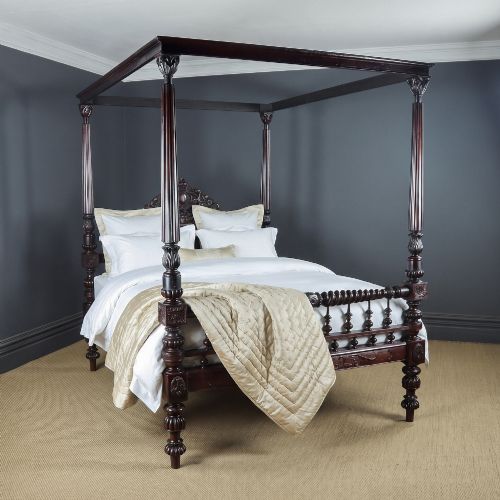
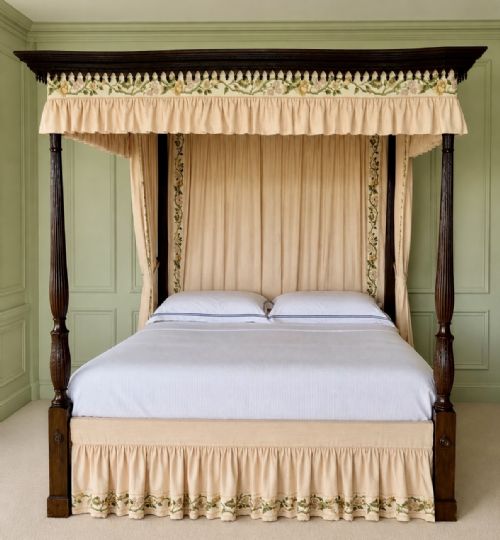
A dark wood four poster bed provides a commanding focal point for a bedroom, defined by substantial corner posts and an overhead tester. Buyers seeking this form will find examples spanning multiple centuries, from early seventeenth century oak pieces to nineteenth century Regency and Victorian interpretations.
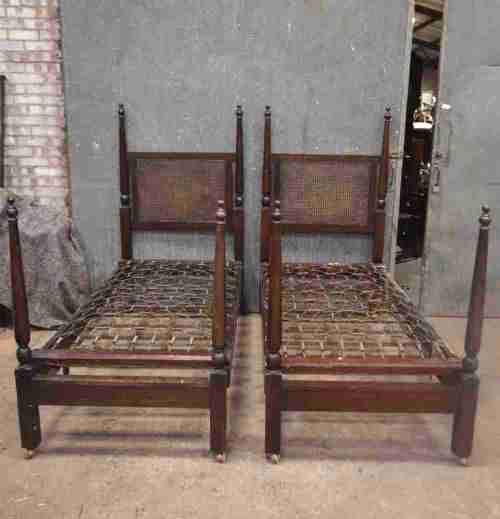
The selection ranges from grand king and super king sizes down to single beds and pairs of beds. Alongside complete frames, the inventory includes individual bed posts and architectural elements.
Geographic influences vary widely across the pieces, encompassing British period designs alongside Anglo-Indian colonial productions and Chinese hardwood constructions. Mahogany and oak dominate the offerings, matched with occasional rosewood and teak.
Materials and construction
Cabinetmakers utilised dense hardwoods such as mahogany, oak, rosewood and teak to construct these heavy frameworks. These timbers were selected for structural integrity and deep natural grain.
Surfaces frequently display hand carved ornamentation upon the posts and headboards. Structural joinery relies on traditional methods suited to supporting the heavy canopy or tester above.
Listings feature woods including mahogany, oak, rosewood, teak and cane across periods ranging from the seventeenth century to the twentieth century.
Judging quality in a dark wood four poster bed
Quality rests in the crispness of the hand carving and the proportional balance of the posts and tester. Superior examples show careful timber selection, where the grain runs harmoniously across the visible sections.
The integrity of the structural joints and the proportion of the architectural elements dictate the character of the piece. Untouched surfaces with deep patination hold greater appeal than heavily restored woodwork.
Howard & Sons
The Dark Wood Four Poster Bed Glossary
- Tester
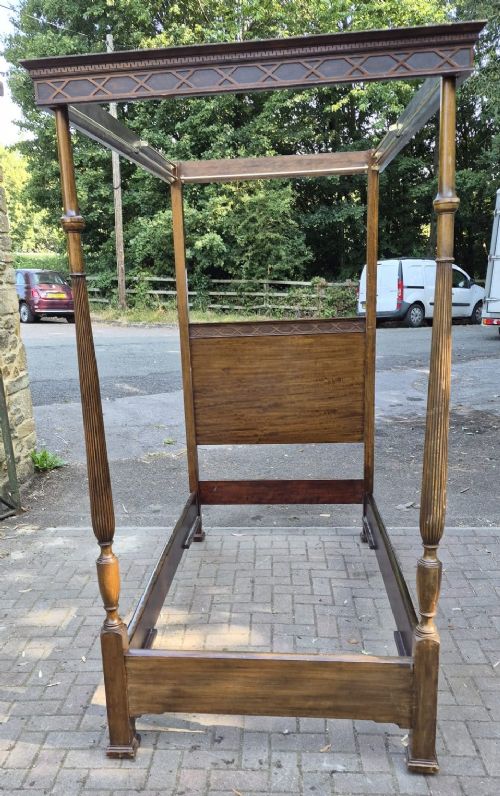
- The flat canopy or ceiling framework suspended above a four poster bed. It is often supported by the four vertical corner posts.
- Bergere
- A type of chair or bed panel featuring woven cane work. It appears on specific oak single bed designs.
- Cane
- Woven material made from rattan used for decorative panels within bedframes. It adds texture alongside solid hardwood.
- Patina
- The surface sheen and deep colour developed by aged wood through decades of handling and wax polishing. It serves as an indicator of genuine age.
Dark Wood Four Poster Bed: Frequently Asked Questions
How do I fit modern mattresses?
Many antique frames require custom mattress dimensions to fit standard modern widths such as king or super king. Checking internal dimensions before purchase ensures proper alignment with the side rails.
Professional upholsterers can supply bespoke bases or modern slats that fit securely within historical timber frames without altering the original structure.
How are four poster beds assembled?
These large structures typically dismantle into separate headboards, footboards, side rails, posts and testers for transport. Assembly requires multiple people to slot the heavy wooden components together using traditional peg or bolt fixings.
Careful alignment of the vertical posts ensures the overhead tester remains level and structurally secure once fully tightened.
Are single four poster beds available?
Smaller formats do exist, including single beds and matched pairs featuring carved posts and tester frames. These offer the architectural impact of larger beds in more compact bedroom spaces.
Periods such as the early twentieth century and the Regency era produced notable single bedstead variations in oak and rosewood.
How do I care for antique hardwood?
Regular dusting with a soft, dry cloth protects the polished surface of mahogany, oak or rosewood from abrasive particles. Occasional application of quality beeswax feeds the timber and maintains the natural lustre.
Keeping the bed away from direct sunlight and strong heat sources prevents the wood from drying out or splitting over time.