


Carved Timber Double Bed
A carved timber double bed brings genuine presence to a bedroom, combining traditional craftsmanship with the warmth of walnut, mahogany, and burr walnut.
Carved Timber Double Bed
A carved timber double bed represents a substantial sleeping platform constructed from solid hardwoods during the nineteenth and early twentieth centuries. These pieces span multiple stylistic revivals, including Georgian, Louis XVI, and Art Nouveau influences.
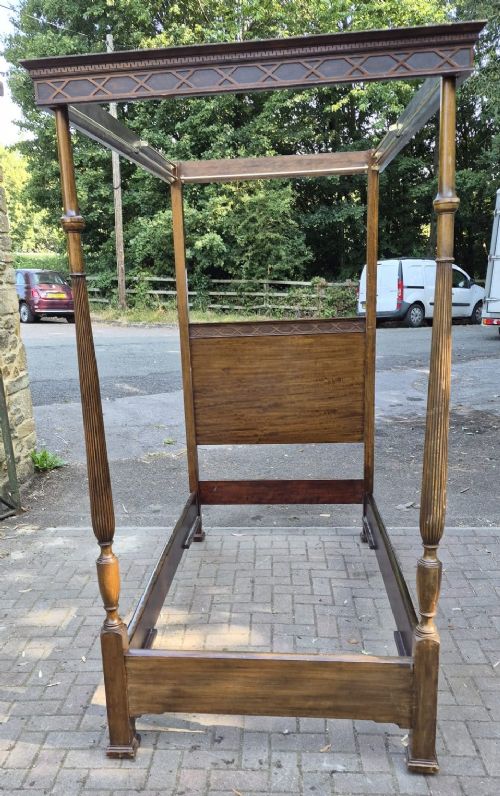
Buyers are most likely to encounter nineteenth-century walnut and mahogany bedsteads, frequently originating from French or British workshops. Forms range from standard double frames to half tester structures and four-poster configurations.
The regional origins vary from Portuguese Baroque Revival designs to Hungarian ash constructions, showcasing diverse decorative carving traditions. Side rails and footboards often accompany the main headboard to complete the suite.
How they were made
Construction relies upon dense timbers such as walnut, mahogany, burr walnut, and Hungarian ash, selected for their structural stability and rich grain patterns. Artisans shaped these materials using traditional hand-carving techniques to produce elaborate crests and panel details.
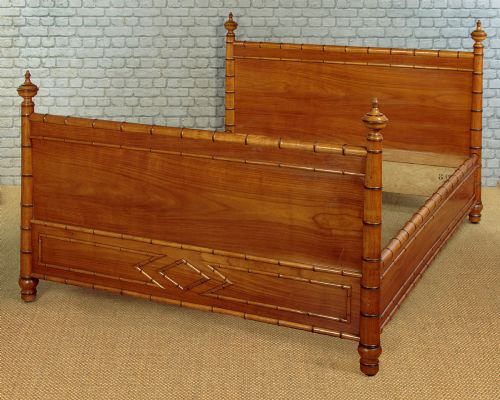
Secondary framing frequently utilises pine and chestnut to support the primary hardwood components. Surface enrichment includes turned hardwood elements, faux bamboo turnings, and woven textile or cane panels integrated into the headboards.
Recorded periods span the nineteenth and early twentieth centuries, encompassing Victorian, Edwardian, and various continental revival styles.
What varies in quality
Quality rests upon the depth and precision of the timber carving, where crisp lines and balanced proportions distinguish finer examples from simpler work. The choice of primary veneer, such as burr walnut or plum pudding mahogany, dictates the visual richness of the surface.
The integrity of the original construction and the selection of secondary timbers influence the overall durability of the bedstead. Cohesion of style, whether adhering strictly to French walnut traditions or Georgian Revival lines, governs the aesthetic success of the piece.
The Carved Timber Double Bed Glossary
- Bedstead
- The framework of a bed, comprising the headboard, footboard, and side rails constructed to hold a mattress. These elements are traditionally joined by mechanical bolts or timber tenons.
- Half Tester
- A bed featuring a partial tester or canopy projecting from the headboard over the upper portion of the sleeper. This form is frequently associated with Victorian walnut designs.
- Burr Walnut
- Timber taken from the wart or burl growth of a walnut tree, yielding highly decorative swirling grain patterns. It is typically sliced into veneers for prominent headboard panels.
- Faux Bamboo
- Timber turned and carved to imitate the segmented stalks of natural bamboo. This decorative treatment appears on nineteenth-century bed frames influenced by aesthetic tastes.
- Plum Pudding Mahogany
- Mahogany timber exhibiting mottled grain formations resembling the texture of a traditional plum pudding. It provides a distinct decorative surface on refined nineteenth-century frames.
Carved Timber Double Bed: Frequently Asked Questions
Will a standard modern mattress fit these antique beds?
Many older bedsteads were built to nineteenth-century sizing conventions which can differ slightly from contemporary standard dimensions. Adjustments to modern slats or bespoke mattress support may be necessary to ensure a correct fit within the side rails.
Checking the internal length and width dimensions listed for each bedstead prevents compatibility issues. Custom mattress makers can also supply pieces tailored to historic frame proportions.
How do I assemble a vintage wooden bedstead?
Most antique bed frames utilise traditional metal bed bolts or drop-in siderail brackets to connect the headboard and footboard. Keeping the components square during tightening ensures the structure remains level and stable.
Enlisting assistance helps support the heavy walnut or mahogany side panels while securing the hardware. Checking that the side rails sit flush prevents shifting during daily use.
How do I care for polished walnut and mahogany surfaces?
Regular dusting with a soft, dry cloth prevents particulate accumulation on carved timber details and polished finishes. Avoiding direct sunlight and maintaining stable room humidity protects the wood and veneer from splitting.
Applying occasional applications of appropriate furniture wax nourishes the timber without building up heavy residues. Harsh chemical cleaners should be avoided to preserve the original patination.
How can I distinguish a French revival bed from a Victorian one?
French revival pieces frequently incorporate curved crests, asymmetric carvings, and lighter walnut tones reminiscent of Louis XVI aesthetics. Victorian examples tend to feature darker, denser timbers, more rectilinear proportions, or half tester canopies.
Examining the secondary timbers, such as chestnut used in continental workshops versus pine found in British pieces, offers further clues to origin. The specific style of turned decoration and panel moulding also highlights regional woodworking traditions.