
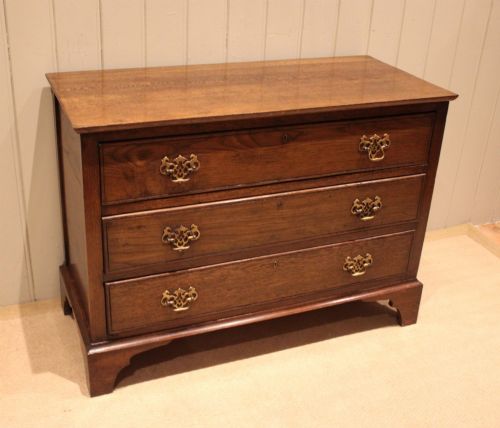
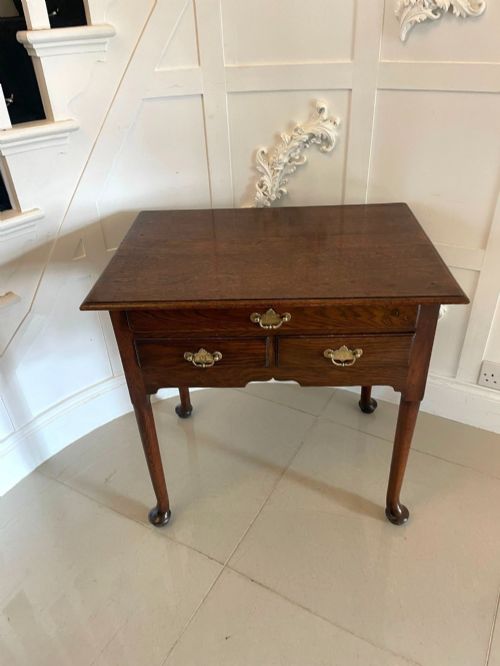
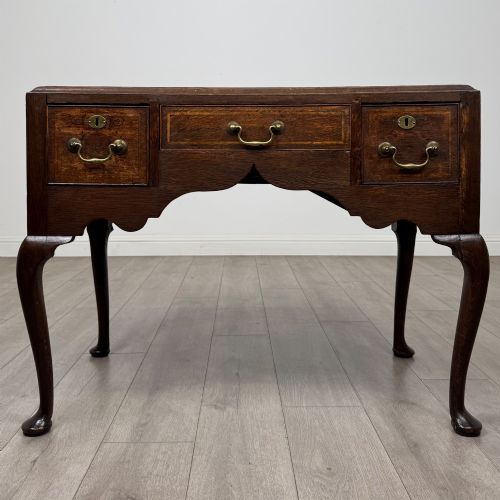
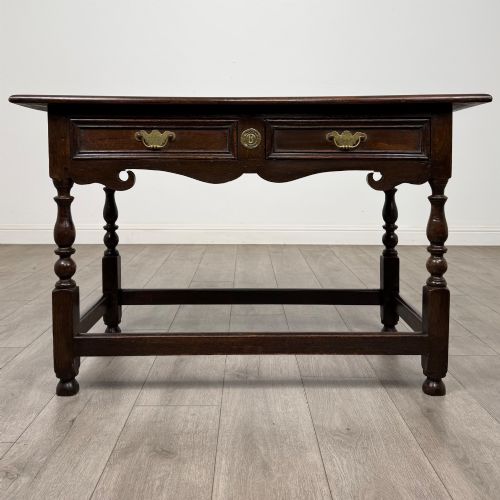
Antique Brown Lowboy
An antique brown lowboy offers compact table storage with drawers, bringing period character and warm timber tones to a hallway or bedroom.
Antique Brown Lowboy
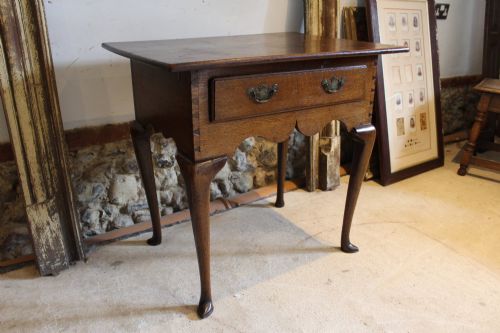
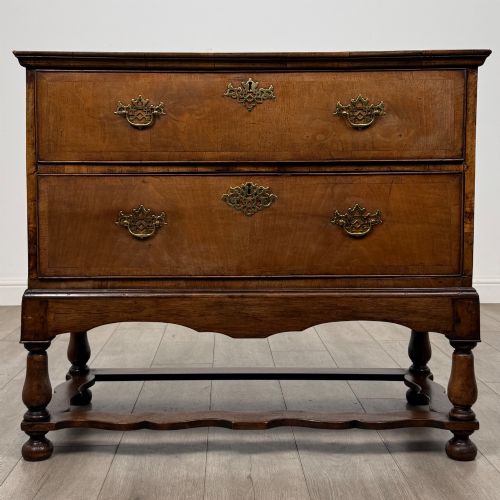
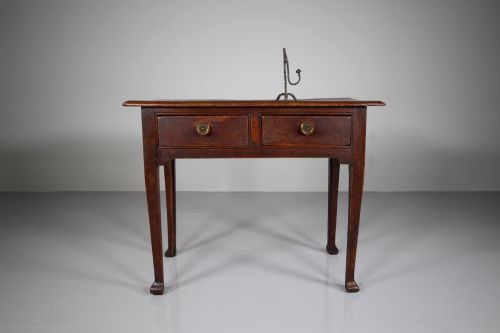
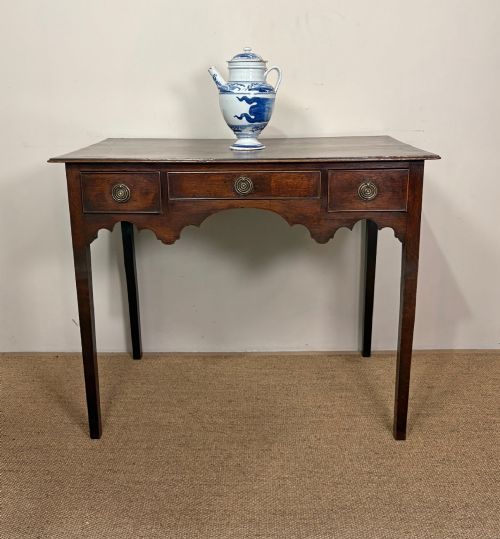
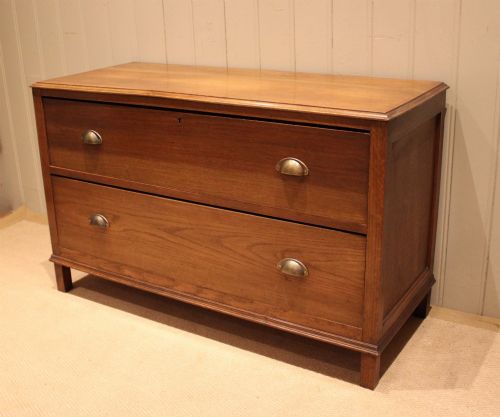
An antique brown lowboy is a small table fitted with one or more drawers beneath the top surface, designed historically for personal grooming or as a compact side table. The examples found here span the seventeenth, eighteenth, and nineteenth centuries, alongside later revival pieces from the twentieth century.
Origins stretch from the William and Mary and Queen Anne periods through the reigns of George I, George II, and George III, up to Edwardian and later interpretations. These tables suit modern interiors as writing desks, dressing tables, or lamp stands while retaining their historical presence.
Materials and Construction
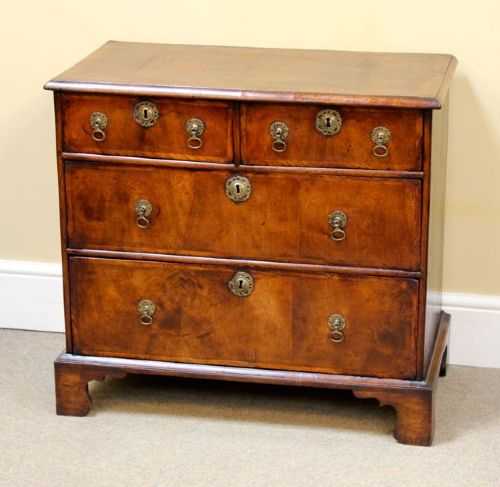
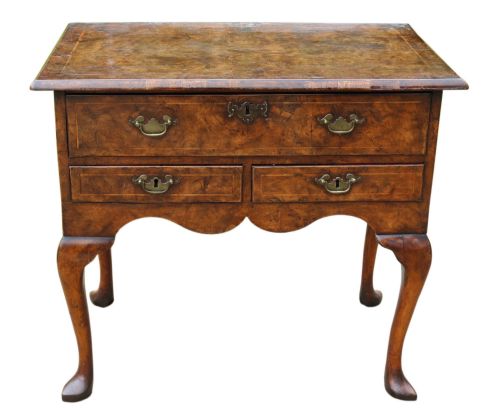
Cabinet makers utilised native and imported hardwoods, primarily oak, walnut, and mahogany, frequently pairing them with secondary fruitwoods or elm for drawer linings and internal framing. Surfaces display the natural grain of burr walnut, yew, or plain oak, finished with traditional polishes that develop a deep brown patina over centuries.
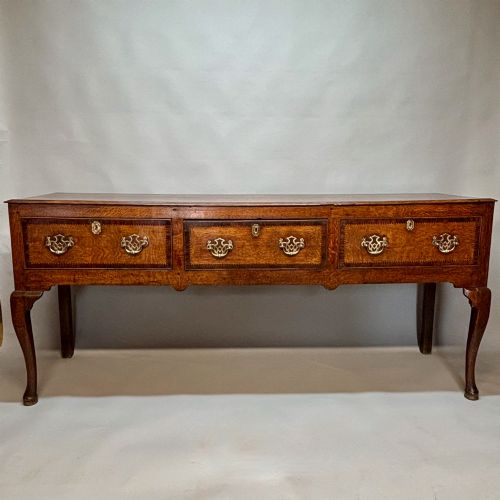
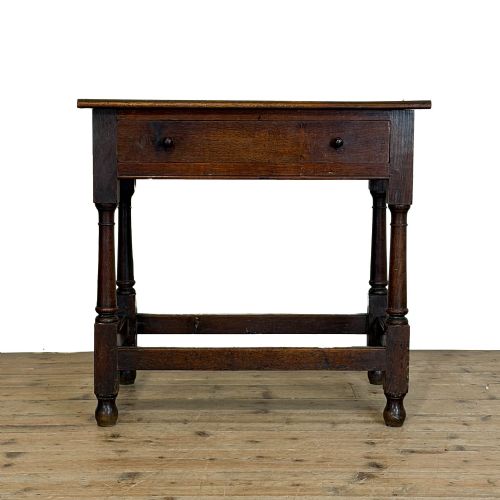
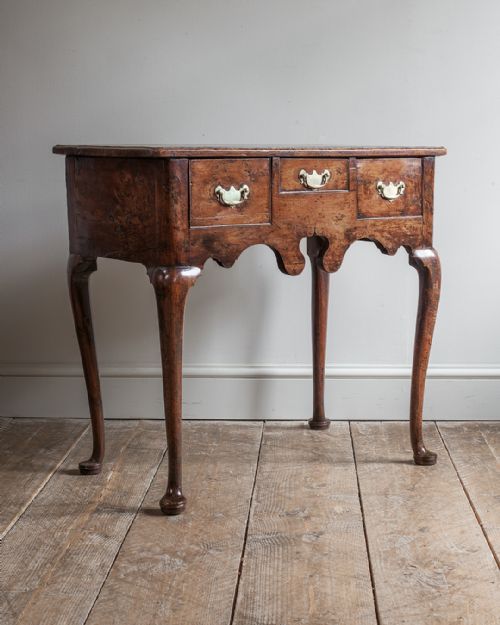
Joinery techniques rely on pegged mortise and tenon frames for the table bases, combined with hand-cut dovetails on the drawer construction. Brass drop handles and escutcheons secure the drawer fronts, while cabriole or straight legs provide structural support.
Period origins span from the seventeenth-century William and Mary era through Georgian reigns to Edwardian and later twentieth-century revivals.
Distinctions in Quality
Quality rests in the selection of timber figure, such as highly patterned burr walnut or dense quarter-sawn oak, which elevates a utilitarian table into a decorative centrepiece. Finer pieces demonstrate crisp mouldings, carefully matched veneers, and slender cabriole legs with well-defined knees and feet.
Constructional integrity dictates value, seen in undisturbed timber shrinkage, original brass hardware, and clean dovetailing inside the drawers. Later revival pieces from the twentieth century differ from eighteenth-century originals through the crispness of the tool marks and the seasoning of the wood.
The Antique Brown Lowboy Glossary
- Lowboy
- A small pedestal or leg-supported table with one or more rows of drawers, originating in the late seventeenth century. They served as dressing tables or side tables in domestic chambers.
- Cabriole leg
- A furniture leg that curves out at the knee and tapers inward to an ankle and foot, typical of Queen Anne and Georgian design. This form derives from animal limbs and added stylistic grace to tables.
- Dovetail
- A joint formed by interlocking wedge-shaped fingers, used primarily in drawer construction for maximum tensile strength. Hand-cut dovetails are an indicator of traditional cabinet making.
- Burr walnut
- A prized timber veneer taken from the growth excrescences of walnut trees, yielding intricate swirling patterns. It was favoured by cabinet makers for high-status tables during the walnut era.
- Dresser base
- A low sideboard or table featuring drawers and sometimes cupboards below a wide top surface. These pieces often provided storage in country houses.
Antique Brown Lowboy: Frequently Asked Questions
What is a lowboy used for?
Historically, a lowboy functioned as a dressing table for personal grooming or a small side table for holding washing basins and personal items. Today, buyers use them as compact desks, hallway tables, or bedside stands.
Their shallow depth allows them to fit into narrow spaces where standard sideboards or chests would prove too bulky. The drawers offer convenient storage for keys, stationery, or modern accessories.
How do I date an oak lowboy?
Dating relies on examining the construction methods, timber selection, and overall style characteristics of the piece. Eighteenth-century examples often feature hand-sawn timbers, pegged joints, and drawer boxes joined with irregular hand-cut dovetails.
Stylistic shifts also provide clues, moving from the inverted cup turnings of William and Mary designs to the graceful cabriole legs of the George II period and the straight tapered legs of George III.
Are walnut lowboys fragile?
Walnut furniture requires standard care given to any antique hardwood, involving stable room temperatures and protection from direct sunlight and excessive dryness. The solid timber and robust joinery built by period cabinet makers ensure structural stability for daily use.
Avoiding placement near heat sources prevents the veneers, particularly burr walnut, from lifting or cracking over time. Regular dusting and occasional waxing preserve the polished finish.
What is the difference between a lowboy and a side table?
A lowboy is specifically a low table featuring one or more tiers of drawers designed for personal use, whereas a side table may have no drawers at all. Many early tables are described interchangeably as side tables or lowboys due to their shared rectangular tops and leg supports.
Tables with fitted drawers intended for domestic chambers earned the specific designation of lowboy during the seventeenth and eighteenth centuries.