
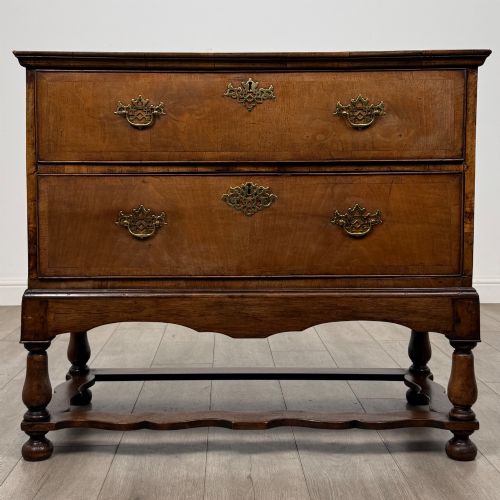
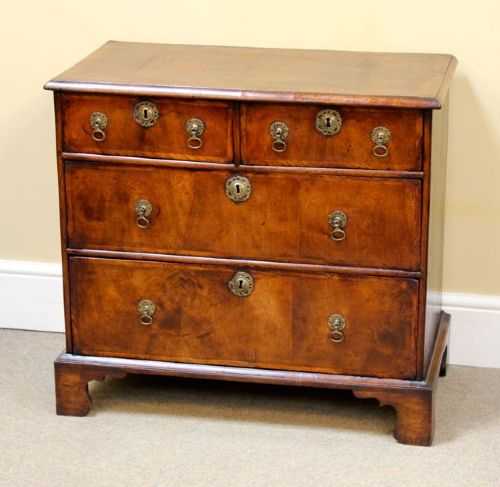
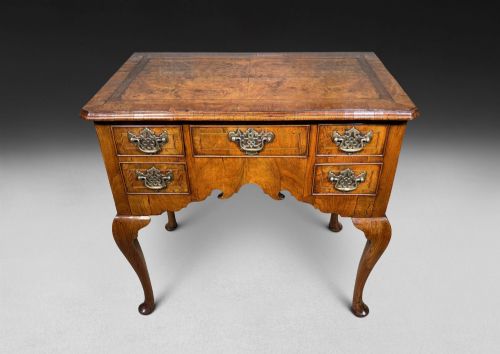
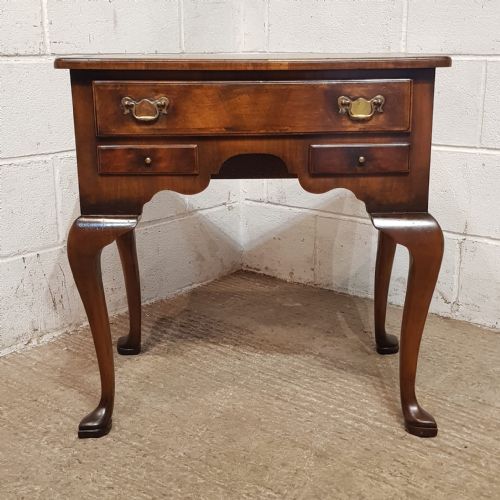
Walnut Lowboy
A walnut lowboy offers compact table storage with drawers, bringing period character and warmth to a room.
Walnut Lowboy
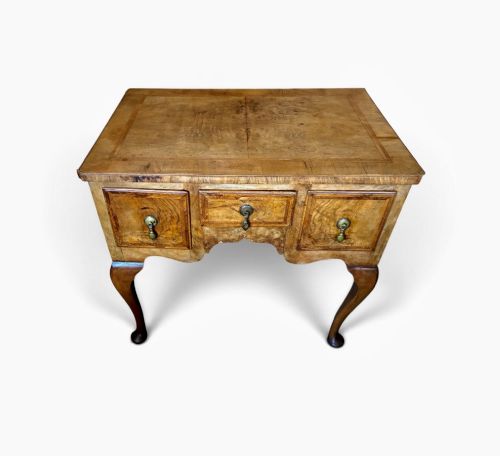
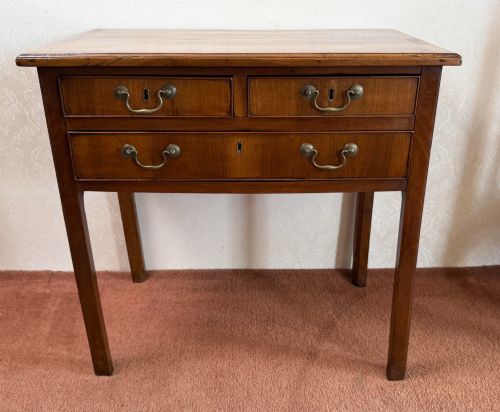
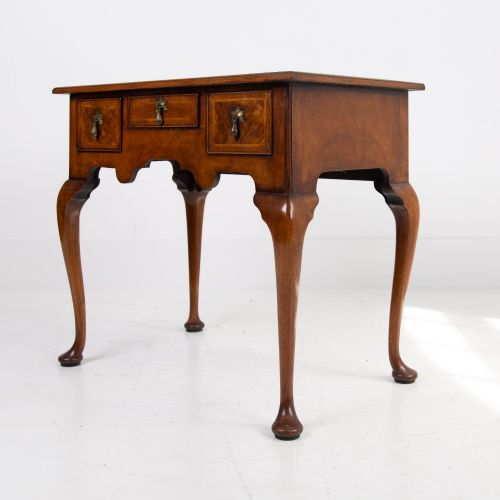
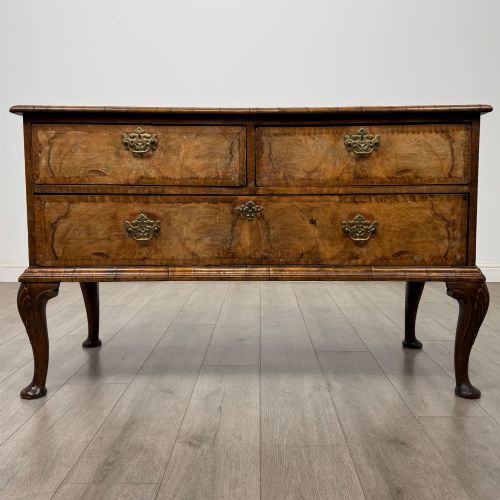
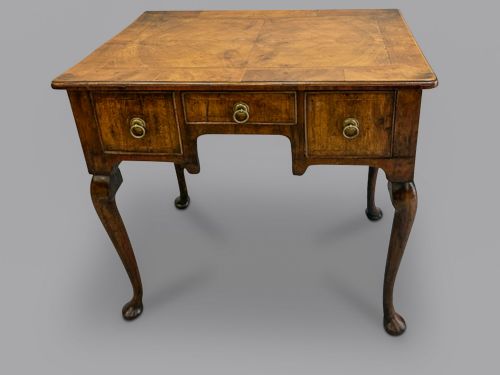
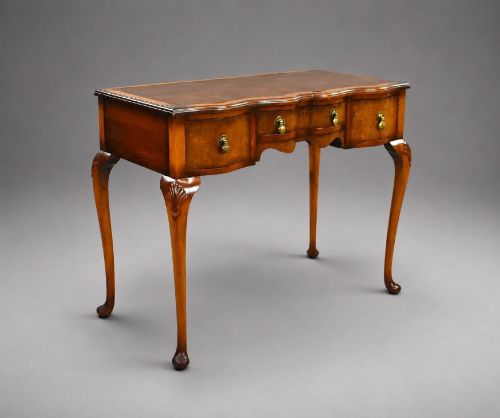
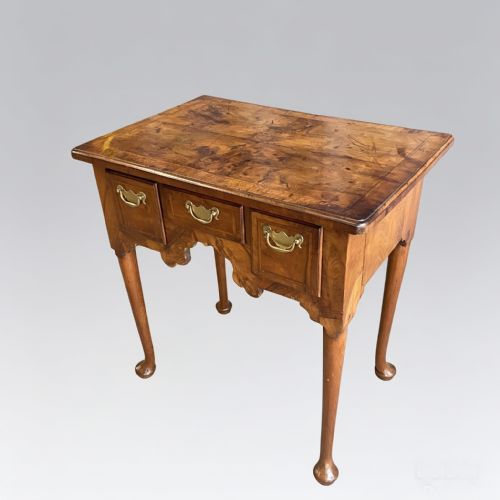
A walnut lowboy is a small side table equipped with drawers, often utilised historically as a dressing table or writing surface. The pieces listed here span the eighteenth century as well as later revival periods, including pieces from the nineteen twenties and nineteen thirties.
Materials and Construction
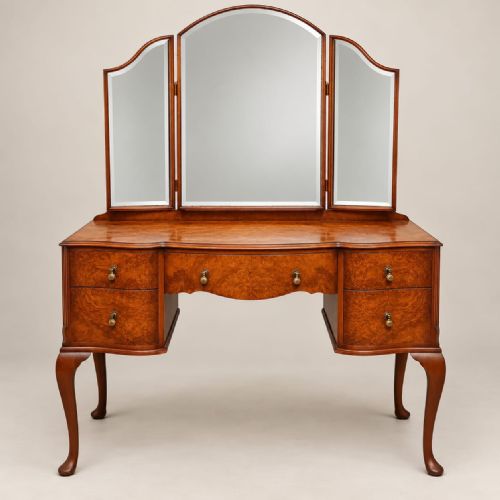
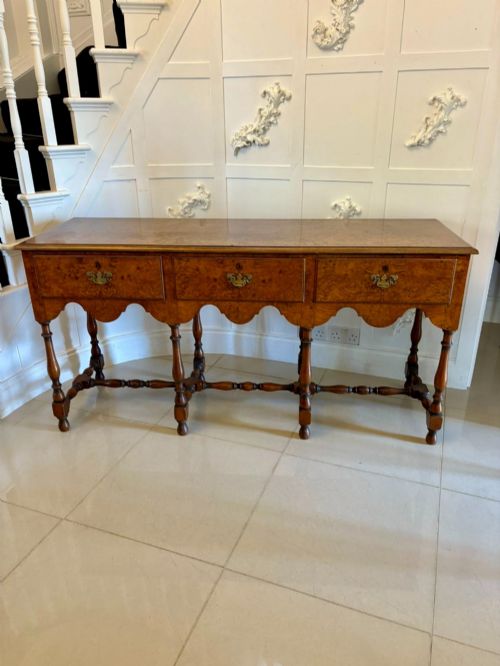
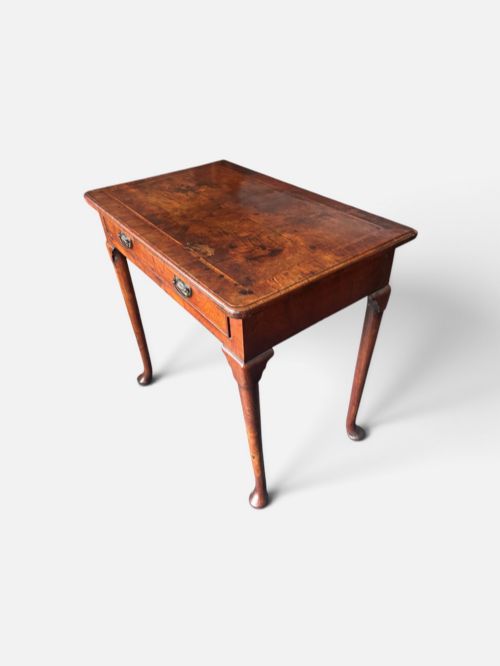
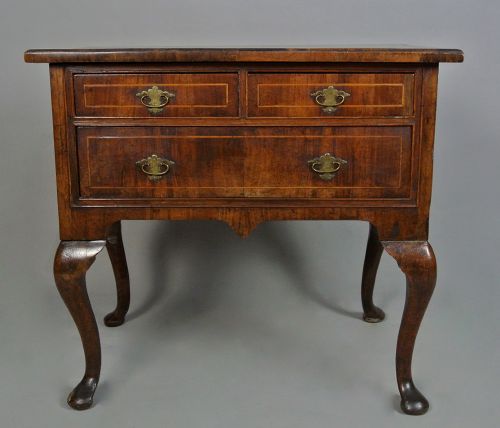
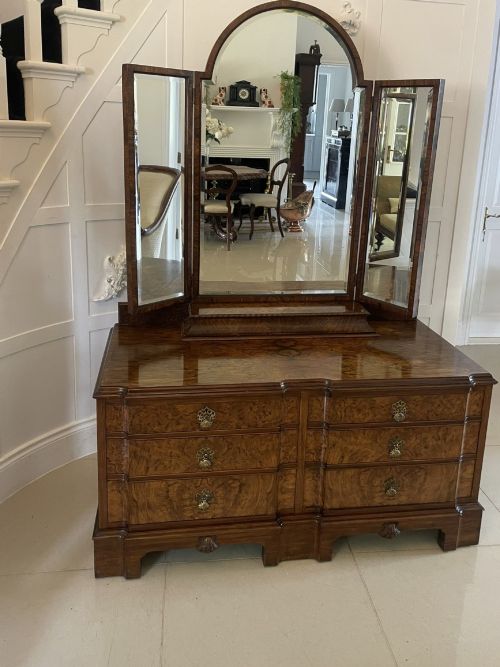
Cabinet makers utilised solid walnut and burr walnut veneer over secondary timbers, often embellishing surfaces with herringbone inlay or marquetry patterns. Brass drop handles and escutcheons accent the drawer fronts.
Early examples rely on traditional joinery methods, whilst later revival pieces incorporate period styling cues such as feather banding and cabriole legs.
Some nineteenth-century makers faithfully reproduced eighteenth-century lowboys so well that even the table gets confused about its true age.
Design and Execution
Quality rests in the figuring of the walnut veneer and the crispness of any inlay work, such as herringbone patterns around drawer edges. Finer examples display careful timber selection for the top and drawer fronts, creating symmetrical grain patterns.
Proportion and the execution of carved details on cabriole legs separate standard production from superior craftsmanship. The choice of hardware and the neatness of dovetail joints in the drawer construction further distinguish the grade of the piece.
Shoolbred and Co
The Walnut Lowboy Glossary
- Lowboy
- A small table with drawers, standing on four legs, typically used in bedrooms or parlours. It originates from the late seventeenth and eighteenth centuries.
- Burr Walnut
- Timber taken from a growth on a walnut tree, yielding intricate, swirling grain patterns. Cabinet makers prized it for decorative veneering on drawer fronts and tabletops.
- Cabriole Leg
- A furniture leg that curves out and then in, resembling the leg of an animal. This style gained prominence during the Queen Anne and Georgian periods.
- Herringbone Inlay
- A decorative border made from small strips of veneer laid in a V-shaped zig-zag pattern. Craftsmen used it to frame drawer perimeters on eighteenth-century furniture.
- Feather Banding
- A form of inlay consisting of two strips of veneer laid diagonally to meet at a central line, resembling a feather's spine. It adds a subtle decorative border to tabletops and drawer faces.
Walnut Lowboy: Frequently Asked Questions
What is a walnut lowboy?
A walnut lowboy is a small table fitted with drawers, standing on legs that frequently feature cabriole styling.
Historically, people used them as dressing tables, writing desks, or side tables in principal rooms.
How were lowboys used?
These tables served multiple domestic purposes, acting as dressing surfaces, writing desks, or small side tables for correspondence.
Their compact size allowed them to fit easily into modest spaces while providing enclosed storage in drawers.
How do I date a walnut lowboy?
Dating relies on examining construction methods, timber selection, hardware, and stylistic details such as leg shapes and inlay patterns.
Eighteenth-century pieces display period joinery and grain characteristics, whereas revival pieces from the twentieth century reproduce those earlier aesthetic traits.
Where does the name lowboy come from?
The term emerged to describe a table version of the tallboy chest of drawers, keeping a low profile.
It distinguishes these small drawer-equipped tables from taller case furniture.