

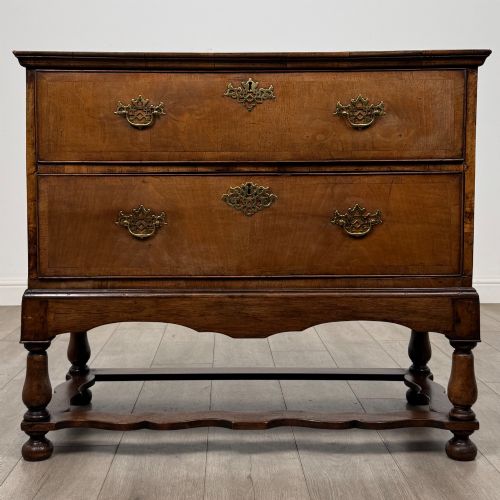
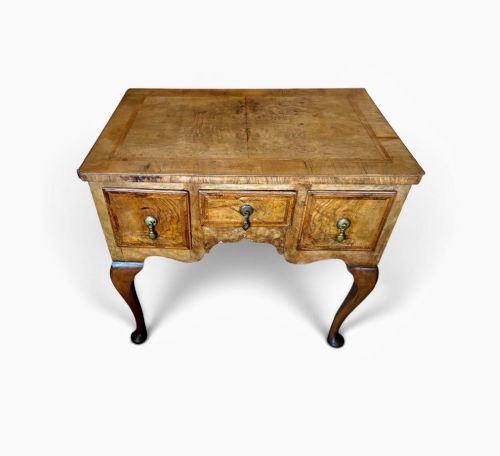
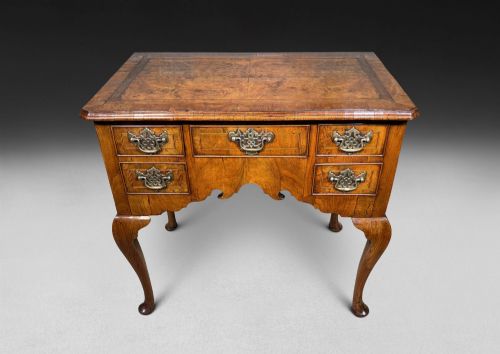
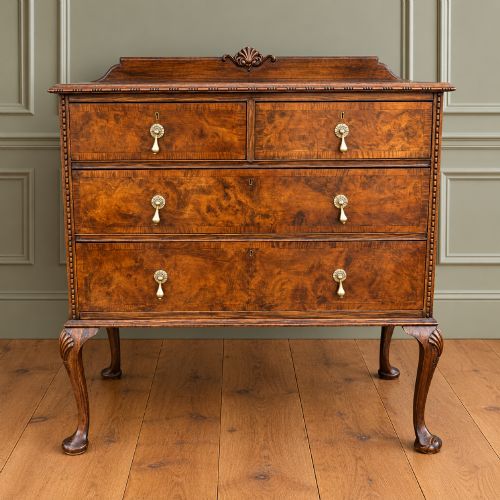





Feather Banded Lowboy
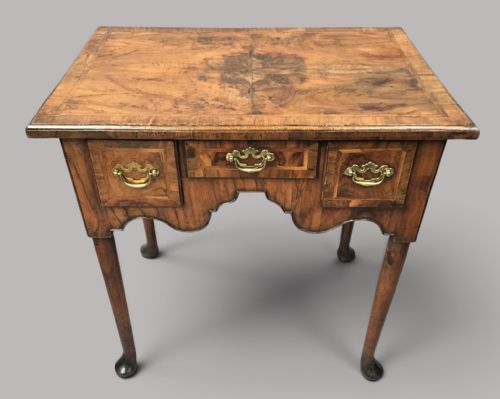
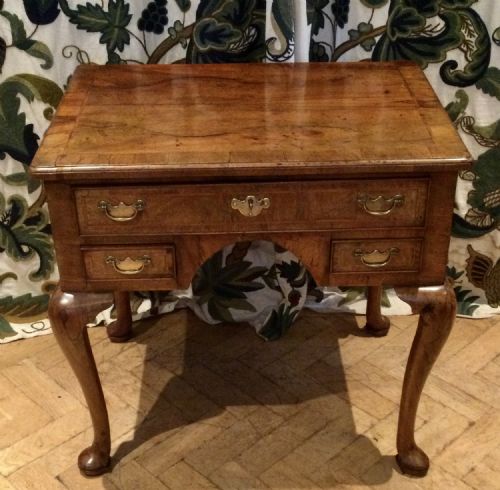
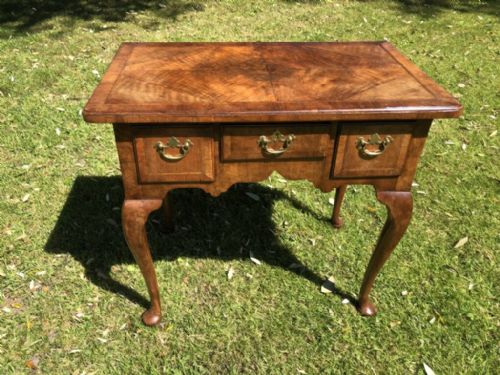
A feather banded lowboy is a compact table with drawers, prized for figured grain and delicate perimeter banding that frames the timber.
Feather Banded Lowboy
A feather banded lowboy offers a low table surface with small drawers beneath, designed for domestic use in dressing or writing. When you search for a feather banded lowboy, you meet lowboys and side tables originating from periods including the 18th Century, Georgian, and 19th Century.
The forms span George I, George II, Queen Anne, and William and Mary styles, alongside Edwardian revivals and later interpretations. Walnut forms the primary structural and decorative choice across these examples.
Materials and construction
Walnut, burr walnut, and burr walnut veneer provide the characteristic rich surface figures found across these tables. Brass handles and drawer furniture punctuate the dark timber fronts.
Inlaid stringing creates the distinctive light and dark diagonal border work known as feather banding around the drawer edges and top perimeters. Quarter veneering appears on select surfaces to mirror the grain patterns symmetrically.
Feather Banded Lowboy Retail Price Guide 2026
Typical asking prices for feather banded lowboy among the pieces listed under this phrase on Sellingantiques today, from the lower quarter to the upper quarter. They describe what is for sale here now, not the wider market.
Listings feature walnut, burr walnut veneer, oak, and brass across pieces spanning the 18th Century to the Edwardian era.
Judging quality in walnut furniture
The distinction between ordinary examples and superior pieces rests upon the intensity of the walnut figure and the precision of the veneer work. Figured grain and well-matched burr walnut elevation separate standard items from the finest pieces.
Originality of surface finish and the integrity of the delicate perimeter banding dictate the standing of an individual table. Tables retaining their early character and intact decorative banding command greater appreciation from collectors.
The Feather Banded Lowboy Glossary
- Feather banding
- An inlay technique using two strips of wood cut diagonally across the grain to form a V-shaped herringbone pattern around drawer fronts or table edges. This intricate border work defines the style of the period.
- Lowboy
- A small table with one or more rows of drawers, standing on four legs, commonly used as a dressing table or side table in the 18th century. The form combines storage with a compact footprint.
- Burr walnut
- Wood taken from a walnut tree growth or wart, yielding a swirling, highly decorative grain pattern used for veneers. Cabinetmakers reserved this prized material for prominent surfaces.
- Quarter veneering
- The arrangement of four adjacent veneer slices cut from the same log to create a symmetrical, diamond-like pattern. This technique showcases the natural figure of the timber.
Feather Banded Lowboy: Frequently Asked Questions
What is a feather banded lowboy used for today?
These compact tables serve well as hallway side tables or dressing surfaces in modern rooms.
Their shallow depth allows them to sit comfortably in narrow spaces while providing useful drawer storage.
How do I spot feather banding on furniture?
Look closely at the borders of the drawer fronts and the outer edges of the top surface.
You will see fine diagonal lines meeting at a central axis to form a distinct herringbone pattern.
Are all walnut lowboys from the 18th century?
The evidence shows examples from the 18th Century and Georgian period alongside later 19th Century and Edwardian revivals.
Construction details, timber patination, and secondary woods help distinguish early pieces from later interpretations.