


Antique Bronze Urn Handles
These antique bronze urn handles are structural details and mounted ornaments salvaged from or made for neoclassical and oriental vessels.
Antique Bronze Urn Handles
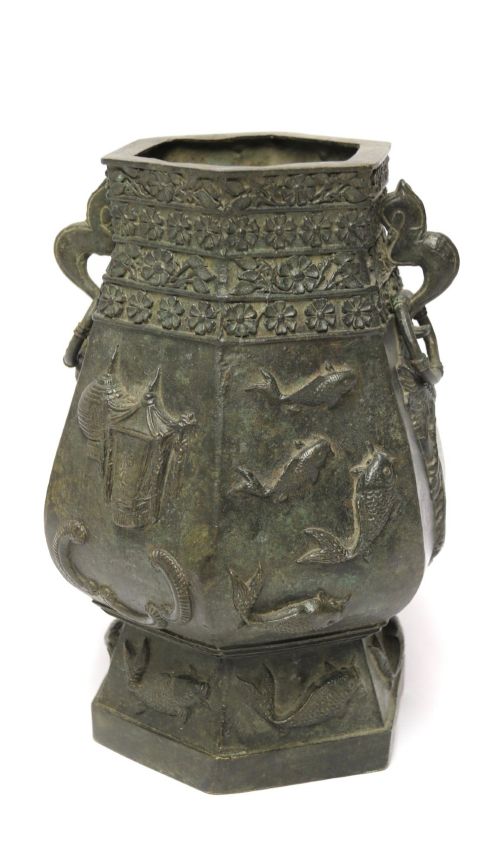
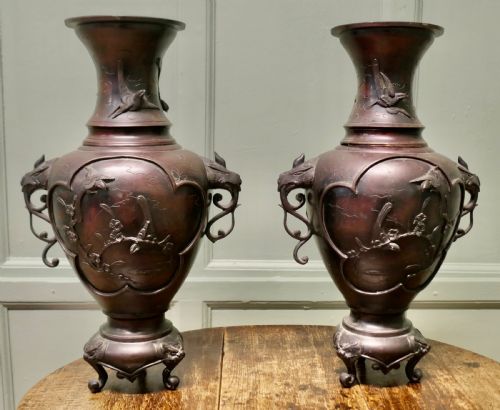
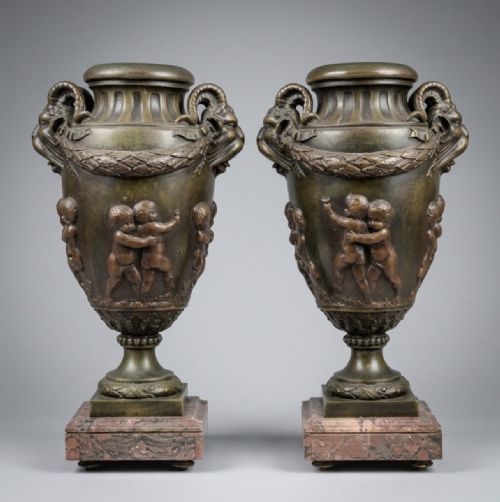
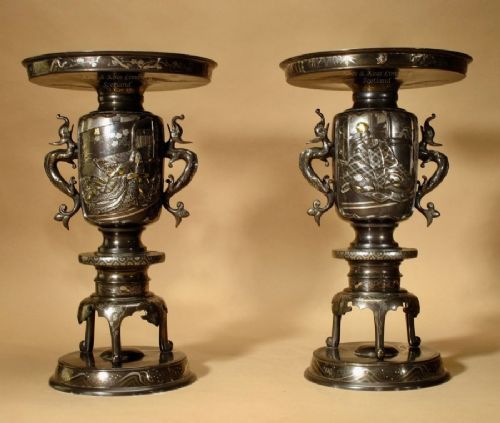
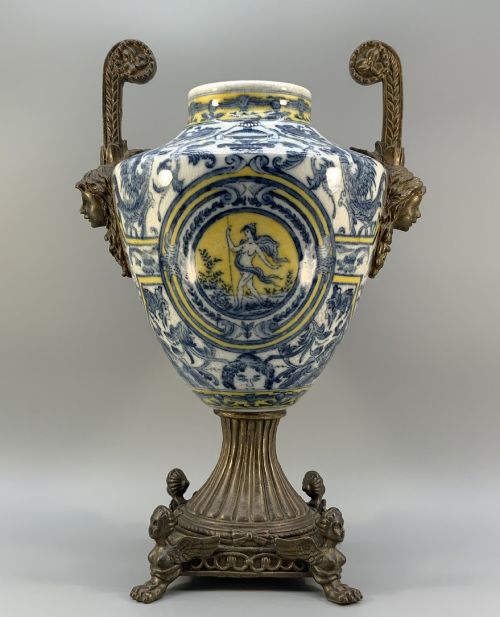
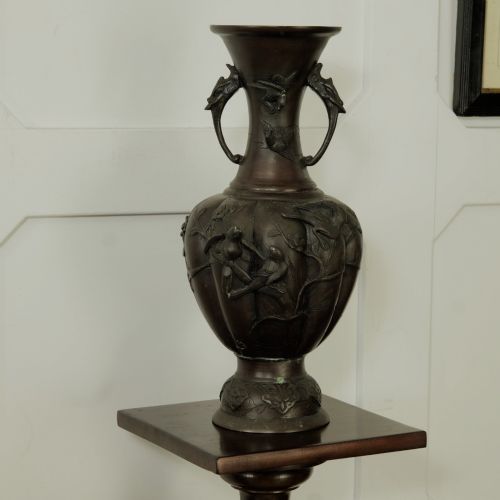
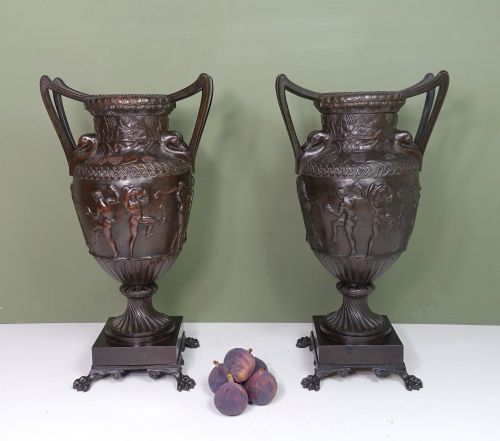
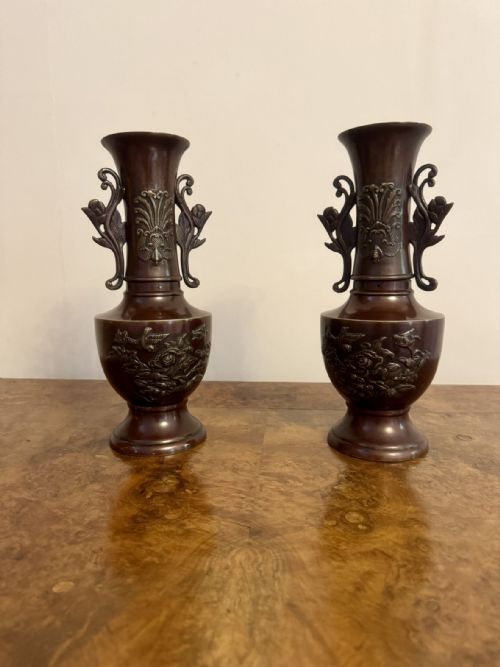
When searching for antique bronze urn handles, buyers find mounting hardware and structural grips originating from nineteenth-century vases, lamps, and decorative vessels. The pieces reflect global influences, ranging from Japanese Meiji period works to French Neoclassical and French Empire designs.
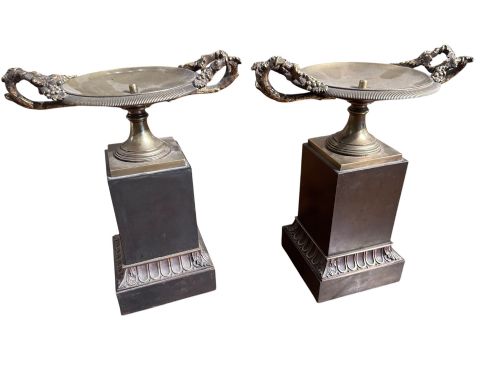
Most items on this page connect to larger decorative objects such as campana-shaped vases, tazzas, and lidded urns. These components highlight the historical utility and ornamental design of bronze work across different centuries.
Materials and construction methods
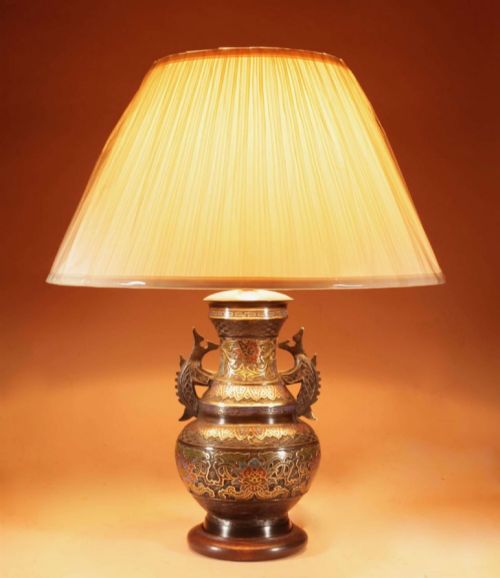
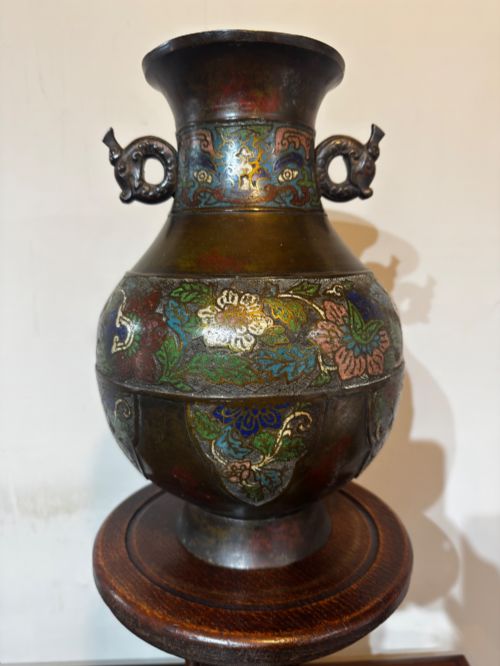
Makers utilised solid bronze, gilt bronze, and ormolu, frequently combining metalwork with contrasting materials like marble and enamel. Techniques such as champlevé enamel work and casting created detailed surfaces on vessels and their mounts.
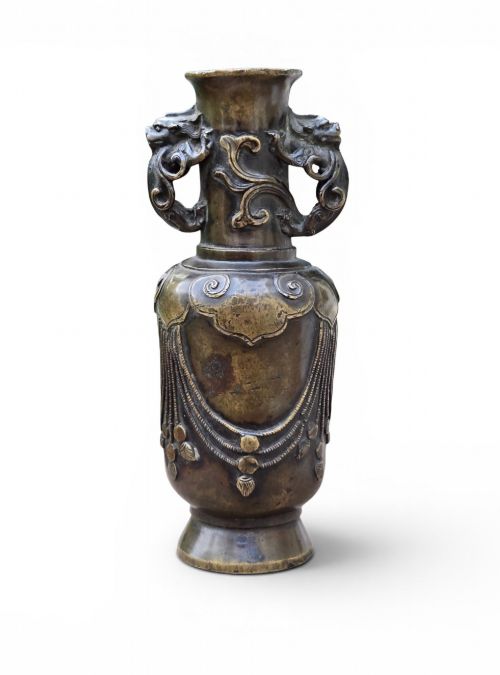
Many items incorporate applied decorative motifs, including dragon handles, egret decorations, and classical figural elements. These components demonstrate traditional foundry methods and surface finishing typical of European and Asian workshops.
Listings feature bronze, brass, copper, and ormolu combined with marble and enamel across nineteenth-century European and Asian items.
Distinctions in quality and execution
Quality separates mass-produced nineteenth-century metalware from finely chased and cast pieces. Sharply defined relief work and clean casting seams indicate superior craftsmanship in the handling of bronze and ormolu.
The integration of secondary materials, such as well-fitted marble bases or neatly applied champlevé enamel, elevates an object. Finer examples maintain crisp surface details and coherent stylistic proportions across both the vessel body and its handles.
The Antique Bronze Urn Handles Glossary
- Ormolu
- Gilt bronze, where a high-carat gold amalgam is applied to a bronze base. This technique was widely used in French furniture and decorative mountings during the eighteenth and nineteenth centuries.
- Champlevé
- An enamelling technique where troughs or cells are sunk into the surface of the bronze and filled with vitreous enamel. The metal partitions remain visible between the coloured enamel areas.
- Campana
- A bell-shaped vessel form popular in classical antiquity and revived during the neoclassical period. These urns and vases typically feature flared rims and prominent side handles.
- Tazza
- A shallow saucer-like dish or cup mounted on a stem and foot. They appear in classical and neoclassical metalwork for display or serving.
- Meiji Period
- A Japanese historical era spanning from 1868 to 1912, known for distinct bronze casting and decorative arts exported to Western markets. Pieces from this time often feature intricate flora and fauna motifs.
Antique Bronze Urn Handles: Frequently Asked Questions
What are antique bronze urn handles?
These pieces are metal grips and decorative mounts salvaged from or designed for nineteenth-century vases, ewers, and ornamental urns.
They represent various stylistic movements, including Japanese Meiji metalwork and European Neoclassical revival designs.
How were these bronze pieces used?
Original mounts functioned as structural lifting points or decorative side ornaments on heavy vessels, wine coolers, and lamps.
Over time, many handles and mounts became separated from their parent objects through repurposing or damage.
How do I identify the period?
Dating relies on stylistic clues, casting techniques, and the presence of specific decorative elements like champlevé enamel or neo-classical motifs.
Nineteenth-century pieces frequently imitate earlier classical or Asian forms while employing contemporary foundry practices of the era.
How should I display them?
These architectural and decorative fragments suit placement on mantels, shelves, or dedicated display mounts as sculptural objects.
Their varied patinas and metal tones pair well with neutral backgrounds that highlight the bronze casting.