



Enamel Bronze Vase
An enamel bronze vase brings together cast metal and vitreous colour, offering distinct decorative weight and rich surface detail for the room.
Enamel Bronze Vase
When you search for an enamel bronze vase, you encounter vessels that bridge Eastern and European traditions, spanning the nineteenth century through the early twentieth century. The selection ranges from Chinese export pieces and Japanese Meiji period examples to French Rococo revival creations.
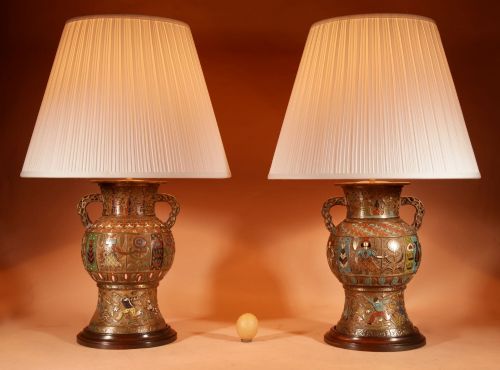
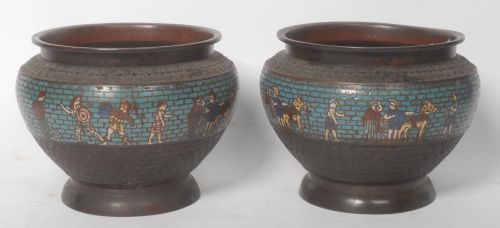
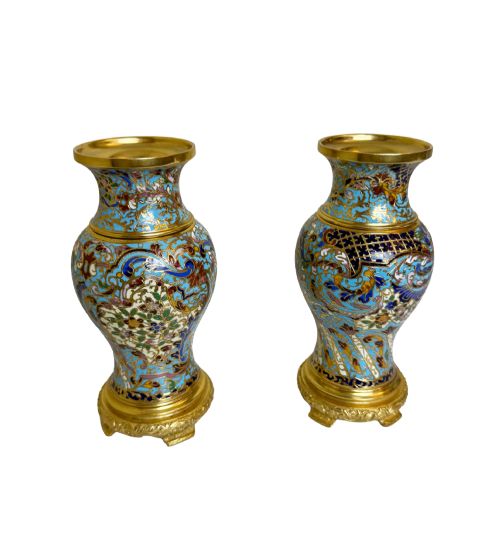
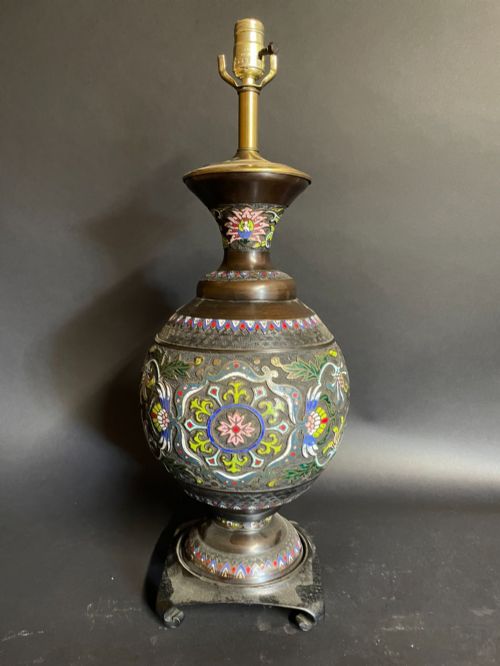
Vessels take many forms beyond standard vases and urns, frequently appearing as ginger jars, cachepots, lidded cachepots, and objects mounted as table lamps or candelabra. You will also find garniture sets alongside miniature pairs and monumental floor-standing pieces reaching significant heights.
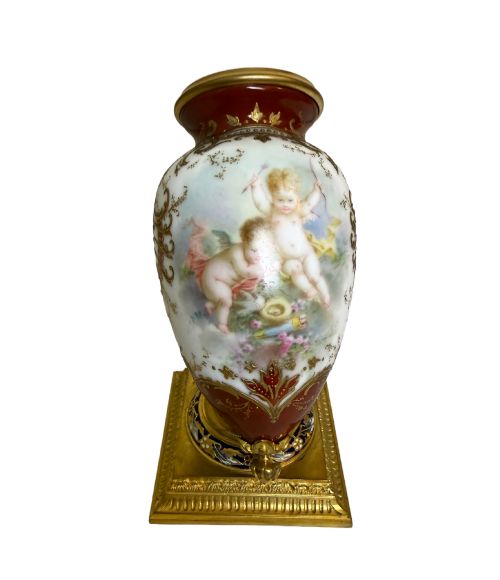
Origins divide broadly between Asian workshops - particularly Chinese Qing period and Japanese Meiji makers - and European centres such as nineteenth-century France. Japanese and Chinese pieces rely heavily on intricate wirework or cast recessing, while European iterations often incorporate gilt bronze, ormolu mounts, or porcelain elements like Sevres.
Materials and techniques
Makers constructed the core structure from cast bronze, brass, copper, or gilt metal, occasionally pairing the metal with porcelain or fabric elements. Molten or hammered metal formed the heavy body, providing a rigid armature capable of supporting subsequent decorative layers.
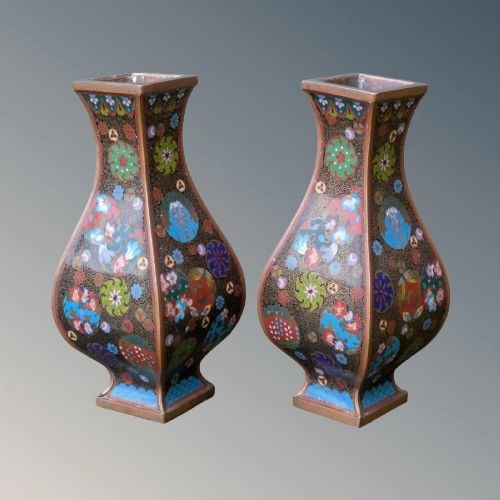
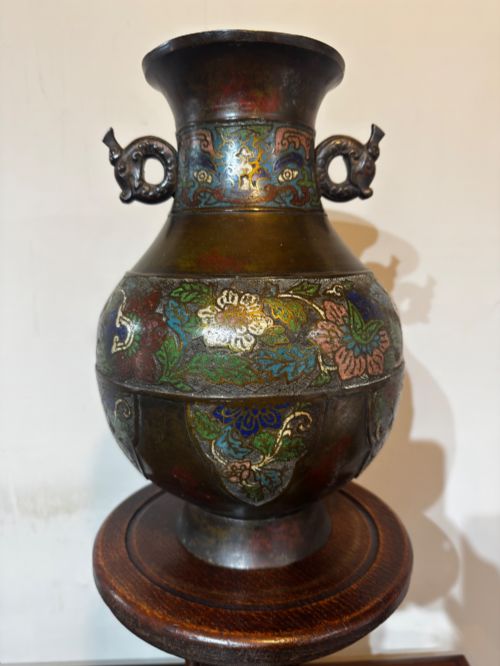
Surface decoration relies primarily on enamel techniques, specifically cloisonné and champlevé, applied to the metal substrate. Cloisonné involves soldering thin metal wires to the bronze body to create partitioned cells filled with coloured vitreous paste, whereas champlevé entails carving depressions directly into the bronze casting to hold the enamel.
Finishing touches often involve fire-gilding or ormolu mounts that frame the enamelled sections, while some items undergo later conversion into lamps or clock garniture sets. The combination of durable bronze and glassy enamel results in a robust object that retains its rich colouration across generations.
Listings feature items spanning the Victorian era, the Meiji period, and the Qing dynasty, utilising brass, copper, porcelain, and gilt bronze alongside enamel.
Judging quality
Quality rests upon the precision of the metalwork and the regularity of the enamel cells. Superior pieces display crisp, deeply carved champlevé channels or meticulously aligned cloisonné wirework without warping or irregular solder lines.
The purity and depth of the enamel palette dictate the visual impact at the top of the range. Finer vessels exhibit smooth, well-fired vitreous surfaces free from excessive pitting, muddy colour transitions, or clumsy modern repairs.
Integration of mounts and subsidiary materials reveals the maker's hand. In better examples, gilt bronze mounts, ormolu frames, and added porcelain components fit the bronze body seamlessly, maintaining structural harmony and balance.
The Enamel Bronze Vase Glossary
- Cloisonné enamel
- A technique where thin metal wires are soldered to a metal base to form compartments that are filled with enamel paste and fired. This method creates intricate, stained-glass-like patterns across the bronze surface.
- Champlevé
- A method in which troughs or cells are hollowed directly into the surface of a bronze casting and filled with enamel before firing. It produces bold designs with thick metal dividing lines.
- Ormolu
- Finely ground high-carat gold mercury-gilded to a bronze object, frequently used by French makers to mount and accentuate enamelled vessels. This treatment imparts a warm, enduring golden lustre.
- Garniture set
- A coordinated group of decorative vases and urns designed to be displayed together on a mantelpiece or sideboard. These matching sets often include clock housings or candelabra.
- Cachepot
- An ornamental pot or vessel designed to hold a flowerpot, frequently adapted from antique bronze and enamel vases. They add decorative colour to interior displays.
Enamel Bronze Vase: Frequently Asked Questions
What is an enamel bronze vase?
It is a decorative vessel cast from bronze, brass, or copper and ornamented with fired vitreous enamel. These pieces combine metallic structures with colourful glass pastes.
They originate from various traditions, including Chinese export workshops, Japanese Meiji period studios, and nineteenth-century French makers.
How were these vases used?
Historically, they served as ornamental mantelpiece ornaments, display pieces, or centrepieces in affluent homes. Their rich colours and metallic sheen projected refined taste.
Many examples were later converted into table lamps or incorporated into clock garniture sets to suit changing domestic lighting needs.
How do I live with one?
Place your vessel where ambient light can catch the glazed enamel surfaces and the gilt bronze mounts. Ensure it rests on a stable, level surface due to the inherent weight of the cast metal.
Keep them away from direct, harsh sunlight and clean them gently with a dry, soft cloth to preserve the delicate enamel and metal patination.
How do I tell periods apart?
Nineteenth-century French pieces often feature Rococo revival styling with heavy ormolu mounts and Sevres-style porcelain combinations. Asian items from the same era display traditional motifs like flora, fauna, and archaic bronze forms.
Meiji period Japanese works and Qing dynasty Chinese pieces show distinct wirework styles and enamel palettes that reflect their specific regional craftsmanship.