
Antique Bronze Centerpieces
Antique bronze centerpieces anchor a dining table or sideboard with sculptural metalwork, crystal, and marble.

Antique Bronze Centerpieces
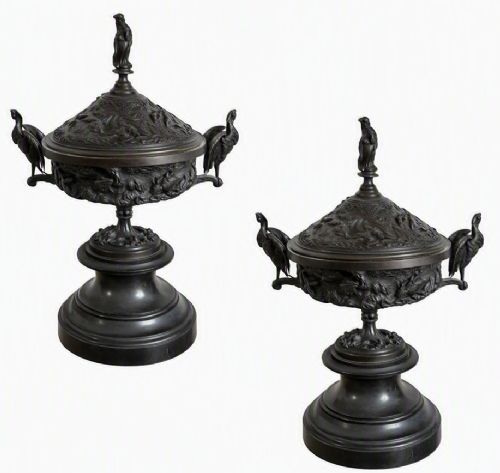
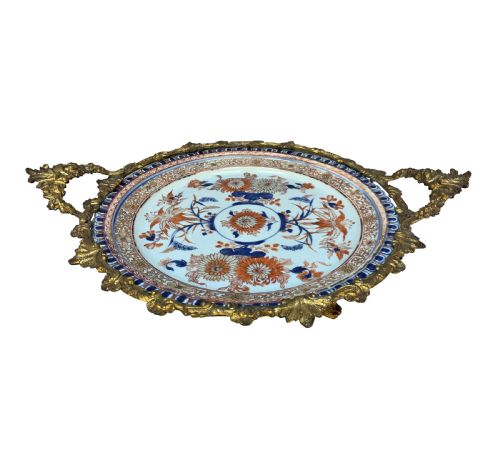
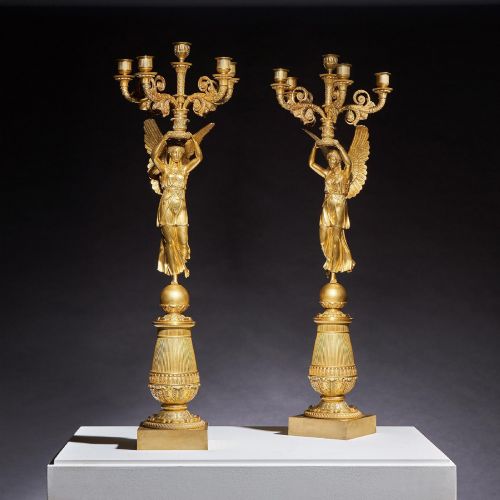
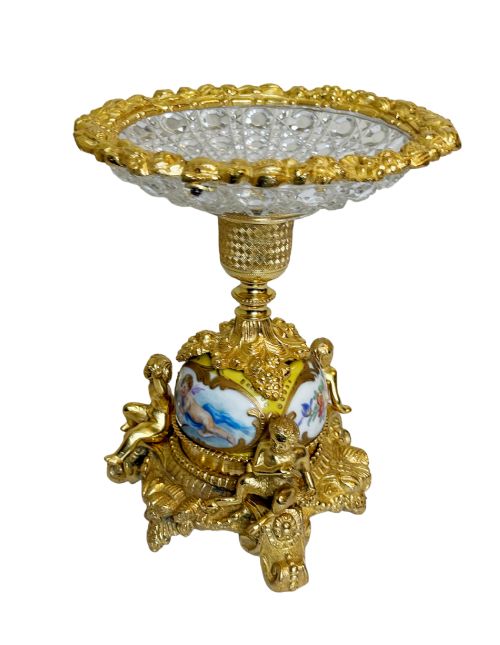
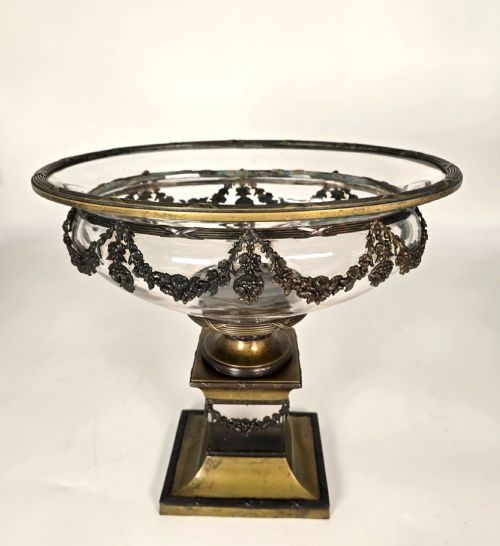
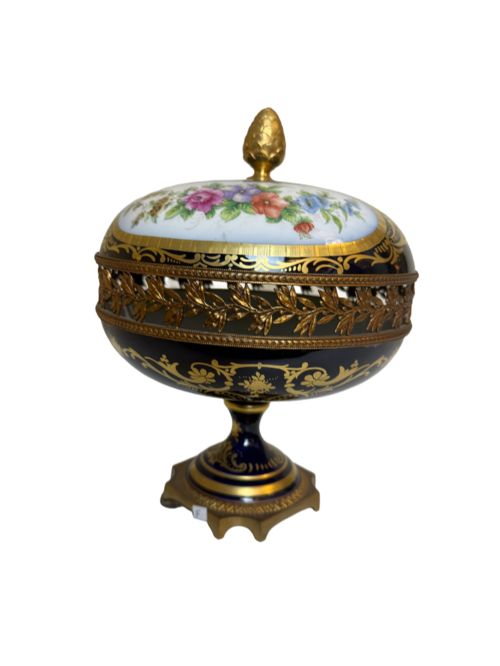
When searching for antique bronze centerpieces, collectors encounter elaborate tazzas, bowls, jardinieres, and urns originating primarily from nineteenth-century France. These decorative objects combine cast metal frameworks with vessels made from cut crystal, porcelain, marble, and glass.
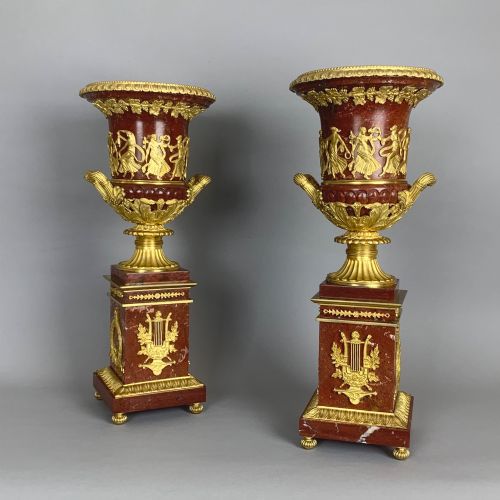
The pieces on this page span the Regency, Empire, and Art Deco periods, though French Rococo Revival and neoclassical designs dominate the selection. Most examples function as grand table centerpieces or decorative dishes intended to command attention in a formal room.
Materials and construction
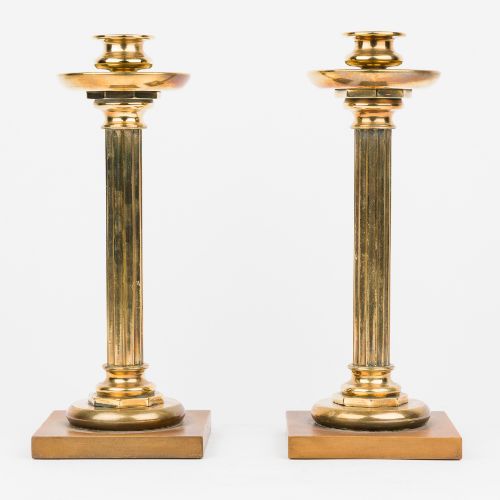
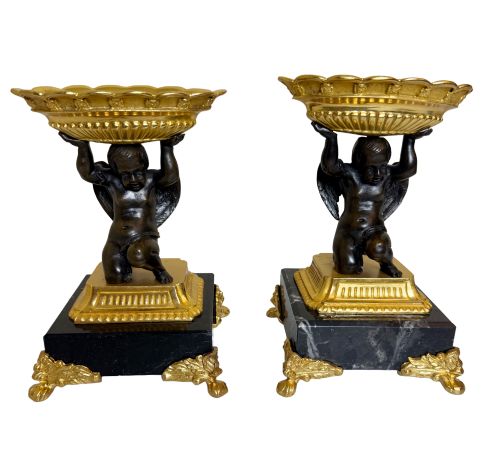
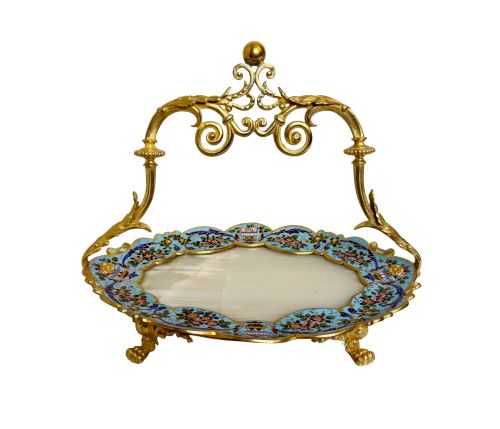
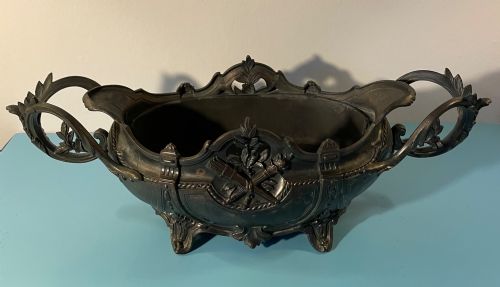
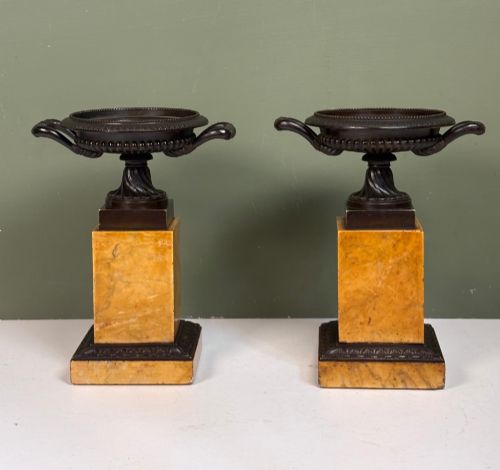
The creation of these objects relies heavily on bronze, often enhanced through fire-gilding to produce brilliant ormolu mounts, or patinated to achieve deeper, darker tones. Foundries combined these metal elements with contrasting natural materials such as white marble, green onyx, and agate cabochons.
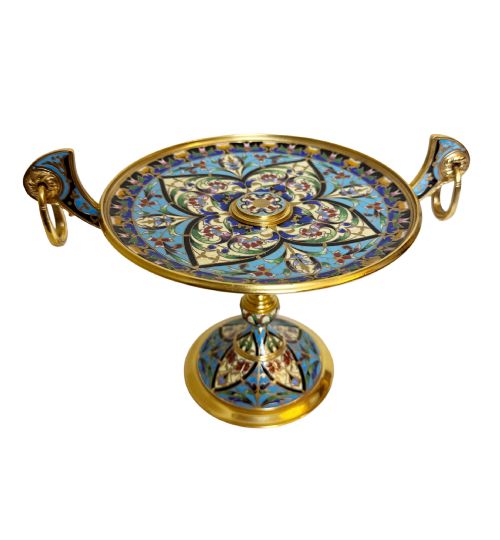
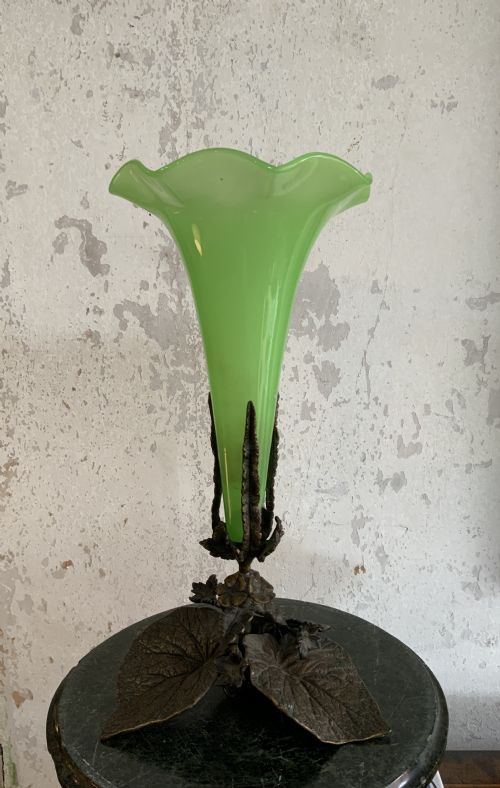
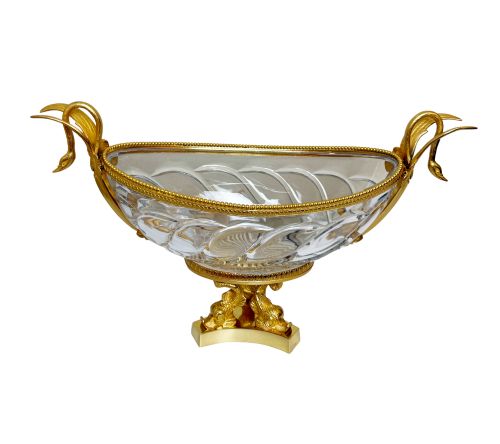
Vessels within the bronze frames frequently incorporate hand-cut crystal, uranium glass, or porcelain painted with intricate patterns and champlevé enamel detailing. Master craftsmen secured these diverse components using threaded metal rods and precise joins rather than adhesives.
Materials appearing across the inventory include gilt bronze, ormolu, champlevé enamel, marble, onyx, and cut crystal.
Assessing craftsmanship
Quality in these works rests upon the crispness of the bronze casting and the depth of the subsequent chasing by hand. Sharp, well-defined foliage, cherubs, and figures indicate a workshop that invested significant time in finishing the metal after it left the sand mould.
The integration of materials also dictates the standard of the piece, visible in how precisely cut crystal or porcelain inserts fit their bronze mounts. Heavier castings with substantial marble bases and thick, unblemished glass bowls represent the upper tier of period production.
Jules Moigniez·Pierre Philippe Thomire
The Antique Bronze Centerpieces Glossary
- Ormolu
- Gilt bronze created by applying a mixture of mercury and gold leaf to a bronze base and heating it. This historic technique produces a rich, durable golden surface.
- Tazza
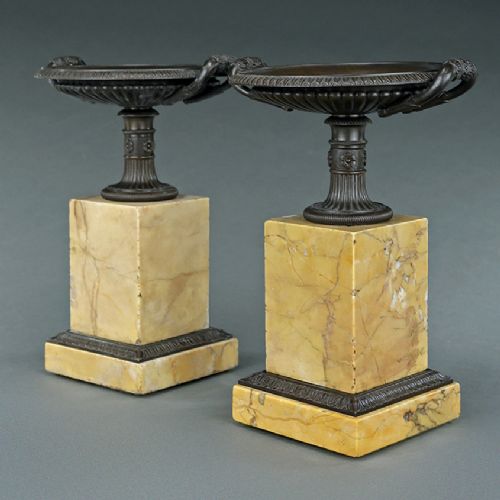
- A shallow bowl or vase raised on a high foot and stem. These stemmed vessels were frequently mounted in bronze during the nineteenth century.
- Champlevé
- An enamelling technique where troughs or cells are hollowed out of the metal surface and filled with vitreous enamel powder before firing. The resulting design sits flush with the surrounding metal.
- Epergne
- A large table centerpiece featuring a central bowl with multiple branching arms supporting smaller dishes or baskets. They were traditionally used for serving fruit or sweets.
- Jandiniere
- An ornamental container designed to hold growing plants or floral arrangements. In nineteenth-century interiors, these vessels often sat on matching bronze or ceramic bases.
Antique Bronze Centerpieces: Frequently Asked Questions
What is an antique bronze centerpiece?
An antique bronze centerpiece is a decorative vessel or tazza designed to sit in the middle of a dining table or sideboard. These objects usually combine a cast bronze or ormolu frame with a bowl made from glass, crystal, or porcelain.
Craftsmen produced them in various styles including French Empire, Regency, and Rococo Revival. They often feature sculptural elements such as cherubs, scrolling foliage, or classical figures.
How were these centerpieces used?
Historically, these items served as decorative focal points for formal dining tables, often holding fruit, flowers, or sweetmeats during large meals. Wealthy households utilised them to display wealth and artistic taste during gatherings.
Beyond dining rooms, owners placed them on console tables, mantels, and pedestals as purely ornamental sculpture. Their combination of reflective glass and gilt bronze helped brighten candlelit rooms.
How do I clean antique ormolu?
Cleaning antique ormolu requires gentle dusting with a soft, dry brush to remove particles from recessed areas. Harsh commercial metal cleaners will strip the original fire-gilt finish permanently.
Moisture should be avoided on gilt bronze, especially near mounted porcelain, marble, or enamel sections. Professional conservation is recommended for pieces showing heavy accumulation of dirt or verdigris.
How do I date a bronze centerpiece?
Dating relies on identifying the prevailing artistic style, such as the strict symmetry of Empire work or the asymmetrical curves of Rococo Revival. Examining the casting quality, patination, and the assembly screws or nuts provides further clues to the period of manufacture.
Materials incorporated into the design also help narrow the age, as champlevé enamel and specific shades of uranium or coloured glass align with later nineteenth-century production. Comparing the piece to documented examples by known makers offers the most reliable timeline.