
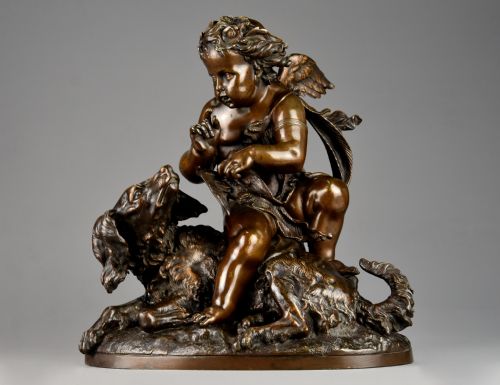


Classical Bronze Cherub Group
A classical bronze cherub group brings lively nineteenth-century French and Neoclassical sculpture into a room, offering energetic figures cast in patinated metal.

Classical Bronze Cherub Group
A classical bronze cherub group depicts winged putti, infant bacchants or dancing children captured in lively mythological scenes. These sculptural pieces draw heavily on eighteenth-century French prototypes, particularly after the sculptor Clodion.
Most examples encountered here date from the nineteenth century, spanning Neoclassical and Rococo Revival styles. Buyers typically find multi-figure compositions mounted on heavy marble bases or cast as standalone table sculptures.
The subjects range from putti playing with grapes to grand tour figures blowing conch shells. These works reflect the nineteenth-century European fascination with classical antiquity and mythological playfulness.
Materials and casting methods
Foundries utilised traditional lost-wax or sand-casting techniques to capture the soft musculature and fine hair of the infant figures. The resulting metalwork is then finished with hand-chasing to sharpen details like wings and drapery.
Surfaces receive varied chemical treatments, yielding dark patinated bronze, bright silvered bronze or occasional gilt brass. Many groups are permanently secured to polished marble bases that provide stability and weight.
Several groups capture small children wrestling with spaniels and tumbling among heavy bunches of grapes.
Distinctions in execution and finish
The sharpness of the chasing separates standard foundry work from superior casts. Better pieces retain crisp facial expressions, well-defined fingers and intricate feather detailing on the wings.
The quality of the patination and the density of the supporting marble plinth indicate the origin and ambition of the casting. Finer groups show careful hand-polishing and subtle tonal variations across the metal surface.
Clodion·Charles Cumberworth·Carrier
The Classical Bronze Cherub Group Glossary
- Putto
- A plump, often winged infant depicted in classical art. They frequently appear in nineteenth-century bronze groups wrestling, dancing or holding grapes.
- Grand Tour
- A cultural journey undertaken by wealthy young Europeans through France and Italy. Souvenirs from these travels included small bronze sculptures of classical subjects.
- Patinated bronze
- Metal treated with chemical solutions to produce a controlled surface colour. This process protects the bronze while enhancing the visual depth of the figures.
- Lost-wax casting
- A method of metal casting in which a molten metal is poured into a mould that has been created by means of a wax model. This technique allows for complex undercuts and delicate anatomical forms.
- Neoclassical
- A style originating in architecture and the arts that draws upon Western classical art and culture. In these listings, it informs the balanced composition and mythological themes of the figures.
Classical Bronze Cherub Group: Frequently Asked Questions
What is a putto?
A putto is a chubby male infant, frequently winged, derived from classical art and Renaissance putti. They appear constantly in nineteenth-century French bronze groups.
In these sculptures, they are often shown playing with animals, dancing or handling grapes in Bacchic scenes.
Are these pieces French?
Many of these bronze groups originate from nineteenth-century French foundries working in Neoclassical and Rococo Revival styles. They frequently reference earlier models by sculptors like Clodion.
Some makers operating during this period produced works that blended English and French artistic influences.
How do I display them?
These sculptures are heavy and typically sit on solid marble bases designed for stable placement on tables, desks or mantelpieces. They require a stable surface with adequate depth to support the weight of the metal and stone.
Keep them away from direct heat sources and moisture to protect the patinated bronze finish.
What does silvered bronze mean?
Silvered bronze refers to a bronze casting that has been coated with a layer of silver to create a bright, reflective surface. This finish alters the appearance of the metal compared to traditional dark patination.
Foundries used this technique during the nineteenth century to highlight finer details and garments.