


French Bronze Putti Sculpture
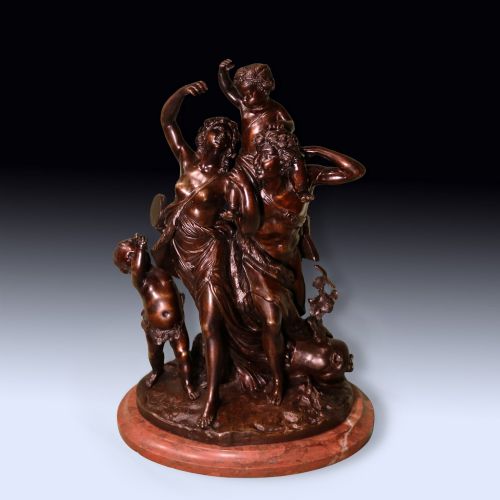
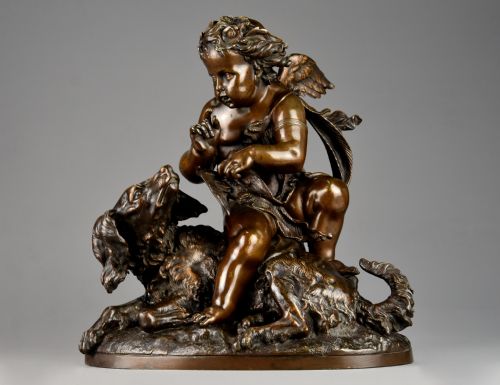
When you search for french bronze putti sculpture, you uncover classical figures of winged infants cast in metal, prized for their expressive detail and mythological charm.
French Bronze Putti Sculpture
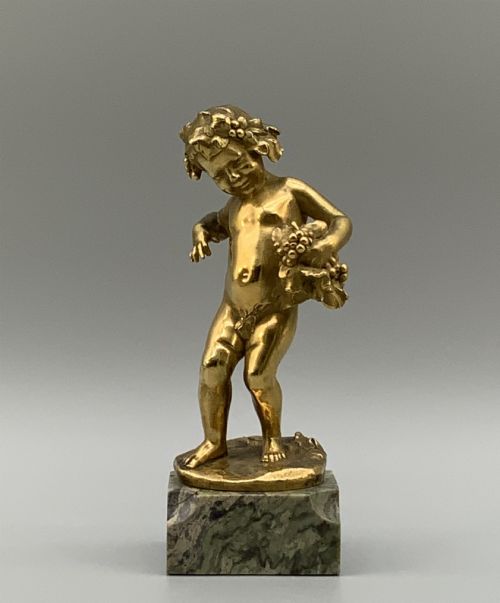
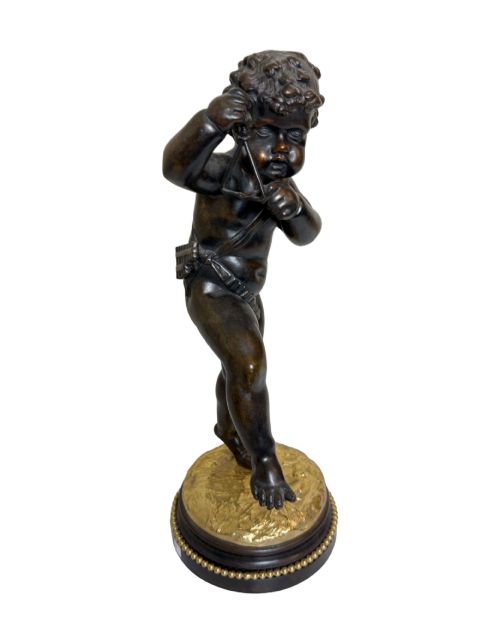
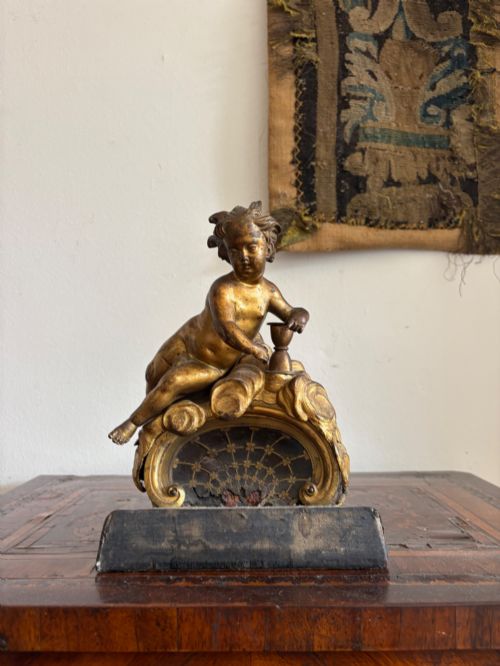
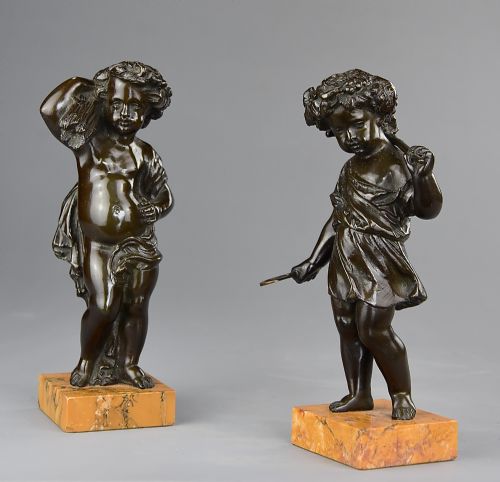
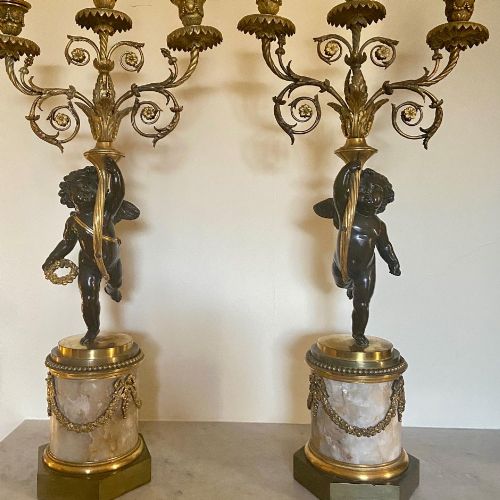
French bronze putti sculpture encompasses figurative works depicting winged cherubs, infants, and amorini engaged in musical, harvest, or mythological pursuits. These pieces frequently manifest as standalone statuary, figural groups, or decorative mounts associated with clocks, lamps, and candelabra.
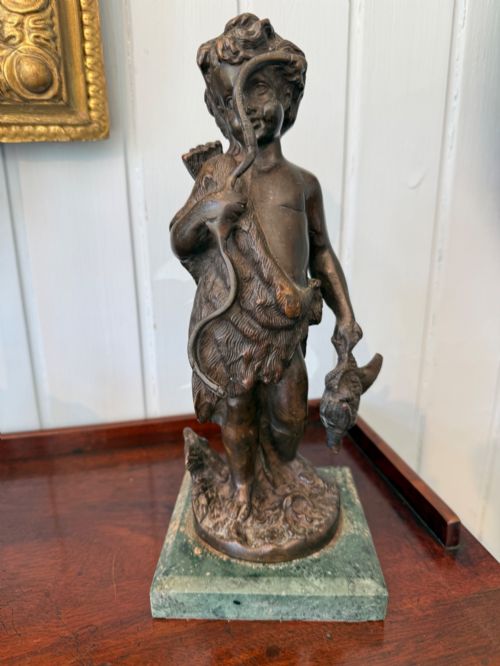
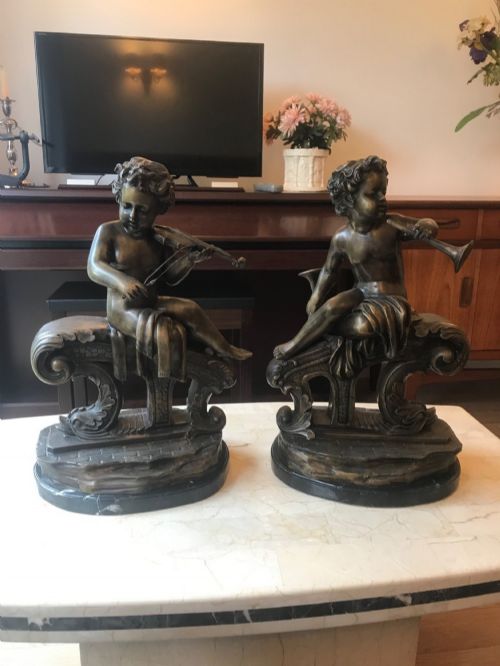
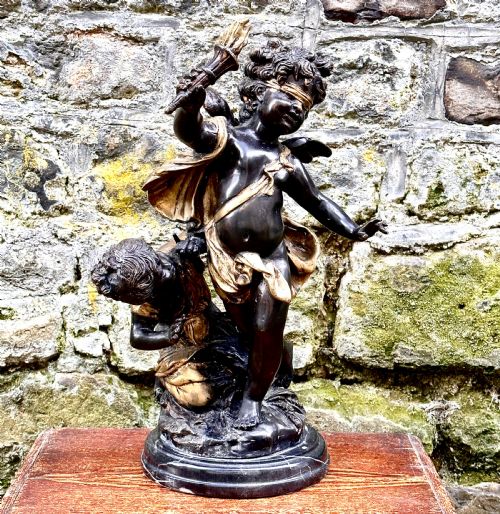
The selection on this page relies heavily upon nineteenth-century examples, alongside select late eighteenth-century items and mid twentieth-century casts. Forms range from solitary sleeping cherubs and bow-wielding Cupids to complex pairs gathering grapes or playing musical instruments.
Origins trace directly to French workshops and classical Grand Tour traditions, often drawing inspiration from master sculptors such as Claude Michael Clodion or François Redmond. Buyers encounter diverse scales, spanning small tabletop ornaments up to large sculptural groups mounted on marble.

How they were made
Foundries utilised traditional lost-wax or sand-casting methods to shape molten metal into intricate child forms, subsequently refining the surfaces through chasing and filing. Bronze served as the primary medium, frequently enhanced through patinated dark finishes, bright gilding, or ormolu highlights.
Artisans combined the cast bronze with complementary materials such as marble for sculptural bases, carved wood, and occasionally fluorspar or enamel details. Ormolu applications provided rich golden contrasts against patinated bronze surfaces on candelabra and mantel clocks.
A sleepy chubby cherub cast in bronze rests alongside dogs, cats, and harvest grapes.
What varies in quality
Quality rests significantly upon the crispness of the chase work, where finer casts retain delicate facial expressions, feather textures in wings, and soft musculature in the infant limbs. Softer, blurred details often indicate secondary casting or excessive wear.
The artistry of the composition and the sophistication of the associated materials, such as heavy veined marble plinths or meticulously gilded ormolu mounts, elevate the distinction of a piece. Signed works associated with recognised founders or sculptors carry added weight through documented provenance.
Charles Louis Malric·Susse Frères·Claude Michael Clodion·Francois Redmond·Leon Message·Jollet et Cie·Louis Auguste Moreau·Charles Cumberworth·Carrier·Ferrand·Pigale
The French Bronze Putti Sculpture Glossary
- Putto
- A plump, naked male infant, frequently winged, appearing in classical and Renaissance art. These figures often symbolise secular love or mythological themes.
- Ormolu
- Gilt bronze produced by applying a finely ground high-carat gold mercury amalgam to a bronze object. This technique imparts a rich golden lustre to decorative mounts and clock fixtures.
- Patinated Bronze
- Metal treated with chemical solutions to produce a specific surface colouration ranging from deep brown to dark green. This finish protects the metal and accentuates sculptural contours.
- Grand Tour
- A cultural journey of Europe undertaken by wealthy young men in the eighteenth and nineteenth centuries to collect classical art and antiquities. Sculptures purchased during these travels often reproduced famous classical motifs.
- Finial
- A relatively small decorative ornament fixed to the top of an object, such as a clock, lamp, or furniture piece. These serve to cap structural elements with sculptural flair.
French Bronze Putti Sculpture: Frequently Asked Questions
What is a putto?
A putto is a chubby, often winged infant figure originating in classical art and later revived during the Renaissance and nineteenth century. They represent mythological attendants, cherubs, or cupids.
In French bronze sculpture, these figures frequently engage in playful activities such as playing musical instruments, harvesting grapes, or holding bows.
How were these bronzes finished?
Foundries used various chemical treatments and gilding methods to achieve distinct surface appearances on the metal. Patination created dark brown or greenish tones, while ormolu involved applying gold to highlight specific details.
Many nineteenth-century pieces combine patinated bronze figures with gilded mounts or contrasting marble bases to enhance their decorative appeal.
Are these sculptures signed?
Certain pieces bear signatures or foundry marks stamped directly into the bronze, identifying the artist or the producing workshop. Signatures linked to established nineteenth-century sculptors or foundries like Susse Frères appear on select pieces.
Unsigned works remain common, often created in the manner of famous classical sculptors without bearing an individual artist mark.
Where were they displayed?
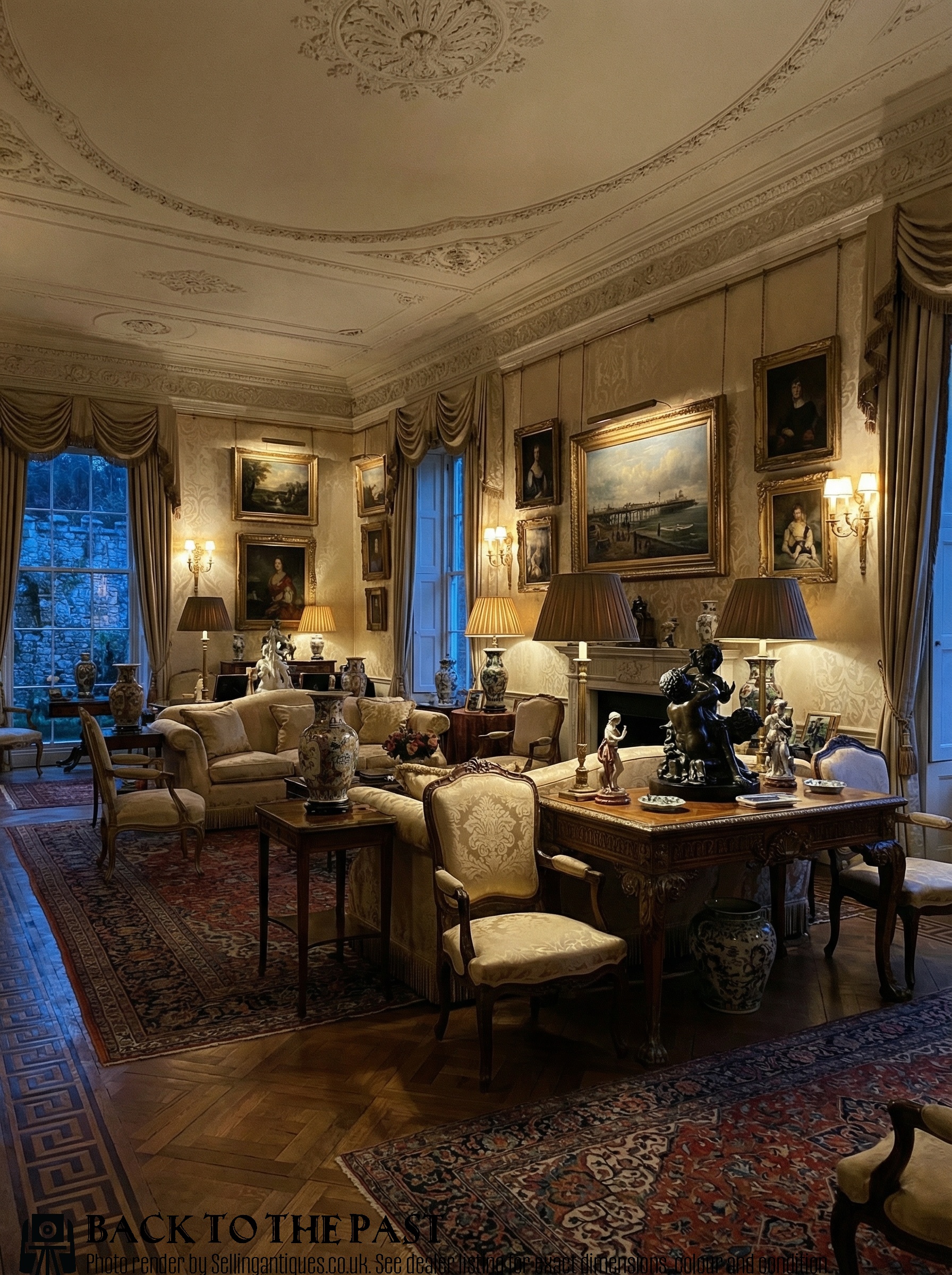
These sculptures functioned primarily as decorative tabletop art, mantelpiece ornaments, or integrated components of clocks and candelabra. Nineteenth-century interiors frequently incorporated them into drawing rooms and libraries.
Larger pairs were positioned on dedicated marble bases or incorporated into functional lighting fixtures such as bronze lamps.