



Dark Bronze Putti Statue
A dark bronze putti statue brings winged mythological figures into the room, cast in heavy metal and finished with rich patination.

Dark Bronze Putti Statue
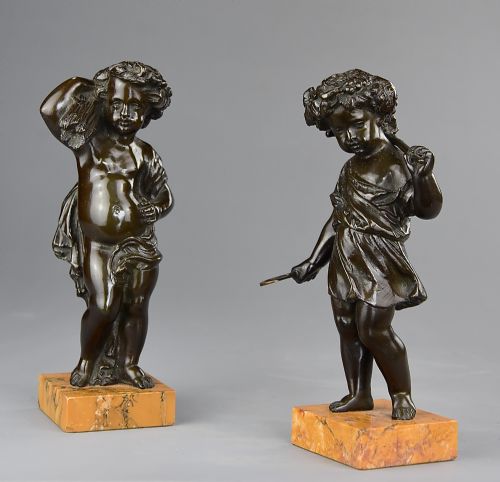
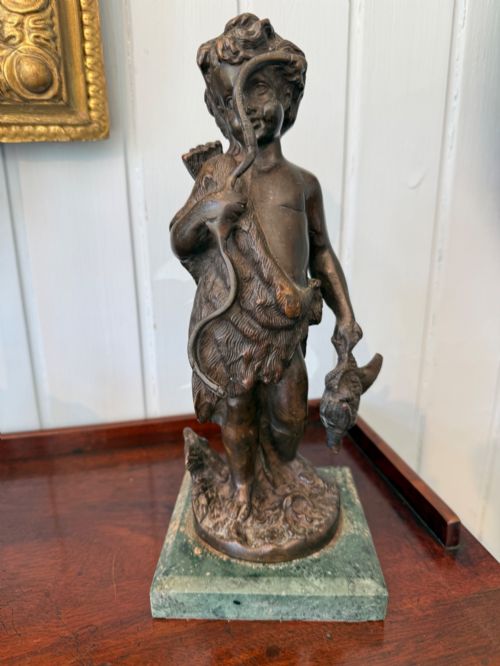
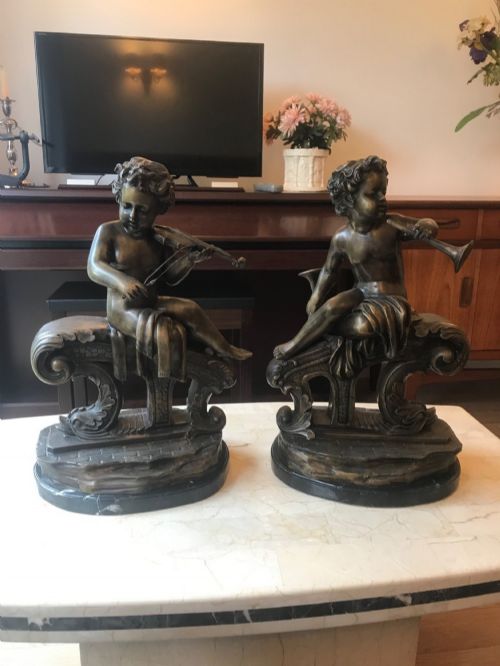
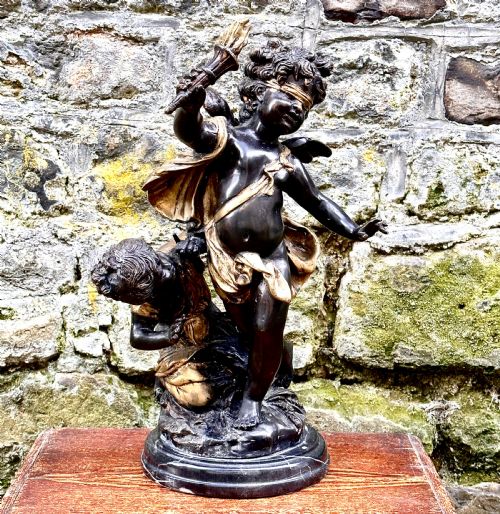
When you search for a dark bronze putti statue, you encounter classical figures cast as cherubs, cupids, and allegorical children engaged in music, harvest, or play. These sculptures appear singly or as pairs, occasionally mounted on marble bases or integrated into functional objects such as mantel clocks and doorstops.
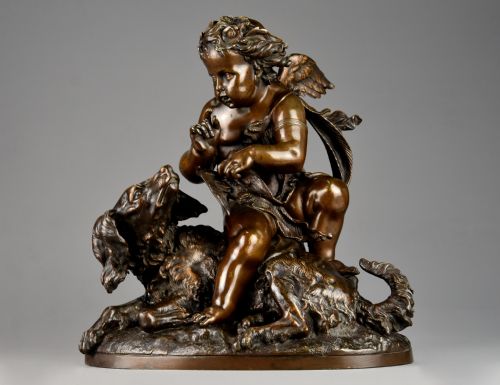
The pieces on this page stem predominantly from the nineteenth century, reflecting French Neoclassical, Rococo Revival, and Grand Tour aesthetic traditions. Makers often drew inspiration from classical sculptors, producing detailed studies of winged infants with grapes, musical instruments, and animal companions.
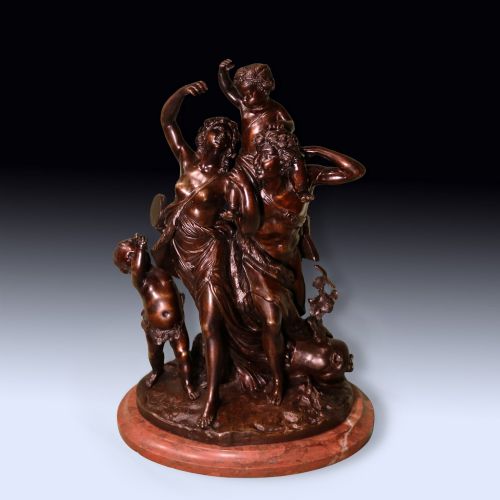
Forms range from small statuettes to large bronze sculpture groups depicting Bacchus, Triton, and seasonal allegories. The patinated bronze surface gives each figure depth, contrasting with occasional highlights of gilt or the smooth texture of supporting green marble plinths.
Materials and Casting Methods
Selected pieces incorporate contrasting materials such as marble and glass, providing sturdy mounts and decorative elements that elevate the sculpture. Bases of green marble or polished stone anchor the heavy metal figures, while enamel and gilt accents sometimes highlight specific details on clocks and decorative objects.
Listings feature works from the Georgian period through the twentieth century, utilising bronze, marble, and patinated finishes.
Distinctions in Quality
Signatures by recognised sculptors or foundries elevate a piece, reflecting skilled workshop execution rather than anonymous commercial output. The integration of supporting elements, such as fitted marble bases and patination consistency, also separates masterwork statuary from simpler decorative castings.
Claude Michael Clodion·Louis Auguste Moreau·Charles Cumberworth·BELLENOT PARIS
The Dark Bronze Putti Statue Glossary
- Putto
- A figure of a small winged infant, frequently used in classical and renaissance art. These plump child figures appear often in representations of cupid or mythological scenes.
- Patinated bronze
- Bronze that has been chemically treated to alter its surface colour, resulting in deep brown, black, or greenish tones. This finish protects the metal and defines sculptural contours.
- Grand Tour
- A cultural journey undertaken by European elites in the eighteenth and nineteenth centuries to collect classical art and small-scale bronze antiquities. Statues from this tradition emulate ancient Greek and Roman models.
- Neoclassical
- An artistic style drawing inspiration from the classical art and culture of ancient Greece and Rome. It emphasises proportion, restraint, and mythological themes.
- Rococo Revival
- A nineteenth-century design movement characterised by asymmetrical scrollwork, naturalistic motifs, and elaborate ornamentation. This style heavily influences French decorative bronzes of the period.
Dark Bronze Putti Statue: Frequently Asked Questions
What is a putto statue?
A putto statue depicts a small winged infant, often representing a cherub or cupid in classical mythology. These figures appear frequently in nineteenth-century decorative art.
Sculptors rendered them playing instruments, gathering grapes, or holding attributes like bows and wheat sheaves.
How do I date a bronze statue?
Dating relies on stylistic clues, casting techniques, and material combinations found in the piece. Nineteenth-century examples often display specific revival styles and patination methods.
Signatures, foundry marks, and accompanying marble bases also help establish the period of creation.
Where were these statues made?
Many of these pieces originate from French workshops and foundries active during the nineteenth century. Others reflect Italian craftsmanship associated with the Grand Tour tradition.
English makers also produced similar decorative bronze figures and doorstops during the Victorian era.
How should I display bronze figures?
Bronze sculptures require stable surfaces that can support their considerable weight, particularly when mounted on marble bases. Placing them away from direct moisture preserves the dark patinated finish.
Dusting with a soft, dry cloth maintains the surface without the need for chemical polishes.