
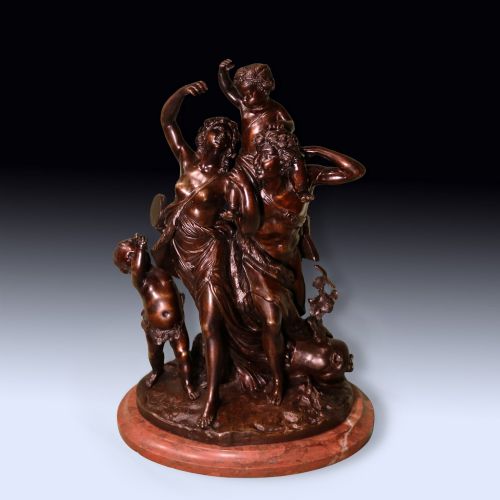


Bacchanalian Bronze Figure
A bacchanalian bronze figure brings the classical revelry of Bacchus, putti, and dancing maidens into your interior through heavy metalwork.

Bacchanalian Bronze Figure
When you search for a bacchanalian bronze figure, you encounter sculptural groups and mantel clocks depicting mythological scenes of wine, harvest, and revelry. These pieces draw heavily on classical antiquity and the popular compositions of Clodion, featuring children gathering grapes, dancing maidens, and figures associated with Bacchus.
You are most likely to meet nineteenth-century French interpretations on this page, cast in patinated bronze and often mounted on marble bases. The forms range from pairs of putti groups to large sculptural compositions and ormolu-mounted clocks styled in the manner of Louis XVI and French neoclassical revivals.
Materials and construction
These figures are cast in bronze, frequently finished with a dark patination to highlight the muscular contours of the bodies and the drape of the garments. Many pieces incorporate ormolu mounts and enamel details, reflecting the sophisticated foundry techniques of nineteenth-century France.
The bronze groups are typically set upon marble bases, including green marble plinths, which provide structural weight and a distinct textural contrast to the metallic figures above.
Materials recorded across the listings include bronze, patinated bronze, ormolu, enamel, marble, and green marble.
Distinctions in quality
The distinction between ordinary and exceptional pieces lies in the crispness of the chasing and the expressive movement within the group. Superior examples display finely rendered facial expressions, deeply undercut grapes and foliage, and fluid choreography among the dancing figures.
The integration of the bronze with its mount also defines the standard of the work, where heavier patinated bronze and substantial marble or ormolu plinths demonstrate greater material substance and workshop investment.
Clodion·Remond
The Bacchanalian Bronze Figure Glossary
- Patinated bronze
- Bronze treated with chemical solutions to produce a specific surface colour, ranging from deep brown to near black. This finish protects the metal and accentuates sculptural detail.
- Ormolu
- Gilded bronze produced by applying a mercury-gold amalgam to base metal and heating it to drive off the mercury. It provides a bright, lasting golden surface.
- Putti
- Representations of chubby, winged male infants, often depicted as cherubs or mythological attendants in bacchanalian scenes. They frequently appear playing with grapes or joining in revelry.
- Neoclassical
- A style reviving the design elements of classical Greece and Rome, prioritising symmetry, restraint, and mythological subject matter. It heavily influenced nineteenth-century French bronze casting.
Bacchanalian Bronze Figure: Frequently Asked Questions
What is a bacchanalian bronze figure?
A bacchanalian bronze figure is a nineteenth-century cast metal sculpture depicting mythological scenes of Bacchus, putti, and maidens celebrating the harvest with grapes and wine. These pieces often follow classical compositions.
They serve as decorative mantel sculptures, clock ornaments, or standalone table pieces rooted in French neoclassical revival styles.
How were these bronze figures used?
These sculptures functioned primarily as decorative works of art for nineteenth-century salons, libraries, and drawing rooms. They demonstrated the owner's classical taste and appreciation for mythological narratives.
Some examples also served as structural components on French ormolu mantel clocks, combining timekeeping with sculptural display.
How do I care for bronze and marble?
Bronze requires gentle dusting with a soft, dry cloth to prevent the accumulation of grit in the recesses of the patination. Avoid using abrasive cleaning agents or commercial metal polishes that strip the historic finish.
Marble bases should be cleaned with a damp cloth and mild soap, ensuring no moisture sits on unsealed stone or seeps into the bronze joints.
How can I tell the period of the bronze?
Nineteenth-century pieces often display specific patination techniques, hand-chased surface details, and mounting styles typical of French foundries of that era. The weight and composition of the accompanying marble bases also offer clues to the period of manufacture.
Signatures or attribution marks referencing sculptors like Clodion indicate the classical tradition being emulated rather than necessarily implying a direct piece by the artist.