


Antique Brass Tazza
An antique brass tazza is a raised pedestal dish designed for display, offering formal elegance through classical proportion and decorative metalwork.
Antique Brass Tazza
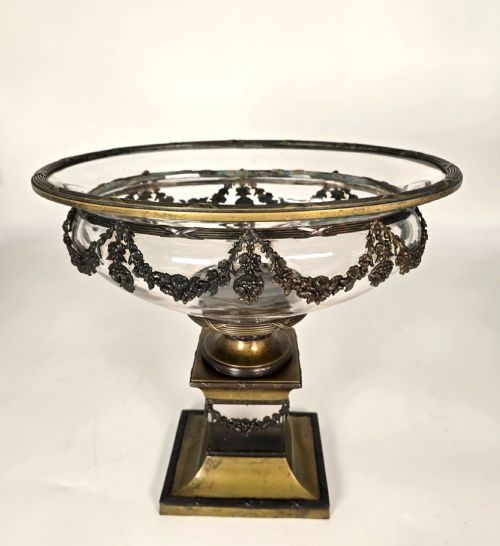
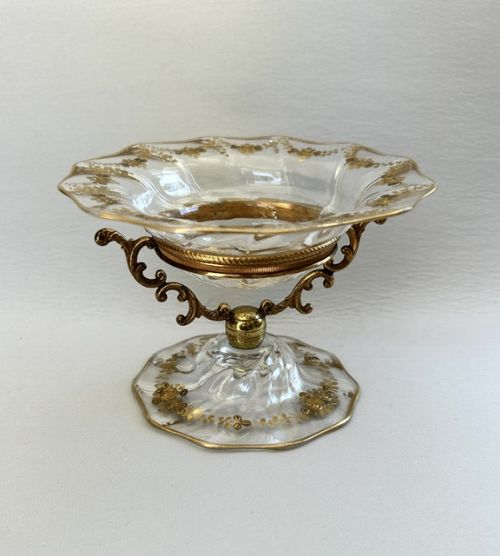
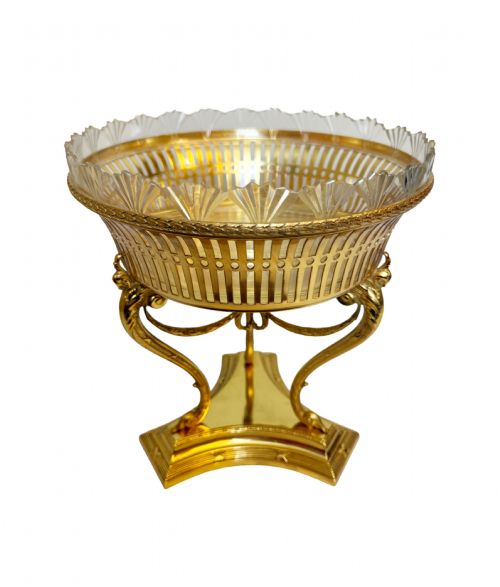
An antique brass tazza is a raised pedestal dish or flat bowl intended for formal display, often drawing on classical proportions and decorative metalwork. These elevated vessels serve as striking centrepieces on tables and sideboards, combining functional form with ornate design. Buyers searching for an antique brass tazza will encounter pieces that frequently incorporate mixed media such as glass inserts, marble bases, and mounted stones.
The selections available span multiple periods including the nineteenth century, Regency era, and around eighteen-sixty, alongside styles like French Empire, Victorian Gothic Revival, and Continental Rococo. Alongside traditional tazza forms, related pedestal bowls, comports, and table platters appear throughout the inventory, often sharing the same raised architectural silhouette. This variety reflects the diverse decorative impulses of nineteenth-century European metalwork and domestic display.
Materials and construction
Construction relies heavily on cast brass, gilt bronze, and ormolu, shaped into sturdy pedestals and decorative rims that support shallow bowls. Metalwork techniques of the nineteenth century combined heavy casting with chased surface detail, producing crisp relief patterns and secure mounts for stone elements. Many examples integrate contrasting components, pairing metallic alloys with natural media such as black slate, variegated marble, sienna marble, alabaster, and banded agate.
In addition to stone bases and pedestals, glass inserts and enamelled accents frequently complete the assembly, secured by bronze mounts or brass bezels. These combined elements demanded skilled collaboration between metalworkers, lapidaries, and glassmakers to achieve stable, balanced table platters and centrepieces. The resulting objects display a robust construction hidden beneath intricate neoclassical or rococo surface enrichment.
Listings feature pieces spanning the nineteenth century, including Regency, French Empire, and Victorian Gothic Revival styles.
Distinctions in quality
Quality in these pedestal vessels rests upon the crispness of the metal casting and the depth of the chased surface work, which separates standard production from finer studio pieces. Heavier gauge brass and richly chased gilt bronze demonstrate greater care during manufacture, yielding sharper relief and more convincing classical detail. The integration of secondary materials also influences distinction, particularly where natural stone bases or mounted agate cabochons are selected for superior colour and figuring.
Proportion and architectural balance further divide the refined examples from simpler domestic wares, ensuring the pedestal supports the shallow dish with visual harmony. Superior pieces maintain tight joints between disparate components such as marble plinths, alabaster bowls, and brass stems without excessive adhesive or visible misalignment. This structural integrity ensures the object reads as a unified decorative statement rather than a collection of mismatched parts.
Japy Frères
The Antique Brass Tazza Glossary
- Tazza
- A shallow bowl or dish mounted on a stem and foot, used historically for serving food or displaying fruit and sweetmeats. In later decorative contexts, it functions purely as an ornamental centrepiece or table platter.
- Ormolu
- Finely ground high-carat gold applied to a bronze base using a mercury amalgamation process, popular in French decorative arts. This technique produces a warm, enduring golden finish distinct from modern electroplating.
- Pietra dura
- An artistic technique of using cut and fitted polished coloured stones to create geometric or figurative images. It appears on mounted plaques and dishes alongside brass and alabaster.
- Garniture
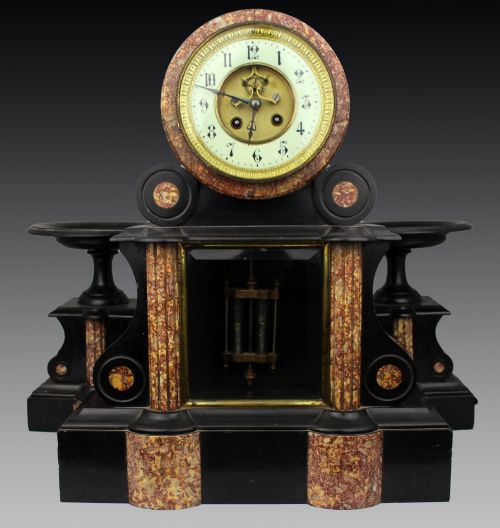
- A set of matching decorative objects, typically numbering three or five pieces, designed to be displayed together on a mantelpiece or sideboard. These sets often include a central clock flanked by matching urns or candelabra.
- Cabochon
- A gemstone shaped and polished as a convex dome rather than faceted, frequently set into metal mounts on decorative objects. Agate cabochons add rich natural patterning and colour contrast to bronze and brass surfaces.
Antique Brass Tazza: Frequently Asked Questions
What is a tazza used for?
Historically, a tazza functioned as a raised vessel for serving small quantities of food, fruit, or sweetmeats during formal dining occasions. In domestic interiors, they evolved into decorative display pieces placed upon tables, cabinets, and mantel garnitures.
Today, collectors use them primarily as ornamental centrepieces or table platters to showcase decorative stones, glass inserts, or simply the intricate metalwork of the pedestal itself.
How do I identify nineteenth-century brass work?
Nineteenth-century brass and bronze objects typically exhibit heavy cast construction with hand-finished chasing, producing crisp surface details that differ from modern machine stamping. The patination develops naturally over decades, showing subtle variations in tone across handling areas and recessed details.
Examining the construction methods, such as threaded fixings, pegged joints, and older casting flaws, helps confirm the period of manufacture. Stylistic cues like neoclassical motifs or Regency proportions further anchor the piece in its historical era.
Are glass inserts original to these pieces?
Many pedestal bowls and centrepieces were manufactured with fitted glass liners designed to hold water, flowers, or fruit without damaging the underlying metal or stone. Determining originality involves assessing how the glass rests within the bronze mount and whether edge wear matches the surrounding framework.
Replacement liners are common due to the fragile nature of glass over long periods, though well-matched replacements remain entirely functional for display.
How should I clean antique brass and bronze?
Maintenance requires minimal intervention to preserve the historic patination that accumulates on brass, bronze, and ormolu over generations. Gentle dusting with a soft, dry cloth removes surface particles without disturbing the protective oxide layer.
Harsh commercial metal polishes should be avoided entirely, as they strip away the aged surface character and any remaining fire gilding or lacquer.