
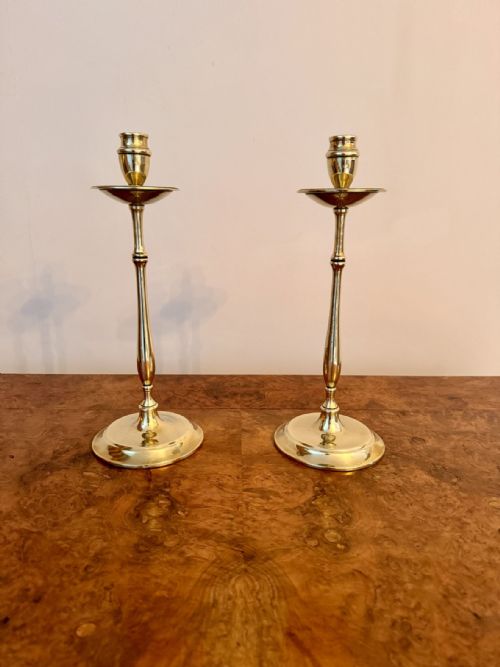
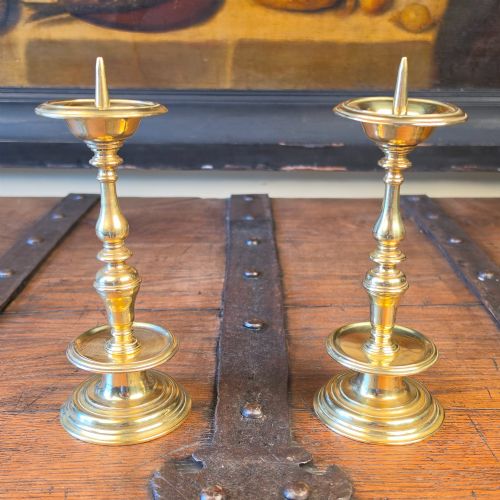
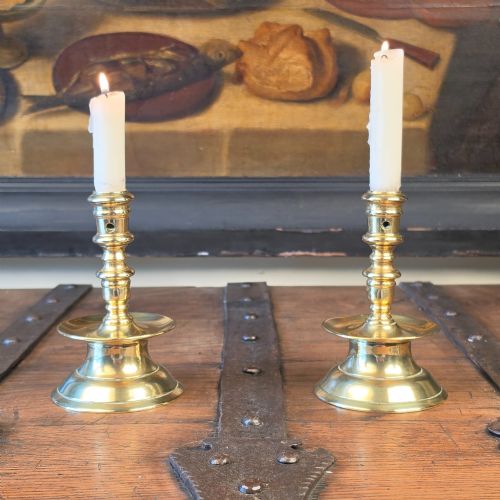
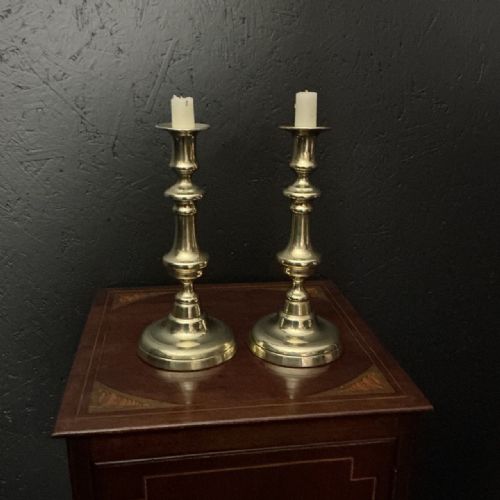


Turned Stem Brass Stand
A turned stem brass stand brings solid weight and warm metal reflection to a room, offering functional candlelight or pedestal display.
Turned Stem Brass Stand
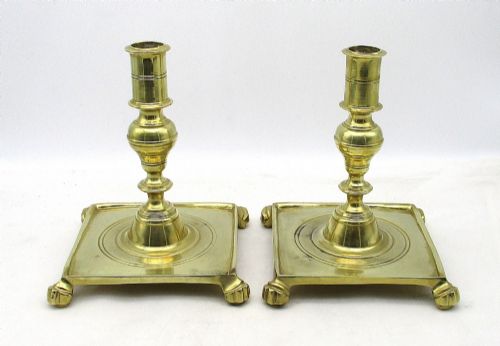
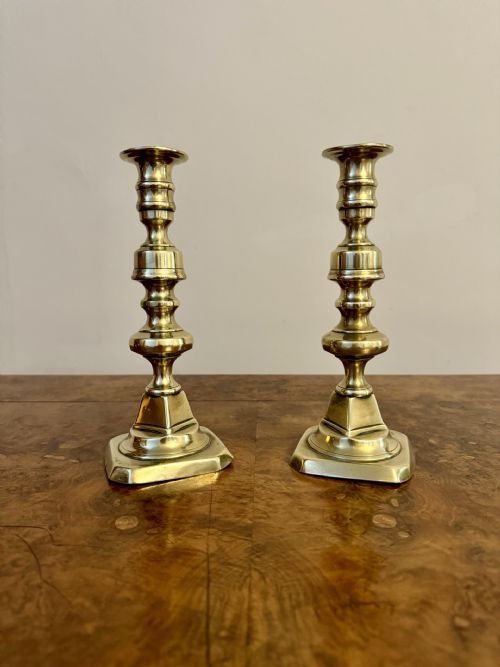
When searching for a turned stem brass stand, a buyer encounters domestic lighting and display pieces primarily taking the form of candlesticks and pedestal table platters. These items date from the eighteenth, nineteenth, and early twentieth centuries, spanning Georgian, Victorian, Regency, and Edwardian periods.
The inventory on this page consists predominantly of pairs of brass candlesticks alongside pedestal platters, incorporating seventeenth-century revival styles and mahogany bases alongside pure metal construction.
How they were made
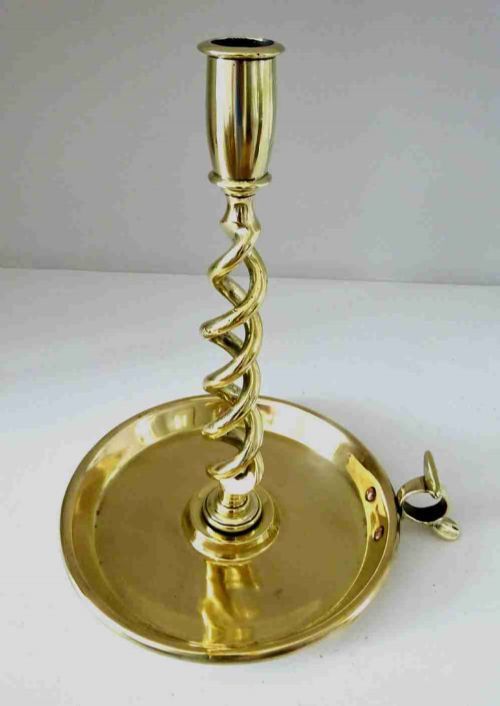
Items are constructed from cast and turned brass, utilising lathe work to create the characteristic twisted and profiled stems that define the form. Certain examples combine brass components with mahogany elements to form the finished base or stand.
Manufacturing methods rely on traditional foundry casting followed by hand-finishing, turning, and assembly, yielding robust objects designed for regular domestic service.
Listings span from the 18th century to the Edwardian era, utilising solid brass and mahogany materials.
What varies in quality
The distinction between standard production and superior examples lies in the crispness of the turning on the stem and the heft of the metal used in the casting. Better pieces display cleaner lines, balanced proportions, and a more deliberate execution of period style details.
Surface finish and the integrity of joints or fitted bases also differentiate the grades, with higher quality items maintaining structural stability and pleasing patination through decades of use.
The Turned Stem Brass Stand Glossary
- Turned stem
- A shaft shaped by rotating the material on a lathe to create spiral or profiled contours. This technique produces the distinct twist seen in many traditional candlesticks.
- Tazza
- A small pedestal table platter or shallow bowl raised on a central foot. These pieces serve decorative or serving functions on a tabletop.
- Hexagonal
- Having six sides and six angles, commonly describing the geometric base or socket shape of early metalwork. This form provides increased stability.
- Patina
- The surface sheen and coloration developed by brass over years of handling and exposure to air. Collectors prize an undisturbed, warm surface.
Turned Stem Brass Stand: Frequently Asked Questions
How do I clean brass safely?
Dust the surface regularly with a soft cloth to prevent grime accumulation.
Avoid harsh chemical dips that strip the aged surface and destroy desirable patination.
Were these used for lighting?
Candlesticks served as primary domestic illumination sources before the widespread adoption of electricity.
Tall stems allowed wax to burn clear of surrounding furnishings while directing light across the room.
How do I date a brass stand?
Examine the base construction, casting seams, and overall stylistic markers relative to known periods.
Twisted stems and hexagonal bases often point toward specific revival movements or eighteenth-century prototypes.
Can I use modern candles in them?
Most antique sockets accommodate standard taper candles, though minor variations in diameter occur.
Check the nozzle size carefully before placing a candle to ensure a secure and stable fit.