




Brass Pedestal Bowl
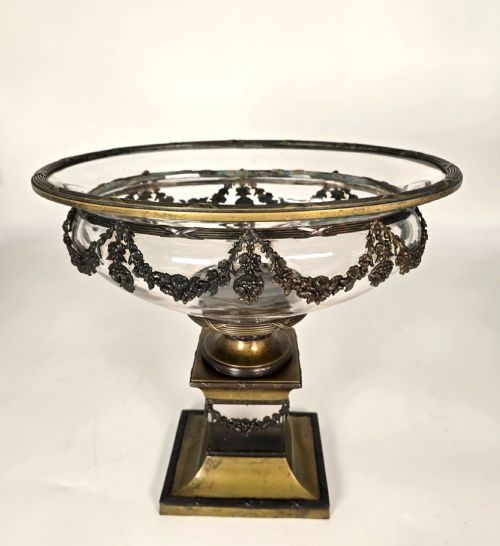
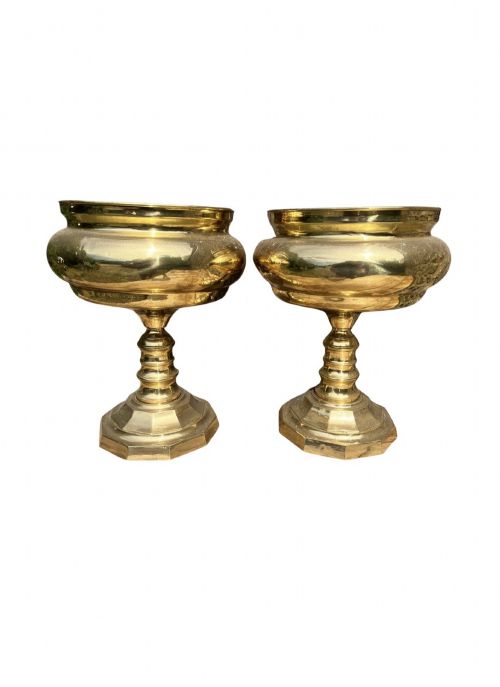
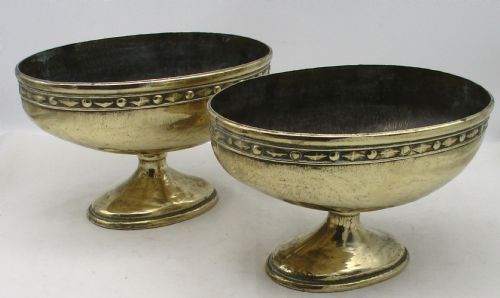
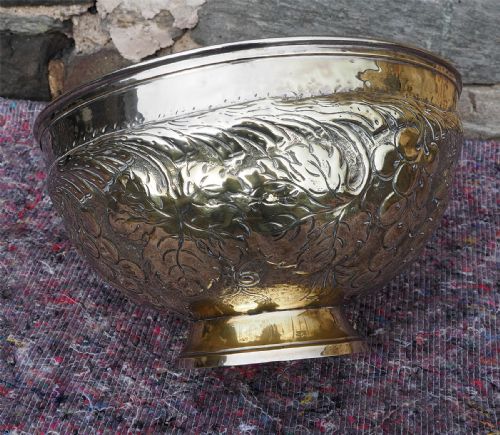
These brass pedestal bowl examples unite the raised elegance of the tazza with the warm lustre of cast metal.
Brass Pedestal Bowl
A brass pedestal bowl elevates its vessel on a raised foot, creating a commanding silhouette found across nineteenth-century and earlier decorative arts. Pieces matching this search span from French Empire gilt bronze tazzas to Victorian brass church vases and heavy pedestal bowls.
Forms range widely in function and profile, taking in covered urns, punch bowls, coupes, and shallow comports. Many items incorporate contrasting materials, pairing brass mounts with glass, agate, or alabaster to create striking display objects for the interior.
Origins stretch from European workshops in France, Italy, and Britain to Anglo-Indian designs and Himalayan butter oil lamps. This variety means a buyer might select a grand neoclassical centrepiece or a modest pair of decorative goblets.
Materials and construction
Foundries utilised casting, turning, and chasing methods to shape brass, bronze, and ormolu into structural pedestals and decorative rims. Metal components often received a mercury gilt finish or were burnished to create rich contrasting textures.
Composite pieces combine metal frameworks with carved mineral elements like banded agate cabochons, alabaster dishes, or moulded Bohemian glass. These varied substances required precise mechanical fitting, utilising pins, screws, and bezels to secure fragile stone and glass into heavy metal bases.
Brass Pedestal Bowl Retail Price Guide 2026
Typical asking prices for brass pedestal bowl among the pieces listed under this phrase on Sellingantiques today, from the lower quarter to the upper quarter. They describe what is for sale here now, not the wider market.
Several items double as butter oil lamps, reminding us that nineteenth-century domestic light sources often doubled as miniature art objects.
Assessing quality and execution
The distinction between ordinary production and superior craftsmanship lies in the crispness of the cast ornament and the weight of the metal. Finer examples display deep, hand-chased detail rather than soft, smoothed surfaces left straight from the sand mould.
Material selection similarly defines the upper tier of objects, where natural stones like agate or pietra dura inserts are chosen for their strong grain and precise polish. Superior assembly ensures that heavy stone or glass vessels sit true and rigid within their metal mounts.
The Brass Pedestal Bowl Glossary
- Tazza
- A shallow bowl or cup mounted on a stem and foot, traditionally used for serving fruit or displaying small objects. The form derives from classical antiquity.
- Ormolu
- Finely ground high-carat gold applied to a bronze or brass object using a mercury amalgamation process. This technique produces a durable, rich golden surface.
- Comport
- A standing dish or bowl used on a dining table for fruit or sweetmeats. They appear in glass, ceramic, and metal combinations during the nineteenth century.
- Cabochon
- A gemstone or mineral polished to a smooth convex dome rather than faceted. They frequently adorn the borders of nineteenth-century metalwork.
- Pietra dura
- An artistic technique using cut and fitted polished coloured stones to create images or geometric patterns. These panels are often mounted into stone or metal decorative dishes.
Brass Pedestal Bowl: Frequently Asked Questions
What were brass pedestal bowls used for?
These vessels served diverse functions depending on their exact form, ranging from altar garniture and church vases to domestic table centerpieces for fruit.
Larger versions held punch or functioned as grand decorative urns, while smaller tazzas and coupes acted as display pieces for wealthy interiors.
How do I clean an antique brass bowl?
Dust gently with a soft, dry cloth to preserve the natural aged surface and accumulated patina that collectors value.
Avoid aggressive metal polishes or abrasive creams, as these strip away historical character and can damage delicate gilt or inset stone elements.
How can I tell a French Empire piece?
French Empire and Second Empire designs rely heavily on neoclassical motifs, fire-gilt bronze, and precise architectural proportions.
They often feature crisp, high-relief chasing and rich surface finishes that distinguish them from simpler utilitarian domestic brassware.