


Brass Footed Urns
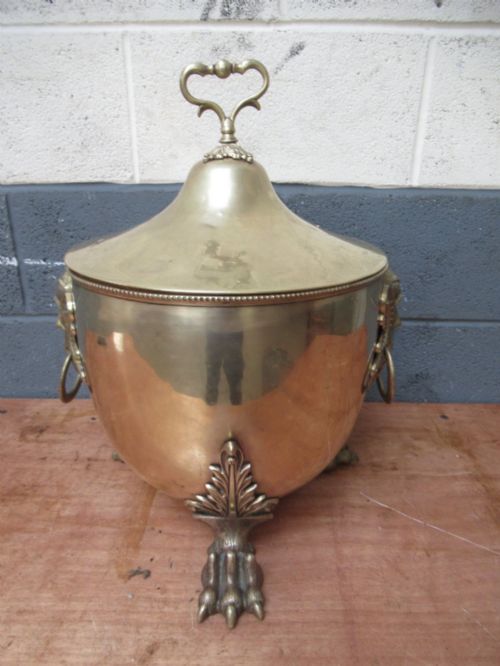
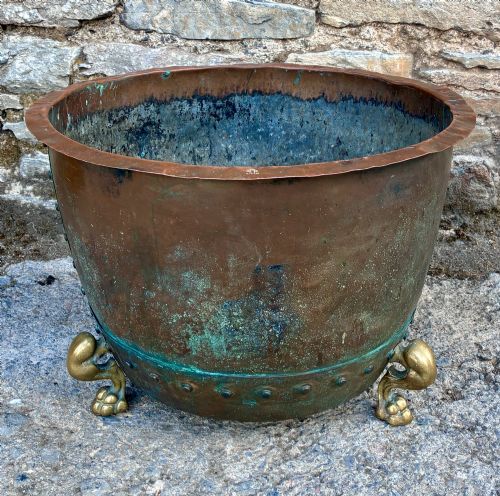
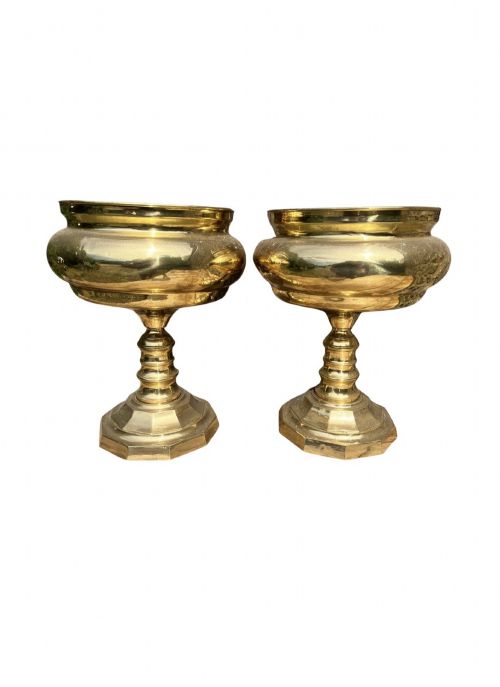
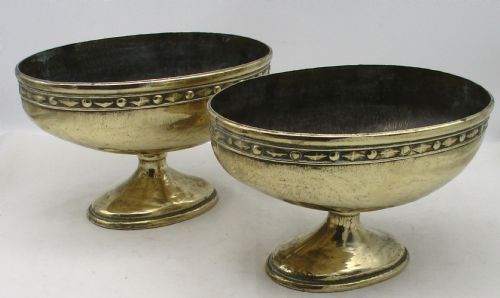
Brass footed urns are sturdy vessels and decorative stands raised upon feet, bringing nineteenth-century metalwork into the home.
Brass Footed Urns
Brass footed urns span the nineteenth century, the Edwardian era and the nineteen-twenties, appearing in forms such as planters, jardinières, bowls and amphora lamps.
These pieces draw upon traditional, Victorian Gothic, French Neoclassical, French Empire and rustic farmhouse styles to serve domestic spaces as decorative containers and lighting.
The selections on this page unite metal vessels with raised supports, combining brass and copper with marble, onyx and gilt metal.
How they were made
Maker workshops shape brass and copper sheets through hammering, riveting and casting to form solid bodies and fitted lids.
Foundries incorporate cast bronze, gilt metal and paw feet to elevate marble and onyx bodies, pairing stone with metalwork.
Listings span the nineteenth century, the Edwardian era and nineteen-twenty, featuring brass, copper, marble and onyx.
What varies in quality
Quality rests upon the crispness of cast details on feet and mounts, where finely worked paw feet and sturdy riveting distinguish better examples.
The combination of materials sets pieces apart, particularly when dense stones like marble and onyx meet heavy cast brass and gilt metal.
William Soutter & Sons
The Brass Footed Urns Glossary
- Jardinière
- An ornamental pot or stand for holding plants or flowers. These large receptacles sit upon feet to display indoor foliage.
- Gilt metal
- Metal coated with a thin layer of gold or a gold-coloured wash. This finish brings a bright metallic sheen to decorative mounts and lamp bases.
- Amphora
- A tall ancient-style two-handled jar. Nineteenth-century makers adapted this classical shape for decorative lamps.
- Paw feet
- Ornamental supports shaped like animal paws. Foundries cast these feet in brass or gilt metal to lift urns and lamps off surfaces.
Brass Footed Urns: Frequently Asked Questions
What were brass footed urns used for?
These vessels served as ornamental planters, coal buckets, church vases and table lamps in nineteenth- and early twentieth-century interiors. Their raised bases protected furniture surfaces while displaying plants or holding fuel.
Over time, many of these metal and stone receptacles transitioned from utilitarian household items to pure decorative objects and lighting.
How do I date a brass urn?
Dating relies upon manufacturing techniques such as hand-riveting, cast mount details and the choice of companion materials like onyx or marble. Victorian Gothic and French Empire styles point to the nineteenth century, whilst clean-lined onyx lamps align with the nineteen-twenties.
Examining the underside, fixing methods and wear patterns helps place an object within the nineteenth-century or Edwardian periods.
Are these urns waterproof?
Many planters and jardinières were manufactured to hold potted plants, but original linings often require checking before direct watering.
Using an inner plastic pot preserves the historic metal base from moisture damage and corrosion.
How do I clean brass and copper?
Maintenance involves removing dust with a soft cloth while preserving the aged patina that centuries of handling create. Harsh chemical polishes strip away the historic surface character that collectors value.
Gentle wiping keeps the metal stable without erasing the signs of age.