



Antique Brass Jam Pan
An antique brass jam pan is a heavy utilitarian vessel that brings warmth and texture to a modern interior.
Antique Brass Jam Pan
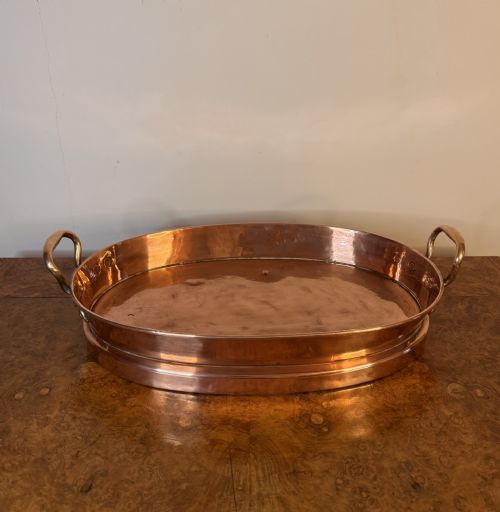
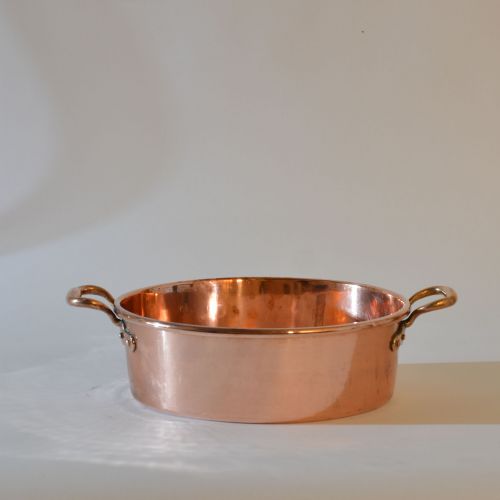
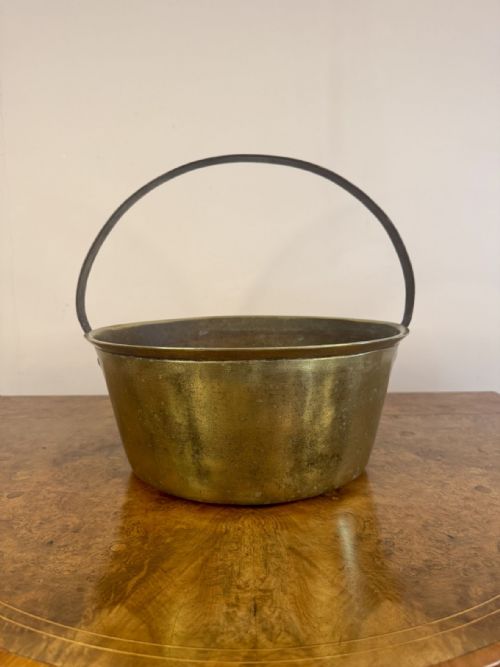
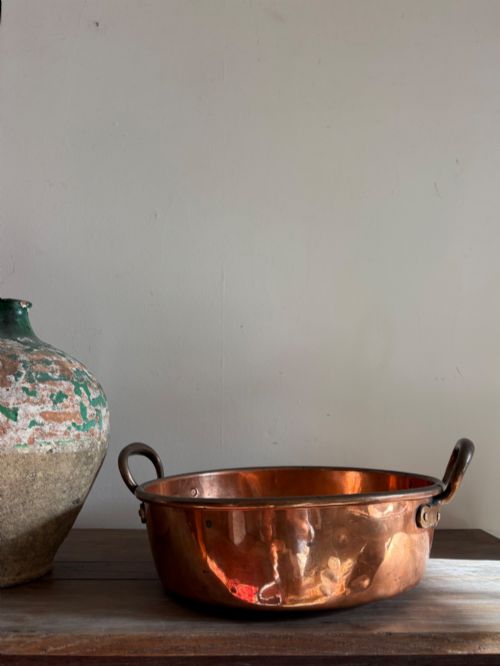
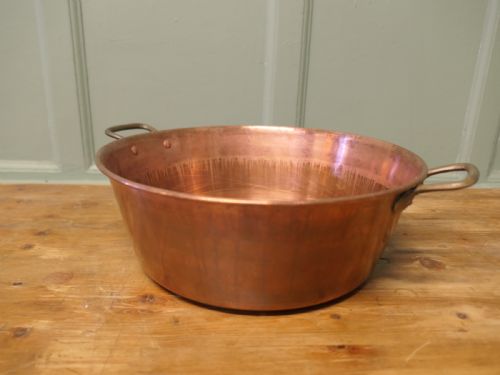
When you search for an antique brass jam pan, you encounter robust kitchenware designed centuries ago for preserving fruit over an open fire or hearth. These vessels span the Georgian and Victorian eras, taking the form of deep bowls with flat bases and often featuring sturdy handles for lifting heavy loads.
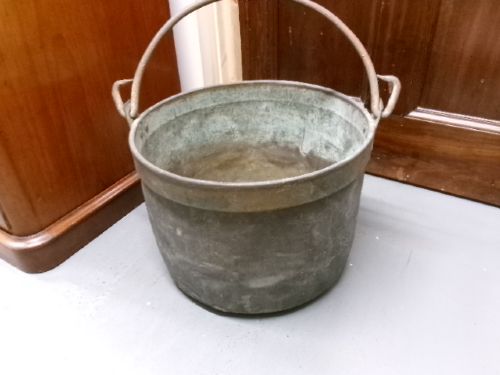
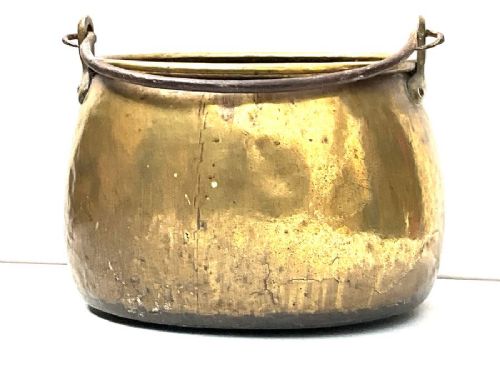
The pieces on this page include heavy brass pans, preserve pans, and swing-handled cauldrons alongside related kitchenware and fireplace accessories. You are most likely to meet 19th-century examples in brass or copper, shaped for domestic utility and now frequently repurposed for display or fireside interest.
How they were made
These vessels rely primarily on heavy brass and copper, sometimes paired with iron or wrought iron for handles and fixings. Metalworkers shaped the bodies through beating and riveting, creating durable walls capable of withstanding direct heat.
Handles were securely attached using rivets or forged directly into swing mechanisms, ensuring the pans could safely hold boiling contents. Bronze also appears in earlier Georgian pieces, reflecting the traditional foundry work of the period.
Antique Brass Jam Pan Retail Price Guide 2026
Typical asking prices for brass jam pan among the pieces listed under this phrase on Sellingantiques today, from the lower quarter to the upper quarter. They describe what is for sale here now, not the wider market.
Some heavy brass pans spent their retirement holding logs by the fire rather than bubbling fruit on the stove.
What varies in quality
Substance and metal thickness set the better examples apart from lighter domestic pieces, with heavier vessels showing a more substantial presence. The quality of the construction is visible in the neatness of the riveted joints and the integrity of the base.
Proportion and surface finish distinguish standard kitchen utility items from superior display pieces. Well-balanced forms with pleasing patination and authentic wear demonstrate the enduring character of these items.
Hodges & Sons
The Antique Brass Jam Pan Glossary
- Swing handle
- A movable metal handle attached to opposite sides of a pan by lugs or brackets. This allows the handle to drop flat against the side or swing upright.
- Riveted
- Joined together using metal pins hammered flat at the ends. This technique provides a strong mechanical bond before modern welding.
- Patina
- The surface sheen and colour developed through age, handling, and cleaning. It distinguishes older metalwork from modern reproductions.
- Cauldron
- A large metal pot with a rounded or bulbous body and a handle, designed for hanging over a fire or resting on hearth feet.
Antique Brass Jam Pan: Frequently Asked Questions
What is an antique brass jam pan used for now?
Today these pans are rarely used for cooking and instead serve as decorative items around the home. Many people use them as planters, fireside log holders, or striking centrepieces on heavy tables.
Their warm metallic tones complement both traditional country interiors and modern rustic spaces. They offer a practical way to store household items while displaying period craftsmanship.
How do I tell a Georgian jam pan from a Victorian one?
Georgian pieces often display earlier foundry techniques, sometimes utilising bronze alongside brass and featuring simpler, robust forms suited to open hearths. They tend to date from around the mid-eighteenth century to the early nineteenth century.
Victorian examples frequently incorporate swing handles and show the influence of industrial production methods. The weight and construction style help indicate the general period of manufacture.
Are brass jam pans made of solid brass?
Most traditional jam pans are forged from heavy brass or copper, selected for heat conduction and durability in the kitchen. Some examples include iron handles or wrought iron fixings for structural support.
Over the centuries, these metals develop a rich surface patination that reflects their age and use. Solid construction ensures the vessels remain stable and heavy.
How do I clean an antique brass jam pan?
Maintenance depends entirely on whether you prefer a bright polished finish or an aged dark patination. Most collectors choose to retain the aged surface to preserve the historical character of the metal.
If cleaning is necessary, use a mild soapy cloth rather than harsh abrasives to avoid stripping the aged surface. Regular dusting is usually sufficient for pieces kept purely for display.