


Brass Preserve Pan
These brass preserve pan examples bring honest utility and warmth to a room, offering tactile metal surfaces that suit both fireside display and everyday use.
Brass Preserve Pan
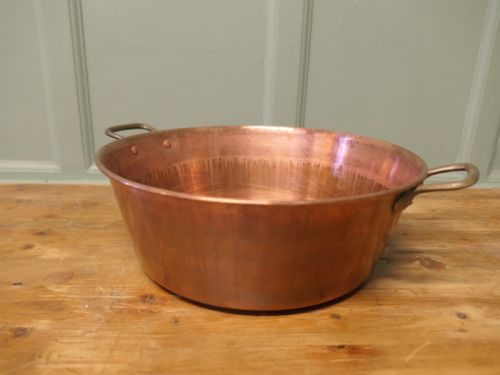
A brass preserve pan provides sturdy kitchenware shaped for boiling fruit and sugar, combining deep bowls with stable flat bases. You encounter heavy Georgian items alongside Victorian kitchen pieces designed for practical service.
Domestic cookware from this range includes preserving pans, jam pales, and cream setting pans alongside specialised fire-side pieces. Most examples display the warm metallic tones typical of utilitarian British kitchenware from these eras.
How they were made
The makers utilised durable sheet metals such as brass and copper, hammering the primary vessels into deep round bodies. Rivets secure handles made of iron or bronze directly to the main body to withstand heavy kitchen use.
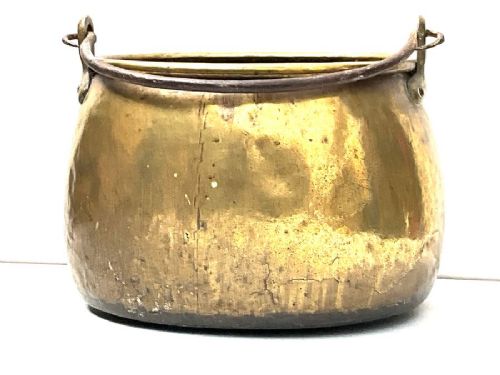
Surface finishes vary from mottled brass textures to polished copper expanses, shaped carefully by hand or early mechanical hammering. Iron handles provide a contrasting dark material that balances the golden and reddish hues of the main bowls.
Listings span the Georgian and Victorian eras, utilising brass, copper, bronze, and wrought iron in various domestic forms.
What varies in quality
Thickness of the metal sets the finer examples apart from lighter domestic versions, dictating how well the pan held heat over an open hearth. Superior items display substantial weight and confident hammer work rather than thin, uniform machine stamping.
Handling iron attachments securely without excessive wobble indicates careful original construction by skilled metalworkers. The presence of makers' marks or retailer stamps occasionally elevates a standard kitchen utensil into a collected piece.
Hodges & Sons
The Brass Preserve Pan Glossary
- Brass
- An alloy of copper and zinc known for its bright golden appearance and durability in domestic vessels. This material conducts heat evenly for culinary tasks.
- Bronze
- A copper alloy typically containing tin, utilised for heavier cast vessels and specialised hearth items. It offers exceptional strength and a darker patina than standard brass.
- Wrought iron
- Tough, fibrous iron shaped by hammering while hot, commonly utilised for handles and hanging bail attachments. It provides reliable structural support for heavy metal bowls.
- Jam pale
- A deep cylindrical container with a swing handle designed for boiling fruit preserves. These vessels often feature heavy rims to assist with pouring hot liquids.
Brass Preserve Pan: Frequently Asked Questions
What were brass preserve pans used for?
These deep metal vessels served primarily for boiling fruit with sugar to create jams and preserves over an open fire or hearth.
Their wide mouths allowed steam to escape efficiently while the metal distributed heat evenly across the base.
How do I date a brass preserve pan?
Dating relies upon observing handle attachments, hammer marks, and the overall form associated with Georgian or Victorian periods.
Earlier examples often display hand-riveted joints and heavier cast bronze or brass compositions compared to later machine-finished goods.
Can I clean and polish these pans?
Polishing depends entirely on whether you prefer a bright reflective finish or the dark historic patina accumulated over centuries.
Gentle cleaning removes active tarnish while preserving the subtle surface textures left by the original hammer work.
How do I display a preserve pan at home?
These substantial metal vessels look effective placed near a hearth, on open kitchen shelving, or used to hold dried logs.
Their warm metallic tones contrast well against brick fireplaces and rustic wooden surfaces.