



Brass Cooking Pan
These brass cooking pan pieces are robust hearth utensils built for actual kitchen work, prized today for their warm metallic glow and centuries of utility.
Brass Cooking Pan
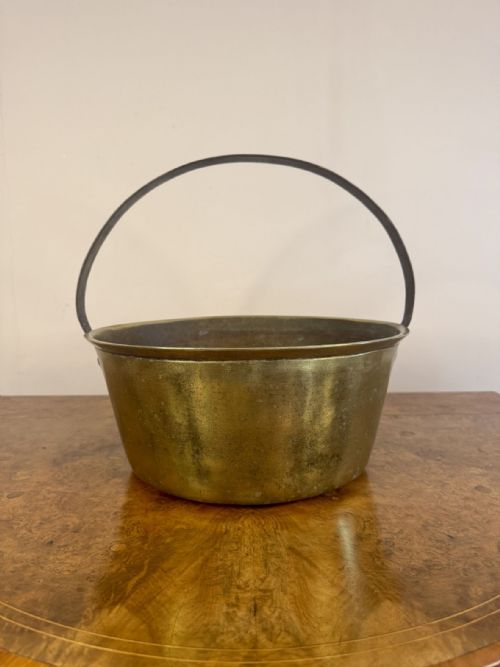
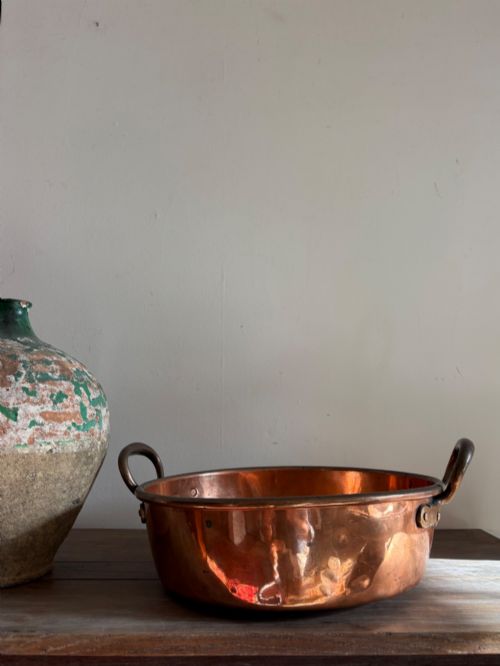
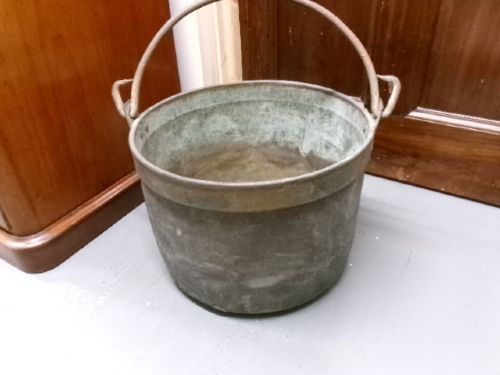
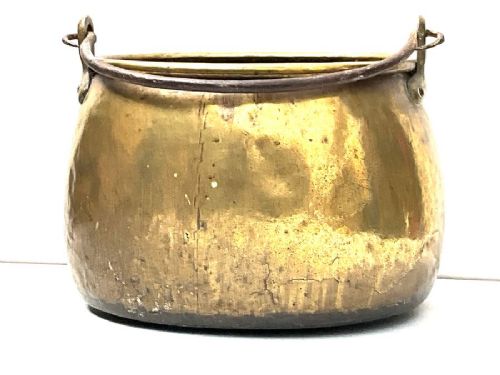
A brass cooking pan represents a durable category of antique hearth cookware, spanning simple saucepans and heavy preserve pans to larger cauldrons and daubieres. Buyers searching for a brass cooking pan will frequently encounter robust Victorian and Georgian examples intended for daily kitchen duties or fireside warmth.
The selection ranges from small riveted swing-handled pots to large graduating sets featuring integral feet and iron handles. Many pieces show distinct origins in English or French country kitchens, shifting in form from utilitarian kitchenware to decorative fireside accessories.
How they were made
Construction relies heavily on durable metals, combining solid brass, copper, and bronze with strong iron handles and wrought iron fittings. Artisans formed these vessels through heavy hammering and riveting, creating sturdy seams designed to withstand direct heat.
Handles and swing bail attachments were securely fastened using heavy rivets, while feet were cast or forged directly onto the base of larger preserve pans and cauldrons to steady them over open fires.
Brass Cooking Pan Retail Price Guide 2026
Typical asking prices for brass cooking pan among the pieces listed under this phrase on Sellingantiques today, from the lower quarter to the upper quarter. They describe what is for sale here now, not the wider market.
Several heavy jam pans retain the gentle scars of wooden spoons stirred in country kitchens over two centuries ago.
What varies in quality
Quality rests primarily in the metal weight and the integrity of the original construction, distinguishing heavy, thick-walled vessels from lighter decorative items. Superior examples retain their original iron handles, secure riveting, and honest patination gained from years of active service.
The presence of matching graduating sets or maker-formulated details like sturdy cast feet elevates a piece. Lesser quality often involves later alterations, excessive thinning from over-cleaning, or missing original components such as swing handles.
The Brass Cooking Pan Glossary
- Preserve pan
- A wide, open vessel designed for fruit boiling and jam making, often featuring a rounded base and a swing handle for easy pouring.
- Daubiere
- A specialised heavy cooking pot originating in France, traditionally used for braising meats and slow-cooking stews on the hearth.
- Cauldron
- A large, deep round pot fitted with a swing handle, designed to hang over an open fire or rest upon integral feet.
- Wrought iron
- Tough, malleable iron beaten into shape by hand, frequently utilised for the handles and attachments on heavy brass cookware.
Brass Cooking Pan: Frequently Asked Questions
Can I still cook in these pans?
While these antique vessels were originally built for culinary use, modern food safety standards require careful consideration of interior linings before cooking.
Many collectors instead choose to display them as kitchenware or fireside accessories to preserve their historical patination.
How do I date an old brass pan?
Dating relies on observing construction methods such as hand-riveting, metal thickness, and the style of the iron handles or feet. Georgian pieces often display heavier casting and distinct hearth wear, whereas Victorian examples frequently incorporate standardised components.
Comparing the object to similar pieces from the same period helps narrow down the decade of manufacture.
How should I clean my brass pan?
Maintenance generally involves gentle washing with warm soapy water and drying thoroughly to prevent spotting. Harsh abrasive cleaners should be avoided to preserve the authentic antique surface finish.
Some owners prefer a light polish to highlight the brass, while others leave the aged patina untouched.
Why do some pans have feet?
Integral feet allowed the vessel to stand securely above the hot coals and ashes of an open hearth fireplace. This raised design kept the base elevated and stable during intensive boiling and stewing tasks.