




Antique Kitchen Metalware
These antique kitchen metalware pieces are hearth and scullery utensils in brass, copper, bronze, and iron that bring heavy utilitarian weight to a modern room.

Antique Kitchen Metalware
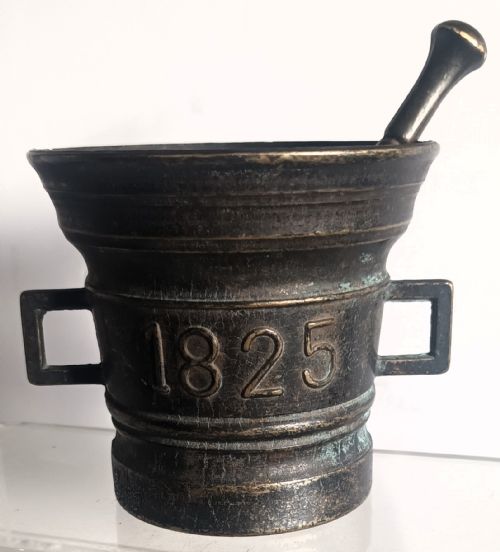
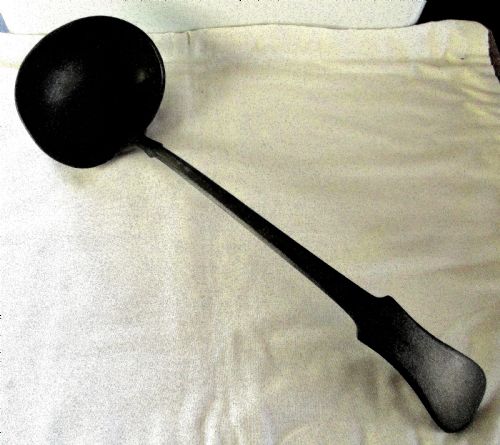
When you search for antique kitchen metalware, you are looking at functional vessels and culinary tools forged or cast for heavy daily use in historic hearths and sculleries. These items range from large copper saucepans and kettles to sturdy brass mortars, ladles, and meat skewers.
The version you are most likely to meet on this page is the 19th-century or Georgian copper jug, pan, or ladle, alongside robust iron and bronze items. Earlier pieces from the 17th and 18th centuries appear less frequently but anchor the collection in early domestic life.
How they were made
The metalware relies on traditional foundry and smithing techniques, utilising heavy cast bronze, beaten copper, and forged wrought iron. Makers shaped these metals by hand, evident in the visible hammering marks on copper pans and the turned profiles of heavy mortars.
Details such as iron handles riveted to brass pans and engraved initials on skewers demonstrate practical construction designed to withstand intense hearth heat. Stamped maker marks and engraved dates indicate workshop origins and individual ownership.
Antique Kitchen Metalware Retail Price Guide 2026
Typical asking prices for kitchen metalware among the pieces listed under this phrase on Sellingantiques today, from the lower quarter to the upper quarter. They describe what is for sale here now, not the wider market.
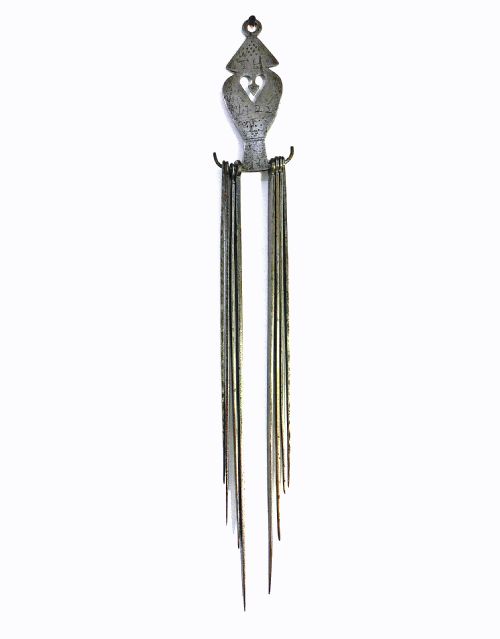
An 18th-century meat skewer set comes complete with its original holder, engraved with the initials TH to prevent the cook's tools from wandering.
What varies in quality
Quality rests in the thickness of the metal plate and the integrity of the original construction rather than surface polish. Heavy-gauge copper and substantial bronze castings represent superior workshop output intended for demanding culinary service.
Subtleties in handle attachment, clean casting lines, and crisp hand-engraving separate standard utility items from finer domestic possessions commissioned for larger country houses.
Dixon And Son·Liptons
The Antique Kitchen Metalware Glossary
- Mortar and pestle
- A heavy bowl and club used for crushing and grinding spices, herbs, or medicines. Bronze and brass examples were standard in domestic kitchens and apothecary shops.
- Muffineer
- A small perforated shaker or dredger used for scattering sugar or flour over baked goods. These small silver or brass vessels sat on dining and tea tables.
- Jersey can
- A distinctive tall copper jug used historically on the island of Jersey for measuring and storing milk or cream. They feature characteristic long spouts and sturdy carrying handles.
- Fish slice
- A flat perforated metal blade with a handle, used for turning or serving fish at table. Seventeenth-century examples often display decorative brass work.
- Skimmer
- A shallow perforated spoon on a long handle used for removing scum or fat from boiling liquids in large pots. Iron and brass variants hung by the hearth.
Antique Kitchen Metalware: Frequently Asked Questions
What are antique kitchen metalware pieces made from?
The pieces utilise a range of metals chosen for thermal conductivity and durability, primarily copper, brass, bronze, iron, tin, and pewter. Each material served a specific culinary purpose, from heat-distributing copper pans to heavy bronze crushing mortars.
Iron and wrought iron provided strength for hearth implements like skewers and skimmers, while pewter and tin served for serving vessels and lighter kitchen implements.
How were copper saucepans used in old kitchens?
Large copper saucepans and kettles sat directly upon hearth coals or over trivets to heat water and cook large quantities of food for country houses. Their high thermal conductivity made them essential for precise culinary tasks before cast iron stoves became common.
Sturdy iron handles and heavy walls allowed these vessels to endure intense daily heat without warping, often marked with maker stamps or owner initials.
How do I date a bronze mortar?
Dating relies on the weight, bell-metal composition, rim profile, and casting irregularities characteristic of specific centuries. Earlier 17th-century examples tend to display simpler, thicker forms with distinct tool marks from the lathe or foundry.
Comparing the form to dated pieces and observing the wear patterns around the base provides clues to its period of origin.
How do I live with antique kitchen metalware?
These pieces integrate easily into modern spaces as decorative objects on open shelving, pot racks, or kitchen counters. Their warm patinas and heavy materials add texture and historical depth to contemporary interiors.
Maintenance typically involves gentle dusting and preserving the aged surface rather than aggressive polishing to keep the historic character intact.