
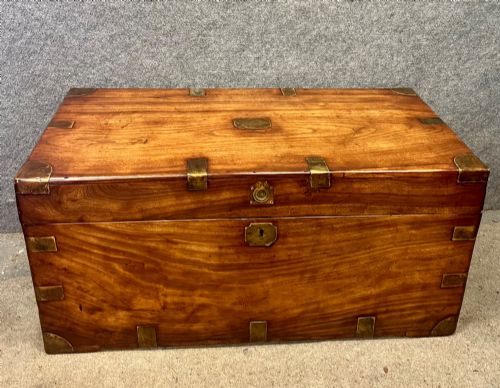
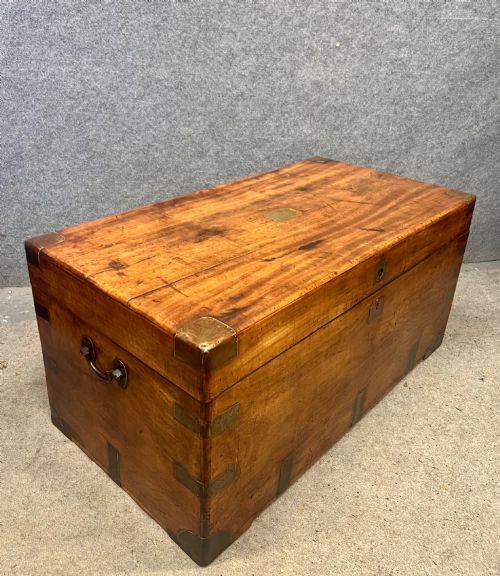
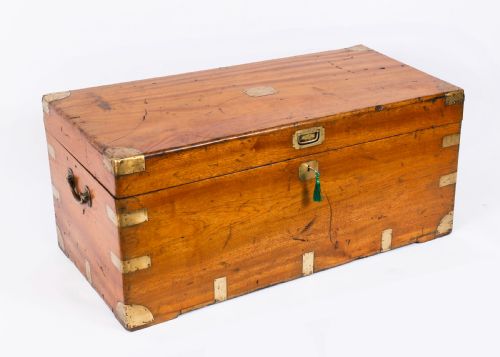
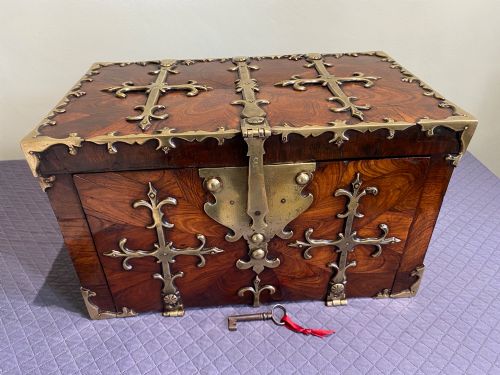


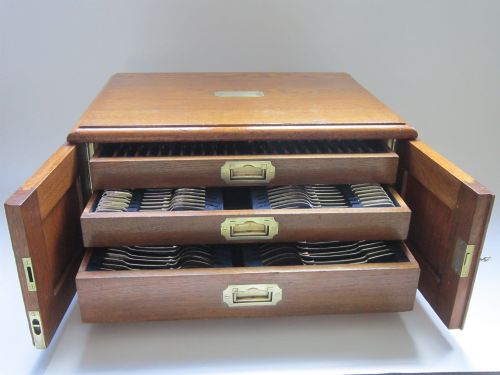
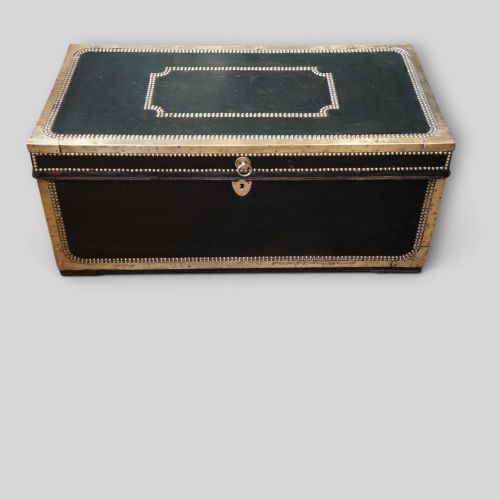
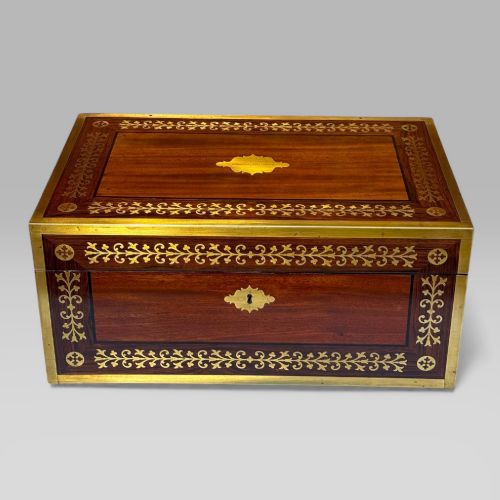
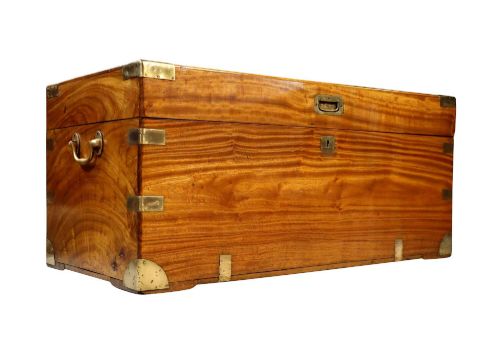
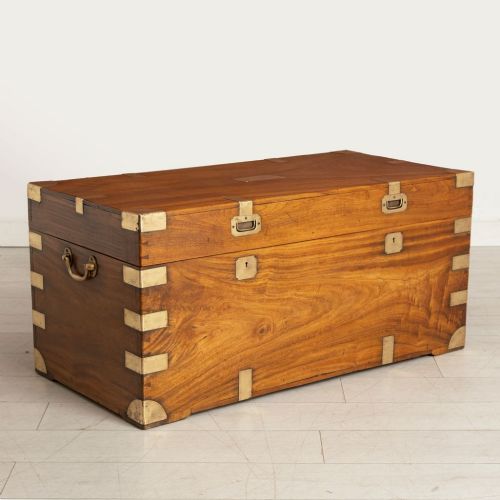
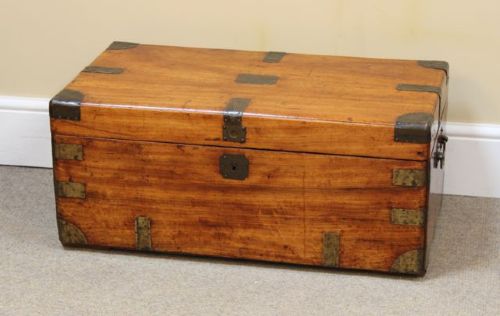
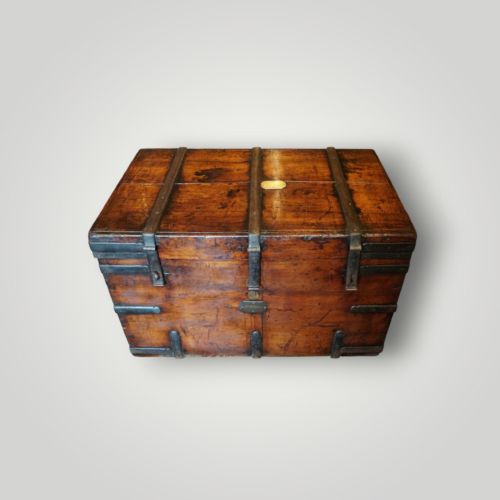
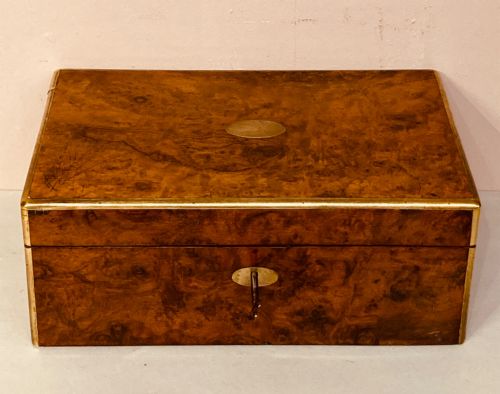
Antique Brass Bound Box
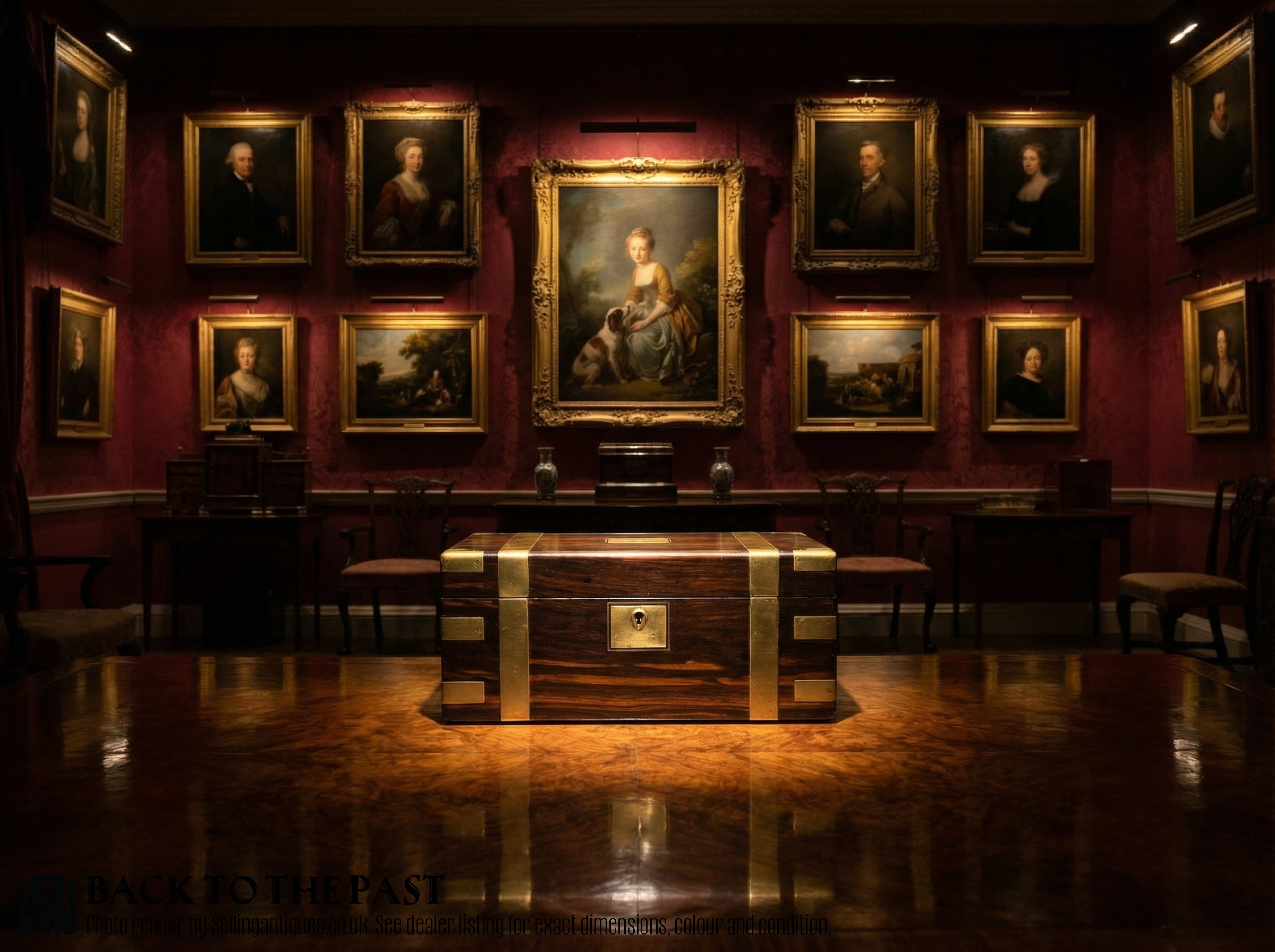
An antique brass bound box is a sturdy receptacle designed for travel or formal correspondence, prized for its robust hardware and fine timber.
What an antique brass bound box is
An antique brass bound box serves various domestic and travel functions, appearing most frequently as a writing slope, stationery box, or vanity case. These objects date primarily to the nineteenth century, with strong representation from the Victorian period.
The form exists to protect valuable contents during transport or daily use. Buyers encounter solid mahogany, rosewood, burr walnut, and coromandel timbers reinforced with metal corners and straps.
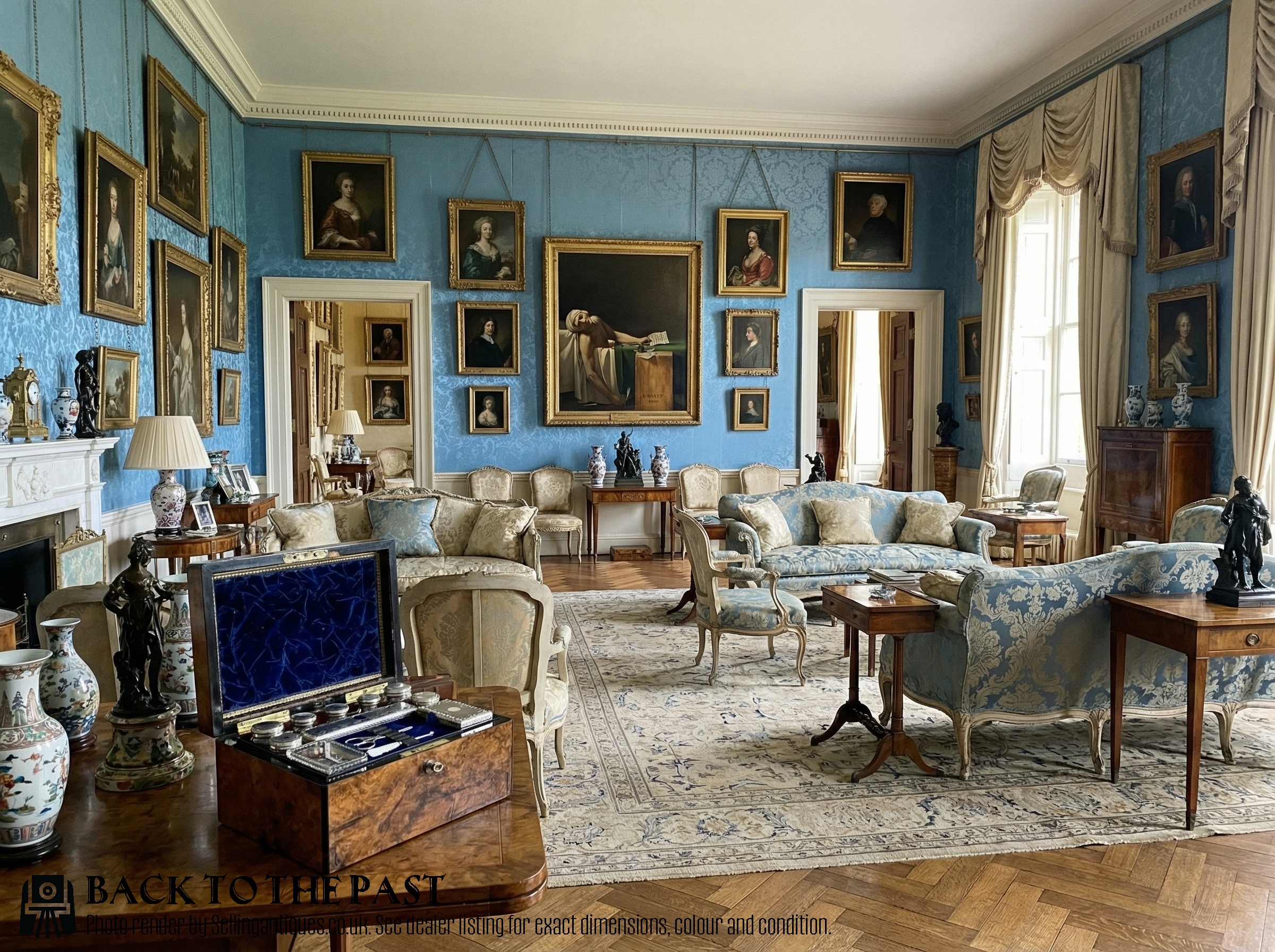
Makers adapted these receptacles for specific owners, incorporating secret drawers, velvet linings, glass containers, and silver fittings. The survival of these internal compartments defines the typical piece found in this category.
How they were made
Cabinetmakers constructed the carcass from dense hardwoods like mahogany, rosewood, or walnut, often applying decorative veneers such as burr walnut and coromandel. Brass strips, corner plates, and flush-fitting handles were let into the wood to absorb the impacts of travel.
Internal spaces required precise joinery to house fitted stationery sections, glass inkwells, and secret drawers operated by concealed release mechanisms. Velvet or leather writing surfaces were glued into folding slopes to provide a smooth platform.
Retail Price Guide 2026
Typical UK retail prices for brass bound box, calculated from the Sellingantiques database of over a million retail prices indexed since 2003. This retail price guide relies exclusively on Sellingantiques data; no external sources or auction records are used, so the figures do not describe the wider market.
What varies in quality
The selection of timber grain sets the baseline for visual merit, with highly figured burr walnut or dense coromandel commanding greater interest than plain mahogany. Grain matching across the lid and sides indicates deliberate planning by the maker.
Hardware execution divides ordinary examples from superior ones. Hand-cut brass inlay, heavy gauge corner reinforcements, and complex locking mechanisms with working keys demonstrate skilled workshop production.
Fisher·C Roberson And Co Ltd
The Antique Brass Bound Box Glossary
- Writing slope
- A hinged box that opens to reveal a slanted writing surface lined with velvet or leather. These interiors generally conceal compartments for ink, pens, and paper.
- Campaign box
- A portable receptacle constructed for military use during travel. These items feature recessed brass handles and reinforced corners to withstand rough handling.
- Secret drawers
- Concealed compartments built behind removable partitions or false panels within writing slopes and vanity boxes. Makers used these spaces for storing sensitive papers or valuables.
Frequently Asked Questions
What is an antique brass bound box?
These pieces are portable wooden containers reinforced with brass corners, straps, and escutcheons to protect them during transit. They encompass writing slopes, stationery holders, and vanity cases.
Cabinetmakers built them to house writing materials, documents, or jewellery for travellers and homeowners alike.
How do I use an antique writing slope?
The hinged lid folds down toward the user to create an angled writing surface covered in velvet or leather. Internal partitions hold pens, inkwells, and loose paper.
Lifting the writing surface often reveals deeper storage wells or secret drawers for important letters.
Which woods were used for these boxes?
Mahogany appears frequently in military and campaign pieces due to its strength and stability. Rosewood, burr walnut, and coromandel were chosen for domestic drawing-room boxes for their decorative grain patterns.
Veneers of burr walnut were applied over solid secondary woods to create highly figured exterior surfaces.
Why do some boxes have brass inlay?
Brass straps and corners were applied to reinforce structural joints against the strains of travel. Inlaid brass lines and cartouches also served a purely decorative purpose on domestic pieces.
Flush-fitting brass handles allowed campaign boxes to be packed tightly without protruding hardware.