


Antique Blue Floral Platter
An antique blue floral platter brings scale, pattern and history directly to the table or wall.
Antique Blue Floral Platter
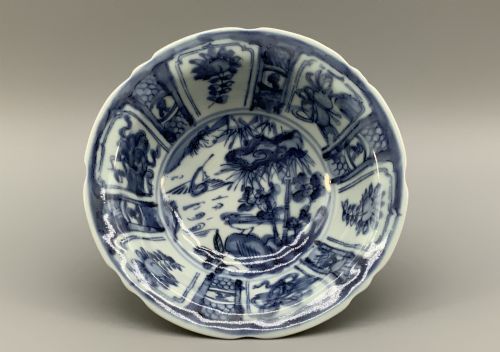
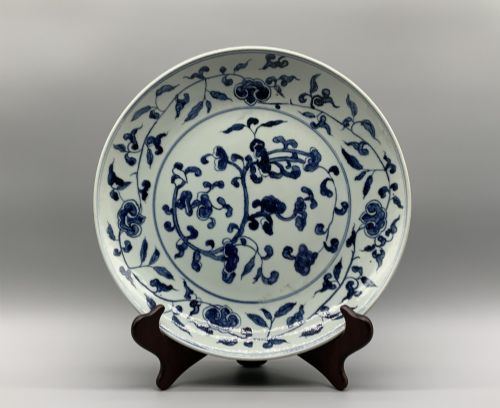
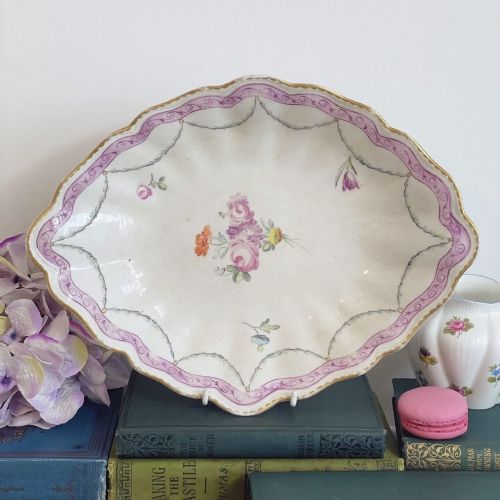
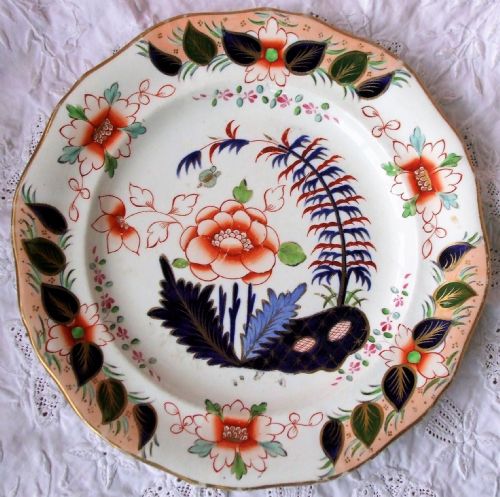
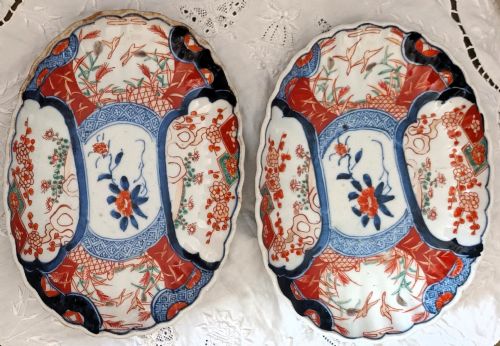
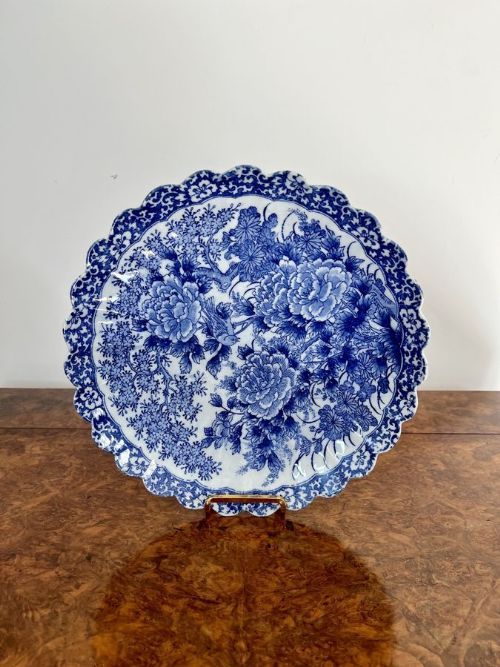
An antique blue floral platter comprises large serving vessels, chargers and deep dishes intended for presentation or dining. The examples gathered here span centuries of production, originating from English potteries, European kilns and Japanese workshops.
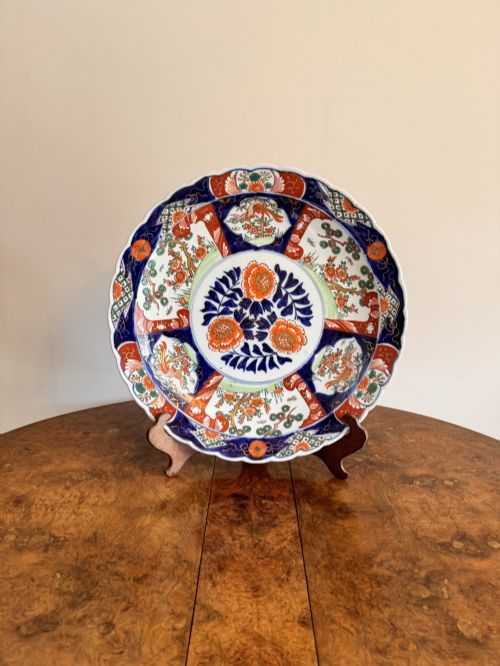
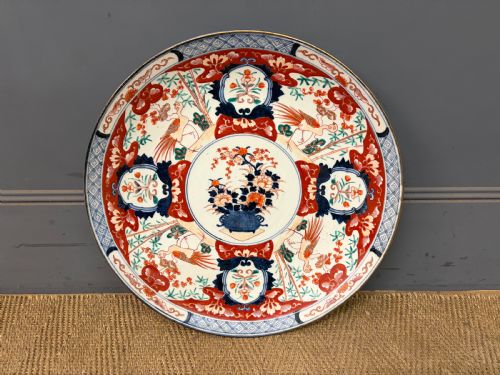
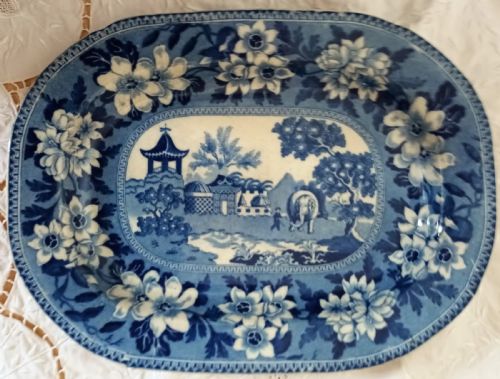
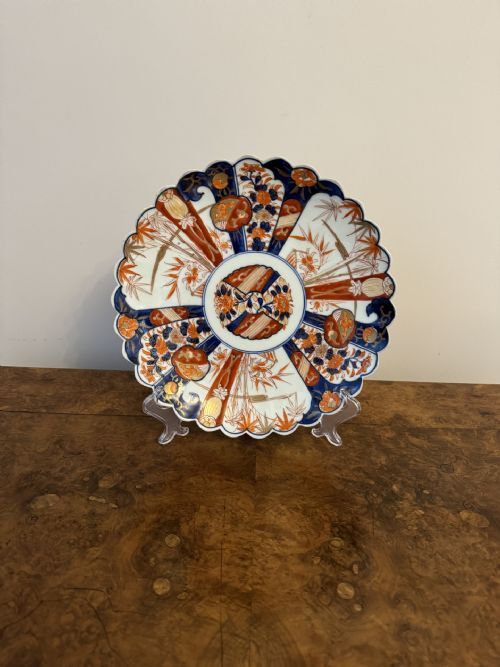
Buyers will most frequently encounter large Imari chargers from the Meiji period alongside English transferware meat platters from the Georgian and Victorian eras. These items served functional roles in domestic service before transitioning into decorative wall and cabinet display pieces.
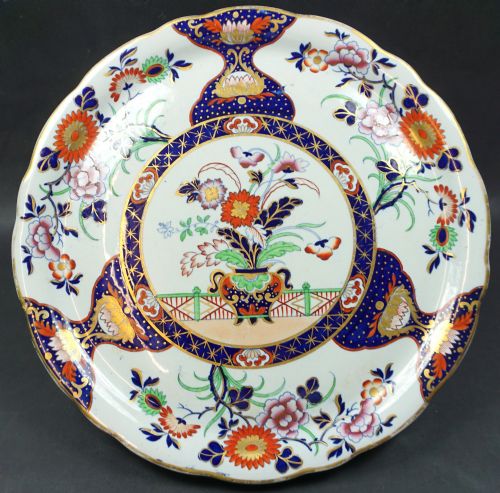
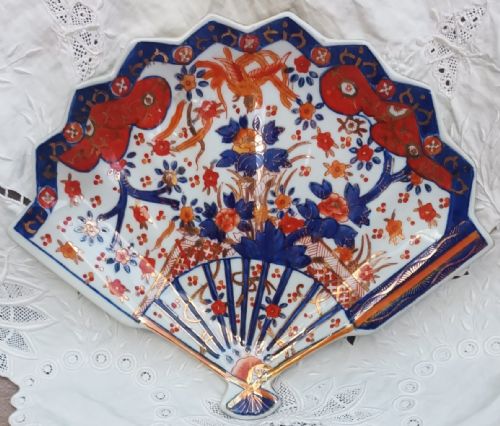
The forms range from deep oval meat dishes to wide circular chargers and scalloped plates. Blue floral motifs dominate the surface decoration, executed either in underglaze cobalt or polychrome palettes featuring blue as a primary tone.
How they were made
Potters shaped these vessels from ceramic, earthenware, porcelain, ironstone and stoneware bodies before applying glazes and pigments. Japanese makers utilised fine porcelain, whilst English factories relied upon refined earthenware and heavy ironstone bodies suited to large meat platters.
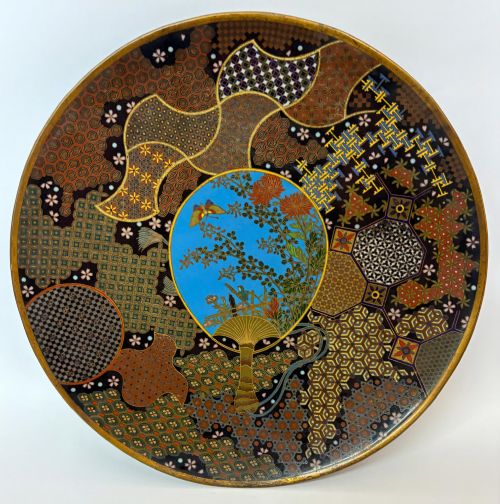
Decoration relied on handpainting, transfer printing and cloisonne techniques using enamel, gold leaf and copper wire. Cobalt blue pigment applied under the glaze provided the durable foundation for traditional floral and landscape designs across European and Asian examples.
Materials range from refined porcelain and stoneware to heavy copper and brass cloisonne enamel bases.
What varies in quality
Quality depends upon the crispness of the handpainting or transfer printing, the purity of the white ceramic body and the complexity of the design. Superior pieces display deep, uniform cobalt tones and meticulous brushwork without smudging or pooling in the glaze.
The weight, symmetry and throwing skill of the base vessel dictate structural merit. Elaborate scalloped edges, well-defined cavettos and intact gilding separate standard utilitarian ware from exceptional cabinet pieces.
Hicks & Meigh·John Rogers & Son·John Davenport of Longport·Pucher Deroche·Minton·John Ridgway·Coalport
The Antique Blue Floral Platter Glossary
- Charger
- A large decorative plate or serving dish intended for display or ceremonial use rather than individual dining. These wide vessels often measure over twelve inches across and command attention on walls or dressers.
- Imari
- A style of Japanese export porcelain characterised by a palette of underglaze blue, iron red and gold. Originating from Arita, this aesthetic heavily influenced European ceramic design throughout the nineteenth century.
- Transferware
- A pottery decoration technique where an engraved copper plate transfers a printed design onto paper, which is then pressed onto the ceramic body. This method allowed intricate floral patterns to be reproduced consistently across large meat platters.
- Earthenware
- A porous, opaque ceramic body fired at lower temperatures than porcelain. It requires an impervious glaze to hold liquids and forms the substantial base for many nineteenth-century English serving dishes.
- Cloisonne
- A metalwork technique using thin wire partitions to create bounded cells filled with coloured enamel pastes. Japanese makers applied this method to heavy copper charger bases to depict floral and avian scenes.
Antique Blue Floral Platter: Frequently Asked Questions
What were antique blue floral platters used for?
These large vessels served practical dining functions, carrying joints of meat, poultry or side dishes to the formal table during the eighteenth and nineteenth centuries.
Over time, many of these durable dishes shifted from the dining room to the drawing room, utilised primarily as decorative chargers mounted on walls or displayed on dresser shelves.
How do I identify a Japanese Imari charger?
Japanese Imari chargers typically feature a distinct palette combining deep cobalt blue with iron red and touches of gold leaf, often depicting natural scenes of flowers, birds and landscapes.
They generally date from the Meiji or Edo periods, presenting heavy porcelain bodies with handpainted motifs beneath a glossy transparent glaze.
Can I hang an antique platter on the wall?
Yes, large chargers and serving platters were frequently designed for visual display and adapt well to wall mounting using properly fitted, coated wire hangers that distribute the weight evenly.
Ensure the wall fixings are secure and avoid placing heavy ceramic pieces in areas subject to vibrations or direct sunlight.