


Staffordshire Pottery Serving Dish
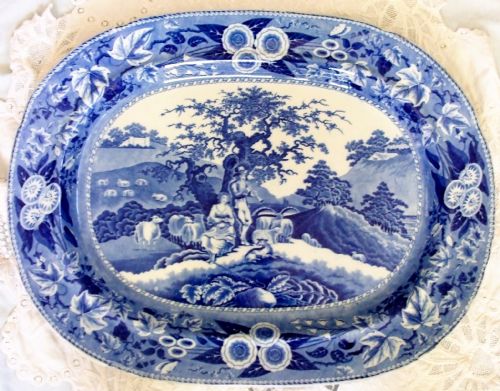
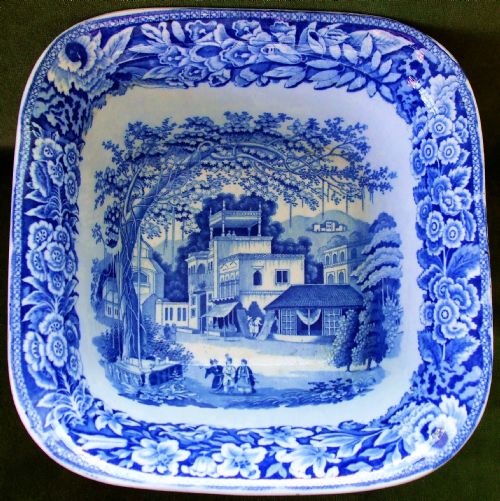
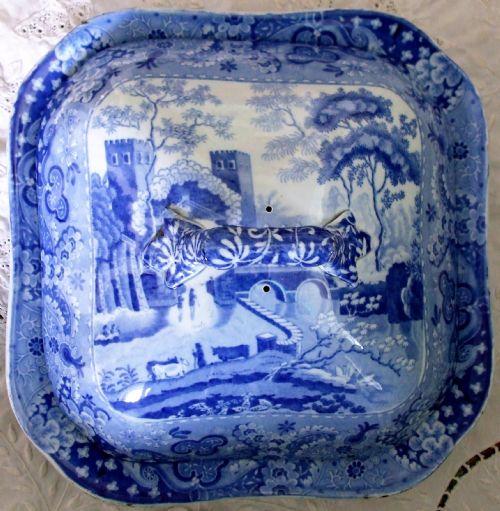
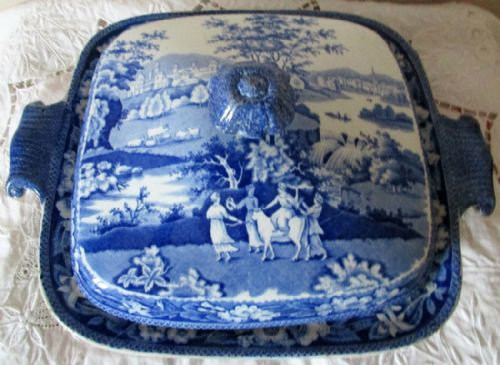
These staffordshire pottery serving dish examples are robust earthenware vessels from the eighteenth and nineteenth centuries that bring bold blue and white narrative patterns to the table.
Staffordshire Pottery Serving Dish
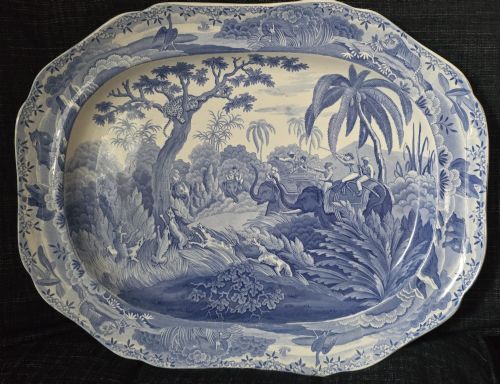
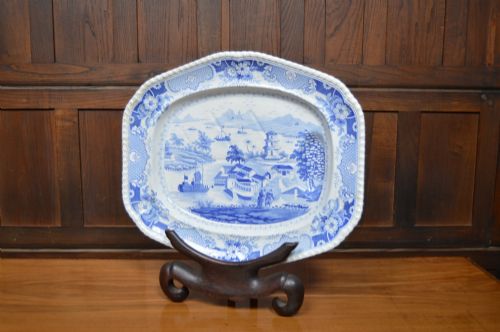
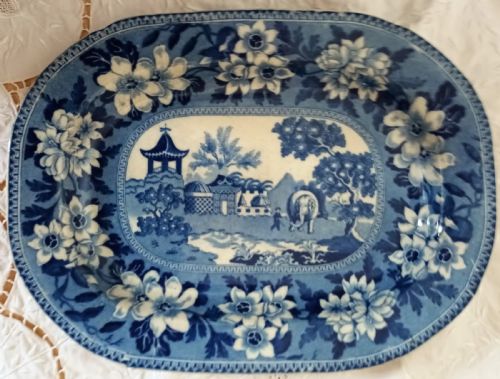
When you examine a staffordshire pottery serving dish from this selection, you encounter heavy platters, vegetable tureens with covers, and meat plates produced during the Georgian and Victorian eras. The version you are most likely to meet on this page is a blue and white transferware platter depicting distant landscapes, architectural scenes, or exotic animals.
The objects span periods from the late eighteenth century through the early and mid nineteenth century, encompassing Regency and Victorian Chinoiserie styles. Makers embraced pictorial themes ranging from classical ruins and rural scenery to whimsical motifs such as elephants, zebras, and piping shepherds.
What varies in quality
Quality rests in the crispness of the transfer print and the clarity of the cobalt pigment against the ceramic body, where sharper lines distinguish superior plates and tureens. The elegance of the moulding, such as silver shaped edges on chargers, separates standard utilitarian wares from more ambitious decorative servingware.
The depth of the glaze and the smoothness of the earthenware surface also influence the overall refinement of each vegetable tureen or meat plate, reflecting the skill of the original pottery.
Cobalt pigment dominates the palette across these platters and tureens, applied through transfer printing in patterns like the piping shepherd and India temple.
John Rogers and Son·J. and R. Riley·J. and R. Clews·James Wallace and Co·Elkin Knight and Bridgwood
The Staffordshire Pottery Serving Dish Glossary
- Transferware
- Ceramic pottery decorated by pressing a paper design inked with cobalt pigment from an engraved copper plate onto the unfired surface.
- Creamware
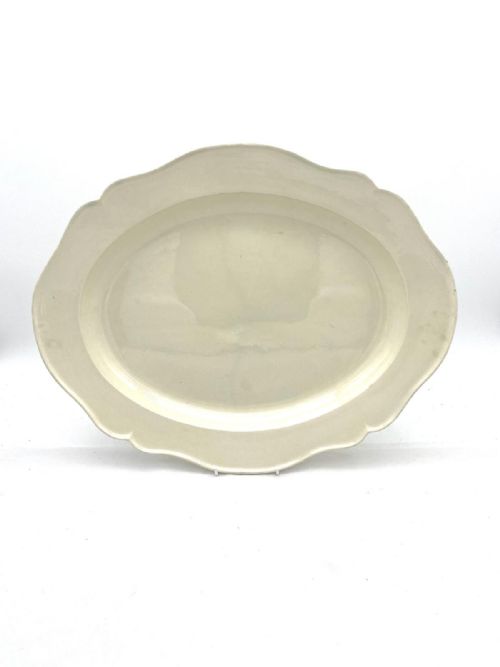
- A refined earthenware developed in the eighteenth century, distinguished by its warm pale yellow or cream coloured lead glaze.
- Pearlware
- An improved earthenware introduced in the late eighteenth century featuring a bluish tinted lead glaze designed to emulate Chinese porcelain.
- Tureen
- A deep covered serving bowl used traditionally for holding vegetables, soups, or stews at the dining table.
- Charger
- A large decorative plate or platter utilised historically for serving food or placed beneath smaller courses.
Staffordshire Pottery Serving Dish: Frequently Asked Questions
What is a staffordshire pottery serving dish?
These pieces are earthenware platters, tureens, and meat plates decorated primarily with blue and white transfer printed designs.
Potters in the Staffordshire region produced them during the Georgian and Victorian periods for domestic dining and serving.
How were these serving dishes used?
Households utilised these platters and covered vegetable tureens to present meats, vegetables, and main courses at substantial dining tables.
They functioned both as practical tableware and as decorative centrepieces displaying picturesque architectural or pastoral scenes.
How do I care for antique pottery?
Wash these earthenware items gently by hand in warm water using mild soap, avoiding harsh scrubbing and modern dishwashers.
Store them securely on stable surfaces where heavy stacking will not risk chipping the historic lead glazes.
How can I tell the period?
Examine the ceramic body, glaze colour, and style of the transfer print to determine whether a piece belongs to the eighteenth or nineteenth century.
Creamware bodies and simpler shapes typically indicate earlier Georgian manufacture, while vivid transferware and silver shaped edges often point to Victorian or Regency production.