
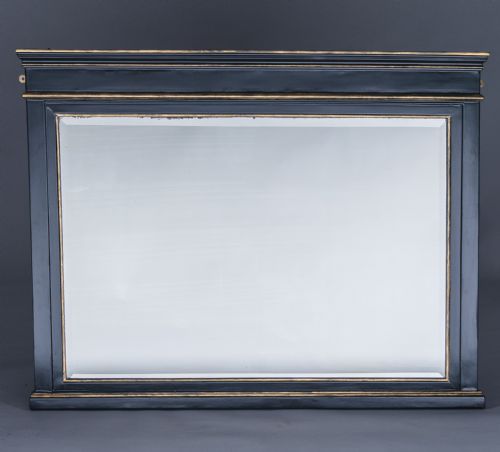
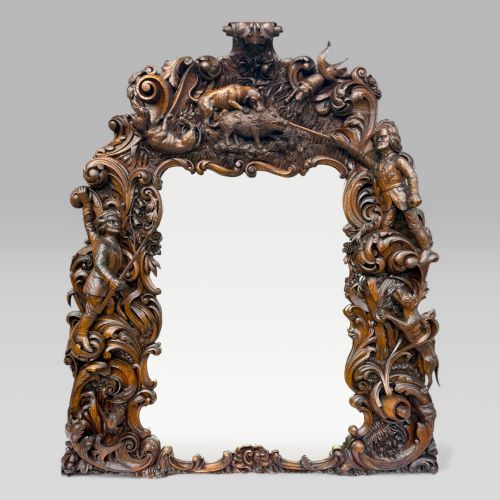


Antique Black Mantel Mirror
An antique black mantel mirror brings gravitas and a sharp architectural line to a room, framing light with dark wood and gilt.
Antique Black Mantel Mirror
An antique black mantel mirror sits above a fireplace, anchoring the chimney breast with presence and scale. The pieces found here span the nineteenth century and the Edwardian era, taking the form of large overmantel mirrors and wall mirrors.
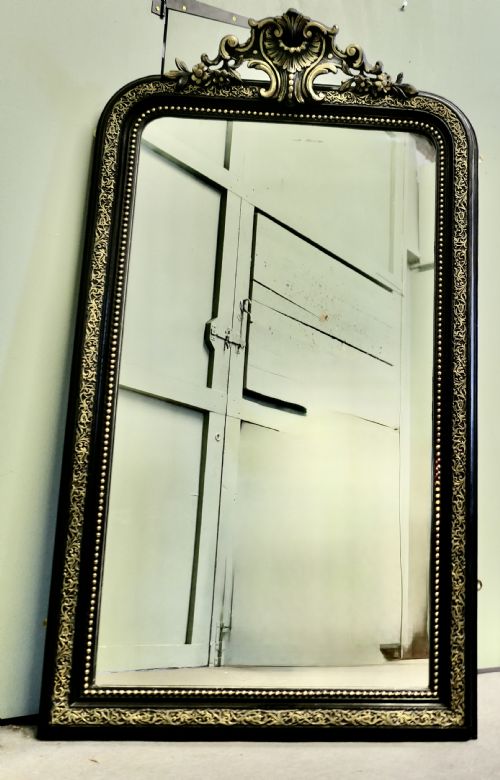
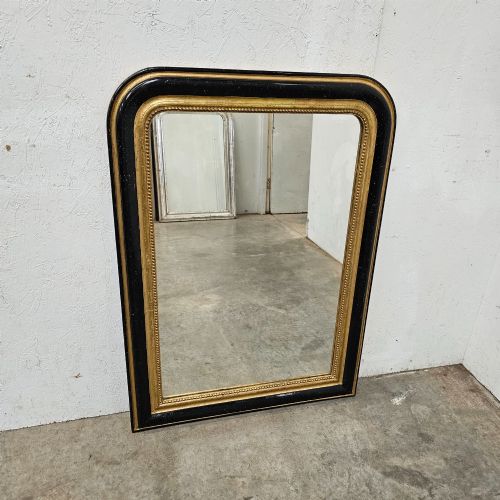
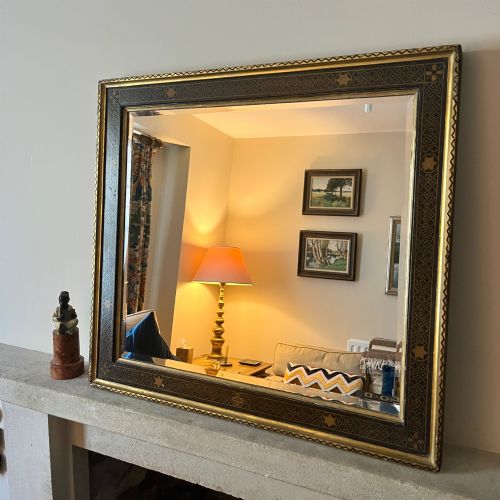
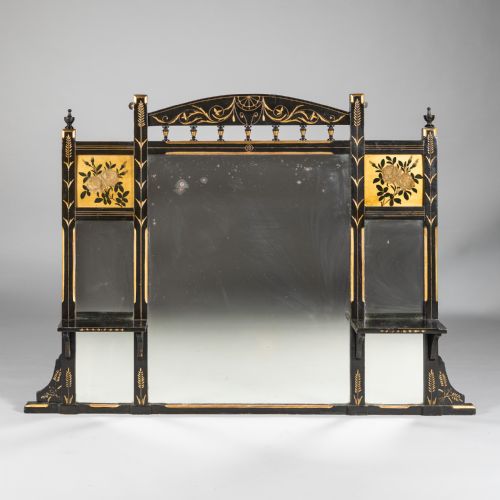
Most examples meet on this page in ebonised wood, often paired with parcel gilt or painted highlights. Victorian and Aesthetic Movement pieces dominate the selection, bringing dark finishes and architectural proportions to domestic interiors.
Materials and Construction
Frames are constructed from wood, cast iron, or carved gesso, finished with ebonised paint to imitate expensive ebony. Craftsmen applied gold leaf, silver, or gilt highlights to catch the light against the dark background.
Glass is set into substantial frames, ranging from simple mouldings to ornate carved designs with arched tops. The integration of paint and gilt on wood defines the visual weight of these mirrors.
Listings feature pieces from the Victorian and Edwardian eras, predominantly utilising ebonised wood, gold leaf, gesso, and glass in overmantel and wall mirror forms.
Distinctions in Quality
Quality rests in the depth of the carving and the crispness of the ebonised and gilt surfaces. Finer examples display meticulous detail in the gesso work and well-balanced proportions that suit grand mantelpieces.
The integration of parcel gilt and secondary painted details separates standard frames from superior works. Weight, structural integrity, and the original state of the glass further distinguish the better pieces.
The Antique Black Mantel Mirror Glossary
- Ebonised wood
- Timber treated with stain or paint to resemble dense, black ebony. This finish became popular during the nineteenth century for furniture and mirror frames.
- Parcel gilt
- A technique where only specific raised portions of a frame receive gold leaf. It creates a contrast between the dark background and the shining metallic highlights.
- Overmantel mirror
- A large mirror designed to sit specifically on the mantelpiece above a fireplace. These pieces often feature horizontal emphasis or arched tops to fit the architecture of a room.
- Gesso
- A plaster-like mixture applied to wood frames to create a smooth surface for carving or gilding. Skilled application allows for sharp, durable ornamentation.
- Aesthetic Movement
- A nineteenth-century design style emphasising visual beauty over narrative content. Pieces from this movement often utilise ebonised finishes and stark gilt contrasts.
Antique Black Mantel Mirror: Frequently Asked Questions
How do I style an antique black mantel mirror?
Position the mirror centrally above the fireplace to draw the eye upward and anchor the room's proportions. Keep mantel decor restrained to let the dark frame and gilt details command attention.
Pair the piece with neutral walls to let the ebonised wood stand out, or use it to ground a bolder colour scheme. Ensure the mirror's width matches or sits slightly within the mantel shelf below.
How do I identify a Victorian ebonised mirror?
Look for the characteristic use of ebonised wood combined with parcel gilt, gesso enrichment, and often an arched top. These design choices reflect the heavy architectural tastes of the nineteenth century.
Construction methods such as pegged joints and older mirror plates further point to the Victorian period. The presence of Aesthetic Movement motifs also helps date these frames to the later decades of the century.
Do these mirrors require special care?
Clean the glass with a soft cloth and a gentle glass cleaner sprayed onto the cloth rather than directly onto the frame. This prevents moisture from damaging the ebonised wood or the gilt.
Dust the carved wooden frame regularly with a dry, soft brush to protect the gesso and paintwork. Keep the mirror away from direct heat sources like active fireplaces to preserve the wood and finish.