

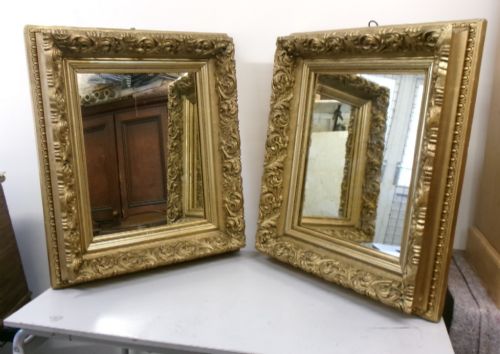

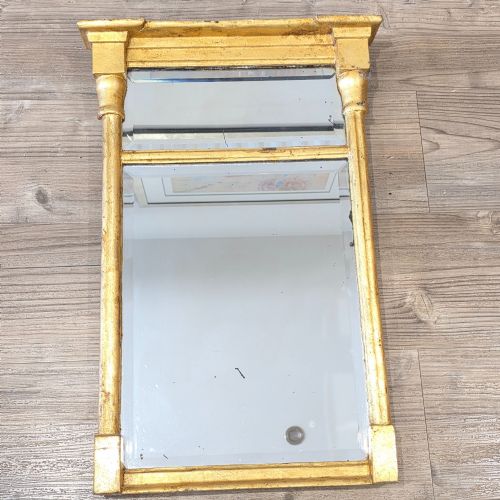

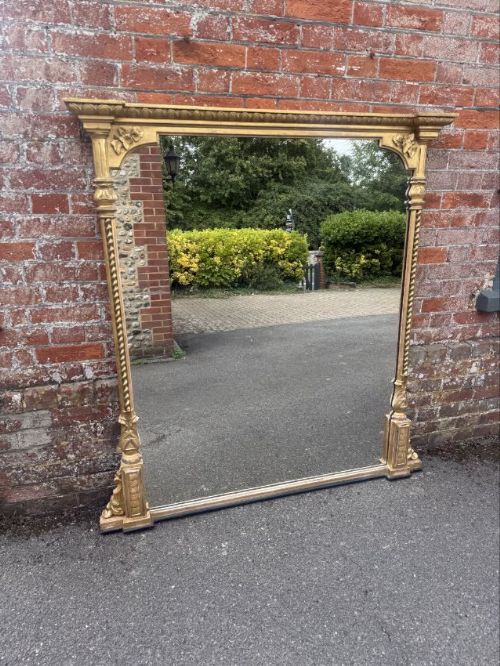
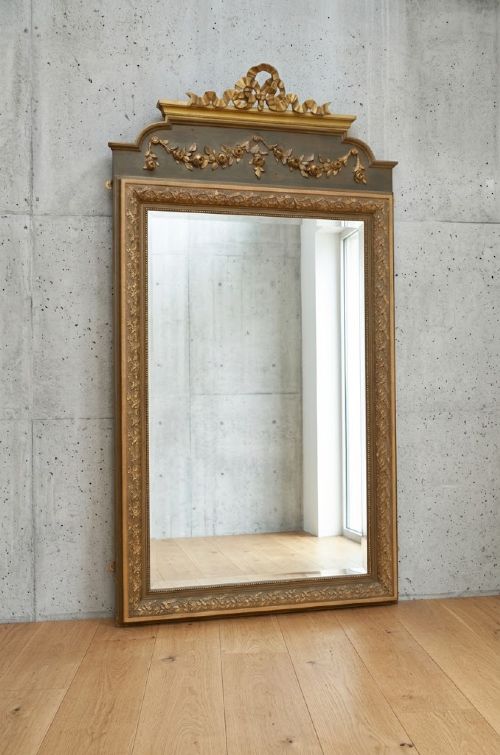
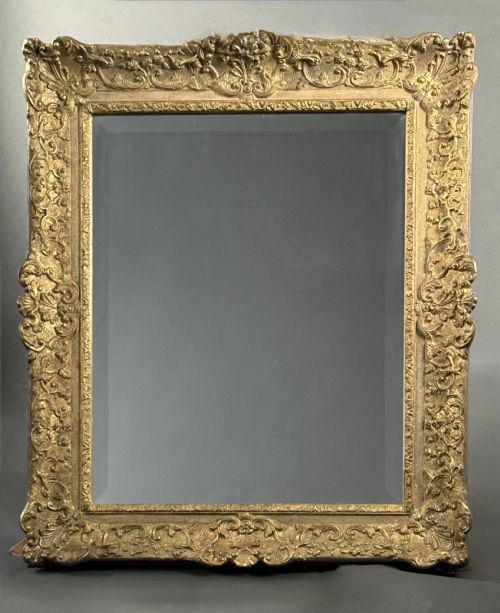
Gilt Framed Overmantel Mirror
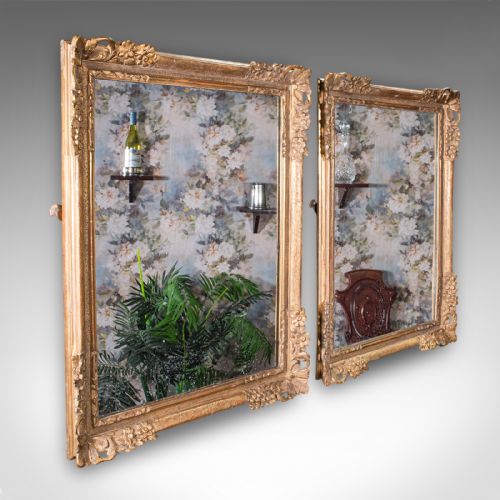
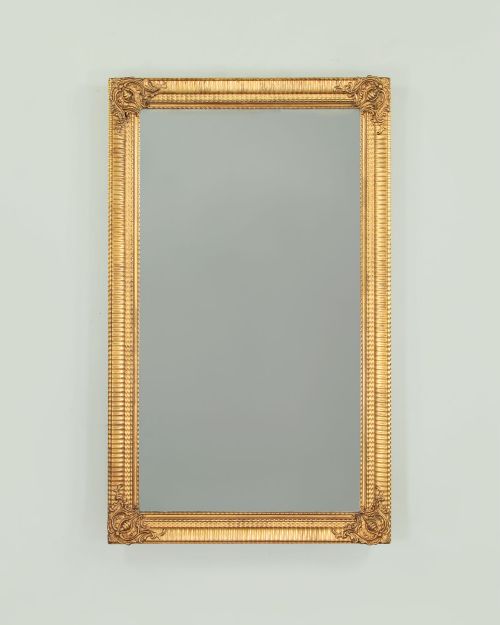
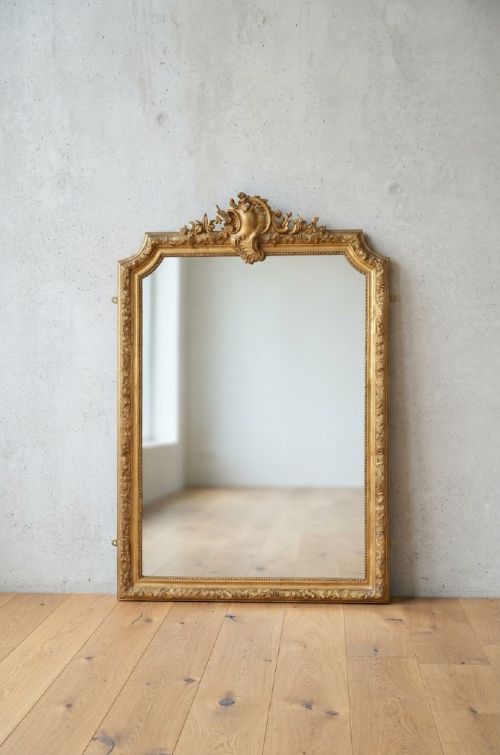
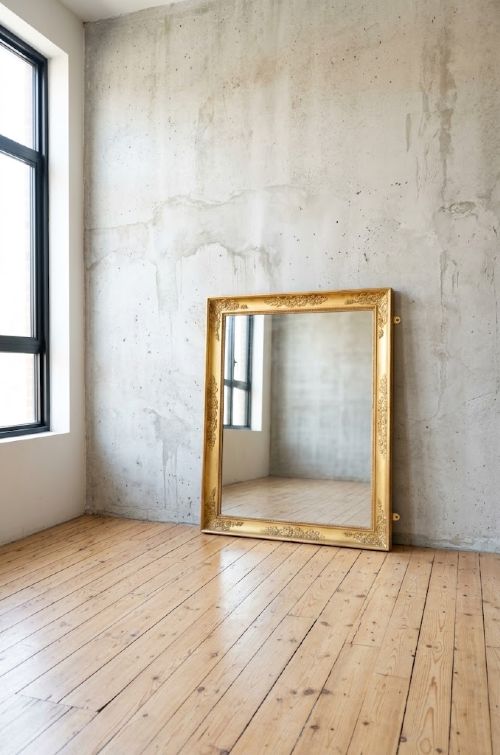
A gilt framed overmantel mirror brings proportion and reflected light to a fireplace, shaped by nineteenth-century English and French hands.
Gilt Framed Overmantel Mirror
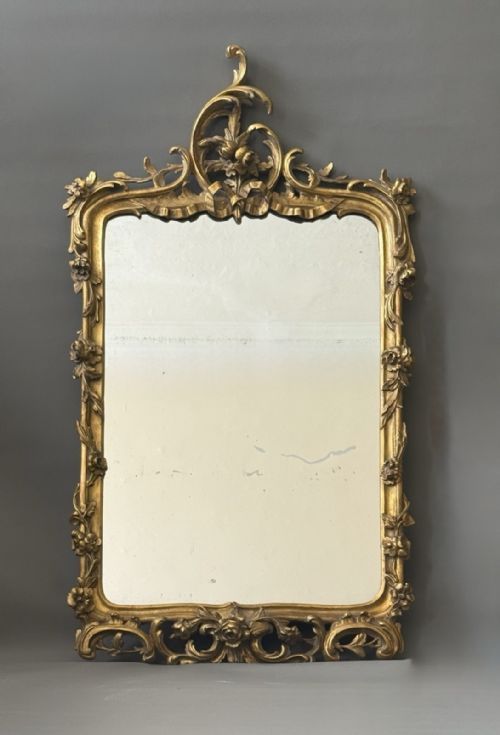
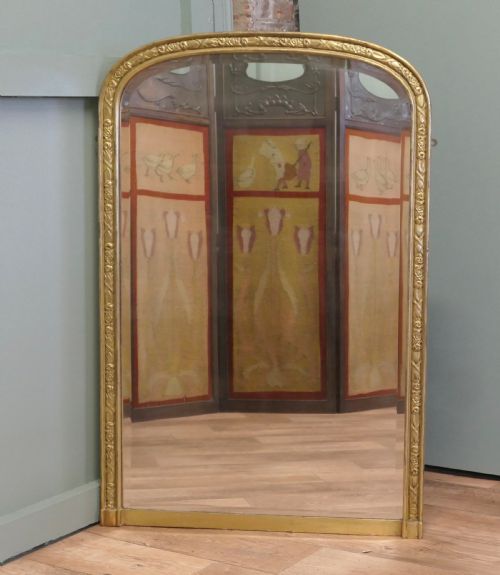
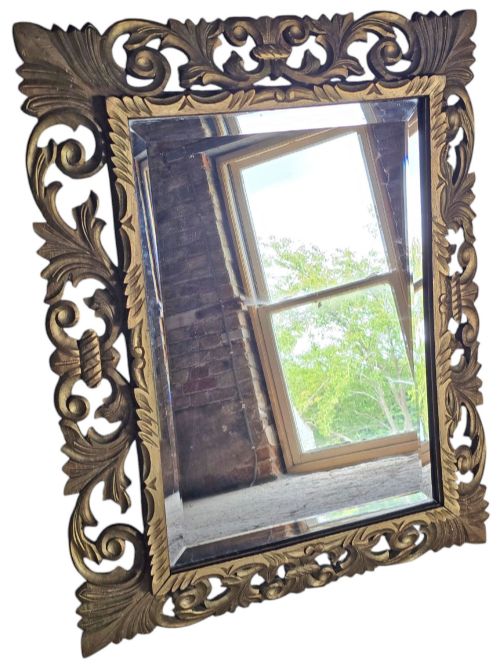
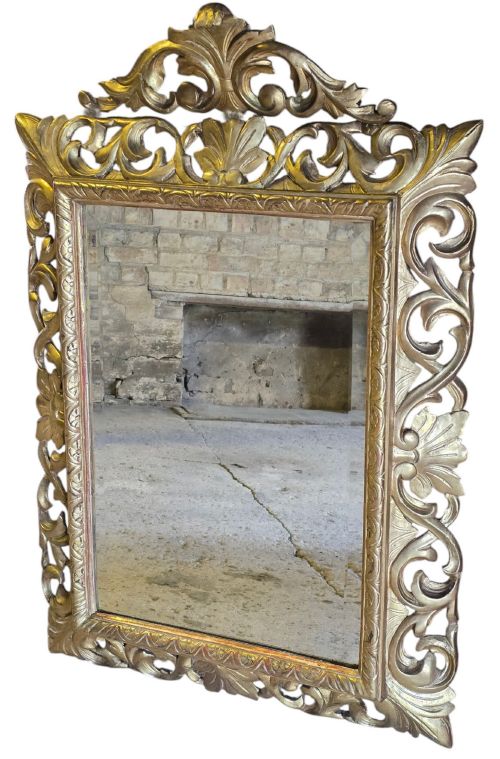
A gilt framed overmantel mirror is a large wall-hanging glass intended to sit above a chimneypiece, designed during the eighteenth, nineteenth and early twentieth centuries to brighten principal reception rooms. The pieces recorded here span English Victorian and Regency designs alongside French Louis Philippe, Rococo Revival and Florentine styles.
The form ranges from heavy architectural English examples with arched tops and column or rope-twist frames to tall French wall pieces featuring ribbon crests, mythological carvings or pastoral oil paintings. Many examples utilise landscape three-plate arrangements or retain their original mercury glass plates.
Victorian and nineteenth-century English interpretations frequently employ carved wood and gesso with ribbed or arched profiles. Continental cousins lean towards French stylistic vocabularies, including Napoleon III and Belle Époque expressions.
How They Were Made
Makers constructed the foundational carcass from timber such as wood, applying layers of gesso to build up high-relief ornamentation like acanthus leaves and floral scrolls before finishing the surface with gold leaf or gilding.
Glass plates were silvered using traditional techniques, including mercury backing on older eighteenth and nineteenth-century examples, which produces natural foxing and oxidation over decades of exposure.
Gilt Framed Overmantel Mirror Retail Price Guide 2026
Typical asking prices for gilt framed overmantel mirror among the pieces listed under this phrase on Sellingantiques today, from the lower quarter to the upper quarter. They describe what is for sale here now, not the wider market.
Listings feature periods spanning from the eighteenth century through the Victorian era to the early twentieth century, utilising wood, gesso and giltwood.
What Varies In Quality
Depth and crispness of hand-carved detail distinguish finer frames from simpler moulded composition pieces, particularly where gesso foliage meets the underlying wooden structure.
The integrity of the reflective surface and whether the mirror plate remains original to the frame dictate the historical continuity of the piece.
The Gilt Framed Overmantel Mirror Glossary
- Overmantel mirror
- A glass specifically proportioned to hang on the wall directly above a fireplace mantelpiece. These frames often feature landscape orientations to match the span of the hearth below.
- Gesso
- A plaster-like mixture applied to a wooden frame and carved or moulded into ornamental detail before gilding. It provides the crisp edges seen on nineteenth-century frames.
- Mercury glass
- An early mirror-making medium created by pouring a mercury and tin amalgam behind glass. It results in characteristic dark spots known as foxing.
- Giltwood
- Timber coated with thin leaves of gold or metal leaf over a prepared base. This finish yields a warm metallic lustre.
- Pier glass
- A tall mirror designed to hang on the narrow pier of wall between two windows. They share many decorative motifs with overmantels.
Gilt Framed Overmantel Mirror: Frequently Asked Questions
What is foxed glass?
Foxing refers to the speckled dark patches that appear on older mirror plates as the backing degrades over time.
Many collectors value this natural ageing because it confirms the antiquity of the glass plate.
Can I place these mirrors above a working fireplace?
Heat from an active fire can dry out gesso and crack the wooden frame over extended periods.
Ensure the mantelpiece deflects rising warmth away from the lower edge of the mirror.
How do I clean a gilt frame?
Dust gently with a soft dry brush to protect fragile gesso and gold leaf surfaces from abrasion.
Avoid liquid cleaners entirely, as moisture strips historic gilding from the wood.